This site is supported by our readers. We may earn a commission, at no cost to you, if you purchase through links.
Your scalp starts sending signals long before you connect the dots. That persistent itch you’ve been scratching, the flakes that won’t quit no matter how much you wash, the hair that suddenly feels like straw—these aren’t random annoyances.
Your scalp’s pH has shifted too far alkaline, and your skin is struggling to protect itself. The acid mantle that normally shields your scalp from bacteria and moisture loss can’t function when pH climbs above 5.5.
When you fix alkaline scalp naturally, you’re not just treating symptoms—you’re restoring the chemical environment your scalp needs to stay calm, balanced, and ready to grow healthy hair.
Table Of Contents
Key Takeaways
- Your scalp’s healthy pH sits between 4.5 and 5.5, and when it shifts alkaline from harsh products or overwashing, you’ll see persistent itching, flakes, frizz, and dullness that won’t quit until you restore that natural acidity.
- Apple cider vinegar rinses (1-2 tablespoons per cup of water), aloe vera gel, and yogurt-honey masks bring your pH back down to the acidic range your scalp needs to stay calm and protected.
- Wash your hair only 2-3 times weekly with sulfate-free, pH-balanced shampoos, and add a weekly gentle exfoliation plus scalp massage to keep buildup from pushing your pH back up.
- Hard water, stress hormones, and dehydration all mess with your scalp’s acid mantle from the inside, so drinking enough water and eating omega-rich foods supports the external treatments you’re doing.
Signs Your Scalp is Too Alkaline
Your scalp tells you when something’s off, but the signs of pH imbalance can be easy to miss if you don’t know what to look for.
From dryness and flaking to irritation or excess oil, recognizing scalp pH imbalance symptoms early helps you address the root cause before discomfort sets in.
An alkaline scalp often announces itself through uncomfortable symptoms and visible changes to your hair’s texture.
You might notice dryness, itching, or hair that feels rough and frizzy—all signs your scalp’s natural balance needs attention through restoring pH after chemical treatments.
Here’s what happens when your scalp’s natural acidity shifts out of its healthy range.
Factors like humidity, product buildup, and how often you wash your hair all play a role in keeping that balance in check.
Common Symptoms of Alkaline Scalp
Your scalp sends clear signals when it’s too alkaline. You might notice persistent itchiness and scalp irritation that won’t quit, even after washing.
Hair dullness becomes obvious—your strands lose their natural shine and feel rough to the touch. An itchy scalp often pairs with flaky skin that resembles dandruff, plus uncomfortable redness.
This alkaline environment disrupts your hair balance, throwing off scalp pH and compromising overall scalp health.
Understanding acidic vs alkaline scalp health helps you choose products that support your natural pH balance instead of working against it.
Effects on Hair Texture and Appearance
When your scalp’s pH balance swings alkaline, hair frizz takes over because raised cuticles catch on each other. You’ll see texture change—strands feel rougher and tangle easily.
Cuticle damage makes hair growth look dull, and color fading happens faster since pigments escape through those lifted scales.
Moisture behaves unpredictably too: some people’s hair feels bone-dry while others get greasy fast, depending on how their scalp reacts to the imbalance.
How to Identify PH Imbalance at Home
You don’t need lab equipment to check scalp pH levels. Watch for persistent white flakes that regular shampooing won’t fix—that’s pH disruption talking.
Track when itchiness or burning shows up after washing, and note unusual frizz or texture shifts over a few weeks.
Pay attention to how oily or dry your scalp feels with different products, since pH imbalance messes with both extremes.
Why Scalp PH Balance Matters
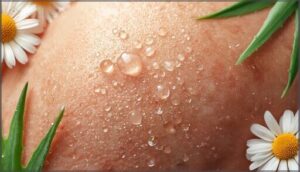
Your scalp’s pH isn’t just a number on a chemistry chart—it’s the foundation for everything from how your hair grows to how comfortable your scalp feels each day. When that balance tips too alkaline, you’re fighting an uphill battle against dryness, irritation, and lackluster hair.
Your scalp’s pH balance is the foundation of hair health—when it tips alkaline, you face dryness, irritation, and dull hair
Here’s what you need to know about why pH balance matters so much for your scalp health.
Ingredients like glycerin, ceramides, and aloe work together to restore moisture to dry scalp while maintaining the protective pH your skin needs.
The Ideal PH Range for Scalp Health
Your scalp thrives in an acidic environment, with a natural pH balance hovering between 4.5 and 5.5. This mildly acidic range isn’t random—it protects your hair cuticles from swelling and keeps protein disruption at bay.
When you use pH-balanced products within this zone, you’re supporting your scalp’s natural defenses against irritation and flaking while minimizing moisture loss that leads to dryness.
Role of The Acid Mantle in Moisture Retention
Think of the acid mantle as your scalp’s invisible shield—a thin film formed from sebum, sweat, and natural lipids that locks moisture in and keeps irritants out.
This barrier thrives in an acidic environment, strengthening the spaces between cells to prevent water loss.
When harsh cleansers or high-pH products strip it away, your scalp becomes vulnerable to dryness and sensitivity.
Impact of PH on Hair Growth and Scalp Comfort
Balance affects more than shine—your pH level directly influences scalp comfort and hair growth. When your scalp pH drifts alkaline, the cells at the surface turn over faster, triggering itchiness and sensitivity.
An acidic balance around 4.5–5.5 keeps the protective lipid layer intact, reducing water loss and creating conditions where follicles thrive.
Natural remedies help restore this equilibrium for lasting scalp health.
Causes of Alkaline Scalp Imbalance

Your scalp doesn’t shift alkaline on its own. Specific products, habits, and environmental exposures push it out of balance, often without you realizing it until symptoms appear.
Understanding these causes helps you take control and protect your scalp’s natural barrier before damage sets in.
Alkaline Hair Products and Treatments
Your shampoo might be working against you. Alkaline products with a pH above 7 disrupt your scalp’s natural defenses, swelling the cuticle and inviting frizz and irritation.
Hair pH levels shift when clarifying formulas or color treatments lift that protective layer.
Look for pH-balanced products and natural shampoos that respect your scalp pH—acidic products help seal moisture back in, giving you real treatment options for alkaline damage and scalp sensitivity.
Overwashing and Harsh Cleansing Routines
Washing your hair every day feels clean, but it’s actually stripping away the oils that keep your scalp pH balanced. Harsh sulfates and hot water disrupt your scalp health, triggering excess oil production and scalp irritation.
Vigorous scrubbing during your hair care routine makes things worse. Switch to gentle cleansing with sulfate-free shampoo two to three times weekly, and your natural shampoos will protect instead of harm.
Environmental and Lifestyle Factors
Your city’s hard water and that midday workout sweat are silently pushing your scalp toward alkalinity, even when you’re doing everything else right. Air pollution deposits chemicals on your scalp, while climate impact from humidity or dry heat shifts your scalp pH daily.
Urban lifestyle stress triggers hormonal changes that disrupt scalp balance, and chlorinated pool water strips natural ingredients your scalp needs to maintain its protective barrier.
Natural Remedies to Restore Scalp PH
Your scalp doesn’t need complicated treatments to get back on track. A few simple, natural ingredients can bring your pH into the healthy acidic range and help your hair look better almost immediately.
Here are three remedies you can start using at home to restore balance and protect your scalp’s natural defenses.
Apple Cider Vinegar Rinses

Think of apple cider vinegar as your scalp’s reset button. ACV benefits your hair by gently lowering pH toward that ideal acidic range—mix 1–2 tablespoons per cup of water and pour it through after shampooing for pH restoration.
This vinegar therapy can ease itching and flaking while clarifying buildup. Always patch test first, since undiluted ACV stings sensitive skin.
Aloe Vera and Herbal Treatments
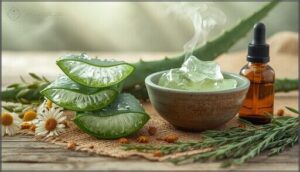
Aloe vera brings instant calm to an irritated scalp while nudging pH back toward balance—its gentle acidity and moisture-locking polysaccharides make it one of nature’s best soothers.
Herbal remedies like chamomile and witch hazel act as scalp toners, reducing redness and excess oil without stripping your skin.
Patch test any new botanical, then massage pure aloe gel or diluted herbal extracts into damp hair for natural, pH-friendly relief.
Homemade PH-balancing Hair Masks
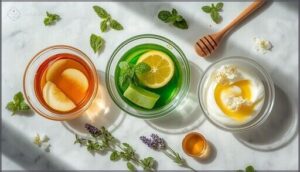
Beyond rinses and gels, natural masks deliver concentrated pH correction right where you need it. Try these scalp treatments to restore acidic balance:
- Apple cider vinegar dilution (1–2 tablespoons per cup of water) as a post-wash rinse to lower alkalinity fast.
- Aloe vera and lemon blend (2 tablespoons gel with 1–2 teaspoons juice) for cooling, acidic relief.
- Yogurt-honey mask for moisture and gentle buffering—rinse thoroughly after fifteen minutes.
Mix, apply, and reset your hair care routine.
Scalp Care Routine for Lasting Results
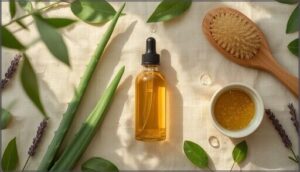
Once you’ve reset your scalp’s pH with the right remedies, you need a routine that keeps things balanced long-term.
The products you choose, how often you wash, and a few weekly habits make all the difference.
Here’s how to build a scalp care routine that actually sticks.
Choosing PH-balanced, Sulfate-free Shampoos
Look for shampoos that explicitly say “pH balanced” on the label—usually targeting the 4.5 to 5.5 range your scalp craves. Dermatologist-tested claims help, but that “pH balanced” promise is your real green light for scalp health.
Sulfate-free formulas skip harsh sodium lauryl sulfate, preserving your acid mantle through gentle cleansing. Check ingredient lists for mild surfactants like decyl glucoside instead of alkalizing agents.
Frequency of Washing and Scalp Massage
Wash your hair 2–3 times per week to preserve natural hair oil balance without stripping your acid mantle—overwashing triggers dryness while underwashing traps debris.
During each wash, massage your scalp in gentle circles for 1–3 minutes to boost blood flow and distribute your sulfate-free shampoo evenly.
This simple ritual promotes scalp health while keeping washing frequency aligned with your scalp’s needs.
Weekly Exfoliation and Hydration Tips
Once weekly, use a soft silicone brush or low-concentration chemical exfoliant to clear buildup and dead cells—scalp exfoliation readies skin for deeper hydration without harsh scrubbing.
Follow immediately with a pH-balanced leave-in treatment rich in glycerin and aloe to lock moisture into your scalp.
Pair gentle cleansing with scalp massage to support hair restoration and maintain ideal scalp pH for lasting scalp health.
Diet and Lifestyle Tips for Healthy Scalp

What you put in your body affects what happens on your scalp. Your daily habits—how much water you drink, what’s on your plate, and when you ask for help—can shift your scalp’s pH just as much as the products you choose.
Here’s how to support your scalp from the inside out.
Hydration and Its Effect on Scalp Health
Your hydration levels directly shape scalp health from the inside out. When you drink enough water, your skin barrier stays intact and your scalp moisture improves, which means your hair follicles get better nutrient delivery and less inflammation.
Dehydration cranks up water loss through your scalp, triggering dryness, itching, and flaking that disrupts natural pH balance and weakens your hair care routine. Proper hydration is essential for maintaining healthy hair through internal hydration processes.
Foods That Support Natural PH Balance
Your diet shapes scalp pH from within. Omega-rich foods like salmon and flaxseeds fight inflammation, while probiotic diets from fermented foods support your gut-skin axis.
Mineral balance improves when you eat leafy greens and nuts, delivering zinc and magnesium for moisture retention. Antioxidant sources like berries protect scalp tissue.
Hydration foods such as cucumber boost water content naturally, working alongside pH-balanced products and natural hair remedies for ideal scalp health, pH balance, and hair growth.
When to Seek Professional Advice
Even with perfect scalp care, some symptoms demand medical evaluation. If you’ve tried home remedies for six weeks without itching relief or notice sudden hair loss, it’s time for a dermatologist consultation. Watch for these warning signs:
- Scalp lesions or non-healing sores that worsen despite treatment
- Severe scalp irritation with rapid hair damage or thinning patches
- Persistent flaking unresponsive to pH-balanced scalp care routines
- Preexisting conditions that complicate your scalp health management
Professional guidance protects your scalp pH and overall wellness.
Frequently Asked Questions (FAQs)
Can hard water cause an alkaline scalp?
Your tap water might be the quiet troublemaker behind your scalp pH chaos. Hard water deposits calcium and magnesium that disrupt your acid mantle, pushing your scalp toward alkaline territory and triggering dryness.
How long does pH rebalancing take?
You’ll notice real scalp restoration within 3 to 7 days using pH-balanced products.
Complete acid mantle recovery and hair renewal usually take 2 to 4 weeks, depending on your scalp health and pH level consistency.
Do certain hair types have different pH?
Your scalp pH stays around 5 to 5, regardless of hair type. However, cuticle structure and hair porosity influence how different textures react to pH shifts, affecting moisture levels, frizz, and scalp sensitivity.
Can stress affect scalp pH balance?
Yes, stress can throw your scalp pH off balance. Cortisol effects and stress hormones disrupt your skin’s acid mantle, triggering pH fluctuations and scalp inflammation that affect overall scalp health and comfort.
Are there pH testing strips for scalp?
You can buy pH testing strips designed for skin and cosmetics that work on your scalp too. Look for strips measuring pH 0 to 0 to monitor your scalp’s acid mantle effectively.
Conclusion
Your scalp won’t heal overnight, but it will respond. Your hair won’t transform in a week, but it will strengthen.
When you fix alkaline scalp naturally, you’re working with your body’s design instead of against it. The apple cider vinegar rinses, the pH-balanced products, the dietary shifts—they all signal your scalp that balance is returning.
Trust the process, stay consistent with your routine, and watch your scalp rediscover the calm it was built to maintain.
- https://www.sciencedirect.com/science/article/pii/S0749208123000268
- https://x.com/godofprompt/status/1990526288063324577
- https://pmc.ncbi.nlm.nih.gov/articles/instance/9553038/bin/pone.0275964.s005.docx
- https://www.scribd.com/document/356795007/Research-Methods-Knowledge-Base
- https://github.com/vinhphunguyen/how-to-write-a-paper/blob/master/how-to-write-paper.out