This site is supported by our readers. We may earn a commission, at no cost to you, if you purchase through links. This content is for general informational and educational purposes only and is not a substitute for professional medical, dermatological, or nutritional advice.
Your bathroom mirror is about to get a lot smarter. A phone camera can now scan your moisture, pigmentation, texture, and redness in seconds, then adjust your routine when the weather turns or you sleep badly.
That’s only the start of what’s coming in skincare technology. LED masks calm breakouts, bioengineered ingredients feed your good microbes, and DNA tests promise a regimen built around your genes. Some of it delivers. Some of it oversells.
You’ll learn which innovations earn a spot on your shelf, which still need better science, and how to spot the difference before you spend a dollar.
Table Of Contents
- Key Takeaways
- AI-Powered Personalized Skincare and Smarter Product Shopping
- Smart Skincare Devices: At-Home Tools and In-Clinic Advances
- Bioengineered Ingredients and Microbiome-Friendly Skincare Innovations
- DNA-Based Skincare: Personalization Potential and Scientific Limits
- Sustainable Skincare Technology: Waterless Formulas and Refillable Packaging
- Frequently Asked Questions (FAQs)
- What is the next big thing in skincare?
- What ages your face the most?
- What do Koreans use against wrinkles?
- What procedure makes you look 10 years younger?
- What is the future of skincare in 2024?
- What is the future of skincare?
- How will technology shape the beauty industry in the upcoming years?
- What will be the future of skincare?
- What are the new technologies for skin care?
- How is technology changing the beauty industry?
- Conclusion
Key Takeaways
- AI skin scans and adaptive routines can flag concerns you’d miss in the mirror, but tools trained on narrow datasets show about 30% higher error rates on darker skin, so check that a tool was tested on skin like yours before trusting it.
- At-home LED masks and microcurrent devices can deliver real results only with steady use (think five days a week for twelve weeks), proper eye protection, and clearance from a doctor if you have a pacemaker, seizure disorder, or are pregnant.
- Microbiome-friendly and bioengineered ingredients are moving from hype to proof, with some products earning third-party certification, though you should still patch test and treat marketing claims with caution.
- DNA-based skincare offers useful clues but weak evidence, since studies are small and skin-of-color research makes up only 16.3% of the literature, so treat results as a starting point rather than a verdict.
AI-Powered Personalized Skincare and Smarter Product Shopping
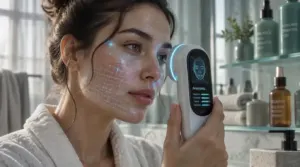
Your skincare routine is about to get seriously smart. You’ll see how AI reads your skin, helps you shop with confidence, and treats your data with care. Here are the three things you’ll want to know.
If you’re unsure where to begin, this step-by-step skincare routine guide walks you through layering order and pacing new actives so your skin adjusts without irritation.
Skin Analysis and Adaptive Routines
How does a selfie know your skin better than you do? Computer vision scans moisture, pigmentation, texture, and redness in seconds, flagging concerns you’d miss in the mirror.
Pair AI-powered tools with skin hydration sensors and real-time skin monitoring, and you’re steering. AI-driven personalization then builds adaptive skincare routines that shift with weather, sleep, and pollution.
Algorithms trained on limited datasets can misidentify concerns on darker skin, which is why inclusive AI training data covering all skin tones, types, and textures matters.
Test, tweak, master.
Augmented Reality for Skincare Shopping
Your routine’s dialed in, so shop like it. Augmented reality previews products on your face, and AI-powered tools turn suited skincare into a confident click.
- Match shades from your live camera feed.
- Preview texture and finish in real time.
- Cut returns by up to 22% before checkout.
- Test omnichannel retail mirrors in-store, too.
- Skip wasteful samples and choose sustainable packaging.
Inclusive AI and Skin Data Privacy
Shop smart, then ask who built the smarts. Algorithmic bias is real: AI powered skincare tools trained on narrow datasets show 30% higher error rates on darker skin tones.
Before trusting any scan, check whether a tool was tested on skin like yours, and see how personalized skincare routine trends are changing what fair, inclusive assessments should look like.
Look for inclusive and suited beauty, meaning brands that train on diverse skin and use scales like Monk.
Demand ethical data collection too: clear opt-ins, deletion rights, and on-device processing. Your face data is yours.
Smart Skincare Devices: At-Home Tools and In-Clinic Advances
Your bathroom counter is turning into a smart skincare lab, and you’re the one running it. Below, you’ll find the three areas that matter most, from glowing masks and gentle pulses to clinic-grade lasers and the honest truth about results. Read on, pick your tools wisely, and stay in control of your routine.
LED, Microcurrent, and Wearable Skin Sensors

Think of your skin as a garden, and your gadgets as the gardener’s tools.
Just as a gardener picks tools suited to delicate soil, you can choose gentle, sun-protective best products for lupus skin to calm flare-ups and keep your skin comfortable.
LED light therapy masks use red, blue, and near-infrared wavelengths to calm, clear, and firm. Microcurrent devices tone and lift with gentle pulses.
Wearable skincare tech tracks moisture and UV, while AI-powered tools turn real-time skin monitoring into routines you control. Start small and stay consistent.
Laser and Radiofrequency Treatment Advances

Why are Laser and Radiofrequency Treatment Advances so exciting? Because you’ve got more control than ever.
- Fractional and hybrid lasers customize depth.
- Fractional Laser Resurfacing cuts downtime to 4-7 days.
- Radiofrequency RF technology tightens skin.
- A professionalgrade laser controls deeper concerns.
Master your options, and you’ll choose treatments that fit your goals. Ask your provider which intensity suits your skin.
Safety, Evidence, and Realistic Results

Most smart skincare devices work, but only if you use them right. FDA-cleared LED masks need eye protection, and anyone with a pacemaker, seizure disorder, or pregnancy should check with a pro first.
Expect evidence-based results to build slowly. Think five days a week for twelve weeks, not overnight magic. Skip uncertified sellers, because safety testing matters. And always wear sunscreen.
Bioengineered Ingredients and Microbiome-Friendly Skincare Innovations
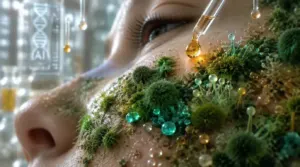
Think of your skin as a rainforest. Trillions of microbes keep it thriving, and harsh products are the bulldozers.
Now you can fight back with smarter chemistry. Bioengineered ingredients are designed to feed good microbes, not wipe them out.
Look for microbiome-friendly formulations with real proof. Codex Labs’ Bia Eczema Relief Lotion earned MyMicrobiome Standard certification and the National Eczema Association Seal of Acceptance in April 2025. Chulalongkorn University researchers built a 4P-biotics formula for THANARA’s serum and sunscreen to balance facial skin microbiome.
Behind the scenes, AI-powered tools speed things up. Terra Quantum and Unilever apply quantum machine learning to skin microbiome data, hunting for eczema-focused formulas faster.
Want control? Choose biotechnology-inspired formulas, and patch test first. Sustainable waterless formulas work too.
DNA-Based Skincare: Personalization Potential and Scientific Limits
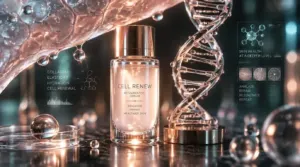
Your genes aren’t your destiny, but they do hold clues.
That’s the promise of DNA-based skincare. Genetic profiling checks markers tied to UV resistance, collagen breakdown, and antioxidant defense, then shapes suited regimens around your risks. Twin studies suggest genetics drive about 60% of perceived age variation. Pair that with AI-powered tools, and you can even track epigenetic aging over time.
Here’s the catch: the evidence is still modest.
- Formulas must stay stable while staying personal.
- Studies are small and geographically limited.
- Skin-of-color research makes up only 16.3% of literature.
- Subscriptions often cost hundreds monthly.
Treat results as a smart starting point, not a verdict. Ask which markers they test and which studies back them. Stay curious, and demand proof.
Treat your DNA results as a starting point rather than a verdict, and keep asking for proof of what they test
Sustainable Skincare Technology: Waterless Formulas and Refillable Packaging

Think your routine can’t get greener? Think again.
Waterless formulas like balms, oils, and powders skip water as an ingredient, which can reduce the need for some preservatives. They aren’t automatically preservative-free, though, so read the label. Concentrates ship less product mass, but if you dilute them with tap water, follow the dosing and storage directions closely.
Now consider refillable packaging. Pouches use less material than rigid bottles, but mixed-material laminates can be hard to recycle. A durable container only pays off when you reuse it enough times. So choose single-material parts when you can, and actually return or refill them.
Pair these with ethical sourcing and other sustainable practices, and you’ll shape a clean beauty routine on your terms.
Frequently Asked Questions (FAQs)
What is the next big thing in skincare?
The next big thing is AI driven personalization. AIpowered skincare uses predictive efficacy modeling to match you with labgrown peptides, while smart skincare devices adjust your routine daily. You’ll control every step and master results.
What ages your face the most?
Sun drives most visible aging. You’ll fight it with daily UV protection, because UV wrecks collagen synthesis. Smoking, pollution and repeated squinting add damage. AI-powered skincare, smart skincare devices and DNA-based formulations can’t outwork sunscreen.
What do Koreans use against wrinkles?
Koreans lean on ginseng extract, adenosine, peptides, and snail mucin, then protect it all with daily sunscreen. You’ll also spot PDRN and gentle, low-dose retinol. Stick with it, because results build over weeks.
What procedure makes you look 10 years younger?
A 2019 study found facelift patients looked about three years younger. No single procedure reliably gives you ten.
Combined treatments work best: a facelift lifts sagging, lasers boost collagen production, and injectables restore volume.
What is the future of skincare in 2024?
Your skin is a living mirror, and it’s finally talking back. AI powered tools build suited regimens from your genetics and lifestyle, while biotech beauty, sustainable cosmetics, and intelligent skincare devices keep you in control.
What is the future of skincare?
Skincare’s future is a mirror that reads your genes. You’ll see AI-driven personalization and DNA testing tailor treatments to your unique genetic profile, while intelligent beauty devices and biotech beauty bring professional-grade care home.
How will technology shape the beauty industry in the upcoming years?
Think of technology as your skin’s compass: it points, you decide. You’ll soon have AI-driven personalization analyzing your skin in real time, machine learning tailoring routines, and smart devices delivering clinical-grade results from your bathroom counter.
What will be the future of skincare?
Think of your skin as a live feed, always updating. Soon you’ll get DNA-tailored formulas, AI routines that adapt as your skin shifts, and at-home treatments rivaling clinics. But don’t ditch basics: cleanse, moisturize, sunscreen.
What are the new technologies for skin care?
New tech for your skin: AI-powered tools read selfies and build suited skincare routines, LED masks deliver LED light therapy, and microbiome skincare plus noninvasive antiaging gadgets personalize results. Ask your dermatologist before jumping in.
How is technology changing the beauty industry?
Your skin now comes with a control panel. AI-driven personalization turns selfies into custom routines.
LED light therapy masks and microcurrent tools deliver clinic-grade treatments at home.
Microbiome-friendly formulations and sustainable chemistry back it up, bringing non-invasive antiaging precision to your bathroom shelf.
Conclusion
What should earn space on your shelf? The destiny of skincare technology isn’t about adopting every clever device or custom formula. It’s about choosing innovations that fit your skin, respect your budget, and have evidence behind their claims.
Use AI as a guide, treat DNA promises with healthy skepticism, and look for smarter, lower-waste packaging. Your routine can be modern without being complicated. Let good science set the pace, and let your skin, not the hype, make the final call.