This site is supported by our readers. We may earn a commission, at no cost to you, if you purchase through links. This content is for general informational and educational purposes only and is not a substitute for professional medical, dermatological, or nutritional advice.
Most shavers reach for pre-shave oil without a second thought. It’s the default—but oil sits on top of skin. It doesn’t pull water in.
Glycerin does something fundamentally different: it bonds to water molecules and draws moisture directly into the outer skin layer, the stratum corneum, swelling it slightly and making it pliable. That structural change matters.
Hydrated skin yields to a blade instead of resisting it, which means less drag, less friction heat, and fewer micro-tears.
For anyone dealing with razor burn, sensitivity, or coarse beard hair, glycerin as a pre-shave isn’t a trend—it’s basic skin chemistry working in your favor.
Table Of Contents
- Key Takeaways
- What Glycerin Does Before Shaving
- How Glycerin Softens Beard Hair
- Glycerin Benefits for Sensitive Skin
- Glycerin Vs Pre-Shave Oils
- How to Apply Glycerin Pre-Shave
- Best Glycerin Pre-Shave Formulas
- Safety Tips for Daily Use
- Frequently Asked Questions (FAQs)
- Which pre-shave soap is the best?
- Why is a pre-shave water soluble?
- What is Proraso pre-shave cream for sensitive skin?
- What is an astringent in a shave?
- How should I shave if I have sensitive skin?
- Should I use astringent in my aftershave?
- Can I use glycerin before shaving my face?
- What is the best prep before shaving?
- What can I use as a pre shave?
- Is glycerin good for razor bumps?
- Conclusion
Key Takeaways
- Glycerin pulls water directly into your skin’s outer layer — it doesn’t just coat the surface like oil does, so your skin actually gets pliable enough to stop fighting the blade.
- Hydrated beard hair cuts easier because glycerin softens the keratin fiber itself, meaning less tugging, less heat, and fewer strokes to finish the job.
- Unlike pre-shave oils, glycerin won’t block pores or kill your lather — it’s noncomedogenic and water-soluble, making it the smarter pick for acne-prone or sensitive skin.
- A few drops on a wet face are all you need — apply it damp, wait 30 seconds, then lather up; more product just leaves tackiness, not better hydration.
What Glycerin Does Before Shaving

Glycerin doesn’t just sit on your skin — it actively pulls moisture in and holds it there. That changes everything about how a razor moves across your face.
That slick, protective layer is exactly why so many people swear by using glycerin as a pre-shave treatment to cut irritation before the blade ever touches skin.
Here’s what’s actually happening before the blade even touches you.
How Glycerin Acts as a Humectant
Glycerin is a humectant — meaning it actively pulls water toward your skin rather than just sitting on top of it. Three hydroxyl groups drive this through Hydrogen Bond Dynamics, latching onto water molecules and holding them close.
Humidity-Dependent Efficiency matters here: glycerin works best on a damp face. That’s your first move — always apply it wet.
It also reduces transepidermal water loss, helping keep skin hydrated during shaving.
Water Binding and Skin Hydration
Once glycerin draws water in, it doesn’t just stop at the surface. It travels through Aquaporin-3 Transport channels — basically water doorways in your skin cells — pushing hydration into living tissue.
There, Keratin-Water Bonding replaces dry keratin-to-keratin connections, and Stratum Corneum Swelling begins. Your Natural Moisturizing Factor stays topped up, and the skin barrier locks moisture in.
That’s real hydration, not just surface dampness.
Why Hydrated Skin Shaves More Easily
Real hydration — the kind glycerin delivers through aquaporin-3 into your stratum corneum — changes everything at the blade.
Here’s what that means practically:
- Skin pliability increases, so the razor tracks smoothly instead of catching
- Water distribution evens out, softening tight spots before they become problem zones
- Thermal reduction lowers friction heat that triggers redness
- Cut efficiency improves — less force, cleaner stroke
- Microtear prevention kicks in because hydrated tissue flexes rather than tears
How Glycerin Improves Razor Glide
That hydration does one more thing — it creates a thin, water-rich microfilm on your skin’s surface. Think of it like a microscopic slip layer. The blade rides this film instead of dragging directly across dry tissue.
Glycerin creates a microscopic slip layer that lets the blade glide across skin instead of drag
| Glycerin Effect | Shaving Benefit |
|---|---|
| Microfilm thickness increase | Razor glide enhancement |
| Friction heat reduction | Skin temperature stabilization |
| Aquaporin-3 transport | Deeper, lasting hydration |
That’s razor blade longevity you can actually feel.
How Glycerin Softens Beard Hair
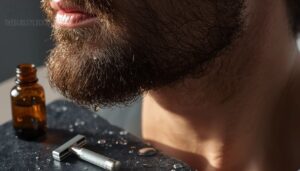
Hydrated skin is only half the equation — your beard hair needs to be ready too. Glycerin pulls moisture into the hair shaft itself, changing how the blade moves through each strand.
Here’s what that actually means for your shave.
Moisture Absorption in Beard Hairs
Beard hair is basically a keratin sponge — and glycerin makes it drink. As a humectant, it drives moisture diffusion deep into the fiber through aquaporin-3 transport channels.
Here’s what happens at the microscopic level:
- Keratin water binding increases inside the shaft
- Cuticle swelling loosens overlapping scales
- Hydration flexibility softens the fiber’s rigid core
- Moisture retention keeps hairs pliable during your entire shave
Lower Cutting Force for The Blade
Softer hair means your blade does the cutting — not the dragging. When glycerin’s humectant action delivers full skin hydration, the resulting slip layer optimization creates a genuine lubricating film at the blade’s contact zone.
Glycerin works the same way in skincare — check out how drugstore moisturizers handle hydration for oily skin without the greasy aftermath.
That’s edge drag reduction working in real time.
Less friction means better blade pressure modulation — you naturally ease up. Frictional heat minimization follows, and the razor glides cleanly with hydration lift doing the heavy work.
Better Prep for Coarse or Dry Beards
Coarse, wiry beards are basically dehydrated hair shafts — and glycerin, a true humectant, fixes that fast.
Whether you’re dealing with beard length that traps dryness or temperature effects from cold, dry climates, a DIY moisture mix starting with glycerin delivers real skin hydration before your blade ever touches skin.
- Promotes skin barrier recovery after shaving
- Adjusts for humidity adaptation challenges in dry climate skin care
- Facilitates post-shave hydration by prepping skin beforehand
Why Soft Hair Reduces Tugging
Think of stiff, dry stubble as a field of tiny springs — each one pushing back against the blade.
Glycerin’s humectant action delivers moisture deep into whisker shafts, triggering reduced hair stiffness and uniform hair alignment.
That means enhanced blade penetration with lower cut resistance. Minimized pullback forces follow naturally, and shaving irritation reduction becomes less of a goal and more of a guaranteed result.
Glycerin Benefits for Sensitive Skin
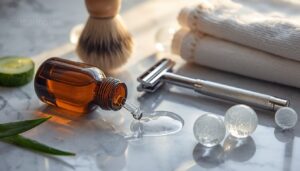
Sensitive skin doesn’t just need a sharp blade — it needs the right prep before the blade ever touches your face. Glycerin targets several of the root causes behind post-shave misery, not just the surface symptoms.
Here’s how it works for skin that needs a little extra consideration.
Less Friction and Razor Burn
Razor burn isn’t random — it’s friction doing damage. Glycerin pulls moisture into the skin surface, creating a slip layer that manages skin traction control naturally.
That means blade drag minimization with every pass, less friction, heat reduction, and stress on reactive skin, and better pass frequency optimization because the razor glides instead of catching.
Fewer aggressive strokes. Less cumulative irritation. Simple physics, real results.
Soothing Redness and Irritation
Redness after shaving is your skin signaling stress. Glycerin’s humectant action keeps moisture locked in, which directly enhances these irritation relief mechanisms:
- Hydrated skin flushes less visibly after blade contact.
- Moisture balance reduces nerve-ending reactivity and dry sting.
- Less dehydration means fewer repeated corrective strokes.
- Calming post-shave serum formulas use glycerin for redness-reducing agents.
- green tea polyphenols boost its anti-inflammatory cooling effect.
Supporting The Skin Barrier
Calming redness is only half the job. Glycerin also reinforces what’s underneath. It moves water through aquaporin-3 channels straight into the stratum corneum — that’s your barrier, not just the surface.
This helps TEWL Control by slowing moisture escape. Ceramide Enrichment, Lipid Matrix Stabilization, and Acidic pH Maintenance all stay intact.
The result? Barrier Repair Resilience that holds up shave after shave.
Why It Suits Dry or Reactive Skin
Dry and reactive skin share one problem: not enough water in the barrier.
Glycerin’s humectant mechanism fixes exactly that — no grease involved.
You get Hydration Without Grease, Reduced Tightness, and Gentle Slip that lets the blade move without triggering a flare.
Enhanced Skin Elasticity means less micro-tearing.
Calming Sensation isn’t a gimmick — it’s skin barrier recovery after shaving, working as it should.
Glycerin Vs Pre-Shave Oils

Pre-shave oils have been around forever, but glycerin plays a completely different game. The two don’t just feel different on your skin — they behave differently in ways that actually matter for your shave.
Here’s how they stack up across the key areas.
Moisture Retention Versus Oily Coating
Glycerin works differently than oils — and that gap matters. Where oils slow evaporation by building a physical Film Formation, glycerin pulls water directly into your skin via its humectant mechanism. That means Hydration Longevity without Pore Blocking.
| Factor | Pre-Shave Oil | Glycerin (oilfree serum) |
|---|---|---|
| Film Formation | Heavy, occlusive | None |
| Evaporation Rate | Slowed via coating | Reduced via water-binding |
| Skin Breathability | Restricted | Maintained |
| Pore Blocking | Possible | noncomedogenic |
| skin barrier recovery | Indirect | Direct |
Impact on Lather and Soap Performance
Pre-shave oils create a layer that fights lather — surfactants can’t grip an oily surface cleanly.
Glycerin doesn’t. It mixes with water, so your shaving soap builds freely, delivering real Lather Volume Boost and Foam Stability.
That humectant foundation keeps Bubble Retention high and controls Lather Dryness Control mid-stroke.
| Factor | Pre-Shave Oil | Glycerin |
|---|---|---|
| Soap Slip Enhancement | Blocked | Supported |
| Shaving Lather Consistency | Disrupted | Stable |
| Foam Stability | Reduced | Maintained |
Acne-prone and Non-comedogenic Concerns
If pore-friendly choices aren’t optional — they’re essential. Glycerin sits at a comedogenic index of zero. That means no pore blockage, no post‑shave breakouts triggered by occlusion. It delivers barrier reinforcement by pulling moisture in, not sealing oil over your follicles.
| Concern | Pre-Shave Oil | Glycerin |
|---|---|---|
| Comedogenic Risk | High | None |
| Acne Safe Levels | Questionable | Confirmed |
| Razor Burn Prevention | Moderate | Strong |
| Barrier Reinforcement | Minimal | Active |
| Irritant Free Profile | Varies | Consistent |
Noncomedogenic solutions for everyday shaving routines exist — glycerin is one. Choosing pre‑shave products for acne‑prone skin means picking ingredients that support, not stress, your barrier. The impact of glycerin on skin barrier recovery after shaving is real and measurable. Acne‑prone skin care doesn’t get simpler than this.
When Glycerin Works Better Than Oils
Some situations just call for glycerin over oils — and knowing when saves your skin.
| Scenario | Pre-Shave Oil | Glycerin |
|---|---|---|
| Acne-prone skin | Risky | Ideal |
| Lather compatibility | Disrupts foam | Smooth |
| Travel convenience | Spillage risk | Stable, compact |
| Shelf life stability | Oxidizes faster | Longer-lasting |
| Sensitive skin relief | Inconsistent | Reliable |
Managing razor burn and irritation for sensitive skin? Glycerin wins. It’s water-soluble, fragrance compatible, and travel convenient — no leaks, no rancid smell after months in your bag.
How to Apply Glycerin Pre-Shave
Getting glycerin right comes down to a few simple steps — and the order matters more than you’d think. Done correctly, it takes under two minutes and sets up everything that follows.
Here’s exactly how to do it.
Using Glycerin on a Wet Face

Always apply glycerin to a wet face — never dry skin. Water is the activator here. Without it, glycerin has nothing to bind, and those aquaporin-3 channels won’t transport moisture effectively into living tissue.
Your wet shave method works best when you:
- Splash warm water first to open pores
- Apply glycerin immediately while skin is still damp
- Let humectant benefits kick in before lathering
- Enjoy natural skin pH stability throughout your pre-shave routine
How Much Glycerin to Use
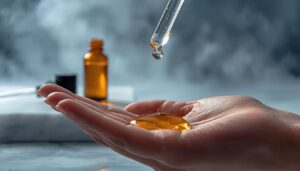
Less is genuinely more here.
For daily moisturizers, the recommended concentration range sits at 5–10% — and that’s your standard.
Pure glycerin straight from the bottle is far stronger. A few drops massaged into damp skin is your starting dose.
Dry or coarse skin types can inch up slightly, but if your face feels tacky, you’ve crossed the line. Dial back next time.
Waiting Before Applying Shaving Cream

Give it 30 seconds. That’s your ideal wait time — long enough for moisture diffusion to pull hydration into the hair shaft, short enough that nothing dries out.
Think of it as lather maturation prep: glycerin does the friction management work first, then the cream seals it in.
Skin temperature rise signals absorption. You’re ready when it stops feeling wet.
Best Technique for Even Coverage
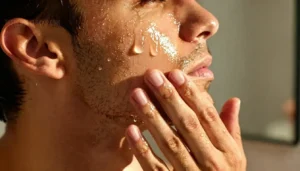
Fingers beat everything else here. Use the Damp Finger Technique — wet fingertips, a few drops, then work in Sectional Application: cheeks first, chin, then neck.
Gentle Finger Strokes with Overlapping Passes fill the gaps, especially where the grain shifts. Finish with Light Patting — don’t rub it away.
Even coverage means glycerin functions as a humectant consistently across every shaving zone.
Best Glycerin Pre-Shave Formulas
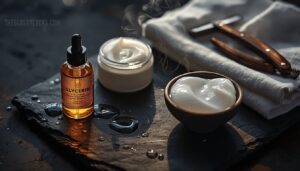
Not all glycerin pre-shave products are built the same, and the formula you choose makes a real difference. Some work better as standalone treatments, others pair beautifully with your existing soap or cream.
Here’s a breakdown of the main options worth knowing.
Pure Glycerin Versus Blended Serums
Pure glycerin is simple — one ingredient, zero surprises. Blended serums add panthenol or dimethicone for better slip feel and evaporation management, but also greater allergen sensitivity risk.
Key differences worth knowing:
- Concentration Differences — Pure glycerin runs higher; serums dilute it with carriers
- Beard Softening — Both work, blends add conditioning agents
- Slip Feel — Serums win on glide smoothness
- Allergen Sensitivity — Pure glycerin is safer for reactive skin
Glycerin Soaps and Shaving Creams
Serums give you precision, but glycerin soap and pre-shave cream options are where ingredient synergy really earns its keep. A quality glycerin soap builds foam stability fast, maintaining pH balance throughout your shave. Brands like Proraso Sul Filo Del Rasoio deliver serious glide.
As a hydrating pre-shave product, glycerin PreShave for sensitive skin costs under $2 — hard to beat for cost efficiency.
Water-soluble, Oil-free Options
Oil-free, water-soluble pre‑shave serums are worth knowing about — especially if your skin clogs easily. These glycerin pre‑shave serum formulas stay in the water phase, so there’s zero layer separation when you add lather.
You get a lightweight feel without residue.
- pH-balanced formulation keeps your acid mantle intact
- Quick-dry finish means no waiting around
- Noncomedogenic solutions for everyday shaving routines suit acne‑prone skin
Ingredients That Boost Glide and Comfort
Glycerin does the heavy lifting, but the right supporting cast makes a real difference.
Look for these additions in your glycerin-based pre-shave:
| Ingredient | Function | Skin Benefit |
|---|---|---|
| Squalane Emollient | Conditions without clogging | Non-comedogenic softness |
| Allantoin Soothing | Calms irritation | Reduces post-shave redness |
| Betaine Humectant | Attracts moisture alongside glycerin | Enhances humectants’ hydration depth |
Silicone Glide Enhancer improves slip. Niacinamide Skin Strength firms the barrier. Together with an oil-free formulation, they keep your glycerin pre-shave performing at its best.
Safety Tips for Daily Use
Glycerin is one of the gentlest ingredients you can put on your face — but a few smart habits make daily use even safer. Knowing what to watch for keeps your skin happy whether you’re shaving every morning or just a few times a week.
Here’s what’s worth keeping in mind.
Patch Testing for Sensitive Skin
Even a skin-friendly ingredient deserves a trial run. Before adding any new pre-shave product to your daily lineup, a quick patch test protects you from surprises.
- Patch Placement: Apply a small amount to your inner forearm or neck crease.
- Dilution Protocols: Use the product at its normal concentration — no need to dilute glycerin.
- Read Timing: Check at 48 hours, then again at 96 hours for delayed reactions.
- Result Interpretation & Allergen Identification: Redness, itching, or bumps mean pause and reassess; clear skin means you’re good to go.
Using Glycerin on Acne-prone Skin
If acne-prone skin is your reality, glycerin is one of the few pre-shave ingredients that genuinely works with your skin instead of against it. Its pH-balanced hydration helps skin barrier recovery without triggering acne flare mitigation concerns.
As a noncomedogenic solution for everyday shaving routines, this oil-free formulation won’t block pores or disrupt sebum regulation — and it plays well alongside topical acne medications.
Pregnancy and Breastfeeding Considerations
Pregnancy skin monitoring matters more than most people realize — hormonal moisture fluctuations can leave your skin drier or more reactive than usual.
Glycerin is pregnancy safe and breastfeeding friendly, but choose a fragrance-free formulation to minimize sensitivity risks.
postpartum barrier repair, its humectant action genuinely helps.
patch test first and rinse hands thoroughly before nursing to prevent any breastfeeding product transfer.
Avoiding Residue, Clogging, and Overuse
Less is genuinely more with glycerin pre‑shave. A few drops on a wet face is your ideal wetness level — overapplication leaves tackiness, not extra hydration.
Rinse after shaving thoroughly; glycerin’s water‑soluble nature makes cleanup easy. Rinse your blade often to handle blade debris management and minimize product buildup.
Oilfree formulation choices support noncomedogenic solutions for everyday shaving routines without clogging concerns.
Frequently Asked Questions (FAQs)
Which pre-shave soap is the best?
It depends on your priorities. Ingredient concentration, fragrance options, price point, and bar vs liquid format all shape the answer.
User reviews consistently highlight glycerin soap and glycerin bars as top-performing pre-shave soap choices.
Why is a pre-shave water soluble?
Water-soluble pre-shave blends seamlessly with your wet face, enabling Lather Integration without separation.
Glycerin’s Rapid Absorption through aquaporin-3 channels ensures Non-Residue Finish, Evaporation Prevention, and Skin pH Balance — keeping your shave clean and smooth.
What is Proraso pre-shave cream for sensitive skin?
Proraso Pre-Shave Cream Sensitive is a protective undercoat blending glycerin, oat extract, and Camellia leaf extract to soften beard hair, boost razor glide, and calm sensitive skin before shaving.
What is an astringent in a shave?
An astringent tightens skin tissue on contact — think of it as a quick-squeeze for your pores.
Alum blocks, witch hazel, and alcohol are the most common ingredients, each offering antiseptic action and minor nick control.
How should I shave if I have sensitive skin?
glycerin pre-shave routine, pick a sharp single-blade razor, shave with the grain using cool water, and follow with gentle post-shave care to support skin barrier recovery and prevent razor burn.
Should I use astringent in my aftershave?
Skip the astringent if your skin is sensitive — alcohol-based formulas trigger razor burn and strip moisture fast.
For post-shave hydration without the sting, glycerin-based balms and alcohol-free options handle post-shave redness and support skin barrier recovery gently.
Can I use glycerin before shaving my face?
Yes, absolutely.
Glycerin works as a humectant, pulling moisture into your skin and beard hair before the blade ever touches your face — making it a smart, cost-effective alternative to heavier pre-shave oils.
What is the best prep before shaving?
Wet your face with temperature-controlled water — warm, not scalding.
A pH-balanced cleanser removes excess oil.
Apply a glycerin-based pre-shave serum; this humectant floods the skin barrier with moisture, priming it for a cleaner cut.
What can I use as a pre shave?
Good options include glycerin, pre‑shave oil, pre‑shave cream, pre‑shave soap, or oil‑free pre‑shave serums.
Natural picks like Aloe Vera Gel, Witch Hazel Toner, Cucumber Water Mist, Rosemary Extract, and Honey Solution also work well.
Is glycerin good for razor bumps?
Glycerin helps reduce friction and promotes inflammation reduction, but it won’t stop ingrown hairs directly. It aids post-shave soothing and pH balance maintenance — making bumps less severe, not disappear entirely.
Conclusion
Your razor doesn’t need a fighting chance—it needs a prepared surface. That’s what glycerin as a pre-shave quietly delivers: skin that’s swollen with moisture, hair that yields instead of resists, and a blade that glides rather than drags.
No no grease, no clogged pores, no guesswork. Just basic humectant chemistry doing exactly what it’s designed to do.
One clear liquid, applied to a wet face, changes the entire rhythm of your morning shave.