This site is supported by our readers. We may earn a commission, at no cost to you, if you purchase through links. This content is for general informational and educational purposes only and is not a substitute for professional medical, dermatological, or nutritional advice.

Most people pick a wash schedule and stick with it—daily out of habit, or twice a week because someone on the internet said so. The problem is that shampooing too often strips your scalp of the sebum it needs to stay balanced, while waiting too long lets oil, sweat, and product residue create the conditions where dandruff and scalp acne thrive.
Your scalp’s sebaceous glands produce oil at a rate that’s uniquely yours, shaped by your hair type, hormones, age, and even the weather. Getting the frequency right means reading those signals instead of following a one-size-fits-all rule.
Table Of Contents
- Key Takeaways
- How Often Should You Shampoo
- Shampoo Frequency by Hair Type
- Scalp Conditions That Change Frequency
- Top 9 Shampoos for Wash Schedules
- 1. K18 Color Safe Detox Clarifying Shampoo
- 2. Redken All Soft Shampoo
- 3. OUAI Fine Hair Thickening Shampoo
- 4. Jupiter Anti Dandruff Shampoo
- 5. SEEN Fragrance Free Sensitive Skin Shampoo
- 6. Moroccanoil Scalp Balancing Shampoo
- 7. As I Am Coconut Cowash
- 8. Not Your Mothers Curl Talk Shampoo Conditioner
- 9. Briogeo Super Moisture Shampoo
- Signs Your Routine Needs Adjusting
- Frequently Asked Questions (FAQs)
- Is dry shampoo bad for folliculitis?
- Should I wash my hair less if I have alopecia?
- How often should you wash your hair if it’s fine?
- Is it good to shampoo your hair Everyday?
- How often do dermatologists recommend washing your hair?
- Is it okay if I shampoo my hair everyday?
- How often should you shampoo your hair to keep it healthy?
- What are the benefits of not washing your hair for a week?
- Is it OK to shampoo your hair 3 times?
- How often should you shampoo?
- Conclusion
Key Takeaways
- Your scalp’s oil production rate — not habit or internet advice — is the most reliable signal for how often you should shampoo, ranging from daily for visibly greasy roots within 24 hours to weekly or less for dry, thick, or coily hair.
- Washing too often strips the sebum your scalp needs, triggering rebound oil overproduction, while waiting too long lets sweat, oil, and product residue set the stage for dandruff and scalp acne.
- Hair type shapes your baseline frequency, but scalp conditions like seborrheic dermatitis, sensitivity, or color treatment can shift that schedule significantly — sometimes in opposite directions.
- External factors including hormones, season, humidity, heat styling, and workout frequency all nudge your ideal wash schedule, so treating it as fixed rather than adaptive is where most routines quietly go wrong.
How Often Should You Shampoo

There’s no single answer that works for everyone — the right wash frequency depends on your scalp, hair type, and lifestyle. A few key categories cover most people pretty well, though, and knowing which one fits you makes a real difference.
Once you know your category, finding the best shampoo for dreads that matches your scalp type takes a lot of the guesswork out of your routine.
Here’s how to figure out where you land.
Quick Answer by Scalp Oil Level
Think of this as your personal sebum rate guide: if your scalp turns shiny within 24 hours, you’re dealing with excess sebum and need a rapid oil response — wash daily. Normal scalps, where oiliness appears after two to three days, do well with a midweek schedule. Dry scalps, your oil threshold indicator sits around weekly or beyond.
Excessive oil production may indicate seborrheic dermatitis symptoms.
Daily Washing for Very Oily Scalps
If your scalp produces excess sebum quickly, resulting in a greasy appearance by morning, daily washing is appropriate—not excessive. Focus shampoo application on the roots and part lines, avoiding the lengths of your hair, and use only a minimal amount.
Prioritize a gentle scalp massage during washing to avoid irritation, followed by a lukewarm rinse to soothe the scalp without stripping natural oils.
- Apply an oil-control shampoo only at the roots, keeping ends conditioner-only
- Use a quick rinse technique to flush residue completely — leftover product accelerates oiliness
- Follow frequency guidelines tailored to oily, dry, or normal scalps, not generalized advice
- Monitor for overwashing signs like tightness or rebound greasiness, adjusting your routine as needed
Every 2–3 Days for Normal Scalps
For most people, washing every 2–3 days hits the sweet spot. Your scalp’s natural sebum spread timing means oil doesn’t usually reach problem levels until day two or three, so your hair-washing schedule doesn’t need to be daily.
During each wash, focus on massage technique and foam contact at the roots, then rinse until water runs completely clear — the thoroughness of your rinse directly affects how long your scalp stays balanced between sessions.
Weekly Washing for Dry or Thick Hair
If your hair is thick or dry, once a week is usually enough — and often the right call. Frequent washing just strips the protective oils your hair genuinely needs.
Keep these guidelines in mind:
- Use a moisture-rich shampoo to support your scalp barrier without over-cleansing
- Always finish with a low-temperature rinse to seal the cuticle
- Follow up with weekly deep conditioning to restore softness
- Apply a gentle scalp massage to lift buildup without scratching
- Follow hair-type-specific washing guidelines — balancing shampoo use and scalp moisture is what makes the real difference in determining ideal hair wash frequency and better dry hair management
Every 1–2 Weeks for Curly or Coily Hair
Curly and coily hair genuinely thrives on less frequent shampooing — ideally once every one to two weeks. Your curl structure already struggles to retain moisture, so a longer hair wash interval protects that balance.
Between washes, revitalizing curls with water and cowashing keeps definition intact.
A consistent nighttime moisture seal and mindful scalp exfoliation frequency further support scalp and hair health.
When to Adjust Your Routine
Your routine isn’t set in stone — bodies change, and so should your schedule. Watch for these signs that indicate you need to wash hair more or less often:
- Hormone fluctuations make scalp oil production unpredictable, especially during pregnancy or menopause
- Stress-induced oiliness appears fast — sometimes within a day
- Age-related sebum naturally declines, so older adults often need fewer washes
- Climate-driven wash needs shift seasonally — humidity speeds buildup
- Product buildup warnings include dullness, waxy texture, or poor lather
Shampoo Frequency by Hair Type
Your hair type is probably the single biggest factor in determining how often you should shampoo — and getting it wrong is where most people run into trouble. Fine hair and coily hair have completely different needs, and a schedule that works beautifully for one can leave the other dry, greasy, or damaged.
Hair type is the single biggest factor in shampoo frequency — get it wrong and your hair pays the price
This mismatch arises because fine hair and coily hair have completely different needs, reacting poorly to routines designed for other textures. What keeps one type healthy might strip or weigh down another.
Here’s a breakdown by hair type so you can dial in a routine that actually makes sense for yours.
Fine or Thin Hair Wash Schedule

Fine and thin hair has a faster oil absorption rate than thicker strands—less surface area means sebum travels to roots quickly. Your shampooing frequency should follow your scalp’s rhythm. Use the frequency trial method: start washing every 1–2 days, then adjust based on how your roots feel.
| Scalp Condition | Recommended Frequency |
|---|---|
| Oily within 24 hours | Every 1–2 days |
| Balanced most days | Every 2–3 days |
| Stays clean 3+ days | Every 3–4 days |
| Product residue timing issue | After each heavy styling day |
| Sensitive or dry scalp | Every 3 days with gentle cleansing ratios |
Hair type-specific washing guidelines for fine hair prioritize scalp pH balance—sulfate-free formulas cleanse without triggering rebound oil production. Avoid daily washing unless your scalp genuinely demands it; over-cleansing thin, fine hair strips moisture faster than expected.
Straight Hair and Oil Buildup

Straight strands act as a highway for sebum migration speed — oil slides from scalp to tip without curl or wave to slow it down, making root oil visibility higher than almost any other hair type. Heat styling worsens this impact, encouraging excess oil movement down the shaft.
Residue trapping from heavy products adds buildup, so a targeted oil control shampoo every 1–2 days keeps thin straight or wavy hair balanced.
On days when buildup is really getting ahead of you, understanding how oil affects hair dye results can help you time both your washes and color treatments smarter.
Dry shampoo’s role? Purely a between-wash bridge.
Medium or Semi-coarse Hair Timing

Medium or semi-coarse hair hits a sweet spot — not fine enough to go greasy overnight, not thick enough to stretch a week easily. Most people find themselves around day 2 or 3 before roots feel less fresh.
A few habits quietly shorten that window faster than expected:
- Brush distribution spreads scalp oil down the shaft, making hair look oilier sooner
- Heat tool frequency stimulates surface shine, mimicking greasiness even when buildup is minimal
- Dry shampoo timing matters — apply it before oil peaks, not after, to actually extend your wash interval
Conditioner placement is just as critical: keep it mid-length to ends only. Shower temperature plays a role too — warm water loosens oil effectively, but hot water can overstimulate the scalp.
For semi-coarse hair, every 2–3 days is a solid, evidence-backed baseline for hair-type-specific washing guidelines, though determining ideal hair-washing frequency always depends on your lifestyle and hair texture considerations.
Thick or Coarse Hair Wash Needs

Thick or coarse hair holds onto its natural oils longer, so you genuinely don’t need to wash it every other day. Every 3–4 days is a reasonable baseline for most hair texture considerations here. Prioritize scalp saturation with warm water first, then focus shampoo at the roots.
Extended conditioning on the lengths offsets dryness, while periodic clarifying clears residue removal — especially if you’re dealing with hard water management.
Wavy and Curly Hair Cleansing Intervals

Curly and wavy hair sits in a different category than thicker, coarser textures. Most wavy types thrive with washing every 2–4 days, while looser curls can stretch to every 3–6 days.
Use warm water and focus scalp massage at the roots—not the lengths. This approach maintains scalp health without stripping moisture from the hair strands.
Co-washing between shampoo days locks in moisture and preserves curl definition, ensuring your buildup reduction schedule remains effective.
Coily Hair and Moisture Preservation

Coily hair takes moisture preservation seriously — and so should you. Washing every one to two weeks prevents the brittleness caused by stripping already dry strands.
Between wash days, cowashing maintains hydration without disrupting scalp balance.
The LOC Layering method — liquid, oil sealing, then cream moisturizer — effectively locks in hydration.
Protective styling and managing heat friction further support moisture retention between cleansing sessions.
Color-treated Hair Washing Frequency

Coily hair guards every drop of moisture, while color-treated hair guards every molecule of pigment. Shade-specific schedules matter: reds fade fastest (wash every 2–4 days), while dark brunettes hold longer (4–6 days).
Follow these pigment retention guidelines:
- Observe a post-color wait of 48–72 hours before the first shampoo
- Use only color-safe alternatives that are sulfate-free and safe for dyed hair
- Finish every wash with a cool water rinse to seal the cuticle
- Limit full shampoo sessions to 2–3 times weekly to slow color fading
Scalp Conditions That Change Frequency
Your hair type sets the baseline, but your scalp condition drives how often you need to wash. An oily, flaky, or reactive scalp can shift your entire routine — sometimes dramatically.
Here’s how different scalp conditions should shape your shampoo schedule.
Oily Scalp Washing Guidelines
An oily scalp isn’t a hygiene failure — it’s your sebaceous glands working overtime. Shampooing every 2–3 days helps balance oil control without triggering rebound oiliness from overwashing.
Focus shampoo application directly on the scalp, rinse with lukewarm water, and choose a formula with a scalp pH of 4.3–5.0.
| Oily Scalp Situation | Recommended Action |
|---|---|
| Visible grease by day 2 | Wash every 2 days |
| Rebound oiliness after daily washing | Stretch to every 3 days |
| Post-workout excess oil | Rinse with lukewarm water only |
Dry Scalp Shampoo Adjustments
A dry scalp actually needs less frequent washing, not more — overwashing effects are real, stripping the moisture your scalp is already struggling to hold. Aim for every 3–4 days, using a low‑pH shampoo with a silicone‑free formula and moisturizing ingredients like ceramides.
Keep your application duration brief, follow with a lukewarm rinse, and apply a hydrating formula conditioner mid-length only for sensitive scalp care.
Dandruff Shampoo Frequency
Dandruff shampoo frequency isn’t one-size-fits-all — it’s built around severity-based scheduling. Active ingredient contact time matters more than people realize, so lather, massage, and wait before rinsing.
- Mild dandruff: 2–3 times weekly
- Moderate flaking: 3–4 times weekly during active phase
- Seborrheic dermatitis: alternate days short-term
- Maintenance tapering: drop to 1–2 weekly once clear
- Rotation with gentle shampoo: alternate on off days to prevent dryness
Sensitive Scalp Cleansing Tips
Sensitive scalps need a gentler approach across the board. Stick to a consistent routine — washing two to three times weekly is a solid starting point — and keep each session simple.
Use a lukewarm rinse, practice gentle handling with fingertips, and opt for sulfate-free formulas free of fragrance or alcohol.
Heat limitation matters too; skip high-temperature tools near your roots to avoid worsening irritation.
Scalp Acne and Buildup Control
Scalp acne is basically a follicle traffic jam — dead skin, sebum, and product buildup stacking up until something inflames.
Managing dandruff and scalp acne with targeted shampoos means reaching for salicylic acid benefits first; it clears congestion through gentle scalp exfoliation methods without stripping.
Add a pore-clearing massage during each wash, limit heavy styling products, and use clarifying shampoo timing every few cycles for thorough product buildup removal.
Sweaty Scalp After Workouts
A sweaty gym session leaves more than damp roots — sweat is like salt drying on your scalp, and that Sweat Salt Buildup triggers Sweat‑Induced Itch fast.
Sweat and scalp oil mix together, creating Humidity‑Driven Grease that worsens daily exercise impact.
For smart Gym Hair Care, a quick Post‑Workout Rinse removes residue without stripping, so you don’t need to shampoo every time.
Seasonal and Humidity-based Changes
Your wash schedule isn’t one-size-fits-all — seasons and humidity genuinely shift how fast excess sebum production happens. Humidity-driven oil builds up faster in summer, while indoor dryness adjustments matter when indoor heating dries your scalp in winter.
- Summer heat-sweat impact speeds up sweat and scalp oil, so shampoo every 1–2 days
- High humidity causes rain-induced buildup, making roots look greasy faster
- Winter indoor heating drops moisture, easing the frequency of shampooing to 2–3 times weekly
- Dry scalp guidelines shift toward gentler, less frequent washing in cold months
- Oily scalp care calls for shorter intervals whenever humidity or heat spikes
Top 9 Shampoos for Wash Schedules
Once you know your wash schedule, the next step is finding a shampoo that actually works with it. The right formula makes a real difference — whether you’re washing daily, twice a week, or somewhere in between.
Here are nine options worth knowing about, each suited to a specific hair need or cleansing routine.
1. K18 Color Safe Detox Clarifying Shampoo
Think of this as a reset button for your scalp. The K18 Color Safe Detox Clarifying Shampoo pulls out up to 99% of product buildup and 95% of sebum in a single wash — without stripping your color or leaving strands feeling like straw. It contains salicylic acid and charcoal to clear congestion, plus K18 peptide to support hair integrity throughout.
At $39, it’s a splurge, but using it just once or twice weekly makes the bottle last.
| Best For | Anyone who uses a lot of styling products, has color-treated or curly hair, or just feels like their strands need a serious refresh without the damage. |
|---|---|
| Price | $39.00 |
| Volume | 9.6 oz |
| Sulfate-Free | Yes |
| Color-Safe | Yes |
| Paraben-Free | Yes |
| Fragrance | Light neutral |
| Additional Features |
|
- Clears out nearly all buildup and grease in one wash — your hair actually feels clean, not just rinsed
- Safe for color, extensions, and curly hair, so you’re not choosing between clean and protected
- Makes other treatments (like the K18 mask) work better by giving them a clean surface to absorb into
- At $39 for 9.6 oz, it’s pricey — especially if you have thick hair and go through product fast
- Only meant for 1–2 times a week, so it won’t replace your everyday shampoo
- The scent is pretty subtle, which might feel anticlimactic for a "detox" product if you like something with more of a punch
2. Redken All Soft Shampoo
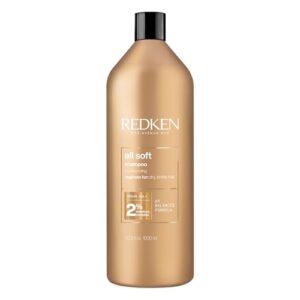
Where the K18 is all about clearing the slate, the Redken All Soft Shampoo focuses on rebuilding softness afterward — making it a valuable addition to your haircare routine. Formulated with argan oil and Redken’s Moisture Complex, it conditions while cleansing, ensuring dry or brittle hair doesn’t feel stripped post-wash.
The shampoo is safe for color-treated hair and works well for fine to medium textures. A little goes further than expected, offering great value from a 33.8 fl oz bottle priced at $56.
| Best For | Anyone with dry, brittle, or color-treated hair who wants a moisturizing shampoo that conditions as it cleans — especially those with fine to medium hair looking to cut down on extra steps. |
|---|---|
| Price | $56.00 |
| Volume | 33.8 fl oz |
| Sulfate-Free | No |
| Color-Safe | Yes |
| Paraben-Free | No |
| Fragrance | Strong floral |
| Additional Features |
|
- Argan oil and Redken’s Moisture Complex actually deliver on softness — hair feels noticeably smoother and less frizzy after each wash.
- Safe for color-treated hair, so you’re not sacrificing your highlights to stay hydrated.
- A 33.8 oz bottle lasts a long time, and a little product goes a long way — good value over time.
- At $56, it’s a real splurge compared to drugstore picks, and not everyone’s budget has room for that.
- The rich formula can build up on the scalp if you’re not careful — keep it on the lengths, not the roots.
- Strong scent is a dealbreaker for anyone sensitive to fragrance, so it’s worth a sniff before committing.
3. OUAI Fine Hair Thickening Shampoo
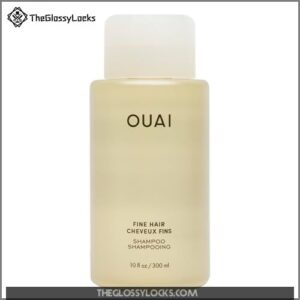
OUAI Fine Hair Thickening Shampoo takes a different angle from Redken’s softness-rebuilding approach — it’s built to give fine hair actual body before blow drying. By strengthening strands and lifting roots without added weight, it delivers noticeable volume.
The formula combines biotin, hydrolyzed keratin, and chia seed oil to fortify hair while maintaining lightness. This blend ensures roots feel elevated without sacrificing manageability.
Sulfate-free and color-safe, the shampoo suits gentle cleansing every two to three days. Its Mercer Street scent adds appeal, though those sensitive to fragrances may prefer a preliminary test.
And if you’re dyeing over green tones, a burgundy shade on a level 7–9 base masks emerald and teal beautifully without turning orange.
| Best For | Anyone with fine, flat, or color-treated hair who wants real volume and stronger strands without stripping moisture. |
|---|---|
| Price | $32.00 |
| Volume | 10 fl oz |
| Sulfate-Free | Yes |
| Color-Safe | Yes |
| Paraben-Free | Yes |
| Fragrance | Italian lemon/musk |
| Additional Features |
|
- Biotin, keratin, and chia seed oil work together to thicken and fortify without weighing hair down
- Safe for color-treated, keratin-treated, and chemically-processed hair — no sulfates, parabens, or phthalates
- Light lather with a fresh, citrus-forward scent that leaves hair feeling clean and bouncy
- At around $32, it’s pricier than most drugstore options and adds up fast with frequent washing
- The fragrance runs strong, so if you’re sensitive to scents, it might be a bit much
- Can feel slightly drying on its own — pairing it with a good conditioner is pretty much a must
4. Jupiter Anti Dandruff Shampoo
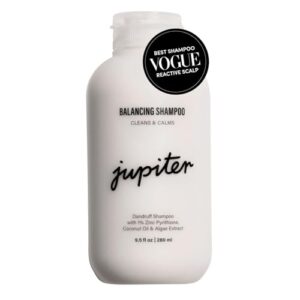
Jupiter Anti-Dandruff Shampoo targets the scalp itself, focusing on the fungal imbalance behind most dandruff with 1% zinc pyrithione, a clinically proven ingredient.
Its standout feature is the supporting cast: squalane, aloe vera, algae extract, and panthenol work to calm and hydrate the scalp while the active ingredient performs its role. The formula is sulfate-free, color-safe, and dermatologist-tested, allowing use three to four times weekly without drying out your scalp.
| Best For | People with persistent dandruff and sensitive scalps who want a clean, color-safe formula that actually treats the root cause — not just the flakes. |
|---|---|
| Price | $29.99 |
| Volume | N/A |
| Sulfate-Free | Yes |
| Color-Safe | Yes |
| Paraben-Free | Yes |
| Fragrance | Vanilla/lavender/mint |
| Additional Features |
|
- 1% zinc pyrithione tackles the fungal imbalance behind dandruff, backed by real clinical evidence
- Loaded with hydrating ingredients like squalane and aloe, so your scalp doesn’t feel stripped after washing
- Vegan, sulfate-free, and color-safe — works for most hair types without trade-offs
- Thicker texture and low lather can feel off if you’re used to foamy drugstore shampoos
- At $29.99, it’s a bigger spend than your average dandruff shampoo on the shelf
- Heavily damaged hair may still need a separate conditioner to stay in good shape
5. SEEN Fragrance Free Sensitive Skin Shampoo
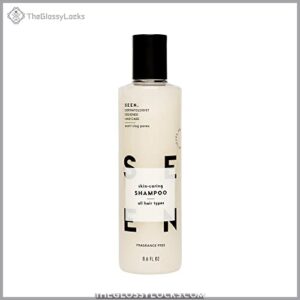
SEEN Fragrance Free Shampoo was developed by a Harvard-trained dermatologist, and that expertise is evident in its formulation. It is sulfate-free, non-comedogenic, and certified by the National Eczema Association, ensuring it is genuinely designed for sensitive scalps rather than merely marketed as such.
The formula incorporates bisabolol to soothe irritation and hemisqualane for smoothing without silicone residue, prioritizing scalp health. At $32 for 10.55 oz, it represents a considered purchase, but its specialized design justifies the investment for those with reactive scalps.
| Best For | People with sensitive, eczema-prone, or reactive scalps who want a clean, dermatologist-formulated shampoo without fragrance or harsh ingredients. |
|---|---|
| Price | $32.00 |
| Volume | 10.55 oz |
| Sulfate-Free | Yes |
| Color-Safe | Yes |
| Paraben-Free | Yes |
| Fragrance | Fragrance-free |
| Additional Features |
|
- Backed by real dermatology credentials and the National Eczema Association seal — not just marketing fluff
- Free of sulfates, silicones, parabens, dyes, and fragrances, making it safe for even the most reactive scalps
- Bisabolol and hemisqualane work together to calm irritation and smooth hair without weighing it down
- $32 for 10.55 oz is a tough sell if you’re watching your budget
- Can leave hair feeling dry or limp if you skip conditioner
- Not quite "zero-impurity" level clean, so ultra-sensitive individuals may still need to be cautious
6. Moroccanoil Scalp Balancing Shampoo
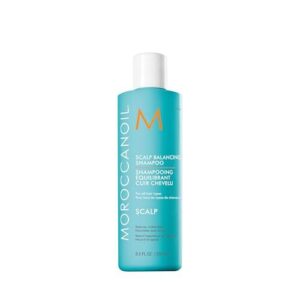
If your scalp swings between oily and irritated, Moroccanoil Scalp Balancing Shampoo is worth a close look. Salicylic acid clears excess oil and flakes without aggressive stripping, while niacinamide calms redness and discomfort you might not even realize is there.
Argan oil keeps the whole thing from feeling harsh — your hair stays nourished, not parched. It’s sulfate-free, color-safe, and priced at $30 for 8.5 oz.
The scent leans medicinal, but the results are genuinely solid.
| Best For | Anyone dealing with an oily, irritated scalp who wants a gentle daily cleanse without stripping their hair dry. |
|---|---|
| Price | $30.00 |
| Volume | 8.5 fl oz |
| Sulfate-Free | Unconfirmed |
| Color-Safe | Yes |
| Paraben-Free | Yes |
| Fragrance | Peppermint/cooling |
| Additional Features |
|
- Argan oil keeps hair feeling nourished — not squeaky or parched after washing
- A little goes a long way, so that $30 bottle lasts longer than you’d expect
- Works for all hair types, and pairs nicely with the matching conditioner for a full routine
- The scent reads more medicinal than luxurious — not what most people expect from Moroccanoil
- Not explicitly sulfate-free, so check the label if you’re sensitive
- On the pricier side per ounce, and the packaging is easy to mix up with the Hydration line
7. As I Am Coconut Cowash
Curly and coily hair needs cleansing without moisture loss—a challenge traditional shampoos often fail. As I Am Coconut Cowash steps in as a sulfate-free, paraben-free solution, blending coconut oil, castor oil, and saw palmetto to gently lift buildup while preserving hydration.
This cleansing conditioner is specially formulated for color-treated and keratin-processed hair, ensuring safety without compromising results. It spreads effortlessly, rinses cleanly, and maintains strand health.
Incorporate it into your routine every two to three days between regular shampoo sessions. This balanced approach minimizes frizz, leaving hair refreshed and manageable.
| Best For | People with curly, wavy, or textured hair who want to cleanse without stripping moisture — especially great for anyone with keratin-treated or color-treated hair. |
|---|---|
| Price | N/A |
| Volume | 16 oz |
| Sulfate-Free | Yes |
| Color-Safe | Yes |
| Paraben-Free | Yes |
| Fragrance | Coconut/tangerine |
| Additional Features |
|
- Cleans gently without sulfates or parabens, so your curls stay hydrated and frizz stays low
- Saw palmetto and phytosterols give your scalp a little extra love and may support hair growth
- Safe for keratin and color-treated hair, so no worrying about undoing your salon work
- Comes in a jar with no pump, so getting the product out can get a little messy
- Needs a thorough rinse — skip that step and you might end up with greasy-feeling hair
- Won’t cut through heavy buildup as well as a regular shampoo would
8. Not Your Mothers Curl Talk Shampoo Conditioner
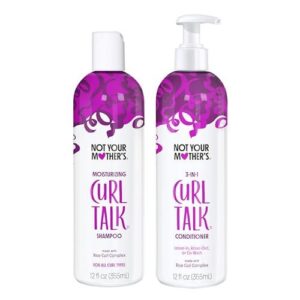
Not Your Mother’s Curl Talk Shampoo and Conditioner is a solid pick for waves, curls, and coils (types 2A–4C) that need gentle, frequent cleansing without sacrificing moisture.
The Rice Curl Complex—a blend of rice extract, keratin, and amino acids—strengthens strands while supporting curl definition.
The sulfate-free, silicone-free formula won’t strip hair of essential moisture, ensuring strands remain nourished.
At $16.99 for a 12 oz set, it’s accessible enough to use regularly without guilt.
| Best For | Curly, wavy, and coily hair types (2A–4C) who want a gentle, everyday cleanser that keeps curls defined without stripping moisture. |
|---|---|
| Price | $16.99 |
| Volume | 12 fl oz |
| Sulfate-Free | Yes |
| Color-Safe | Yes |
| Paraben-Free | Yes |
| Fragrance | Citrus-jasmine |
| Additional Features |
|
- The Rice Curl Complex (rice extract, keratin, amino acids) actually strengthens hair and helps restore curls after heat or chemical damage.
- Completely free of sulfates, silicones, and parabens—safe for color-treated hair and gentle enough for daily use.
- Eco-friendly packaging made from 75% recycled plastic, and at $16.99 for a 12 oz set, it won’t break the bank.
- The citrus-jasmine fragrance runs strong—scent-sensitive folks might find it a bit much.
- The conditioner can feel thin, especially if your curls are on the drier or coarser side—you may need to use more than expected.
- Without heavy silicones, very dry or ultra-coarse curl types might need to layer on additional moisturizing products to get full results.
9. Briogeo Super Moisture Shampoo
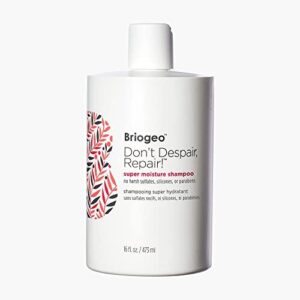
Briogeo’s Super Moisture Shampoo is basically a deep conditioner and shampoo rolled into one, making it ideal for those washing dry, damaged, or color-treated hair two to three times weekly.
The sulfate-free, silicone-free formula relies on biotin, rosehip oil, and argan oil to strengthen strands while delivering hydration during cleansing.
At $39 for 16 oz, it’s a splurge, but if breakage or brittleness is your main concern, it justifies its place in your routine.
| Best For | Anyone with dry, damaged, or color-treated hair who wants a shampoo that cleans and hydrates at the same time. |
|---|---|
| Price | $39.00 |
| Volume | 16 fl oz |
| Sulfate-Free | Yes |
| Color-Safe | Yes |
| Paraben-Free | Yes |
| Fragrance | Unspecified/disputed |
| Additional Features |
|
- Packed with nourishing ingredients — biotin, rosehip oil, and argan oil — that strengthen strands and reduce breakage over time.
- Safe for color-treated and chemically processed hair, so you’re not stripping your color every wash.
- Free of sulfates, silicones, and parabens, making it a solid pick for sensitive scalps.
- At $39 for 16 oz, it’s a real investment compared to drugstore options.
- Some users find the scent off-putting, which is a dealbreaker for fragrance-sensitive folks. If a sour or rancid smell shows up, that’s your cue the wax has expired—this guide to choosing a mustache wax for handlebar styles covers how to spot freshness and store it properly.
- Lathers less than traditional shampoos, so it might not feel like it’s doing much — even when it is.
Signs Your Routine Needs Adjusting

Your hair is pretty good at telling you when something’s off — you just have to know what to listen for. Whether you’re washing too often, not often enough, or using the wrong products, the signs tend to show up in predictable ways.
Here’s what to watch for.
Greasy Roots Soon After Washing
If your roots feel greasy just hours after washing, that’s a clear signal your routine is off. Harsh cleanser effects can trigger rapid sebum rebound — your scalp overcompensates for stripped oils by ramping up production.
Residue accumulation from heavy styling products, handling oil transfer from touching your hair, and thermal oil boost from heat styling all accelerate oil buildup on the scalp. Dialing back frequency of shampooing often breaks the rebound oil production cycle.
Dry, Brittle, or Frizzy Hair
Over-washing has the opposite effect — stripping natural oils until your cuticle care goes out the window and strands turn brittle. Poor moisture retention means raised cuticles, frizz in any humidity, and real breakage risk. If your hair feels rough despite using a hydrating formula, check your frequency first.
Porosity management and heat damage compound fast, so fewer washes often fix more than any protein strengthening treatment will.
Itchy, Flaky, or Irritated Scalp
An itchy, flaky scalp isn’t always dandruff. Seborrheic dermatitis tends to be oilier and more inflamed, while scalp psoriasis presents as thickened, red patches with intense burning.
Fungal infections spread as a rash, offering a distinct clue.
Product residue irritation and contact dermatitis triggers often resolve once the offending ingredient is identified and discontinued.
Adjusting your washing frequency, alongside the right formula, typically calms irritation quickly.
Product Buildup and Dullness
Once irritation settles, dullness becomes the next red flag worth examining. Silicone residue and hard water minerals layer onto strands over time, creating moisture barrier blockage that prevents hydrating ingredients from doing their job. Light reflection loss is usually the first sign—hair looks flat, coated, and lifeless.
Try product buildup removal with a sulfate-free clarifying shampoo every few weeks. Key symptoms include:
- Hair feels heavy or sticky right after washing
- Styles lose definition despite using fresh product
- Shine disappears even with conditioning treatments
Faster Color Fading From Over-washing
Color fading often surprises people — but it’s rarely random. Every wash strips loose dye molecules, and factors like surfactant strength, hot water, and shampoo agitation accelerate pigment loss. Cuticle lifting from heat or harsh cleansers further enables dye escape.
To minimize fading, limit washes to 2–3 times weekly, opt for sulfate-free formulas, and rinse with cool water. Avoid aggressive scrubbing during shampooing, and reduce clarifying treatments to every 3–4 washes.
| Factor | Low Risk | High Risk |
|---|---|---|
| Surfactant Strength | Sulfate-free | Clarifying/deep-clean |
| Water Temperature | Cool rinse | Hot water |
| Clarifying Frequency | Every 3–4 washes | Weekly or more |
| Shampoo Agitation | Gentle scalp massage | Aggressive scrubbing |
| Wash Frequency | 2–3x per week | Daily overwashing |
Using Dry Shampoo Between Washes
Dry shampoo is a useful tool for stretching time between washes — but only when you use it right.
Spray at the roots the moment oil appears, not after hair is already saturated. Root targeting keeps buildup contained, and proper residue management (brush it out fully) prevents that chalky, dull look.
It also delivers a quick volume boost and odor neutralization between wash days.
Co-washing and Water-only Rinses
Co-washing and water-only rinses are smart adjustment strategies when your frequency of shampooing feels like too much. These methods offer distinct advantages: co-washing promotes better moisture retention and less frizz, making it particularly beneficial for curly and thick hair care routines.
However, conditioner selection matters—choosing the wrong formula can lead to residue management issues quickly. For water-only rinses, effectiveness hinges on proper technique: using lukewarm water and a fingertip massage ensures a light refresh on low-maintenance days.
Frequently Asked Questions (FAQs)
Is dry shampoo bad for folliculitis?
Dry shampoo can worsen folliculitis. Follicle blockage from powder residue, propellant irritation, yeast overgrowth, and contact allergy all contribute to this issue.
To mitigate risks, follow a rinse protocol regularly and consider exploring dry shampoo alternatives to safeguard scalp health.
Should I wash my hair less if I have alopecia?
Not necessarily. With alopecia, scalp health matters more than washing less. Match your frequency to oil and irritation levels, using a gentle cleansing routine as your guide.
How often should you wash your hair if it’s fine?
Fine hair lies flat fast because scalp oil travels down each strand quickly. Wash every 1–2 days, using lightweight styling products and dry shampoo intervals to stretch timing without sacrificing volume.
Is it good to shampoo your hair Everyday?
For most people, washing your hair daily isn’t necessary — and can actually backfire.
Daily shampooing strips natural oils, disrupts microbiome health, and triggers rebound sebum overproduction, leaving your scalp worse off than before.
How often do dermatologists recommend washing your hair?
Dermatologists don’t agree on one universal number — but clinical guidelines generally land on every two to three days for most scalp types, with adjustments based on oiliness, texture, and lifestyle.
Is it okay if I shampoo my hair everyday?
It depends on your scalp. If yours gets visibly oily or uncomfortable within a day, daily washing is fine —
Just use a gentle, sulfate-free formula to protect your scalp microbiome and pH balance.
How often should you shampoo your hair to keep it healthy?
Most hair does well with washing every 2–3 days, but your scalp’s oil production, hair texture, and environment all shape the right frequency for you.
What are the benefits of not washing your hair for a week?
Skipping washes for a week lets natural oil benefits work quietly. Sebum conditions strands, boosts curl definition, and promotes color longevity.
It also encourages a budget-friendly routine while reducing overstripping effects.
Is it OK to shampoo your hair 3 times?
Yes, shampooing three times a week is perfectly fine for most people — it strikes a practical balance between scalp hygiene and moisture retention, especially when your lifestyle factors and hair porosity’s effects guide the decision.
How often should you shampoo?
Most people wash too often out of habit, not necessity.
Two to three times a week suits most scalps, but your ideal hair washing schedule depends on oil production, hair type, and lifestyle.
Conclusion
Think of your scalp like a houseplant—water it too much and the roots rot; neglect it and everything wilts.
Oily roots by day two? Wash sooner. Dry, tight scalp after every rinse? Pull back. Your hair’s signals guide your routine.
Your hair tells you exactly what it needs—you just have to start listening.
Once you know your hair’s porosity, you can figure out whether rice water will hydrate it or leave it weighed down—this guide on rice water for low porosity hair breaks down exactly how to tell.