This site is supported by our readers. We may earn a commission, at no cost to you, if you purchase through links.
That vibrant shade you applied this morning? It’s already starting its goodbye tour. Temporary hair dye doesn’t stick around like permanent color does—it sits on your hair’s surface, ready to wash out within days or weeks depending on what you’re using.
The real question isn’t just how long it lasts, but what actually determines that timeline. Your hair type, how often you wash, sun exposure, and the specific product you choose all play major roles in how quickly that color fades.
Understanding these factors helps you make smarter choices about which temporary dyes work best for your goals, whether you’re testing a bold new look or just adding some fun for the weekend.
Table Of Contents
- Key Takeaways
- What is Temporary Hair Dye?
- How Long Does Temporary Hair Dye Last?
- Temporary Vs. Semi-Permanent Hair Dye
- Temporary Vs. Permanent Hair Dye
- Factors That Affect Dye Longevity
- How to Make Temporary Dye Last Longer
- Best Temporary Hair Dye Products
- Temporary Hair Dye for Different Hair Types
- How to Remove Temporary Hair Dye
- Common Myths About Temporary Hair Dye
- Frequently Asked Questions (FAQs)
- Conclusion
Key Takeaways
- Temporary hair dye sits on your hair’s surface rather than penetrating it, typically lasting anywhere from one wash to two weeks depending on the product type, your hair’s porosity, and how frequently you shampoo.
- Your washing habits directly control color longevity—daily shampooing can strip 95% of temporary dye within two days, while limiting washes to two or three times weekly and using sulfate-free, color-safe products can extend vibrancy to 7-10 days.
- Hair color and condition dramatically affect results: blonde hair shows vibrant color for 3-5 shampoos with potential staining up to two weeks, while dark hair requires pre-lightening for visibility and processed hair fades twice as fast as virgin hair.
- Unlike permanent dyes, temporary formulas are ammonia-free and cause no structural damage to your hair, making them safe for frequent reapplication without waiting periods, though they can transfer color to pillowcases and clothing when damp.
What is Temporary Hair Dye?
Temporary hair dye gives you a quick, commitment-free way to switch up your look. It’s all about trying bold color without staying power or stress.
Here’s what you need to know before picking the right option for yourself.
How Temporary Hair Dye Works
Think of temporary hair color as a veil draped over your hair’s surface. The dye deposition simply coats each strand in pigment—never penetrating your hair’s core. Thanks to its gentle chemical composition and quick application process, this color deposit washes away easily.
Temporary hair color acts as a veil over your strands, coating the surface with pigment that washes away easily without ever penetrating the core
Temporary coloring brings vivid hair pigmentation without risking hair health, so you can experiment freely. This is because temporary color fades after a couple of washes.
Types of Temporary Hair Dye
When you want to play with color without strings attached, temporary hair dye offers several options: sprays for all-over impact, hair chalk for wild streaks or pastels, mascara dyes to target roots or tips, plus styling gels and foams for bold but brief results. Each temporary coloring method lets you switch up your look without long-term commitment.
The market is seeing substantial compound growth due to rising popularity.
Key Differences From Other Dyes
Unlike permanent or semi-permanent dyes, temporary hair color only coats your hair’s surface—no deep dye penetration or harsh chemical composition needed. The color intensity is bold but fleeting, fading after one or two washes.
Application ease sets it apart: you can spray, gel, or chalk on color, then wash it away, no long-term commitment required.
How Long Does Temporary Hair Dye Last?
Let’s get into how long you can expect that new hue to stick around. The answer isn’t one-size-fits-all—product type and your hair routines both play big roles.
Here’s what you need to know before you pick your next color.
Typical Duration on Hair
Color vibrancy with temporary hair dye fades almost as quickly as it appears—most products start losing their punch after one wash. That’s the beauty and the tradeoff. How long does temporary hair color last? Expect:
- Wash frequency is key
- Dye composition determines staying power
- Color fade is rapid
- Hair type impacts duration
- Removal is nearly simple
Variations by Product Type
Ever noticed how spray durability is brief, while chalk lifespan might stretch a couple days? Temporary hair color comes in many forms—sprays usually vanish after one wash, colored gels and wax effects fade with the next shampoo, and dye masks or conditioners linger three to five washes.
Each product offers its own take on dye longevity and hair color fading and removal.
How Quickly Color Fades
Almost instantly, temporary hair color starts its disappearing act. Initial Wash Fading happens now, and Colorimetric Grading shows fading gets steeper with each rinse.
Week-By-Week Trends reveal drastic loss by day seven. Heavy washing or sun exposure only speeds things up, while Residue Persistence sometimes leaves subtle tones behind.
Temporary Vs. Semi-Permanent Hair Dye
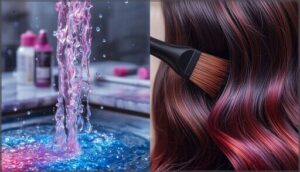
If you’re choosing between temporary and semi-permanent hair dye, it helps to know how each one plays by different rules.
The way they last, how you put them on, and how you get them out couldn’t be more different.
Here’s what sets them apart.
Longevity Comparison
Curious how Wash Durability really stacks up? Temporary Hair Dye acts like rain boots—protective but brief, slipping off in a few washes and leaving barely a trace. SemiPermanent Hair Dyes, though, burrow deeper for greater Color Stability.
Check the table below for a snapshot of Dye Penetration and Fading Speed across these Temporary vs. SemiPermanent Hair Color options.
| Dye Type | Wash Durability | Fading Speed |
|---|---|---|
| Temporary | 1–10 washes | Rapid |
| SemiPermanent | 4–28 washes | Gradual |
| Permanent | 20+ washes | Very Slow |
Application Differences
Think of Hair Dye Application as a game of precision. Temporary Hair Color, often used for At-Home Hair Dyeing, goes on dry hair—sprays offer fast, easy coverage but risk uneven distribution. Creams boost saturation for root touch-ups. The application chart below clarifies technique differences:
| Application Aspect | Temporary |
|---|---|
| Applicator | Spray/Cream |
| Prep | Dry hair |
| Time | 2–30 min |
| Coverage Control | Varies—spray vs. cream |
| Drying Adherence | Essential |
Removal Process Differences
Removing temporary hair dye is refreshingly simple—a single shampoo wipes away nearly all evidence, so color correction is rarely needed. Semi-permanent dye, in contrast, clings longer and may demand clarifying shampoo or multiple washes.
Here’s how Removal Wash Count, At-Home Methods, and more compare:
| Factor | Temporary |
|---|---|
| Removal Wash Count | 1–2 |
| At-Home Methods | Standard shampoo |
| Product Interactions | Mild, non-drying |
| Damage Potential | None |
| Professional Intervention | Rare |
Temporary Vs. Permanent Hair Dye
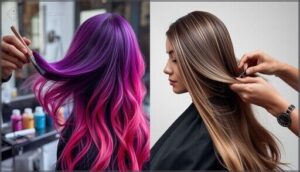
Choosing between temporary and permanent hair dye isn’t just about how bold you want to go—it’s also about how long you want your new look to last. Each option affects your hair, schedule, and freedom to switch things up in different ways.
Here’s what sets them apart.
Lifespan of Each Dye Type
Ever feel like bold hair color is here one moment, gone the next? Temporary hair dye is designed for a quick transformation, usually vanishing after just one wash. Compare that to permanent color, which sticks around for six to eight weeks. Here’s a summary to help you navigate different hair coloring options:
| Hair Dye Types | Fading Timeline |
|---|---|
| Temporary Hair Dye | 1 wash, rapid loss |
| Semi-Permanent | 4–12 washes, gradual |
| Demi-Permanent | 20–28 washes, steady |
| Permanent | 6–8 weeks, slowest |
Hair Health Impact
When you reach for temporary hair dye, you’re choosing a formula that skips harsh chemicals and leaves your hair’s structure untouched. These non-damaging dyes avoid protein loss, dryness, and high breakage rates often seen with permanent color. Even after repeated use, moisture retention and hair porosity stay steady.
Compare core impacts side by side:
| Temporary Dye | Permanent Dye |
|---|---|
| Zero structural impairment | Protein loss, porosity |
| Rare allergic reactions | Higher reaction risk |
| Safe, large pigments | Oxidative agents |
| Maintains moisture | Increased dryness |
Commitment Level
Just as temporary hair dye cares for your hair’s health, it also cares for your freedom. If you crave color reversibility, shade switching, or simply a trial period, temporary hair color options offer you control. Commitment is measured in hours, not months. Here’s how the difference feels:
| Dye Commitment | Usage Frequency | Color Reversibility |
|---|---|---|
| Short—single wash | Flexible | Complete, instant |
| Months—permanent | Infrequent | Gradual, partial |
| Weeks—semi-permanent | Moderate | Gradual, near full |
Factors That Affect Dye Longevity

Plenty of things can influence how long your hair color sticks around. If you want your new shade to last, it pays to know what really has an impact.
Here’s what matters most for keeping your temporary color looking fresh.
Hair Porosity and Texture
Think of your hair’s porosity and texture like a sponge—how much it soaks up and holds color sets the rules. Here’s what matters:
- Porous hair absorbs dye quickly, but loses it fast.
- Thicker strands mean longer color retention.
- Damaged hair can fade unevenly.
- Low porosity hair holds on to vibrancy.
Understanding porosity shapes smarter hair care choices.
Frequency of Washing
How often you wash matters more than you’d think. Daily shampooing strips 95% of temporary hair dye within just two days, while washing two to three times weekly can extend that color to 7–10 days.
Switching to sulfate-free, color-safe shampoo preserves dye retention by over 40%, and cold water holds pigment 30% longer than hot. Your washing habits directly control how vibrant your temporary hair color stays.
Exposure to Sun, Heat, and Water
Sun and heat are your color’s worst enemies. UV exposure fades your dye by 50% after just three hours outdoors, while heat styling tools used frequently accelerate fade by 35%. Swimming in chlorinated or saltwater washes out 60% of color in one session. Hard water shortens longevity to just two to three weeks.
Protect your investment with hats, UV sprays, and rinsing with cool water after pool time.
Use of Styling Products
What you apply to your hair after dyeing can make or break your color’s vibrancy. Alcohol-based sprays reduce retention by up to 25%, while oil-based products cause patchy fading. Here’s your maintenance strategy:
- Swap alcohol sprays for silicone serums, which create a gentler barrier
- Use dry shampoo between washes to preserve color and limit weekly loss to under 10%
- Apply deep conditioning treatments to extend longevity by retaining 15% more pigment
Smart product choices protect your investment.
How to Make Temporary Dye Last Longer
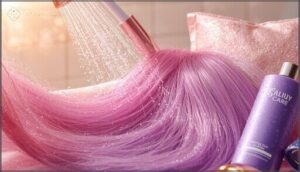
Now that you understand what affects how long your temporary dye sticks around, let’s talk about what you can actually do to stretch it out. The good news is that you’ve got real control here—small shifts in how you wash, protect, and care for your hair can make a noticeable difference.
Here’s where the practical stuff comes in.
Proper Application Techniques
Getting the application right is where temporary hair color truly shines—it’s the foundation for everything that comes next. Start with a patch test 48 hours before, since 6.4% of users experience allergic reactions when skipping this step. Segment your hair into four to six sections for even coverage, which improves color evenness by 27%. Use an applicator brush rather than your hands, follow timing precisely (usually 5–30 minutes), and rinse thoroughly to reduce scalp irritation by 15%.
| Application Step | Duration | Coverage Benefit | Tools Needed | Result |
|---|---|---|---|---|
| Patch Testing | 48 hours prior | Prevents allergic reactions | Small applicator | Safety confirmed |
| Hair Sectioning | 5 minutes prep | 27% improved evenness | Clips, comb | Uniform color |
| Product Application | 5–30 minutes | Even pigment distribution | Applicator brush | Professional finish |
| Timing Accuracy | Use timer | Prevents over-processing | Clock or phone | Best color |
| Thorough Rinsing | 3–5 minutes | 15% reduced irritation | Cool water | Healthier scalp |
Color-Safe Hair Care Practices
Think of your colored strands as a delicate canvas requiring intentional care. Start with sulfate-free shampoos, which preserve color vibrancy up to 40% longer than standard formulas. Wash just 2-3 times weekly to minimize pigment loss—each wash strips roughly 15% of color intensity.
Follow with color-safe conditioners to boost retention by 31%. When heat styling, apply protective sprays first. These practices work together, keeping your temporary hair color vibrant and your hair healthy throughout its lifecycle.
Environmental Protection Tips
Your color choice impacts more than just your look—it affects the environment too. Choose ammonia-free formulas to reduce VOCs by up to 80%, or explore natural dyes like henna for biodegradable alternatives.
Opt for sustainable packaging, use low-flow showerheads during rinsing to conserve water, and dispose of leftover dye responsibly at hazardous waste facilities.
These practices protect ecosystems while extending your color’s vibrancy through intentional, non-damaging hair care.
Best Temporary Hair Dye Products
Now that you know how to keep your color looking fresh, let’s talk about what products actually deliver results. There’s a solid range of options out there, and finding the right one for your hair type and goals makes all the difference.
Here are some of the best temporary and semi-permanent dyes that colorists and users consistently rely on.
Top-Rated Temporary Sprays
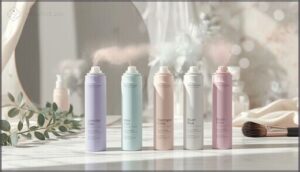
When you’re hunting for the perfect temporary hair color spray, award-winning options like Schwarzkopf Keratin Root and L’Oréal Paris Colorista lead the pack. Schwarzkopf earned 2025 Product of the Year honors for its keratin-infused formula and impeccable gray coverage, while Colorista dominates with 18% global market share.
Pastel shades drive current trends, and eco-friendly packaging now matters to over 70% of buyers. These sprays deliver vibrant results in under five minutes—perfect for root touch-ups or bold experimentation.
Popular Semi-Permanent Options
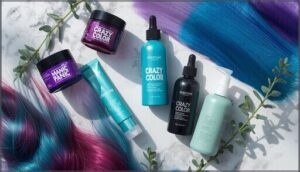
If you want color that sticks around longer, semi-permanent dyes are your answer. Brands like Manic Panic and Crazy Color deliver vibrant results lasting 6-8 weeks, while Overtone specializes in formulas for dark hair.
These ammonia-free options use direct dyes that coat your strands without penetrating them, so your hair stays healthier. Vegan formulations are widely available, and many come as conditioning masks or creams—giving you both color and care in one step.
Products for Dark or Light Hair
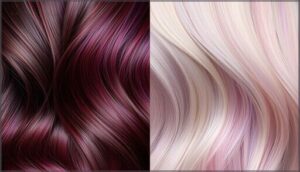
Your hair color matters when choosing temporary dyes. For dark hair, Lunar Tides Velvet and Arctic Fox deliver visible cranberry and deep tones without pre-bleaching, maintaining vibrancy for weeks. Light hair showcases L’Oréal Colorista and Splat’s pastel shades at 90% opacity after one application.
Both product types offer excellent washability efficiency—dark hair needs 6-10 washes for removal, while light hair clears in one. Safety profiles remain consistent across formulations, with conditioning agents protecting your strands.
Temporary Hair Dye for Different Hair Types
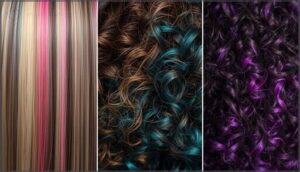
Not all hair is created equal when it comes to temporary dye—what works beautifully on one person might look completely different on someone else. Your hair’s history, texture, and natural color all play a role in how temporary color takes hold and how long it sticks around.
Let’s break down what you can expect based on your specific hair type.
Color on Virgin Vs. Processed Hair
If you’re comparing results, here’s what matters: virgin hair retains temporary dye vibrantly for 8–12 washes, while processed hair fades within 4–8 washes. That’s because virgin hair’s intact cuticles create a protective barrier, minimizing pigment loss by 30%.
Processed hair’s raised cuticles and increased porosity allow dye molecules to leach faster—up to 50% color loss within two weeks. Bleached hair absorbs dye quickly but loses it just as fast.
Understanding these differences helps you set realistic expectations and choose the right maintenance routine.
Results on Dark, Blonde, and Gray Hair
Now let’s talk about how temporary hair dye actually performs on different base colors—because your starting shade makes a huge difference in how vibrant and long-lasting your results will be.
Dark Hair Results
Temporary dyes struggle on dark hair. Without pre-lightening, bold colors like blue or green become nearly invisible, fading completely after just 2–3 washes. Only 17% of dark-haired users report visible color beyond five washes. That’s the reality: darker bases absorb pigment differently, and temporary formulas simply don’t have the staying power you’d hope for.
Blonde Hair Results
Here’s where temporary dye shines. Blonde hair shows vibrant color for 3–5 shampoos, with nearly 80% of users experiencing true saturation. Pastel shades work beautifully, fading evenly within 2–4 washes. The catch? Non-pastel colors like purple, blue, and green can stain light blonde hair for up to two weeks in 37% of cases—something worth considering before committing.
Gray Hair Results
Gray hair presents mixed results. Its porous texture initially grabs color well, achieving up to 80% coverage depending on the product. However, fade patterns are often patchy and unpredictable. About 28% of gray-haired users see complete color removal after just one shampoo with spray formulations, while semi-permanent options last 5–8 washes for more consistent coverage.
Color Retention Patterns
Here’s what the data shows across all hair types:
- Cool-toned dyes (blue, green, purple) retain 40% better color on light hair after five washes compared to dark or gray
- Warm tones vanish by the fourth wash in 59% of blonde cases but linger subtly on dark hair in 38% of cases
- Full color removal from blonde can take up to 10 washes with certain strong pigments
- Dark-haired users express 45% dissatisfaction with vibrancy, while only 15% of blonde-haired users feel the same way
This is why understanding your hair’s foundation matters. Your base color determines whether you’re getting a bold statement or a subtle tint—and how long you’ll actually see results. Knowing these patterns helps you choose the right dye type and set realistic expectations before you apply anything.
Tips for Curly, Straight, and Textured Hair
Because your hair’s structure determines how dye behaves, understanding your specific type is essential. Curly and textured hair absorbs color differently—you’ll likely need more product for visible results, but your color may last just 1–2 washes due to cuticle structure. Straight hair shows even fading over 3+ washes.
For all types, apply gel to 80% dry hair, use color-safe shampoos, and limit washing to twice weekly. Cold water and leave-in hydrators preserve both curl pattern and vibrancy effectively.
How to Remove Temporary Hair Dye

Getting temporary dye out of your hair is usually easier than you’d think, especially since it sits on the surface rather than penetrating the strands. Depending on how stubborn the color is and what you’re working with, you’ve got several approaches that range from simple to more intensive.
Let’s walk through the most effective methods to fade or remove that temporary color.
Effective Washing Methods
Getting temporary dye out requires strategy, not guesswork. The initial warm water rinse lifts about 10% of the color before you even shampoo—that’s your first advantage. Here’s your removal game plan:
- Rinse with warm water before shampooing
- Use sulfate-rich clarifying shampoos daily
- Keep water temperature warm, never hot
- Gently massage shampoo for 10 minutes
- Towel dry softly to prevent breakage
Daily washing with hot water accelerates fading noticeably within 3–5 washes, so timing matters. Skip conditioner initially—it seals color in rather than removing it. This approach strips color efficiently while protecting your hair’s integrity throughout the removal process.
Clarifying Shampoos and Treatments
When clarifying shampoos hit your hair, they work like powerful detergents that break down dye molecules sitting on your strands. These formulas contain strong surfactants and chelating agents that lift color up to 2.5 times faster than regular shampoos.
Brands like Paul Mitchell Shampoo Two accelerate fade rates considerably. Apply to damp hair for 3–5 minutes weekly to avoid excessive dryness while maximizing color removal effectiveness safely.
When to Seek Professional Help
If you’re facing uneven fading, persistent color after multiple removal attempts, or noticeable damage like breakage and dryness, it’s time to call a professional. Allergic reactions—swelling, intense redness, or blistering—demand immediate attention.
Salon colorists use specialized hair color correction techniques that succeed in 85% of cases versus under 50% for repeated home attempts. They assess your hair porosity and apply targeted hair damage and repair treatments, restoring your appearance safely while protecting strand integrity.
Common Myths About Temporary Hair Dye
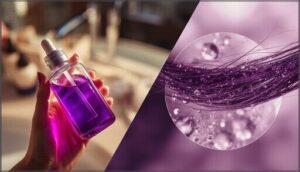
There’s a lot of misinformation out there about temporary hair dye, and it can be tough to know what’s actually true. You might’ve heard some things that made you hesitant to try it, or maybe convinced you it wasn’t worth the effort.
Let’s clear up what’s real and what’s just myth so you can make the best choice for your hair.
Color Permanence Misconceptions
Think temporary hair dye washes out after one shampoo? Not quite. Most temporary formulas actually last one to two weeks, depending on your hair type and how often you wash. Vibrant shades like pink or blue can linger even longer due to pigment properties.
Here’s the truth: fading isn’t permanent color loss. Gradual fading means you can refresh or reapply without damage. Environmental factors accelerate fading, but your hair stays in great shape for your next color experiment.
Damage and Safety Beliefs
Most people assume temporary dye damages hair like permanent color does—but that’s a misconception worth clearing up. Temporary formulas sit on your hair’s surface without penetrating the shaft, making them the safest dye option available. Here’s what you should know:
- Temporary dyes are ammonia-free and nonoxidative
- Only 1-2% of adverse reactions link to temporary products
- They’re recommended for sensitive skin and known allergies
- No statistically significant cancer risk from temporary dye use
Your hair stays healthy while you experiment boldly.
Myths About Dyeing Frequency
You can safely reapply temporary hair dye as often as you’d like—there’s no mandatory waiting period like with permanent color. Daily use won’t cause hair damage or permanent staining, and pigment won’t build up over time. Studies show your hair’s health remains unchanged after 20 consecutive applications.
The ammonia-free formula bonds superficially to your cuticle, washing out completely after shampooing. Experiment freely without guilt.
Frequently Asked Questions (FAQs)
Can temporary hair dye stain pillowcases or clothing?
Yes, temporary hair dye can stain pillowcases and clothing. Surveys show 61% of users report color transfer within the first week, especially when hair remains damp, making fabric stain severity dependent on prompt treatment.
Is temporary hair dye safe during pregnancy?
Most research shows temporary hair dye is safe during pregnancy—your body absorbs minimal amounts through the scalp.
Still, waiting until after the first trimester offers extra peace of mind for cautious parents-to-be.
Does temporary dye work on hair extensions?
Temporary dye works best on human hair extensions, delivering vibrant hair color that lasts one to three washes.
Synthetic dye options rarely absorb well, often creating patchy results regardless of application challenges.
Can you swim with temporary hair dye?
Swimming poses a real risk for temporary hair dye. Chlorine effects and saltwater impact strip color fast—often within one session.
Swim caps offer protection, but expect significant washout and require diligent post-swim care.
Will temporary dye affect future permanent coloring?
Most of the time, no—but porous or pre-bleached strands might retain pigment. Use clarifying shampoos and wait 1–2 weeks before applying permanent hair dye to avoid uneven color results.
Conclusion
Want color that reflects your current mood, not a long-term commitment? That’s exactly what temporary hair dye delivers.
Now that you know how long temporary hair dye lasts and what influences its staying power, you can confidently choose products that match your lifestyle.
Whether you’re experimenting for a weekend or testing before a bigger change, you’ve got the knowledge to make it work beautifully on your terms.
- https://www.sallybeauty.com/FAQ_HAIR_COLOR_13.html
- https://vampsalon.com/how-often-should-you-touch-up-your-hair-coloring-experts-weigh-in/
- https://xmondohair.com/blogs/thexclusive/how-long-does-semi-permanent-hair-color-last-and-tips-to-extend-it
- https://www.youtube.com/watch?v=B6c16EAvhhA
- https://partner.projectboard.world/oas/project/how-hair-porosity-affects-hair-dye-results-yzymrn