This site is supported by our readers. We may earn a commission, at no cost to you, if you purchase through links. This content is for general informational and educational purposes only and is not a substitute for professional medical, dermatological, or nutritional advice.
Your microfiber hair towel loses about 40% of its absorbency after 50 washes. By wash 100, it’s down to roughly 30% of what it started with. The drop is gradual, so you rarely notice it happening.
Instead, you notice your hair staying damp longer, or water beading on the surface instead of soaking in. That’s when the question of how often you should replace your microfiber hair towel gets real. Daily users often need a new one every 6 to 12 months, while lighter use stretches that to two years or more.
Here’s how to spot the signs, and how to make each towel last.
Table Of Contents
- Key Takeaways
- How Often Should You Replace Microfiber Hair Towels?
- Signs Your Microfiber Hair Towel Needs Replacing
- Factors Affecting Microfiber Hair Towel Lifespan
- Washing Microfiber Hair Towels Without Damaging Them
- Drying and Storage Habits That Prevent Deterioration
- When to Repurpose Your Old Hair Towel
- Frequently Asked Questions (FAQs)
- Conclusion
Key Takeaways
- You’ll usually need a new microfiber hair towel every 6 to 12 months with daily use, or every 1 to 2 years with lighter use, since absorbency drops about 40% by wash 50 and roughly 70% by wash 100.
- You can tell it’s time to replace it when water beads on the surface after a vinegar-soak cleaning, the fabric turns rough or frayed, or a musty smell returns within two washes.
- You’ll slow the wear by washing every 3 to 4 uses in 30-40°C water with unscented detergent, skipping fabric softener and bleach, and rotating two or three towels.
- You should air dry it flat or use low or no heat, store it only when completely dry, and move a worn-out towel to cleaning duty instead of tossing it.
How Often Should You Replace Microfiber Hair Towels?
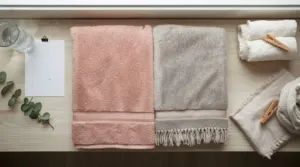
When does a hair towel actually need to go? Most people guess, and a worn-out towel stays in rotation for another year.
If you’re unsure where your own towel stands, this guide on how often to wash your hair towel helps you match the schedule to your scalp, routine, and fabric.
Replace every 6 to 12 months with daily use. Expect 1 to 2 years if you use it a few times a week and care for it well. Premium hair-specific towels with a finer weave can last 2 to 3 years or more.
Wash count shapes towel lifespan more than the calendar. Microfiber loses about 40% of its absorption capacity after 50 washes and roughly 70% after 100. The decline is gradual, so you won’t notice a sudden failure. Washing above 30°C can also cut a towel’s lifespan by about 30%, so cold water washing helps your towel last longer.
Run a performance testing check every few months. Track your towel replacement cycle with a date on the tag.
Signs Your Microfiber Hair Towel Needs Replacing
Not sure if your hair towel still has life left in it? A worn-out towel usually gives itself away in a few clear ways. Here are the three main warning signs to check for.
Reduced Absorbency Versus Product Buildup
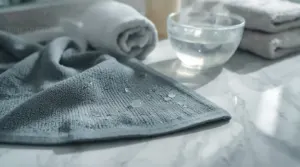
Why does your towel suddenly stop drying your hair?
Water beads on the surface, and the towel feels stiff or waxy. That’s product buildup, not wear. Strip it with a vinegar soak and hot rinses.
If it stays slick after cleaning, reduced absorbency means worn fibers. Replace regular-use microfiber towels every 6-12 months. Treat that as your towel replacement cycle.
Rough Texture and Visible Damage

Does your towel feel scratchy even after a clean wash?
Check five signs:
- Frayed edges
- Thinning fabric
- Loose stitching
- Worn patches
- Stiff, scratchy feel
If roughness lingers after washing, that’s fiber wear, not buildup. Replace it.
Fiber breakage leaves microfiber harsh, so it can’t cushion wet hair. Rub it against your palm. If it snags or feels harsh, it’ll tug wet strands.
Persistent Odors After Washing

Does your towel still smell musty after a wash?
Try one reset first. Soak it 30 minutes in a 1:4 vinegar-water mix, then rewash hot enough for the care label. Skip softener.
If the mildew smell returns within two washes, bacterial proliferation has set in deep. Odor development that survives a vinegar soak means fibers are harboring bacteria. Replace it.
Factors Affecting Microfiber Hair Towel Lifespan

A towel that looks fine, so why does one last 6 months and another three years? Usually, three factors decide it.
- Usage frequency: Daily use means 6-12 months. Few times weekly, 1-2 years. Occasional, 2-3 years.
- Material quality: Pick 80/20 polyester/polyamide. Choose 500+ GSM. Skip split-fiber if longevity matters.
- Physical wear: Don’t rub hard. Keep it out of direct sun. Never store it damp.
Rotating two towels spreads wear, so each one gets a full day to dry and recover between uses. Good towel maintenance slows fiber degradation and absorbency loss, but it can’t stop them entirely. So plan to replace regular-use microfiber towels every 6-12 months, and expect a realistic lifespan range of 6-18 months overall.
Washing Microfiber Hair Towels Without Damaging Them

Worried your wash routine is wearing out your towel faster than it should? Two habits decide most of it: how often you wash and what goes in the machine. Here’s what to get right on each.
Washing Frequency Between Hair Wash Days
How often should you wash it?
Every 3-4 uses. Wash sooner if water beads instead of soaking in.
| Your routine | Wash after | Why |
|---|---|---|
| Daily hair wash | 3-4 days | Moisture |
| Washing 2-3 times weekly | 7 days | Lower dampness |
| Heavy products | 1-2 uses | Buildup |
| Humid bathroom | 1-2 uses | Mildew |
Skipping washes brings absorbency loss; overwashing adds wash cycle impact across 6-18 months.
Detergent, Temperature, and Laundry Products
Say your towel went from thirsty to slick after one scented-detergent wash. Why? Likely detergent residue.
What’s safe? 30-40°C. Skip hot water; temperature effects above 60°C can melt fibers. Use unscented liquid detergent, add an extra rinse, and skip fabric softeners and bleach. Treat it like cleaning cloth care: wash separately, avoid lint-makers, and keep the wash cycle impact gentle.
Drying and Storage Habits That Prevent Deterioration

Does blasting a towel on high heat really dry it better? No. Heat melts synthetic fibers and kills absorbency, so any gain in drying efficiency costs you lifespan.
Chasing faster drying with high heat only scorches the synthetic fibers, trading a towel’s absorbency and lifespan for minutes saved
How should you dry it? Air dry flat. Wring out water gently first. Hang or lay it in a ventilated spot, away from direct sunlight. Need the dryer? Pick no heat or low heat. Skip dryer sheets and softeners. If you want softer, fluffier towels without chemical residue, toss a few wool dryer balls into the low-heat cycle instead of dryer sheets.
Where should it live? Completely dry only. Fold it on a clean surface. Store it in a sealed container or cabinet. Keep it away from cotton and lint. Never seal it damp.
Run a water bead test and fiber inspection under light. Keep it apart from cleaning cloth care supplies to block residue.
When to Repurpose Your Old Hair Towel
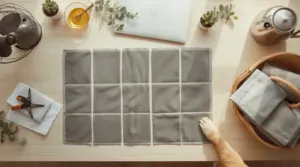
Is a worn towel ready for the trash? Not yet.
1. Retire it from hair duty. Once you notice reduced absorbency, frayed edges, stiffness or rough feel, or stains that won’t come out, stop using it on your head.
Repurposing old towels keeps good fabric out of the landfill. Cut it into squares and give each a job. Use one for dusting shelves, fans, and electronics. Use it slightly damp to polish counters and appliances. Wipe garden shears with oil to prevent rust. Dry pets’ paws after walks.
Keep cloths separate from your hair towels. Wash them apart, skip fabric softener, and label the bin so nothing gets mixed up.
Frequently Asked Questions (FAQs)
Are microfiber hair towels better than cotton for hair?
Cotton works like a sponge you have to wring out. Yes, for most hair. Microfiber soaks up to seven times its weight, cuts friction, and shortens drying time. Cotton terry often snags fragile, damaged strands.
Do microfiber hair towels cause frizz or breakage?
Usually not. Microfiber’s flat weave cuts friction, so it often beats terry cloth. Frizz and hair breakage start with rubbing, twisting, or tight, long wraps. Blot, scrunch, and detangle first.
How many microfiber hair towels should I own?
Not sure how many to buy?
Own 2 to 3 towels. Rotate them so one’s always dry. Wash every 3 uses. Allow 1 to 2 per person. Color-code towels for households. Add one for guests.
Is a more expensive microfiber hair towel worth it?
A cheap towel is a candle burning fast; a good one holds its flame. Yes, usually. Premium microfiber keeps fiber integrity past 50-75 washes, resists texture degradation, and costs less per year. Wash it cold.
Conclusion
Check the absorbency. Feel the texture. Sniff for odors. Still wondering how often should you replace your microfiber hair towel? Those three checks answer it better than any calendar.
Most daily users land between 6 and 12 months, and lighter use stretches further. Wash gently, skip fabric softener, and dry it fully between uses to slow the wear.
When the towel finally quits, don’t just toss it. Move it to cleaning duty, then start fresh.