This site is supported by our readers. We may earn a commission, at no cost to you, if you purchase through links.

Your hair looked fresh yesterday morning. By afternoon, it’s already clinging to your scalp like you haven’t showered in days. This isn’t bad hygiene—it’s the reality of having straight fine hair, where oil races down each strand with zero curl pattern to slow it down.
Most people with your hair type end up in a frustrating cycle: wash daily to avoid looking greasy, but constant washing strips your scalp and triggers even more oil production.
The truth is, there’s no one-size-fits-all answer to how often you should wash straight fine hair. Your ideal schedule depends on your scalp type, lifestyle, and how you’re actually washing it. Get these factors right, and you can break the grease cycle without living in the shower.
Table Of Contents
- Key Takeaways
- How Often Should You Wash Straight Fine Hair?
- What Makes Straight Fine Hair Unique?
- Key Factors Affecting Washing Frequency
- Best Washing Techniques for Straight Fine Hair
- Tips to Extend Time Between Washes
- Maintaining Healthy Straight Fine Hair
- Frequently Asked Questions (FAQs)
- Can I use regular conditioner on my fine hair?
- How can I add volume to my straight fine hair?
- Is it necessary to use dry shampoo on fine hair?
- Can I use hot tools on my straight fine hair?
- What should I avoid when using products on my fine hair?
- Can I train my hair to need less washing?
- Does water hardness affect fine straight hair?
- Should I wash differently during winter months?
- Can overwashing cause permanent hair thinning?
- Do hair supplements reduce oiliness in fine hair?
- Conclusion
Key Takeaways
- Wash straight fine hair 2-3 times per week as your baseline, adjusting up to 4 times for oily scalps or down to twice weekly for dry scalps—your ideal frequency depends on how fast oil slides down your smooth strands.
- Apply shampoo only to your scalp (not lengths) and conditioner only to mid-lengths and ends (never roots) to prevent the flat, greasy look that kills volume in fine hair.
- You can’t actually train your scalp to produce less oil since sebum production is controlled by hormones and genetics, but you can manage oiliness between washes with dry shampoo and strategic styling.
- Overwashing backfires by stripping natural oils and triggering your scalp to overproduce sebum as compensation, so cutting back by even one or two days helps restore your scalp’s natural balance.
How Often Should You Wash Straight Fine Hair?
If you’ve got straight fine hair, you’re probably tired of that greasy look showing up way too soon after wash day. The truth is, your hair type needs a specific approach that balances cleanliness with keeping your strands healthy.
Let’s break down exactly how often you should be washing and what signs tell you if you’re getting it right.
Recommended Washing Frequency
Most people with straight fine hair thrive on washing 2 to 3 times per week—that sweet spot where your scalp stays clean without overdoing it. Your ideal washing schedule depends on your hair type and lifestyle, but this frequency keeps hair oil balanced and scalp health strong.
- Oily scalps may need up to 4 washes weekly, especially during humid seasons
- Normal scalps do best with every-other-day washing to maintain hair hygiene
- Dry scalps can stretch to twice weekly, preventing unnecessary stripping
Why Fine, Straight Hair Gets Greasy Quickly
Your fine hair gets greasy quickly because of how sebum production works with your hair texture. Those thinner strands have less surface area, so oil from your scalp travels down each shaft faster than it would on coarser hair.
If you’re tempted to stretch washes by using body wash as shampoo, that can actually make greasiness worse since body wash isn’t formulated to handle scalp oil properly.
Straight hair makes this worse—there’s no curl pattern to slow oil absorption or trap grease at the roots.
This means oil buildup happens within 24 to 48 hours, making washing frequency essential for grease management and scalp health.
Choosing the right hair color for thin fine hair can also help create volume and texture while keeping your scalp routine manageable.
Signs You’re Washing Too Often or Not Enough
Knowing whether you’ve got your wash cycle right comes down to reading your scalp balance and moisture levels. Overwashing strips oil regulation, causing your scalp to overproduce sebum—creating rebound greasiness. Underwashing leads to visible oil buildup, flat roots, and sometimes odor.
Your hair type and porosity matter here. If your straight hair feels dry yet looks greasy, or your washing frequency leaves you uncomfortable, it’s time to adjust.
What Makes Straight Fine Hair Unique?

Your hair has its own personality, and straight fine hair plays by different rules than thick or curly types. Understanding what sets it apart helps you take control of your routine instead of fighting a losing battle.
If you’re wondering how often you should wash your hair with this texture, the answer depends more on your environment and activity level than a one-size-fits-all schedule.
Let’s break down the three key factors that make your hair behave the way it does.
Hair Shaft Structure and Oil Distribution
Your hair shaft has three layers—the outer cuticle, the cortex beneath, and sometimes a medulla core. Cuticle integrity affects oil penetration, while hair porosity and cortex layers determine how quickly your strands absorb or repel that oil, influencing your hair texture and type’s oil control needs.
If grey strands are showing up earlier than you’d like, choosing the best shampoo to reduce grey hair means finding formulas that work with your cuticle structure and porosity level.
When your scalp sebum travels down straight hair, it glides faster than on curly types because there’s no bend to slow it.
That’s why sulfate-free shampoos for dry hair work so well for curly textures—they clean without stripping the oils that take longer to distribute.
Common Challenges for Fine, Straight Hair
You’ll likely notice your straight fine hair looks greasy by day two—sometimes even sooner. That’s because fine hair has more strands per square inch, creating extra surface area for oil to coat.
Your lengths go limp fast, and every styling product shows up like a neon sign. Breakage happens easily when you brush dry, so your hair care routine and scalp health need constant attention for better oil control.
How Hair Thickness Influences Washing Needs
Generally, hair thickness dictates how fast oil travels down your strands. Your fine straight hair shows greasiness faster because oil slides easily along the smooth shaft, while thicker hair holds it closer to the roots.
This directly impacts your washing frequency and entire hair care routine.
- Oil distribution happens quicker on fine hair, shortening time between washes
- Scalp sensitivity increases when fine strands can’t mask buildup or flaking
- Hair porosity stays lower in straight hair, affecting how products rinse clean
Key Factors Affecting Washing Frequency

Your straight fine hair doesn’t exist in a vacuum. Several key factors determine whether you need to wash daily or can stretch it to every other day.
Let’s break down what really matters when you’re figuring out your perfect washing schedule.
Scalp Type (Oily, Normal, Dry)
Your scalp type is the single biggest factor in determining your hair washing frequency. If you’ve got an oily scalp, sebum production runs two to three times higher than normal, meaning you’ll likely need to wash every 1–2 days to keep those greasy roots at bay and maintain volume at the crown.
A normal scalp produces balanced oil that distributes evenly along your hair shaft. You can usually stretch washes to every 2–3 days without looking greasy. The key is listening to your scalp—if it feels comfortable and your hair looks fresh, you’ve found your sweet spot.
Dry scalps produce less sebum, which can lead to tightness and flakiness if you wash too often. Try extending to every 3–4 days and look for hydrating, sulfate-free formulas that won’t strip away what little moisture you’ve got. Over-cleansing a dry scalp actually worsens flakiness and irritation, so less is more here.
Here’s something interesting: washing an oily scalp too frequently can backfire. Your scalp might ramp up oil production to compensate for being stripped too often. That’s why scalp pH balance matters—keeping it around 5.5 aids natural oil regulation without triggering extra sebum production.
Overwashing oily hair backfires—your scalp compensates by producing more oil, so maintaining a pH of 5.5 helps regulate sebum naturally
For oily scalps, a clarifying shampoo once or twice weekly removes buildup without over-drying. If you’ve got a dry scalp, gentle scalp exfoliation occasionally helps remove dead skin cells, but don’t overdo it. Hair porosity also plays a role—fine straight hair usually has lower porosity, meaning oils sit on the surface rather than absorbing, making oily scalps look greasier faster.
Lifestyle and Daily Activities
Your daily routines directly shape your washing schedule. If you work out regularly, sweat management means you’ll likely rinse or wash more often—even a quick water rinse helps remove salt buildup.
Occupational hazards like dusty job sites or smoky kitchens accelerate oil and grime accumulation on straight hair.
Product layering with styling gels or serums also demands more frequent cleansing to prevent buildup that weighs down fine strands.
Climate and Environmental Exposure
Where you live changes everything about your wash schedule. Humidity effects ramp up oil production fast, while air pollution coats strands with grime that demands more frequent cleansing.
- UV damage breaks down protective oils, leaving your scalp health vulnerable to dryness
- Water quality matters—hard water creates mineral buildup that alters hair type behavior
- Seasonal shifts swing your climate needs from parched winter scalp to summer sweat
- Coastal salt air accelerates greasiness, shortening time between hair washing sessions
Adapt your hair maintenance routine when your environment shifts.
Product Usage and Buildup
Your hair products stack up like layers of paint, and product buildup weighs down fine strands fast. Silicone effects from regular conditioner create hair residue that dulls your shine, while leave-in formulas demand more frequent washes.
Sulfate impact cuts both ways—clarifying shampoos strip buildup monthly, but overuse triggers rebound oil. Switch to sulfate-free shampoo for gentler hair care between deep cleans.
Best Washing Techniques for Straight Fine Hair
Knowing how often to wash is only half the battle. The way you wash your straight fine hair matters just as much as the frequency.
Let’s break down the techniques that’ll keep your hair clean without weighing it down or stripping it bare.
Choosing The Right Shampoo and Conditioner

You need lightweight, sulfate-free formulas that won’t weigh down your strands. Look for shampoos around pH 5.5 to support scalp health and your natural barrier. Skip heavy conditioners—choose “weightless” or silicone-free options that prevent product buildup.
For straight fine hair, clear shampoos work better than creamy ones. Add a clarifying treatment weekly to keep your hair fresh without overwashing.
Proper Scalp Cleansing Methods
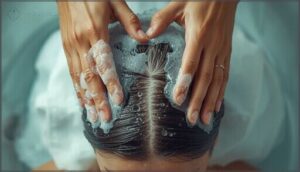
Once you’ve picked the right shampoo, how you use it matters just as much. Apply product directly to your wet scalp—not your lengths—and massage gently for about 60 seconds. This scalp massage helps balance oil and boosts circulation. Use warm water, never hot, to protect your scalp health and maintain proper pH levels. Rinse thoroughly to avoid buildup.
- Focus shampoo only on your scalp, letting rinse water cleanse your lengths naturally
- Massage with rotating fingertips for 60 seconds to redistribute sebum and improve oil balance
- Wash 2-3 times weekly for most scalp types, adjusting based on your activity level
- Try scalp exfoliation once or twice monthly to gently remove dead skin cells
- Pat dry with a microfiber towel—never rub vigorously—to prevent frizz and irritation
Conditioning Tips for Fine Hair

Your scalp is clean—now comes the tricky part. Conditioner for fine hair demands restraint. Choose lightweight formulas and apply only to mid-lengths and ends, skipping roots entirely to prevent that flat, greasy look.
Rinse thoroughly with cool water to seal cuticles and block product buildup. This hair moisture balance keeps strands soft without sacrificing volume, giving you gentle detangling power and healthier hair overall.
Avoiding Common Washing Mistakes

Even with the right products, missteps can sabotage your hair care routine. Watch for these overwashing effects that lead to scalp irritation and hair breakage:
- Hot water opens cuticles, causing sulfate damage and stripping natural oils your straight hair needs.
- Skipping thorough rinses leaves residue buildup that weighs down fine strands.
- Daily washing triggers oil overproduction, disrupting your ideal washing schedule completely.
Tips to Extend Time Between Washes

You don’t have to wash your hair every day just because it gets a little oily. There are smart ways to stretch your routine without your hair looking greasy or lifeless.
Here’s how to keep your fine, straight hair fresh between washes.
Using Dry Shampoo Effectively
Dry shampoo is your secret weapon between washes, but you’ve got to use it right. Spray it on your roots about 2 to 3 inches from your scalp—not closer—to avoid product buildup.
Let it sit for a minute or two before brushing through. This gives the formula time to absorb oil and refresh your straight hair without weighing down those fine strands.
Styling Tricks to Manage Oiliness
Strategic styling can be your best ally in controlling oil buildup between washes. Apply lightweight, oil-control products and keep heavy silicones away from your scalp to prevent product buildup.
Use volumizing powders at the roots to lift straight hair while absorbing excess oil. Cool water rinses help reduce oily hair production, and matte-finish styling products work wonders for hair care without triggering that greasy look.
Brushing Techniques for Oil Distribution
Brushing your straight hair the right way can work wonders for oil balance between washes. A soft-bristle brush moves natural oils from scalp to ends, keeping your hair texture smooth without triggering excess oil production.
- Brush once or twice daily using gentle, controlled strokes from roots to tips
- Choose natural-bristle tools that respect your hair type and minimize breakage
- Time your brushing sessions for 2–3 minutes to encourage even distribution patterns without overstimulating scalp stimulation
This simple hair care habit extends your hair washing schedule naturally.
Maintaining Healthy Straight Fine Hair

Getting your washing frequency right is just the start. Your fine, straight hair needs a complete care strategy that protects it from damage while keeping it strong and healthy.
Let’s cover the essentials that’ll help you maintain gorgeous hair between washes and beyond.
Preventing Damage From Overwashing
Overwashing strips your straight hair of natural oils, throwing off scalp balance and triggering excess oil regulation as your skin overcompensates. Cutting back by just one or two days can improve moisture retention and strengthen your hair’s natural barrier.
Switch to gentle cleansing with sulfate-free formulas and lukewarm water—your washing schedule matters, but so does how you wash. Condition mid-lengths to ends only to avoid weighing down fine strands.
Essential Hair Care Products
Your hair care arsenal needs five essentials: a sulfate-free shampoo that cleanses without stripping, a lightweight conditioner that won’t flatten your strands, and a silicone-free leave-in or hair serum for shine.
Add a clarifying shampoo for monthly buildup removal and a heat protectant before styling. These hair products work together to keep fine hair healthy between washes.
Nutrition and Hydration for Hair Health
Think of your body as your hair’s manufacturing plant. What you eat and drink directly impacts hair health and hair growth from the inside out.
Proper Hydration Levels keep your scalp balanced, while Vitamin Balance and Hair Minerals like iron and zinc prevent Nutrient Deficiency that leads to shedding. Add Omega Fatty acids from fish or nuts for stronger strands.
Your hair nutrition matters as much as your hair hygiene routine. Understanding the importance of methodological rigor can also help in evaluating the scientific studies on hair care.
When to Adjust Your Hair Washing Routine
Your body fuels hair growth, but your scalp signals when to switch gears on your washing schedule. Notice persistent oiliness despite following your ideal washing schedule? Bump up frequency. Seeing flaky dryness or irritation? Pull back.
Seasonal changes mess with oil balance too—summer humidity demands more washes than winter dryness.
Watch for product buildup dulling your straight hair maintenance routine, then adjust accordingly.
Frequently Asked Questions (FAQs)
Can I use regular conditioner on my fine hair?
You can, but lightweight formulas work better. Regular conditioner often weighs down fine hair and creates product buildup.
Apply sparingly to mid-lengths and ends only, skipping your scalp to maintain volume and scalp balance.
How can I add volume to my straight fine hair?
Want more lift without the weight? Try volumizing shampoo and root-lifting spray for serious boost.
Blow-dry upside down with a round brush, then finish with texturizing powder at your crown for instant hair volume enhancement.
Is it necessary to use dry shampoo on fine hair?
Dry shampoo isn’t necessary, but it’s a lifesaver for fine hair. It absorbs oil between washes, adds volume, and buys you time. Just don’t overuse it—your scalp still needs regular cleansing.
Can I use hot tools on my straight fine hair?
Yes, but stick to 300°F or lower—your finer strands can’t handle the heat like thicker hair. Always spray on a heat protectant first and limit hot tool sessions to once weekly.
To minimize damage, understand the importance of using heat protectant products when styling with heat.
What should I avoid when using products on my fine hair?
Skip heavy formulas and silicone-rich conditioners that flatten your hair. Avoid over application and layering mistakes that create product buildup—less is more with sulfate-free shampoo.
Watch for high alcohol content in sprays, which can cause hair damage.
Can I train my hair to need less washing?
You can’t actually train your scalp to produce less oil—sebum production is controlled by your hormones and genetics, not your washing schedule.
What changes is how you style and manage oiliness between washes.
Does water hardness affect fine straight hair?
Water hardness absolutely matters for your hair type. Hard water effects include mineral buildup that weighs down straight hair and reduces volume.
Fine strands show dullness faster because calcium deposits cling to thinner hair shafts more noticeably.
Should I wash differently during winter months?
Winter air is thirsty—it’ll steal every bit of moisture from your scalp.
You might need to wash less often and switch to richer conditioners to lock in hydration and protect your fine straight hair.
Can overwashing cause permanent hair thinning?
Good news: overwashing won’t cause permanent hair thinning. You might see temporary shedding from scalp irritation or breakage from rough handling, but your hair density stays intact once you adjust your routine.
Do hair supplements reduce oiliness in fine hair?
Hair supplements won’t dial down oil production in fine hair. They support hair growth and scalp health, but topical treatments like zinc pyrithione shampoos work better for managing sebum regulation and oil control methods.
Conclusion
You might think figuring out how often you should wash straight fine hair means settling for greasy roots or damaged strands. It doesn’t. Once you understand your scalp’s oil production and match your routine to your lifestyle, you’ll stop fighting your hair type and start working with it.
Your wash schedule isn’t about following rules—it’s about reading what your hair actually needs. That shift changes everything.