
This site is supported by our readers. We may earn a commission, at no cost to you, if you purchase through links.
Your hair dryer breaks on a Tuesday morning, and suddenly you’re forced to rediscover what humans did for thousands of years before blow dryers existed. Air drying sounds simple enough—just let your hair do its thing, right? Wrong. Without the right approach, you’ll end up with a frizzy, flat mess that makes you want to reach for that dryer again.
The truth is, mastering how to air dry your hair isn’t about doing less—it’s about doing different. Your hair type, the products you choose, and even how you squeeze water from your strands all determine whether you get smooth, defined results or a tangled disaster.
Once you understand the techniques that work with your natural texture instead of against it, you’ll wonder why you ever needed heat styling in the first place.
Table Of Contents
- Key Takeaways
- Preparing Your Hair for Air Drying
- Proper Towel Drying Techniques
- Top 3 Products for Air Drying
- Air Drying Techniques by Hair Type
- Preventing Frizz and Maintaining Results
- Frequently Asked Questions (FAQs)
- Can I air dry my hair overnight?
- How can I prevent frizz when air drying?
- What products should I use for air drying?
- How long does it take for my hair to air dry?
- How can I enhance my hair’s texture while air drying?
- How long does air drying usually take?
- Can I air dry color-treated or bleached hair?
- What if my hair smells bad when air dried?
- Should I brush my hair while its air drying?
- Does air drying work in cold or winter weather?
- Conclusion
Key Takeaways
- Using sulfate-free shampoo, proper conditioning, and a wide-tooth comb sets your hair up for smooth, frizz-free air drying.
- Microfiber towels and gentle blotting or squeezing prevent breakage and frizz, while sectioning helps hair dry evenly.
- The right products—like curl cream, microfiber wraps, and satin pillowcases—boost definition, reduce frizz, and protect your hair overnight.
- Air drying techniques should match your hair type, and keeping hands off while drying is key to maintaining texture and minimizing breakage.
Preparing Your Hair for Air Drying
Air drying isn’t just about skipping the blow dryer and calling it a day. Your hair needs the right foundation to dry smooth and frizz-free on its own.
That’s why using the right frizz-fighting products can make all the difference between effortless waves and a tangled mess.
Here’s how to prep your strands so they can handle the journey from wet to gorgeous without any heat.
If you’re planning to switch up your color soon, check out whether you can dye your hair after bleaching to keep your strands healthy through the process.
Cleanse and Condition Properly
The foundation of gorgeous air-dried hair starts in the shower, where what you use—and how often—makes all the difference between natural waves and a frizzy mess. Switch to sulfate-free shampoo to preserve your natural oils and maintain moisture balance. Skip harsh hair clarifying products for gentle cleansing instead.
If frizz is still showing up despite using the right products, you might need to adjust your washing routine or styling technique—here’s how to get rid of frizzy hair for good.
- Condition thoroughly, focusing on mid-lengths to ends for ideal moisture
- Apply a leave-in treatment while hair’s still damp to accentuate natural texture
- Wash only once or twice weekly to protect your hair’s moisture balance
Detangle With a Wide-Tooth Comb
Once your hair’s properly conditioned, detangling comes next—and your tool choice matters. Grab a widetooth comb and start at the ends, working your way up to roots.
This gentle detangling method reduces hair breakage by distributing pressure evenly across each strand. The wider teeth spacing glides through knots without snagging, protecting your natural texture while you prep for airdry success.
Proper Towel Drying Techniques
How you dry your hair after washing can make or break your air-drying results. The wrong towel or rough handling creates frizz and disrupts your natural texture before it even has a chance to form.
Here are three essential towel-drying techniques that’ll set you up for smooth, defined hair.
These methods help you dry your hair without causing damage while preserving your natural curl pattern and preventing frizz.
Use a Microfiber Towel

Switch to a microfiber towel if you’re serious about protecting your natural texture while air-drying. These specialized towels absorb water 2–3 times faster than cotton, cutting your drying time by 30–50 percent. Here’s why they’re game-changers:
- Finer fibers create less friction on your cuticles
- High absorbency removes moisture without rough handling
- Lightweight material stays soft after multiple washes
- Gentle weaving preserves your hair’s integrity
Choose one with a tight weave for maximum microfiber towel benefits.
Blot and Squeeze, Don’t Rub

Once you’ve got your microfiber towel, master the technique. Pat your hair gently from mid-length to ends—never rub or twist. Rubbing lifts the cuticle and creates instant frizz, while gentle blotting preserves your natural texture.
Squeeze sections lightly to release water without pulling at the roots. This squeeze technique cuts breakage risk and keeps curls intact, making frizz control smooth as you air dry.
For even better results overnight, try a nighttime styling routine for curly hair that protects your curls while you sleep.
Section Hair for Even Drying
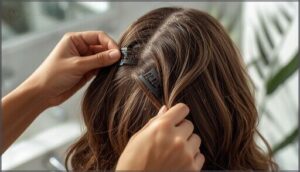
Break your hair into 1–2 inch subsections using clips—this airflow management trick is essential for moisture control across all hair textures. Smaller sections expose more surface area, so dense or curly hair dries evenly without those frustrating damp spots.
Secure each part away from your face, and you’ll notice how much faster your natural texture emerges with these simple hair sectioning and air drying techniques.
Top 3 Products for Air Drying
You don’t need a cabinet full of products to nail the air-dry routine. The right tools make all the difference between frizzy chaos and smooth, defined results.
Here are three game-changers that’ll help you ditch the heat tools for good.
1. Marc Anthony Curl Defining Hair Cream
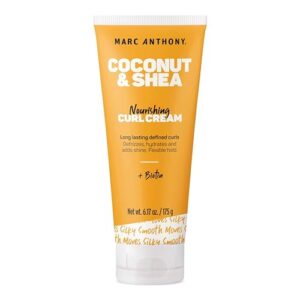
Looking for a styling cream that won’t betray your curls? Marc Anthony Curl Defining Hair Cream delivers serious curl definition without the crunch.
This $9.99 gem blends coconut and shea butter to boost hair hydration while you air dry. Apply it to damp hair, scrunch gently, and let your curls do their thing.
The sulfate-free formula enhances curl enhancement without weighing down your texture. Just keep in mind—if you’ve got fine hair, this product review comes with a heads up that it might be too rich for your strands.
| Best For | Anyone with curly, wavy, or textured hair who wants frizz control and bouncy, defined curls without the stiff, crunchy feel. |
|---|---|
| Hair Type | Curly, wavy, dry, damaged |
| Primary Benefit | Reduces frizz, adds shine |
| Material | Coconut and shea butter |
| Usage | Daily use on damp hair |
| Care | Apply to wet/damp hair |
| Suitable For | Men and women |
| Additional Features |
|
- Coconut and shea butter combo hydrates curls and adds natural shine without greasiness
- Sulfate-free and paraben-free formula is gentle enough for daily use
- Budget-friendly at $9.99 for nearly 6 ounces of product
- Can weigh down fine or thin hair types
- Coconut scent might be overpowering for some users
- Curl hold and definition results vary depending on your specific hair texture
2. CZZXI Microfiber Hair Towel Wrap
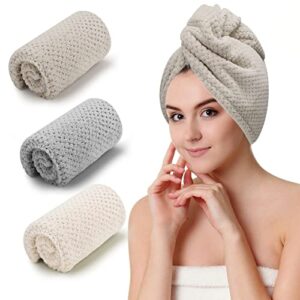
Ditch that scratchy cotton towel—it’s working against you. The CZZXI Microfiber Hair Towel Wrap delivers exceptional hair absorbency that cuts drying time without roughing up your cuticle.
At under $10, this microfiber towel uses ultra-fine fibers to pull moisture from your strands efficiently, making it essential for frizz reduction during your air dry routine.
The secure button closure keeps everything in place while you move around. Just remember, if your hair reaches past your elbows, you’ll want to check the 24.8-inch dimensions before committing.
| Best For | Anyone with curly, wavy, or frizz-prone hair who wants faster drying without heat damage—especially if you’re working with shoulder-length or shorter hair. |
|---|---|
| Hair Type | All hair types |
| Primary Benefit | Prevents frizz, reduces damage |
| Material | Microfiber |
| Usage | Post-shower, travel, daily |
| Care | Easy to clean |
| Suitable For | All hair types |
| Additional Features |
|
- Ultra-absorbent microfiber pulls water out quickly, cutting down your drying time significantly compared to regular towels
- Gentle on hair cuticles, which means less frizz and breakage during your post-shower routine
- Affordable option under $10 that includes a secure button closure to keep the wrap in place while you get ready
- Buttons may come loose or fall off after multiple washes and uses
- The 24.8-inch length won’t fully cover very long hair (past elbow-length)
- Some users find the wrap doesn’t stay secure on their head shape, requiring readjustment
3. Kitsch Satin Pillowcase for Hair and Skin
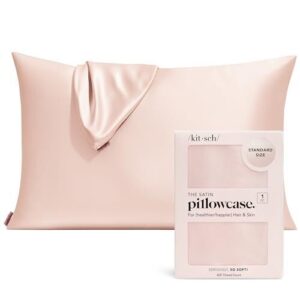
Your air dry efforts don’t stop when your head hits the pillow. The Kitsch Satin Pillowcase transforms overnight hours into part of your hair care strategy by cutting friction that undoes your daytime work.
Satin benefits include less breakage and fewer tangles compared to cotton. The smooth surface promotes skin health too, reducing moisture loss while you sleep.
At standard size with a zipper closure, this machine-washable option delivers better sleep quality without the silk pillowcase price tag—making it essential for serious hair maintenance.
| Best For | People who want to protect their hair from breakage and reduce facial creases while they sleep without spending a fortune on silk. |
|---|---|
| Hair Type | All hair types |
| Primary Benefit | Reduces frizz and tangles |
| Material | Satin |
| Usage | Overnight during sleep |
| Care | Machine washable |
| Suitable For | Hair and skin care |
| Additional Features |
|
- Smooth satin fabric cuts down on friction, helping prevent tangles, frizz, and breakage overnight
- Zipper closure keeps the pillowcase secure so it won’t slip off while you move around in your sleep
- Machine washable and wrinkle-free, making it easy to care for compared to delicate silk options
- Satin can feel more delicate than cotton and may wear down faster if not washed carefully
- Only comes in standard/queen size, so it won’t work for king or specialty pillows
- Doesn’t specifically mention being hypoallergenic, which might matter if you have sensitive skin or allergies
Air Drying Techniques by Hair Type
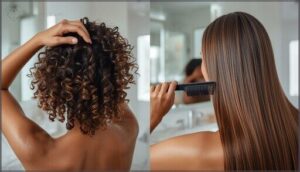
Your hair type changes everything regarding air drying successfully. What works for tight curls won’t give straight hair the same results, and fine hair needs a completely different approach than thick, textured strands.
Here’s how to air dry based on your specific hair type.
Methods for Curly and Wavy Hair
Your curls deserve techniques that work with their natural texture, not against it. Master these methods for curly and wavy hair that air dry without turning into a frizz disaster:
- Plopping Techniques – Wrap damp hair in a microfiber towel or cotton T-shirt to compress curls while drying, enhancing curl definition and reducing frizz.
- Scrunching Methods – Cup sections upward toward your scalp to activate uniform wave clumps and encourage bounce.
- Gel Casting – Apply strong-hold gel to damp curls, let it form a protective shell while air drying, then scrunch out the crunch for soft, defined spirals.
- Root Clipping – Place clips at your crown before air drying to lift hair away from the scalp, preventing that dreaded flat-top look.
Understanding curly hair techniques is key to achieving beautiful, bouncy curls.
Methods for Straight and Fine Hair
Straight hair loves simplicity, but fine strands need strategic care to avoid that limp, lifeless look. Since your hair reaches 60-70% dryness within just 10 minutes, timing matters. Apply a lightweight leave-in conditioner while damp—think pea-sized amounts to fight frizz without weighing things down. A clarifying wash weekly strips buildup that makes fine hair flop.
Your straight hair styling game changes when you work smarter, not harder—fine hair care means less product, better results.
| Air Drying Tips | Lightweight Products | Frizz Control Methods |
|---|---|---|
| Let hair air dry 80% before styling | Use weightless leave-in treatments | Apply product to damp strands only |
| Position near low-speed fan | Choose silicone-free formulas | Avoid touching hair while drying |
| Skip heavy creams and oils | Try UV-protectant sprays | Sleep on satin pillowcase |
| Towel-dry gently for 1-2 minutes | Select water-based serums | Keep hands off until fully dry |
| Detangle from ends upward | Opt for volumizing mists | Use clarifying shampoo weekly |
The Flip and Clip Method for Volume
Flat roots dragging you down? Try this volume booster: flip your head forward and secure medium-sized clips at the crown.
This styling trick repositions hair fiber away from your scalp, creating natural root lift as sections air-dry for 10-15 minutes. Release clips gradually to lock in that lifted base.
Proper clip placement beats heat damage every time—your new go-to for easy volume enhancement.
Preventing Frizz and Maintaining Results

You’ve mastered the techniques, but keeping your air-dried hair smooth and defined takes a few protective habits.
The real secret is knowing what not to do once your hair starts drying. Here’s how to lock in your results and keep frizz from ruining your effort.
Avoid Touching Hair While Drying
Temptation runs high when your hair’s wet—you want to scrunch, adjust, or fix flyaways. But here’s the truth: every touch disrupts your hair rhythm and raises contact frequency, triggering up to 20% more breakage. Gentle handling is your secret weapon for airdrying success. Minimizing breakage means keeping your hands off:
Touching wet hair repeatedly can trigger up to 20% more breakage—hands off is your secret weapon for air-drying success
- Let your leavein treatment and microfibre towels do the work
- Resist scrunching or repositioning sections mid-dry
- Trust the process—reduced frizz comes from patience, not intervention
Your hair texture will thank you.
Protect Hair From Humidity and Sun
Now let’s talk about protecting your investment. Sun Protection and Humidity Control aren’t just buzzwords—they’re your frizz fighters in action. UV rays degrade hair proteins while humidity causes fiber swelling and moisture chaos.
Apply a UV-protectant spray before heading outdoors, and reapply every few hours for Hair Shielding that actually works. Climate Care means choosing silicone-based sealants that block environmental moisture exchange, preserving your air drying results against the elements.
Overnight Air Drying Tips
Going to bed with damp hair? Swap your cotton pillowcase for silk or satin to cut friction by 60%—serious Frizz Prevention that works.
Apply a leave-in product before sleep for Overnight Moisture, then loosely braid or bun your hair to protect your curl pattern.
This Nighttime Styling approach means you’ll wake up with defined texture and minimal Morning Refresh needed.
Frequently Asked Questions (FAQs)
Can I air dry my hair overnight?
Like leaving wet laundry out overnight, air drying your hair while you sleep is totally possible—just protect those strands with a satin pillowcase and strategic overnight styling techniques to prevent frizz and breakage.
How can I prevent frizz when air drying?
Frizz control starts with a lightweight hair serum or leave-in product on damp strands.
Microfiber towels minimize friction, while gentle air flow and moisture balance keep your hair texture smooth during air drying—no touching allowed.
What products should I use for air drying?
Your product lineup determines whether you’ll wake up to smooth definition or a frizzy mess.
Start with sulfate-free shampoos and conditioners, then layer a leave-in product, curl cream or serum, and finish with microfiber accessories.
How long does it take for my hair to air dry?
Your hair density and natural hair texture determine drying time. Fine strands dry in one to two hours, while thick or coarse hair needs three to six hours.
Humidity levels and airflow speed also matter.
How can I enhance my hair’s texture while air drying?
Want definition that lasts? Apply a curl enhancer or leave-in product to damp strands, then scrunch with microfiber tools.
This texture-boosting method locks in natural hair texture through balanced hair hydration.
How long does air drying usually take?
Expect anywhere from 45 minutes to 5 hours depending on length, thickness, and Hair Porosity. Climate Impact matters too—humidity can add an extra hour or two to your Drying Time.
Can I air dry color-treated or bleached hair?
Yes, you can—but bleach damage and high hair porosity demand extra moisture balance. Air dry gently to preserve color, minimize fade, and protect hair health.
Use color-safe products for best color preservation across every hair type.
What if my hair smells bad when air dried?
That stink comes from bacteria thriving on your scalp. Combat it with clarifying shampoos, thorough rinsing, and keeping your scalp dry.
Choose fragrance-free formulas and exfoliate weekly to stop odor-causing buildup.
Should I brush my hair while its air drying?
Best to skip brushing mid-dry. Brushing damp hair increases breakage risk and extends drying time by disrupting clumps. For frizz control and faster results, detangle gently before air-drying techniques begin.
Does air drying work in cold or winter weather?
Air drying absolutely works in cold weather, though it takes longer indoors. Central heating drops humidity levels, which actually speeds evaporation. Just plan extra time and use frizz-prevention products for winter hair care success.
Conclusion
Heat styling promised control but delivered dependency. Learning how to air dry your hair flips that script entirely—you’re not fighting your texture anymore, you’re finally working with it.
The techniques you’ve learned here won’t give you salon-perfect results overnight, but they’ll give you something better: hair that breathes, moves naturally, and doesn’t need constant intervention. Your strands will thank you for the freedom, and your mornings just got simpler.