This site is supported by our readers. We may earn a commission, at no cost to you, if you purchase through links. This content is for general informational and educational purposes only and is not a substitute for professional medical, dermatological, or nutritional advice.

Red doesn’t go down without a fight. Those warm pigments grip the hair shaft, and even a rich brown dye won’t simply bury them. The result? Auburn bleeding, muddy tones, or a chestnut that looks nothing like the box.
Covering red hair dye with brown takes more than picking a shade and hoping for the best. Red’s persistent undertones interact with every color you layer on top, which means preparation, shade choice, and timing all shape your outcome.
Get those three things right, and brown is absolutely achievable, without bleaching your hair into damage territory.
Table Of Contents
- Key Takeaways
- What Happens if You Apply Brown Hair Dye Over Red?
- How Do You Choose The Right Brown Shade to Cover Red Hair?
- Should You Fade, Remove, or Bleach Red Hair Before Going Brown?
- How to Cover Red Hair Dye With Brown Step by Step
- How Do You Maintain Brown Hair and Prevent Red Tones?
- Frequently Asked Questions (FAQs)
- Can you put brown dye over red hair?
- What brown hair color cancels out red?
- What color hair dye can you put over red?
- How to change red hair color to brown?
- How Long Does Red Hair Dye Last?
- Is There an Easy Way to Remove Red Hair Dye?
- What Are the Benefits of Going From Red to Brown Hair?
- Are There Any Natural Alternatives to Covering Red Hair With Brown?
- Can brown cover red hair in one session?
- How soon can you re-dye after going red?
- Conclusion
Key Takeaways
- Red pigments grip the hair shaft so stubbornly that layering brown over them without any prep almost always pulls warm, producing auburn or muddy tones instead of a clean result.
- Choosing a cool or ash-toned brown at level 4–6 is essential because its blue-green base cancels out red’s warmth rather than amplifying it.
- For vivid or saturated reds, fading with a color remover first gives the brown a cleaner base to work with—and it’s far gentler on your hair than bleach.
- Keeping brown hair truly brown long-term means washing less often, using sulfate-free products, and applying a cool-toned toner every four to six weeks before red starts creeping back.
What Happens if You Apply Brown Hair Dye Over Red?
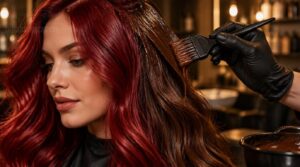
Before you cover red hair dye with brown, you need to understand what’s happening inside your hair. Red pigments are persistent, and hair color correction isn’t as simple as layering one shade over another. Brown dye interacts with your base pigments rather than erasing them, which is basic color theory in action.
Understanding how red pigments linger and interact with brown is the first step toward correcting brassy, warm tones that surface through bleached or color-treated hair.
The result often shifts warm, toward auburn or chestnut tones. Your final color depends on how vivid your red is, so always do a quick strand test first.
How Do You Choose The Right Brown Shade to Cover Red Hair?
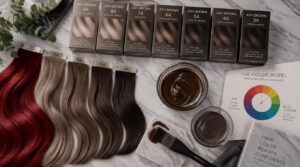
Since red pigments tend to shift warm, your choice of brown matters more than you might think.
The key is undertone cancellation. Red hair dye carries red undertones, so pick a brown hair dye with a cooler blue-green base. Color theory backs this up: warm over warm gets warmer, so a cool or neutral brown is your safest bet.
Here’s what to look for:
- An ashy brown shade labeled "ash" or "cool" delivers the strongest neutralizing effect on warm bases
- A level 4-6 brown suits vivid red best; going darker risks an orange-brown result
- Avoid warm golds and copper-based browns entirely; they’ll boost existing red tones
- For cooler reds like mahogany or burgundy, a lighter cool brown reads most natural
Should You Fade, Remove, or Bleach Red Hair Before Going Brown?
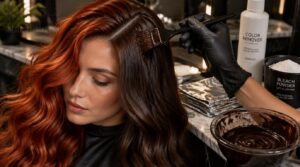
Picking the right shade is only part of the equation. Whether you need to prep your hair first depends on how intense your current red is.
If your hair has been chemically treated or is especially vibrant, how to dye roots darker than the rest of your hair walks you through the prep steps that make the biggest difference.
For vivid reds and copper tones, skipping a fade step leads to a muddy, warm-brown result. Fading your red hair dye first, even slightly, gives the brown something cleaner to work with.
A hair color remover is the gentlest option. It strips artificial red pigments without lifting your natural base, keeping damage low. Bleaching works faster and removes more pigment, but it raises your breakage risk, especially on fine or already-processed hair.
If your red is soft or already faded, you can sometimes apply brown hair dye directly and let neutralization handle the rest.
How to Cover Red Hair Dye With Brown Step by Step
Covering red with brown comes down to following the right sequence. Each step in this process builds on the last, so skipping ahead can leave you with uneven results or stubborn red bleeding through. Work through these six steps carefully, and you’ll give your brown the best chance of actually sticking.
Assess Hair Color and Condition

Think of your hair as a canvas already painted. Before anything else, your precolor assessment starts with identifying your current shade under natural light. Red undertones in precolored hair sit deep within the cortex, so you’ll need to gauge both the base pigments and your hair condition honestly.
Understanding how your color history interacts with your natural undertones is essential, especially if you’re considering a reverse balayage for red-toned or precolored hair, where base pigment depth directly shapes the final result.
Dry, porous, or chemically treated hair absorbs color unevenly, which complicates results.
Perform Patch and Strand Tests

Run a patch test on your inner forearm 48 hours before applying anything over your red hair dye. If there’s redness or swelling, stop.
Do a strand test next to check how your hair responds and whether red pigments bleed through the brown dye. If the strand test shows breakage or hair damage, pause and deep condition before proceeding.
Fade or Lift if Needed
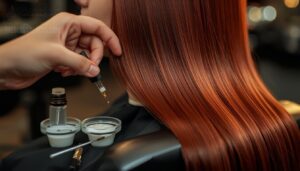
If your red is deep and saturated, you’ll need to lift the color before brown will take properly. A gentle lightener works best; check every 5 to 10 minutes and aim for level 6 to 8 to avoid a coppery result.
Apply a bond-building treatment beforehand, then wait 24 to 48 hours after rinsing before you apply your brown shade.
Neutralize Red With Green
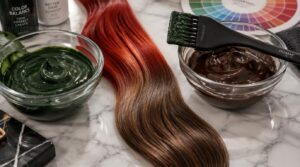
Strand tests show that just five to ten minutes of green toner delivers a balanced neutral, while fifteen risks over-darkening.
Green and red are complementary colors, sitting opposite each other on the color wheel. That’s why green pigments neutralize red tones. Deposit green tones with a toner or glaze after lifting, watch closely, and rinse. Then proceed straight to brown.
Apply Brown Dye Evenly
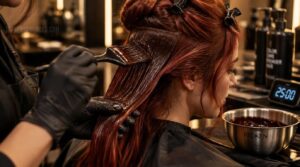
Picture each section drinking in brown hair dye like parched ground after rain, slowly and completely, from root to tip.
- Work in 1/4-inch subsections for controlled color saturation
- Comb through each section to eliminate dry spots
- Keep process time to 30 to 40 minutes
Even application is your goal. Set a timer and check midway to prevent overprocessing porous hair.
Rinse and Deep Condition

This final step does more than clean out color. Rinse with cold water first to tighten the cuticle and start hair cuticle sealing.
Then apply a sulfate-free deep conditioning treatment with heat for 10 to 20 minutes.
Chemical processing disrupts your hair’s lipid barrier, so it’s worth prioritizing hair moisture retention now. Finish with a leave-in to protect your results.
How Do You Maintain Brown Hair and Prevent Red Tones?

Keeping your brown hair truly brown takes more effort than the initial dye job. Red tones don’t wait; they creep back the moment your color maintenance slips.
Red tones don’t wait—the moment your color maintenance slips, they creep back
Switch to a sulfate-free shampoo and rinse with cool water every wash. Heat styling accelerates color fading, so lower your tool temperatures and always use a heat protectant. Add weekly deep conditioning treatments to keep hair healthy, since damaged strands lose pigment faster and drift toward copper.
- Use an ash or cool-toned toner every 4 to 6 weeks
- Wash hair no more than 2 to 3 times per week
- Apply bond-building treatments to strengthen color retention
- Avoid prolonged sun exposure, which lifts brown pigment
- Use dry shampoo between washes to extend color life
Frequently Asked Questions (FAQs)
Can you put brown dye over red hair?
You can put brown dye over red hair, but it won’t always turn out the way you expect. Red hair dye resists new color, so neutralizing red pigments first gives you a much cleaner brown.
What brown hair color cancels out red?
Ever wonder why some browns turn brassy over red? The color wheel shows green neutralizes red pigments, so choose an ashy or cool brown at level 4– Its brown pigments offset complementary colors in hair.
What color hair dye can you put over red?
To cover red hair dye with brown, choose cool or ash-toned permanent dyes with violet or blue undertones.
These neutralize the base pigments more effectively and deliver a true, clean brown result without a coppery finish.
How to change red hair color to brown?
To change red hair color to brown, choose a cool or ash brown, neutralize stubborn red tones if needed, then apply your chosen shade following a careful step-by-step guide.
How Long Does Red Hair Dye Last?
Red hair dye is vivid but notoriously the quickest to fade. Your color usually lasts 4–6 weeks, though sun, heat, and frequent washing shorten that. Permanent dyes hold longer, but natural fade always catches up.
Is There an Easy Way to Remove Red Hair Dye?
You’ll find that red pigments can resist up to three rounds of color stripping. Thankfully, a hair color remover, clarifying shampoo, or bleach paired with an ashy shade can effectively neutralize stubborn red hair dye.
What Are the Benefits of Going From Red to Brown Hair?
What if your color just stayed put? Brown hair dye suppresses stubborn red pigments far more effectively, so you’ll get fewer coppery shifts, a more stable shade, and a real boost to hair health restoration.
Are There Any Natural Alternatives to Covering Red Hair With Brown?
A thousand natural tricks won’t fully replace permanent dyes, but green-toned rinses can help neutralize red hair dye, and clarifying shampoos gradually fade that existing warmth over time, making your shift to brown locks easier.
Can brown cover red hair in one session?
Think of it as a negotiation between pigments. Yes, a permanent brown shade can cover red hair in one session, but using a hair color remover first gives you a more even, predictable final result.
How soon can you re-dye after going red?
Patience is your best tool. If red was freshly applied, wait at least two weeks before attempting any hair color change, allowing oxidation to complete and reducing chemical hair treatment stress on highly porous strands.
Conclusion
Think of red undertones like wet paint on a wall: brown won’t stick cleanly until the surface is properly prepped. That’s the whole logic behind learning how to cover red hair dye with brown.
Assess your starting point, neutralize what fights back, and choose a shade with the right depth. Follow each step with care, and brown becomes a realistic, lasting result, not just a hopeful guess.