This site is supported by our readers. We may earn a commission, at no cost to you, if you purchase through links. This content is for general informational and educational purposes only and is not a substitute for professional medical, dermatological, or nutritional advice.
Black is actually a very dark brown, and your biology explains why. Your hair follicles pack in so much eumelanin that light barely escapes, creating that deep, uniform color you see indoors. So yes, black is a natural hair color, even if it’s technically wearing a disguise.
That sunlit brownish glow you notice? That’s photo-oxidation at work on your outer pigment layers, not a sign your color is fading.
Whether your black hair is natural or dyed, knowing what’s happening inside the strand helps you protect it, maintain it, and own it.
Table Of Contents
- Key Takeaways
- Is Black a Natural Hair Color?
- What Makes Hair Naturally Black?
- Why Can Black Hair Look Brown in Sunlight?
- How Can You Dye Hair Black?
- What Are The Pros and Cons of Dyeing Hair Black?
- Frequently Asked Questions (FAQs)
- Is black an actual natural hair color?
- Is there any natural hair color?
- Can you get black hair naturally?
- What ethnicity has true black hair?
- Are there any health risks associated with dying hair black?
- How long does black hair dye typically last?
- Is there a difference between dyeing and bleaching black hair?
- How often should black hair be dyed to maintain the color?
- Can black hair dye be used to lighten hair?
- Does black hair fade faster than other colors?
- Conclusion
Key Takeaways
- What you call black hair is actually an extremely dark brown, made to look black by a high concentration of eumelanin that absorbs almost all visible light.
- When your hair looks brownish in sunlight, that’s UV-triggered photo-oxidation on the outer pigment layers — your deep eumelanin is untouched and your color isn’t fading.
- Your melanocytes, the enzyme tyrosinase, and how well pigment transfers into the hair shaft all work together to determine just how dark your natural color gets.
- If you dye your hair black, permanent formulas bond deep into the cortex for lasting grey coverage, while semi-permanent options coat the cuticle and fade gently within a few washes — each suits a different level of commitment.
Is Black a Natural Hair Color?
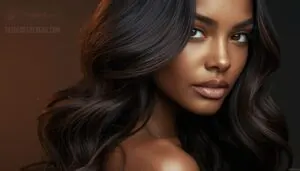
How widespread is natural black hair? It’s one of the most common hair shades on the planet, driven largely by genetics and ethnicity. Your follicles produce varying levels of melanin, and when that production is consistently high, your hair shows up as strikingly dark.
Factors like skin tone and undertone also shape how black hair reads visually—something explored in depth in this guide to hair color choices for fair skin tones.
Here’s something worth knowing: "black" isn’t technically its own standalone color class. What most people call natural black hair is actually a very dark brown that reads as black because of dense hair pigmentation. The concentration of eumelanin, the darker melanin form, is what ultimately determines how black or near-black your hair actually looks.
What we call black hair is actually very dark brown made deep by dense eumelanin pigmentation
That’s true whether your hair is naturally dark or you’re thinking about black hair dye to recreate that same depth at home.
What Makes Hair Naturally Black?
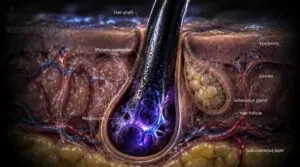
So what’s actually driving that depth? It comes down to your melanin production pathways and how well your follicles do their job.
Two key pigments—eumelanin and pheomelanin—work together in your follicles to create your unique shade, a process explored in depth in this guide to hair color science and melanin production.
Melanocytes sit at the base of each follicle, producing pigment that travels up into the growing shaft. In natural black hair, these cells push out high concentrations of black eumelanin, the deepest pigment form. An enzyme called tyrosinase controls the rate of that production, and when it’s running at full speed, your hair pigmentation reaches its darkest potential.
Three key factors shape the final color you see:
- Eumelanin concentration packed into each shaft
- Tyrosinase activity levels controlling overall output
- Melanosome transfer from melanocytes deep into the cortex
That combination is what gives natural black hair its characteristic depth.
Why Can Black Hair Look Brown in Sunlight?
That high eumelanin concentration absorbs most visible light indoors, giving your natural black hair its signature deep look. Sunlight changes that.
Broad-spectrum sunlight reveals those hidden warm tones by overwhelming melanin’s absorption capacity, a process explored in depth in this guide to why black hair looks brown in sunlight.
UV rays trigger photo-oxidation at the melanin surface, temporarily breaking down the outer pigment. Your hair then scatters light differently, producing that warm, brownish glow you see.
It comes down to the light exposure effect. Sunlight packs far more yellow and red wavelengths than indoor lighting. Those frequencies hit your cuticle and mix with surface reflections, nudging your perceived color toward dark brown hair territory. UV simply can’t reach the deep eumelanin stores that set your baseline, so the shift stays superficial. Even trace pheomelanin, normally masked under dominant eumelanin, can appear when sun oxidation thins the outer layers.
How Can You Dye Hair Black?
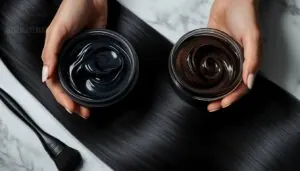
Dyeing your hair black is simpler than you might think, but choosing the right dye type makes all the difference. Each option works differently depending on your commitment level and hair goals. Here are the two main routes to think about.
Whether you want a bold commitment or a temporary change, understanding the differences between semi-permanent and permanent black dye helps you pick the formula that fits your lifestyle.
Semi-Permanent Black Dye
deposits color on your cuticle and fades gradually over 4 to 12 washes. That gentle fade is why it doesn’t leave harsh root lines.
To extend hair dye longevity, use sulfate-free shampoo and rinse with cool water.
For the best hair dye application, apply black hair dye directly onto natural black hair or a dark, unprocessed base.
Demi-Permanent Vs. Permanent Dye
Choose based on your commitment level.
- Demipermanent dye fades gradually over 6-12 weeks with washing
- Permanent hair dye bonds to your cortex and stays
- Grey hair coverage requires permanent dye to fully work
- Hair dye processing time runs longer with permanent formulas
- Weighing hair dye pros and cons helps you decide
Demi’s more forgiving. Permanent needs bleach to remove it.
What Are The Pros and Cons of Dyeing Hair Black?
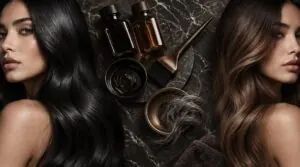
Pros of black hair dye are worth understanding before you decide. You’ll get a bold, uniform look fast, and grey coverage is a genuine advantage since darker pigment hides root regrowth far longer than lighter shades do. For especially stubborn greys, a dedicated black hair dye for grey coverage with conditioning agents can make a noticeable difference in how evenly the color takes.
The downsides are real, though. Most permanent hair dye fades over time, and black is notorious for shifting toward warm, brownish tones as pigment breaks down. If your natural hair is lighter or already chemically processed, brassiness shows up faster and more noticeably.
Knowing your hair dye pros and cons upfront helps you maintain results. Regular toning keeps your color looking sharp. On hair dye safety, scalp sensitivity and repeated chemical exposure are the main concerns, so always do a patch test first. A hair dye patch test kit makes it easy to check for reactions before committing to a full application.
Frequently Asked Questions (FAQs)
Is black an actual natural hair color?
Yes, black is absolutely a real, natural hair color. Your shade comes from black eumelanin, a pigment your melanocytes produce during hair growth. Natural black hair sits at the darkest end of the color spectrum.
Is there any natural hair color?
Funny you’d ask, because every single color your hair naturally grows in is technically natural by definition. Natural hair color is driven by genetic inheritance and your eumelanin concentration. More black eumelanin means darker hair.
Can you get black hair naturally?
About 85% of people worldwide have naturally dark hair, and some of it is truly black. Your hair color inheritance and black eumelanin levels together determine whether you can grow natural black hair without dye.
What ethnicity has true black hair?
Think genetics, not geography. True black hair comes from high black eumelanin, most common in East Asian and sub-Saharan African populations, and Melanesians of New Guinea share this ethnic hair trait through hair color inheritance.
Are there any health risks associated with dying hair black?
Like a ticking clock, PPD exposure quietly builds. Each fresh application raises your risk of skin irritation, allergic reactions, and even facial swelling. Always do a patch test before using any permanent black hair dye.
Unlike dyed hair, natural black hair forms when follicles produce dense deposits of dark eumelanin, showing micro-variation in shade rather than a uniform solid color.
How long does black hair dye typically last?
The clock starts ticking the moment you rinse. Semi-permanent black fades within 4–12 washes, demi-permanent lasts through 24–28, and permanent holds until new regrowth demands a root touchup, with hair dye fading gradually over months.
Is there a difference between dyeing and bleaching black hair?
Yes, and the difference matters. Dye deposits pigment onto your hair shaft without stripping what’s already there. Bleaching uses oxidizers to break down your black eumelanin, lightening your base before any color can take hold.
How often should black hair be dyed to maintain the color?
That telltale stripe of new growth creeps in fast. You’ll need a hair dye root touchup every 4-6 weeks with permanent dye, and even more often with semi-permanent formulas that fade quickly between regular washes.
Can black hair dye be used to lighten hair?
Black hair dye only deposits pigment into the hair shaft. It won’t lift or lighten your existing color. If you want to go lighter, you’ll need hair dye bleaching first, then a fresh color application.
Does black hair fade faster than other colors?
Permanent black dye actually has strong color fading resistance compared to lighter shades like blonde or red. Larger pigment molecules get trapped deeper in the cortex. Hair shaft porosity from bleaching speeds up fading a lot.
Conclusion
The theory that black isn’t a "real" hair color dissolves once you understand the science. Is black a natural hair color? Absolutely, and eumelanin proves it. Your follicles simply produce pigment so dense that light can’t argue back.
That sun-kissed brown shimmer isn’t a flaw; it’s physics. Knowing what’s actually happening inside your strands puts you in control, whether you’re maintaining your natural shade or choosing to deepen it with dye.