This site is supported by our readers. We may earn a commission, at no cost to you, if you purchase through links. This content is for general informational and educational purposes only and is not a substitute for professional medical, dermatological, or nutritional advice.

Your hairbrush isn’t lying to you: 50 to 100 strands a day is normal shedding, not a crisis. But when you’re seeing bald patches at your part or a ponytail that’s suddenly thinner, genetics, ferritin levels, and your styling routine are all worth a closer look.
Roughly 81% of androgenetic alopecia comes down to heredity, but that’s not the whole story. Iron deficiency, cortisol spikes, and scalp buildup from product residue can all mimic pattern hair loss, and treating the wrong cause wastes months you don’t have.
Here’s how to figure out what’s actually thinning your hair and which fixes, from scalp massage to minoxidil, actually move the needle.
Table Of Contents
- Key Takeaways
- Why Hair Becomes Thin
- How to Get Thicker Hair Growth
- Top 5 Products for Thicker Hair
- Medical Treatments and Growth Expectations
- Frequently Asked Questions (FAQs)
- Can you regrow hair thickness?
- At what age is hair thickest?
- Can thin hair turn thick again?
- What triggers hair growth?
- How can I get thicker hair naturally?
- Can thin hair become thick again?
- How do I increase the thickness of my hair?
- How to grow hair faster and thicker?
- How does hair density impact thickness appearance?
- What role does scalp massage play in hair volumizing?
- Conclusion
Key Takeaways
- Losing 50 to 100 hairs a day is normal, so before you panic, check for real red flags like a widening part or a noticeably thinner ponytail.
- Genetics drive about 81% of pattern hair loss, but low iron, high stress, and scalp buildup can mimic it too, so treating the wrong cause just wastes time.
- Minoxidil is the only over-the-counter treatment proven to regrow hair, but it takes six or more months to show results and you have to keep using it or the gains fade.
- Daily scalp massage, a protein and iron-rich diet, gentler styling, and a healthy scalp all work together to support thicker hair over time, not overnight.
Why Hair Becomes Thin
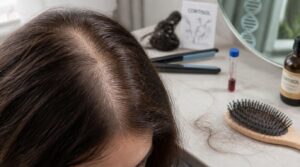
Thinning hair rarely has one single cause, and treating it like it does usually wastes time and money. Your genes, your bloodwork, your stress levels, and even your flat iron can all play a role, often at the same time. Here’s what actually drives hair loss, so you know which culprit you’re dealing with.
Once you’ve identified your main triggers, pairing that fix with one of these beginner-friendly hair growth shampoos can help support thicker-looking strands as part of your routine.
Genetics and Pattern Hair Loss
If thinning runs in your family, blame your genes, not your shampoo. Androgenetic alopecia stems from androgen sensitivity, triggering follicle miniaturization as terminal hairs shrink toward vellus-like strands. Twin studies point to a strong genetic heritability factor of 0.81, underscoring how much of this pattern is inherited.
Key factors:
- Gene variants (WNT10A, FGF5) regulate growth cycles
- Onset often begins post-puberty, worsening with age
- DHT-blocking drugs like finasteride target this pathway, though evaluation matters first
Nutrient Deficiencies and Restrictive Diets
Genetics load the gun, but your plate can pull the trigger too. Iron deficiency anemia and low ferritin are common, undiagnosed causes of shedding.
Restrictive diets often create folate intake low and B vitamin gaps, while poor protein absorption issues limit keratin building blocks.
Fix nutritional deficiencies with bloodwork, targeted supplements, and omega3 fatty acids before assuming it’s just genetics.
Stress, Hormones, and Health Conditions
Bloodwork fixes diet gaps, but your nervous system writes its own prescription. Chronic stress hijacks cortisol and thyroid signaling, pushing follicles into stress-induced shedding within months.
PCOS, thyroid imbalance, and autoimmune alopecia all trigger hormonal imbalance patterns mimicking androgenetic alopecia. Sleep loss compounds it further.
If shedding persists despite good nutrition, ask your dermatologist about hormone panels before assuming genetics alone.
Breakage From Heat and Chemicals
Hormones aside, plenty of thinning is mechanical. Heat tools and bleach break disulfide bonds in keratin, raising the cuticle and stripping hair elasticity.
Keratin treatments can help, but formaldehyde-releasing formulas risk protein overload, leaving strands stiff and brittle. Bleached hair tolerates heat poorly.
Limit flat-iron passes, use heat protectant, and prioritize cuticle repair and moisture retention to curb breakage.
Scalp Inflammation and Product Buildup
Under the surface, an irritated scalp can quietly stall growth. Scalp buildup from oils, product residue, and dead skin clogs follicles, and conditions like seborrheic dermatitis or psoriasis worsen inflammation.
Watch for:
- Persistent flakes despite washing
- Redness or itching
- Heavy, dull-feeling hair
- Buildup that returns fast
Adjust cleansing frequency and address Malassezia yeast activity before it damages follicle health.
Pairing this glycolic exfoliant with a targeted routine like these best toners for oily, yeast-prone skin can help rebalance excess oil while keeping Malassezia growth in check.
How to Get Thicker Hair Growth
Thin hair isn’t permanent for most people, but reversing it takes a real plan, not a single product swap. The right combination of habits works with your hair’s biology instead of against it, from the follicle up to the way you style it. Here’s what actually moves the needle, starting with something you can do in four minutes a day.
Practice Daily Scalp Massage
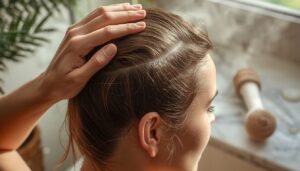
Five minutes a day, fingertips only, small circles across your whole scalp. That mechanical stretching stimulates dermal papilla cells, the structures controlling your hair growth cycle.
A silicone massager helps distribute pressure evenly if your hands tire.
Results aren’t instant: expect consistent practice over several months before you notice thicker strands and better scalp circulation.
Eat Protein and Iron-Rich Foods

Keratin is protein, plain and simple, so your follicles need steady amino acid supply to build strong strands.
Prioritize protein sources like eggs, fish, lentils, and tofu.
Pair non-heme iron (spinach, beans) with vitamin C, think citrus or broccoli, for better nutrient absorption. Heme iron from meat absorbs more easily. Balanced meal planning helps hair follicle health long-term.
Optimize Your Hair Care Routine

Your shampoo choice matters more than you’d think. Wash 2-3 times weekly, choosing clarifying, hydrating, or color-safe formulas based on your scalp’s needs.
Apply conditioner right after cleansing to ease tangling. Work in a monthly scalp scrub to control buildup and inflammation, both linked to poor hair follicle health and stalled thickening over time.
Prevent Breakage and Styling Damage

Every strand you save from breakage is one less you have to regrow.
Every strand saved from breakage is one less strand you’ll have to regrow
Detangle before washing, always starting at the ends and working up, and apply conditioner first to cut friction.
Limit heat tools, air-dry when you can, and skip harsh chemical processing.
Damaged cuticles lift, making hair drier and more prone to snapping.
Create Volume With Strategic Styling
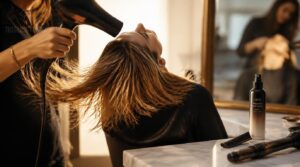
Can’t regrow strands overnight, but you can fake density in minutes.
Switch your parting technique to side or zigzag, add root-lifting sprays at damp roots, and blow-dry upside down. Layered cuts starting at the jaw remove weight; strategic highlights mimic thickness through light. Curl enhancement with a 1.25-inch iron lifts strands off the scalp. Finish with end texturizing for a fuller, blunt-cut illusion.
Top 5 Products for Thicker Hair
Not every product on shelves earns its claims, so knowing which ones actually work saves you time and money. The five below cover different angles, from instant camouflage to long-term follicle support backed by clinical data. Here’s what to look for in each one.
1. L’Oreal Paris Root Cover Up Spray
Not every gray-hair fix needs to be permanent. L’Oreal Paris Root Cover Up Spray is an ammonia-free, peroxide-free formula that camouflages regrowth in seconds and rinses out with your next shampoo. At 2 oz, it’s built for quick root touch-ups, not long-term density building.
The lightweight, transfer-resistant formula dries fast without stickiness, though overspray can stain skin or fabric if you’re not careful. Think of it as a styling patch, useful for photos or events, not a treatment for thinning.
| Best For | Anyone who wants a fast, temporary way to cover gray roots between salon visits without committing to a permanent dye. |
|---|---|
| Format | Spray |
| Primary Concern | Gray Coverage |
| Active Ingredient | None Listed |
| Size | 2 oz |
| Application Frequency | As Needed |
| Scalp Sensitivity Risk | Skin Staining |
| Additional Features |
|
- Instantly conceals gray roots and scattered grays in seconds
- Ammonia-free, peroxide-free formula is gentle on hair
- Dries quickly into a lightweight finish that won’t feel sticky or heavy
- Overspray can stain skin, clothing, or nearby surfaces
- Color may rub off onto pillows or collars, or during physical activity
- Only lasts until the next shampoo, so it’s not a long-term solution
2. Rogaine 5 Minoxidil Hair Regrowth Foam
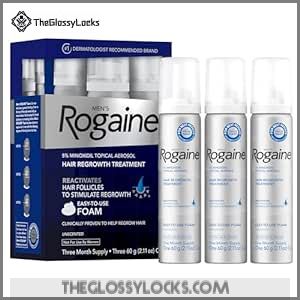
Camouflage only goes so far. If you want actual regrowth, 5% minoxidil foam is the only OTC option backed by FDA approval for female pattern hair loss.
A 3-month supply gives you three 2.11 oz canisters, unscented, with glycerin that absorbs fast. Apply a half-capful twice daily to dry scalp at the vertex, not the hairline. Expect initial shedding first, then density improvements after 6+ months. Stop using it, and gains reverse within months.
For a deeper look at what actually works long-term, evidence-based baldness treatments for men break down why consistency—not a one-time fix—is the real key to lasting results.
| Best For | Men experiencing hereditary thinning at the vertex or crown who want an easy-to-apply, twice-daily treatment to slow hair loss and support regrowth. |
|---|---|
| Format | Foam |
| Primary Concern | Hair Regrowth |
| Active Ingredient | 5% Minoxidil |
| Size | 6.33 oz (3-pack) |
| Application Frequency | Twice Daily |
| Scalp Sensitivity Risk | Irritation/Itching |
| Additional Features |
|
- Clinically proven 5% minoxidil formula helps regrow hair and slow hair loss with consistent use
- Unscented, fast-absorbing foam with glycerin and scalp-conditioning botanicals leaves no residue
- Simple twice-daily routine that fits easily into regular grooming habits
- Requires lifelong twice-daily use, since stopping causes regrowth benefits to fade
- Not effective for frontal hairline recession or complete baldness
- May cause scalp irritation, itching, or unwanted hair growth on the face or body in some users
3. Nizoral Anti Dandruff Shampoo Ketoconazole
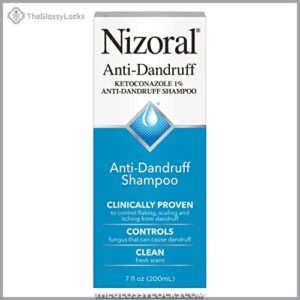
Minoxidil regrows hair, but an inflamed, flaky scalp can undo that progress. Nizoral’s 1% ketoconazole formula targets Malassezia yeast, the fungus behind chronic dandruff and follicle irritation.
Lather into wet scalp, leave on 3-5 minutes, rinse. Use every 3-4 days for up to 8 weeks, then taper to twice weekly for maintenance. It’s gentle enough for color-treated or chemically processed hair, though expect some dryness with regular use. Pair it with a lightweight conditioner to offset that.
| Best For | Anyone dealing with flaky, itchy, or fungal-irritated scalps—especially those combining it with treatments like minoxidil who need to keep inflammation in check to support hair growth. |
|---|---|
| Format | Shampoo |
| Primary Concern | Dandruff |
| Active Ingredient | 1% Ketoconazole |
| Size | 7 fl oz |
| Application Frequency | Every 3-4 Days |
| Scalp Sensitivity Risk | Dryness/Brittleness |
| Additional Features |
|
- Contains clinically proven 1% ketoconazole to target the yeast that causes dandruff
- Gentle enough for color-treated, chemically processed, or gray hair
- Long-lasting relief with infrequent use (every 3–4 days)
- Can leave hair and scalp feeling dry, brittle, or tight
- Requires consistent, ongoing use or dandruff may return
- Not for internal use or contact with mucous membranes
4. Head and Shoulders Classic Clean 2-in-1

Not everyone needs a targeted antifungal. If your flaking is mild, Head and Shoulders Classic Clean 2-in-1 with 1% pyrithione zinc works as a gentler daily option, cleansing and conditioning in one step.
It reduces flakes and itch with regular use and stays safe for color-treated hair. The dimethicone-based conditioning smooths strands without heavy buildup, though very dry or chemically treated hair may still need extra conditioner on the ends.
| Best For | People with mild, occasional dandruff who want an easy, gentle daily 2-in-1 that cleanses and conditions without a heavy antifungal formula. |
|---|---|
| Format | Shampoo |
| Primary Concern | Dandruff |
| Active Ingredient | 1% Pyrithione Zinc |
| Size | 8.45 fl oz |
| Application Frequency | Regular Wash |
| Scalp Sensitivity Risk | Insufficient Conditioning |
| Additional Features |
|
- Combines cleansing and conditioning in one convenient step
- Reduces visible flakes and scalp itch with regular use
- Safe for color-treated hair as part of the Head & Shoulders system
- Conditioning may not be enough for very long, dry, or chemically treated hair
- Some users feel the bottle is smaller than expected for the price
- May require extra conditioner on hair ends for full moisture
5. Neutrogena Scalp Therapy Anti-Dandruff Shampoo

When flaking comes with itch and excess oil, salicylic acid earns its place. Neutrogena Scalp Therapy Anti-Dandruff Shampoo uses 2.5% to 3% salicylic acid depending on the version, working to loosen dead skin and buildup at the follicle opening.
Directions call for massaging it into a wet scalp, leaving it on for a few minutes, then rinsing, at least twice weekly. Formulas vary between scented and fragrance-free, so check labels if you’re sensitive. Follow with conditioner, since salicylic acid can leave ends dry.
| Best For | People with dandruff-related flaking, itching, and scalp buildup who want a fast-acting, medicated shampoo they can work into a regular routine. |
|---|---|
| Format | Shampoo |
| Primary Concern | Dandruff |
| Active Ingredient | 2.5% Salicylic Acid |
| Size | 12 fl oz |
| Application Frequency | 2-3 Times Weekly |
| Scalp Sensitivity Risk | Intense Cooling |
| Additional Features |
|
- Clinically proven 2.5% salicylic acid formula that exfoliates and controls flaking and itch from first use
- Cooling menthol and peppermint deliver immediate relief for an irritated scalp
- Fits easily into a maintenance routine, used just 2-3 times a week
- Can dry out hair ends if not paired with a conditioner
- Menthol’s cooling effect may feel too intense for sensitive scalps
- Not a solution for every scalp issue, such as dermatitis or psoriasis, without a doctor’s guidance
Medical Treatments and Growth Expectations

Sometimes at-home fixes only get you so far, and that’s when a dermatologist’s input matters most. Medical treatments come with real evidence behind them, but they also require realistic timelines and proper diagnosis first. Here’s what to know about your options and what results actually look like.
Dermatologist Hair Loss Evaluation
A dermatologist’s evaluation isn’t guesswork. It starts with a focused history, medications, family history, recent illness or weight changes, then a scalp exam checking scaling, redness, and follicular openings.
Expect a hair pull test, sliding fingers through 50-60 strands. Six or more coming loose signals active shedding.
Trichoscopy magnifies shaft diameter and vascularity. Biopsy confirms causes when scarring’s suspected.
Minoxidil and Prescription Options
Once you’ve confirmed the diagnosis, topical minoxidil is the dermatologist recommended starting point, in 5% foam or solution, applied once or twice daily. It converts vellus hairs to terminal ones over 6+ months. Prescription alternatives include oral minoxidil or finasteride, plus ketoconazole shampoo to curb DHT and scalp inflammation.
| Option | Form | Frequency |
|---|---|---|
| Minoxidil | Topical 5% | Daily |
| Minoxidil | Oral | Daily |
| Finasteride | Prescription | Daily |
| Ketoconazole | Shampoo | Weekly |
PRP and Low-Level Laser Therapy
PRP uses your own blood, spun down to concentrate platelets five to ten times normal levels, then injected into the scalp to deliver growth factors straight to follicles. Platelet concentration and leukocyte content vary by formulation, affecting results.
Sessions usually run monthly for three months. Pairing PRP with red light therapy (LLLT) may boost follicle stimulation through photobiomodulation’s wound-healing effects.
Hair Growth Timeline and Shedding
Your hair growth timeline runs on cycles, not straight lines. Anagen lasts 3–7 years, growing 0.44mm daily, faster in summer, slower in winter.
Telogen (100 days) and exogen (2–5 days) follow, shedding 50–100 hairs daily normally.
Age shortens anagen to 2–3 years, driving hair follicle miniaturization.
Track your hair shedding cycle seasonally before assuming true loss.
Can Thin Hair Become Thicker?
Yes, but the answer depends on why it thinned. Breakage repair methods can restore length and fullness fast, while true follicle miniaturization needs months of consistent care.
Minoxidil, iron correction, and scalp circulation boosts can improve hair follicle density over time. Genetic influence reversal isn’t realistic, but slowing progression and improving hair thickness gradually is very achievable with the right plan.
Frequently Asked Questions (FAQs)
Can you regrow hair thickness?
Minoxidil users often see density gains after six months, not weeks. Regrowth depends on genetic predisposition, hormonal balance, and consistent treatment adherence targeting the hair follicle directly, since stopping minoxidil usually reverses progress within months.
At what age is hair thickest?
Scalp measurements show hair thickness peaks around age 40 to 45, per parietal shaft diameter data. Density, though, is highest at 20 to 30 and declines steadily, meaning follicle aging affects thickness and thinning differently over time.
Can thin hair turn thick again?
Fragile strands rarely thicken on their own, yet the follicles beneath them often can. Correcting nutrient deficiencies, calming scalp inflammation, and using minoxidil consistently for months can restore density by prompting genuine hair follicle stimulation and regrowth.
What triggers hair growth?
Follicle activation depends on vascular signals, hormonal regulation, and neural stimulation working together, pushing follicles from rest into the anagen phase. Growth factors trigger this shift, driving hair growth stimulation and, over time, real hair density improvement.
How can I get thicker hair naturally?
Combine daily scalp massage with a protein and iron-rich diet, gentle washing habits, and breakage prevention.
These habits support natural hair growth stimulation, improve density over months, and build thickness without relying on harsh chemical treatments or excessive heat styling.
Can thin hair become thick again?
Can a fading fire be coaxed back into flame? Often, yes. Minoxidil regrowth, corrected ferritin levels, and consistent scalp massage can genuinely reverse thinning, restoring density within 4 to 6 months of steady effort.
How do I increase the thickness of my hair?
Start a daily scalp massage routine.
Eat a protein-rich diet with iron and zinc, and switch to gentle hair care.
Add strategic styling and nutrient supplementation where blood work shows gaps, since consistency drives real hair density gains.
How to grow hair faster and thicker?
No shortcuts, no gimmicks: faster growth means feeding follicles, not fooling them. Pair a daily scalp massage with a protein-rich diet, gentle hair care, and topical minoxidil, the only proven way to boost hair density and thickening over months, not days.
How does hair density impact thickness appearance?
Hair density determines strand coverage per square inch, driving scalp visibility and light reflection across your scalp. Higher density hides scalp better and boosts visual thickness perception, while low density plus thin strand diameter compounds sparse-looking hair regardless of actual growth.
What role does scalp massage play in hair volumizing?
Think of your scalp like soil: tight, compacted ground stunts roots. Mechanical force from massage loosens that ground, stimulating hair follicles, easing scalp tension, and distributing pressure evenly, factors tied to measurable hair thickening with consistent practice.
Conclusion
Your thinning crown isn’t a verdict, it’s a signal your follicles are asking for help. Getting there takes patience: ferritin above 40, steady minoxidil use, and a scalp that isn’t inflamed.
How to get thicker hair growth comes down to consistency, not miracles. Give it four to six months before judging results. Your dermal papilla cells respond to steady care, not desperation. Treat the cause, not the mirror, and density follows.