This site is supported by our readers. We may earn a commission, at no cost to you, if you purchase through links. This content is for general informational and educational purposes only and is not a substitute for professional medical, dermatological, or nutritional advice.

Acne doesn’t stop at adolescence—roughly 85% of people experience breakouts at some point, and for many, the cycle of clearing up only to break out again feels endless.
The frustrating part isn’t the pimple itself; it’s realizing that small daily habits, the wrong moisturizer, or even a dirty pillowcase can quietly undo weeks of progress.
Preventing future acne blemishes isn’t about finding one miracle product—it’s about building a consistent routine where every step works in your favor. The tips ahead cover exactly that, from cleansing technique to active ingredients, giving your skin a real foundation for staying clear.
Table Of Contents
- Key Takeaways
- Build a Gentle Cleansing Routine
- Match Products to Your Skin Type
- Moisturize Without Clogging Pores
- Use Acne Actives Correctly
- Prevent Irritation and Bacteria Transfer
- Support Clear Skin Daily
- Frequently Asked Questions (FAQs)
- Can high A1c cause acne?
- How do Koreans clear acne?
- How do I stop future breakouts?
- How do you make acne blemishes go away?
- How do you prevent future acne scars?
- What reduces acne blemishes?
- Can certain medications trigger acne breakouts?
- Does smoking actually make acne worse?
- How often should I change pillowcases?
- Should I avoid dairy products for clearer skin?
- Conclusion
Key Takeaways
- Washing your face twice daily with a sulfate-free cleanser and lukewarm water is the single most effective habit for reducing bacterial buildup and preventing new breakouts.
- Matching every product — moisturizer, makeup, sunscreen — to your skin type and choosing noncomedogenic, fragrance‑free formulas stops pore congestion before it starts.
- Acne actives like benzoyl peroxide, salicylic acid, and adapalene work best when introduced slowly, applied correctly, and never layered on top of each other.
- Daily habits like changing pillowcases every two to three days, never picking pimples, and managing stress‑driven cortisol spikes are just as important as any product in your routine.
Build a Gentle Cleansing Routine

Your cleansing routine is often the first place acne either gets better or worse. Getting a few basics right makes a real difference, and none of it is complicated. Here’s what to focus on.
The good news is that non-irritating acne treatment options exist that work with your skin, not against it.
Wash Twice Daily
Washing your face twice daily — once in the morning, once at night — is one of the simplest habits that actually moves the needle on acne. Here’s why that rhythm works:
- Morning wash clears overnight sebum and sweat before your day starts.
- Night wash removes sunscreen, makeup, and daily grime.
- Post-workout cleansing prevents sweat from sitting on skin too long.
- Cleanser amount control — a coin-sized amount — stops over-cleansing.
- Rinse thoroughly to prevent residue that clogs pores.
Consistent cleansing reduces bacterial load, further preventing acne.
Stick to a sulfate-free facial cleanser and keep it twice daily. Your skin barrier will thank you.
Use Lukewarm Water
Once you’ve got your cleansing frequency down, the next variable worth getting right is water temperature. It sounds minor, but it matters more than most people expect.
Lukewarm water — roughly 90°F to 110°F — is the sweet spot. Hot water strips your skin barrier, triggering irritation and rebound oiliness. Cool it down, and you rinse effectively without the damage.
Choose Sulfate-Free Cleansers
Water temperature sets the stage — and your choice of cleanser keeps the momentum going. Sulfate-free cleansers preserve your skin barrier instead of stripping it, which matters a lot when you’re already managing acne treatments.
Look for plant-based surfactants like coco glucoside. They lift oil and dirt without triggering irritation or rebound oiliness — a clean rinse that works with your skin, not against it.
Avoid Scrubbing Tools
Your cleanser does the heavy lifting — your tools shouldn’t undo that work. Scrubbing with loofahs, rough washcloths, or bristle brushes creates friction that aggravates inflamed skin and breaks down your barrier faster than most actives would.
Skip these during your routine:
- Loofahs and exfoliating gloves — too abrasive for acne-prone skin
- Facial cleansing brushes — bristle contact adds pressure that worsens redness
- Rough washcloths — circular scrub motions spread bacteria and irritate active blemishes
Your hands or a soft microfiber cloth are genuinely enough. They remove residue without overdoing friction, keeping irritation low and your skin barrier intact.
Pat With Clean Towels
After you wash your face, how you dry it matters more than you’d think.
Pat — don’t rub with a clean towel each time. Single-use facial towels, often made from soft viscose fibers, are ideal because they carry no leftover bacteria from prior sessions, reducing irritation and keeping acne-prone skin genuinely protected.
Match Products to Your Skin Type

Not every product works for every face, and that’s where a lot of people go wrong. Your skin type shapes which formulas actually help versus which ones quietly make things worse. Here’s what to look for when choosing products that truly work with your skin.
Pick Non-Comedogenic Formulas
The label "noncomedogenic" is your first filter when shopping for skincare. It means the formula is designed not to block pores — a real advantage when your skin is already acne-prone.
Pairing a noncomedogenic moisturizer with an effective overnight acne spot treatment can make a real difference, especially as you ease your skin into a new routine.
- Look for noncomedogenic moisturizer options with glycerin or hyaluronic acid
- Choose noncomedogenic makeup that lists mineral-based ingredients like zinc oxide
- Pick oil-free formulas to reduce pore-clogging residue
- Do a patch test first on a small area before full use
- Skip products with synthetic fragrances or added oils in the ingredient list
Avoid Heavy Occlusives
Some moisturizers work a little too well at sealing things in — and that’s the problem. Ingredients like petrolatum, mineral oil, and thick butters create a heavy film on the skin surface.
On oily or acne-prone skin, that film can trap heat, residue, and bacteria, making pore congestion worse.
Check Fragrance-Free Labels
The word "fragrance-free" carries real weight in dermatology — but only if you verify it. Don’t trust the front label alone.
Flip the product over and scan the full ingredient list for "parfum," "linalool," or "limonene." These hidden allergens can trigger skin irritation even without a noticeable scent.
Note that "unscented" isn’t the same as fragrance-free — it may still contain masking agents.
Treat Oily T-Zones
The T-zone is basically your skin’s oil factory — and it needs a different strategy than the rest of your face.
- Swap heavy creams for gel hydrators with hyaluronic acid or glycerin
- Use salicylic acid on oily areas to unclog pores and reduce shine
- Press blotting papers gently on the forehead and nose midday
- Try oil-control toners to support sebum regulation without over-drying
Support Combination Skin
Combination skin plays by its own rules — oily through the T-zone, dry everywhere else.
| Area | Skin Need | Best Approach |
|---|---|---|
| T-zone | Oil control | Noncomedogenic gel or salicylic acid |
| Cheeks | Hydration | Lightweight hydrating moisturizer |
| Whole face | Balance | pH-balanced, fragrance-free hybrid skincare formulas |
Treat each zone on its own terms, and your skin will thank you.
Moisturize Without Clogging Pores
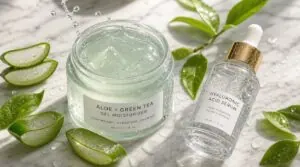
Moisturizing is non-negotiable, even if your skin runs oily — skipping it only pushes your skin to produce more oil. The trick is knowing what to look for on the label. Here are the key things to keep in mind when choosing a moisturizer that hydrates without clogging your pores.
Use Oil-Free Moisturizers
When your skin feels tight after cleansing, reaching for a heavy cream seems tempting — but that’s often what clogs pores.
Oil-free moisturizers give you the hydration you need without adding congestion. They absorb quickly, leave no greasy residue, and are usually labeled noncomedogenic, meaning they’re formulated to keep pores clear while still supporting your skin’s barrier.
Look for Hyaluronic Acid
One ingredient worth checking the label for is hyaluronic acid. It’s a naturally occurring substance in your skin that attracts and holds water — sometimes described as holding up to 1,000 times its weight in moisture.
That makes it a smart pick for acid-prone skin: you get real hydration without any added oil to block pores.
Try Glycerin-Based Hydration
Glycerin works in a similar way to hyaluronic acid. It’s a humectant, meaning it pulls moisture toward the outer layer of your skin and holds it there. The result is hydrating without heaviness — no greasy finish, no pore-clogging residue.
Look for a noncomedogenic, oil-free formula with glycerin listed near the top of the ingredient list.
Prevent Barrier Damage
Your skin barrier is like a protective shield — when it breaks down, everything gets harder to manage.
pH-balanced cleansers keep that shield intact. Pair them with damp application timing: apply your noncomedogenic moisturizer while skin is still slightly damp after cleansing. This locks in hydration before the surface dries out.
Don’t overlook fabric material impact either — soft pillowcases and towels reduce overnight irritation considerably.
Balance Drying Treatments
When acne treatments do their job, they also dry things out — that’s the trade‑off. Benzoyl peroxide and adapalene both strip moisture, so pairing them with an oil‑free, hydrating moisturizer isn’t optional. Apply a noncomedogenic‑labeled formula right after treatment to protect your skin barrier function without clogging pores.
Space actives apart; stacking them daily overwhelms skin fast.
Use Acne Actives Correctly
Acne actives are the workhorses of any breakout-prevention routine, but using them wrong can do more harm than good. The key isn’t just which ingredients you choose — it’s how you introduce and apply them. Here’s what you need to know to get the most out of each one.
Start Benzoyl Peroxide Slowly
Think of benzoyl peroxide like a new exercise routine — start slow, or you’ll burn out fast. Begin at 2.5% and apply a thin layer to active breakouts only, not your whole face.
Once your skin tolerates it after a week or two, gradually expand the area and increase frequency.
Always moisturize after to protect your barrier.
Try Salicylic Acid

Salicylic acid works differently from benzoyl peroxide — it’s oil-soluble, which means it can actually slip inside your pores and dissolve the buildup of oil and dead skin cells, causing blackheads and whiteheads.
Start with a 0.5%–2% OTC formula, either a leave-on gel or a daily cleanser, and let your skin adjust before increasing frequency.
Apply Adapalene Thinly

Adapalene — sold as Differin 0.1% gel — is a topical retinoid gel that works quietly overnight to unclog pores and speed up cell turnover. Use it correctly, and it earns its place.
Here’s how to apply it right:
- Cleanse, then wait until your skin is completely dry before applying
- Use a pea-sized amount for your whole face
- Spread a thin, even layer across all acne-prone areas — not just active spots
- Skip the eyes, lips, and nostrils to avoid stinging
Evening application is standard — once nightly, consistently.
Avoid Overloading Actives
Using too many actives at once is like overloading a circuit — something’s going to burn out.
| Active | Safe Pairing Rule |
|---|---|
| Benzoyl peroxide | Use AM only; avoid mixing with retinoid |
| Salicylic acid | Alternate nights with adapalene |
| Topical retinoid gel | PM only; never layer over chemical exfoliation |
| Chemical exfoliation | Use on off-retinoid nights |
| Any new active | Patch test first, always |
Frequency ramp-up matters too — start two nights per week before increasing.
Treat The Whole Face

Spot-treating only the pimples you can see is a common mistake. Acne actives like adapalene work best as full-face application across breakout‑prone zones — not just on existing lesions.
This uniform approach targets clogged pores before they surface. Think of it as preventive zone care: consistent, thorough coverage keeps new blemishes from forming between flare‑ups.
Prevent Irritation and Bacteria Transfer
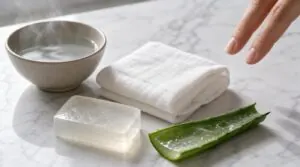
Your skincare products matter, but so do your daily habits. Small things — like what you touch and when you wash — can quietly make or break your progress. Here’s what to watch for.
Stop Touching Your Face
Your hands touch phones, keyboards, and door knobs all day — then, almost without thinking, they drift to your face. Bacteria transfer instantly.
Most face‑touching happens automatically, so the first step is simply noticing it.
Identify your trigger moments — desk work, scrolling, stress — and swap the habit with a replacement, like resting your hands flat on your thighs.
Remove Makeup Nightly
Keeping a face-touching habit in check is only half the battle. What stays on your skin overnight matters just as much.
Sleeping in makeup is one of the fastest ways to end up with clogged pores. Pigments, oils, and film from foundation or concealer sit against your skin for hours, slowly blocking follicles.
That buildup gets even trickier during hormonal swings, which is why knowing how to get rid of whiteheads matters just as much as prevention.
The double cleansing method works well here. Start with a cleansing balm or micellar water to dissolve the makeup, then follow with a gentle, sulfate-free cleanser to clear any remaining residue. That second step is what makes your skin care routine actually work — skincare products applied over leftover makeup barely penetrate.
Here’s a simple nightly order to build consistency:
- Wash your hands before touching your face.
- Apply a cleansing oil or balm to dry skin and massage gently.
- For eye makeup care, press a soaked cotton pad on closed lids for a few seconds before wiping — no tugging.
- Rinse with lukewarm water, then follow with your regular cleanser.
- Pat dry with a clean towel, then apply your toner or treatment as usual.
Look for noncomedogenic labeling on any remover you choose. Some cleansing oils leave a pore-blocking residue if not rinsed thoroughly, so rinse until your skin feels clean, not slick. Making this part of your nightly consistency habits means your skin gets a full reset every single night.
Clean Makeup Brushes Weekly
Your makeup brushes are basically a petri dish in disguise. Every time you use them, they pick up oil, dead skin, and bacteria — then press it right back onto your face.
Clean brushes weekly using baby shampoo or a gentle soap. Swirl the bristles in your palm, rinse thoroughly, and lay them flat to dry so water doesn’t pool near the ferrule and loosen the bristles over time.
Wash Oily Hair Regularly
Your hair’s natural oils don’t stop at your scalp. If you have oily hair, that sebum travels down and onto your forehead and cheeks — and when it does, pores can become plugged.
Wash every two to three days to stay ahead of buildup. Focus shampoo on your roots, use lukewarm water, and dry thoroughly after each wash.
Never Pick Pimples
Resist the urge to pick or pop pimples — it feels satisfying in the moment, but it almost always makes things worse.
Squeezing breaks your skin barrier, letting bacteria from your fingers enter the open skin and spread to nearby pores, triggering new breakouts. It also delays healing and raises your risk of acne scarring and hyperpigmentation.
If your skin turns red and tender soon after you start a product, it may be irritation rather than a clogged pore, so see whether spot treatments can make acne worse.
Picking pimples breaks your skin barrier, spreads bacteria, and trades one blemish for lasting scars
Support Clear Skin Daily

Clear skin isn’t just about your cleanser — it’s built through small daily choices that add up over time. What you eat, how you handle stress, and even your sunscreen can all shift the balance. Here’s what to weave into your everyday routine.
Wear Oil-Free SPF
Sunscreen isn’t optional when you’re treating acne — it’s part of the treatment. Many acne actives like adapalene and benzoyl peroxide increase your skin’s sensitivity to UV rays, making unprotected sun exposure a fast track to irritation and darker post-acne marks. Broad spectrum SPF 30 or higher is your daily minimum.
Reach for an oil-free sunscreen specifically. These formulas skip heavy, pore-clogging bases and use lightweight silicones or mattifying powders instead, so your skin stays protected without feeling greasy or congested. Many are labeled non-comedogenic and designed to layer smoothly over acne treatments without pilling.
Apply it as the last step in your morning routine, about 20 minutes before sun exposure. If you’re outdoors for extended periods, reapply every two hours — sweating and towel drying break down protection faster than most people realize. For days you wear makeup, choose an oil-free SPF under makeup that blends without a slippery finish. Consistency here makes a real difference in keeping post-acne marks from darkening.
Reduce High-Glycemic Foods
What you eat can quietly shape what shows up on your skin.
High-glycemic foods — white bread, pastries, sugary drinks — spike insulin fast, which ramps up oil production and fuels breakouts.
Swap refined carbs for whole grains like barley or oats, pair carbs with protein or healthy fats, and cook pasta al dente to naturally lower the glycemic load.
Manage Dairy Triggers
Dairy might be quietly fueling your acne breakouts. For some people, milk protein reactions — triggered by casein or whey — drive oil production and inflammation beneath the skin.
Try a Dairy Elimination Trial:
- Cut all dairy products for four weeks
- Check labels for hidden dairy sources like whey, casein, and lactose
- Switch to dairy-free alternatives such as unsweetened oat or soy drinks
- Keep breakout tracking logs — note location, size, and what you ate
Patterns rarely appear overnight, so give it time.
Lower Stress Levels
Stress doesn’t just affect your mood — it spikes cortisol, which tells your skin to produce more oil and triggers stress-induced acne. Cortisol management starts with sleep. Aim for 7 to 9 hours nightly; consistent sleep timing keeps cortisol rhythms stable and aids skin barrier repair.
Simple breathing techniques help too. Box breathing — inhale, hold, exhale, hold, four counts each — shifts your body into a calmer state fast. Even five minutes daily has an impact.
For longer-term stress relief, moderate exercise lowers baseline stress and promotes blood sugar balance. Just shower after workouts — sweat left on skin clogs pores. Pair movement with mindfulness practices like meditation or journaling to reduce cortisol-linked inflammation that fuels breakouts.
Track Hormonal Breakouts
If your breakouts follow a monthly pattern, that’s not a coincidence — that’s hormonal acne at work. For those menstruating, tracking your cycle logging alongside flare dates reveals whether breakouts cluster before your period.
Note location too: jawline and chin blemishes often signal hormone triggers like excess androgen or shifts from birth control.
Frequently Asked Questions (FAQs)
Can high A1c cause acne?
Yes, high A1c can contribute to acne. Elevated blood sugar drives insulin resistance, which raises androgen levels and ramps up oil production — creating the exact conditions where breakouts thrive.
How do Koreans clear acne?
Korean skin care routines tackle acne through double cleansing and layered hydration. An oil-based cleanser lifts sunscreen and sebum first, then a sulfate-free, fragrance-free water-based cleanser follows.
How do I stop future breakouts?
Stopping future breakouts starts with consistency over intensity. A simple, twice-daily routine — gentle cleanser, lightweight moisturizer, and the right actives — does more for your skin than any aggressive quick fix ever will.
How do you make acne blemishes go away?
Making acne blemishes fade takes a mix of consistent acne treatment and patience. Topical acne medications like benzoyl peroxide, salicylic acid, and retinoids clear pores and calm inflammation — often showing results within a few weeks.
How do you prevent future acne scars?
Preventing acne scars starts early, stays consistent, and protects healing skin daily. Broad-spectrum sunscreen (SPF 30+) stops postinflammatory hyperpigmentation from darkening. Never pick. Treat breakouts fast to reduce deep inflammation that leads to lasting marks.
What reduces acne blemishes?
A few targeted ingredients make a real difference. Benzoyl peroxide kills acne-causing bacteria, while salicylic acid unclogs pores through gentle exfoliation — both reduce active blemishes and help keep new ones from forming.
Can certain medications trigger acne breakouts?
Certain medications trigger acne. Steroids, lithium, and JAK inhibitors are common culprits. Always consult your doctor before adjusting any prescription.
Does smoking actually make acne worse?
Yes, smoking can make acne worse. Nicotine reduces blood flow, slows healing, and raises oxidative stress — all of which prolong breakouts and increase the chance of lasting marks.
How often should I change pillowcases?
Change pillowcases every 2–3 days if you have oily or acne-prone skin. For normal skin, once a week works fine.
Should I avoid dairy products for clearer skin?
Dairy isn’t a guaranteed trigger, but research links high dairy intake to acne in some people. Milk proteins and glycemic load and skin changes suggest a two-week dairy-free trial is worth trying.
Conclusion
Picture your skin six months from now—calm, balanced, and no longer dictating your mornings. Learning how to prevent future acne blemishes isn’t a single aha moment; it’s the quiet result of small, consistent choices stacking up over time.
The right cleanser, a non‑comedogenic moisturizer, a clean pillowcase—none of it feels dramatic, but together these habits shift the odds in your favor.
Stay consistent, and your skin will follow.