This site is supported by our readers. We may earn a commission, at no cost to you, if you purchase through links. This content is for general informational and educational purposes only and is not a substitute for professional medical, dermatological, or nutritional advice.
Your beard doesn’t have to curl and twist like a tangled mess—you can take control and straighten it out. Most men don’t realize that beard hair is naturally coarser and curlier than the hair on your head, which means it needs different tools and techniques to stay smooth.
A few minutes with the right heated brush or straightening iron can transform a wild, unruly beard into a sharp, well-groomed statement. The trick is knowing which method works for your specific beard texture and how to protect your facial hair from heat damage while you’re shaping it.
Straightening isn’t just about looks—it makes daily grooming faster and helps you maintain the exact style you want.
Table Of Contents
- Key Takeaways
- Why Straighten Your Beard?
- Beard Hair Types and Straightening Challenges
- Essential Tools for Beard Straightening
- Preparing Your Beard for Straightening
- Step-by-Step Beard Straightening Methods
- Preventing Damage During Straightening
- Maintaining a Straight Beard All Day
- Daily Beard Care for Long-Term Results
- Professional and Advanced Straightening Options
- Frequently Asked Questions (FAQs)
- How can I straighten my beard?
- Is it better to straighten beard hair wet or dry?
- How to make a beard soft and straight?
- How do I make my beard hair straight?
- How do you fix a crooked beard?
- How to fix a curly beard?
- How often should I straighten my beard?
- Can humidity affect beard straightening?
- Are there natural ways to straighten a beard?
- What are the risks of straightening too often?
- Conclusion
Key Takeaways
- You can straighten your beard using heated brushes (160-200°C), blow dryers with concentrator nozzles, or straightening irons with ceramic plates, but always apply heat protectant first to prevent damage and limit sessions to 2-3 times per week.
- Beard hair is coarser and curlier than scalp hair due to different follicle structure and lower natural oils, which means it requires specific tools and techniques—washing with sulfate-free shampoo, conditioning thoroughly, and detangling before any heat styling.
- Daily maintenance with quality beard oils (jojoba or argan), regular brushing with boar bristle tools, and lightweight wax or balm for hold will train your beard to stay straighter over time while preventing frizz in humid conditions.
- Professional treatments like keratin applications or chemical relaxers offer longer-lasting results (4-8 weeks) but carry risks including scalp irritation and heat damage, making them worth considering only for extremely stubborn beards that don’t respond to home methods.
Why Straighten Your Beard?
You’ve probably looked in the mirror and wondered why your beard won’t cooperate, no matter how much you groom it. Straightening isn’t just about vanity—it’s about taking control of your appearance and making your daily routine simpler.
The right products can make all the difference—using quality beard oil and proper mustache care keeps everything soft, manageable, and looking sharp throughout the day.
Here’s what a straighter beard can do for you.
Tame Unruly Beard Hairs
Ever notice how some beard hairs defy gravity and stick out like they’re trying to escape? Curly beard growth patterns and coarse hair follicles create flyaways that ruin your facial hair’s clean lines.
When these wild hairs tangle together, they form beard knots and tangles that make grooming even harder.
A heated beard straightening brush targets these rebels directly, aligning stubborn strands so your beard looks intentional instead of chaotic. Straightening tips start with controlling texture, not fighting it.
Pair it with proper beard trimming without losing length to maintain volume while keeping every hair in its place.
Enhance Beard Shape and Style
Straightening reshapes your beard to match your facial contours, giving you precise beard definition along your jawline and cheeks.
Strategic straightening paired with beard shaping for round face creates sharper angles that elongate and sculpt your facial structure.
A heated beard straightening brush smooths out irregular hair texture so you can create sharper lines and better beard symmetry.
If your beard sticks out or curls unevenly, learning how to get your beard to lay flat will help you maintain a clean, controlled style.
You’re not just flattening curls—you’re unlocking style enhancement that turns a wild beard into a sculpted statement piece that highlights your best features.
Make Grooming Easier
When your beard lies flat and smooth, you cut your morning routine in half. Detangling becomes a breeze because straight hairs don’t knot themselves into impossible snarls that waste precious minutes.
A quick pass with your beard straightener and grooming tools replaces the endless brushing sessions you used to endure. That’s beard maintenance that actually fits into real life—easy styling without the daily battle.
Boost Confidence
Beyond saving time, your appearance transforms how you feel walking into any room. A sharp, straight beard frames your face in ways that boost self-esteem instantly—studies show jawline definition can improve by 15 percent when you nail the look.
Here’s how beard straightening builds real confidence:
- First impressions stick – Your groomed beard signals professionalism in client meetings and social settings
- Daily wins matter – That 10-minute morning routine sets a positive tone before you leave home
- Compliments fuel momentum – Positive feedback from colleagues makes public speaking easier and sharpens emotional intelligence
- Control breeds calm – Mastering beard care and men’s grooming gives you one less thing to worry about
- Looking good feels good – Four-week self-assessments prove consistent beard styling correlates with higher self-perceived attractiveness
Bottom line: when your beard looks deliberate, you carry yourself differently. That’s not vanity—it’s mental wellness through small, controllable confidence boosters that compound daily.
A deliberate beard isn’t vanity—it’s mental wellness through small, controllable confidence boosters that compound daily
Beard Hair Types and Straightening Challenges
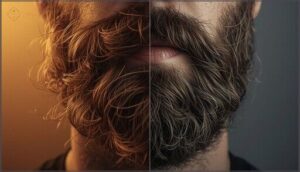
Your beard isn’t the same as the hair on your head, and that difference matters more than you’d think. Beard hair grows thicker, coarser, and often curlier, which makes straightening it a completely different game.
Understanding what you’re working with helps you pick the right approach and avoid wasting time on methods that won’t work for your specific beard type.
Differences Between Beard and Scalp Hair
You might assume all hair is the same, but beard hair and scalp hair are completely different beasts.
Facial hair growth is driven by androgens, making your beard coarser and curlier. The follicle structure underneath is flatter, creating wiry hair fiber types that resist styling. Skin oil levels on your face run lower than your scalp, leaving beard hair drier.
Understanding these beard curl patterns and hair texture differences makes facial hair care and beard straightening far more effective. To better understand the science behind facial hair vs head hair, check out these facts about the structure and growth of beard hair.
Common Beard Textures
Your facial hair falls into one of several categories, each with its own personality and challenges. Straight beard hair lies flat with a smooth cuticle, while wavy texture shows gentle S patterns that catch light. Curly beard texture forms tight loops that resist alignment without heat.
Here’s what you need to know:
- Coarse beards have thicker strands that feel stiffer and take longer to relax
- Fine beards consist of thinner hairs that respond quickly to light heat
- Beard density determines fullness, with high-density growth covering more skin area
How Curliness Impacts Straightening
Curl patterns throw straightening off track because those pronounced bends near the base create extra lift when you apply heat. Random twists across your curly beard mean some sections need longer exposure while others risk heat damage prevention issues—especially in dense cheek zones.
You’ll notice varied curl radii respond differently to identical beard straightener settings, and jawline direction changes leave visible ridges unless you adjust your hair straightening techniques mid-session.
Essential Tools for Beard Straightening
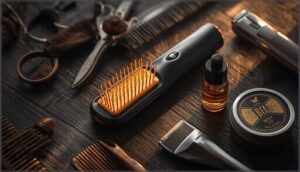
You can’t straighten your beard with just your hands and wishful thinking. The right tools make the difference between a sharp, controlled look and a frizzy mess that won’t cooperate.
Here’s what actually works when you’re serious about taming that facial hair.
Heated Beard Brushes
A heated brush is your fastest weapon for taming a wild beard. These tools combine ceramic bristles with adjustable heat settings (usually 160°C to 200°C) to smooth coarse hairs in minutes. For a detailed understanding of beard straightening, see how heat and ceramic bristles interact.
Always apply a beard heat protectant first, then glide the beard straightener through dry sections. For brush maintenance, wipe clean after each use to prevent oil buildup and extend its lifespan.
Beard Straightening Irons
When your beard defies every brush stroke, a straightening iron delivers precision control. These compact tools feature narrow ceramic or tourmaline plates that heat up in 30 to 60 seconds, letting you tackle stubborn curls section by section.
- Adjustable temps from 160°C to 200°C match your beard texture
- Rounded edges protect skin during close work
- Auto shutoff kicks in after 30 to 60 minutes
- Floating plates adapt to facial contours
- Dual voltage facilitates travel-ready styling
Wipe plates clean after use to prevent buildup.
Blow Dryers and Attachments
A blow dryer paired with the right nozzle turns chaos into order fast. Concentrator nozzles direct airflow along each strand, cutting frizz and speeding up precision work around your jawline.
Comb attachments detangle while you dry, and brush heads smooth like a round styling tool.
Pair any setup with a beard heat protectant, keep temps moderate, and you’ll rival a straightening iron’s control.
Beard Combs and Bristle Brushes
Once heat styling wraps up, reach for a beard comb or boar hair brush to lock in your work. Wide-tooth designs in bamboo or wood prevent snags, while boar bristle brushes spread oils and add shine.
Clean bristles weekly with warm water, let them dry face-down, and oil wooden grips monthly to keep detangling smooth and maintain long-term beard care performance.
Preparing Your Beard for Straightening

You can’t just blast heat onto an unprepared beard and expect good results. Skipping prep means uneven straightening, more damage, and a style that won’t hold.
Before you reach for any heated tool, you need to trim, wash, and detangle your beard the right way.
Trimming for Even Results
Before you reach for your beard straightener, achieve symmetry with a solid trim. Use trimming scissors or electric clippers to create uniform lengths across facial contours. Work in 1 to 2 millimeter increments, checking both sides constantly.
Divide your beard into sections—cheeks, jawline, chin—and adjust for hair texture differences. Even lengths matter because uneven patches straighten at different rates, sabotaging your entire effort.
Brush with a beard comb between passes to confirm beard care precision.
Washing and Conditioning Techniques
After trimming sets the foundation, proper beard cleansing and facial hydration become your next power moves. Wet your beard with lukewarm water, then massage a sulfate-free beard shampoo into the skin beneath, targeting oil and debris. Rinse thoroughly, follow with beard conditioner for 1 to 3 minutes, and detangle gently.
Pat dry with a soft towel, then lock in moisture with beard oil while still damp. This beard care ritual prepares hairs for straightening.
Detangling and Combing Methods
Once your beard’s damp and conditioned, detangling prevents breakage during beard straightening. Use a wide-tooth comb, starting at the ends and working toward roots in small sections. Finger-detangle stubborn knots first, then follow with your beard brush.
Here’s your detangling blueprint:
- Section your beard from cheeks to chin
- Use gentle, straight pulls—no back-and-forth tugging
- Apply lightweight beard oil to reduce friction
- Brush upward at roots to loosen tight knots
This beard styling prep makes beard combing smoother.
Step-by-Step Beard Straightening Methods
You’ve prepped your beard, and now it’s time to actually straighten it. The method you choose depends on your beard type, how much time you have, and what tools you’re working with.
Let’s break down the five most effective techniques, from heated brushes to natural oils.
Using a Heated Beard Brush
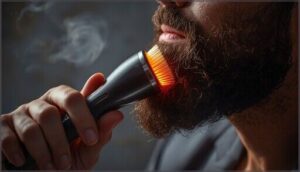
You’ve got a weapon in your hands—use it right. Start by setting your heated brush between 160 and 200 degrees Celsius, matching the heat to your beard texture. Run the beard straightener through small sections slowly, letting the ceramic bristles do the work. Don’t rush multiple passes or you’ll fry your facial hair.
| Feature | What It Does |
|---|---|
| Ceramic bristles | Distribute heat evenly, reduce snagging |
| Temperature range | 160-200°C customizes for your beard hair |
| Anti-static properties | Minimize flyaways during straightening techniques |
| Automatic shutoff | Prevents accidental overheating damage |
| Quick heat-up | Ready in 20-60 seconds for fast styling |
Clean your brush regularly to prevent product buildup that clogs bristles and ruins heat distribution.
Blow-Drying and Brushing Technique
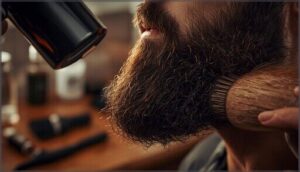
You’re taking control with precision here. Set your blow dryer between 120°C and 180°C—ceramic or tourmaline components deliver infrared heat that reduces frizz during beard styling.
Use a narrow concentrator nozzle to direct airflow down the hair shaft, not across it. Work in small sections with a boar bristle brush, guiding hairs from root to tip for proper beard alignment without heat damage.
Straightening Irons for Beards
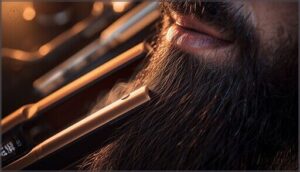
Precision tools demand respect. Your beard straightening iron needs ceramic plates for even heat distribution—start at 160°C and raise only if necessary to prevent beard damage.
Lock in your technique:
- Clamp small sections between plates for 3-5 seconds maximum to avoid weakening hair structure
- Glide slowly from root to tip in one smooth pass for uniform beard straightening results
- Never re-iron the same section immediately; heat settings above 200°C risk permanent follicle damage.
Applying Beard Relaxing Creams
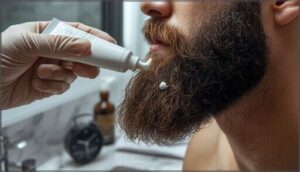
Chemical relaxers break keratin bonds to tame curls—but they’re not for everyone. Apply cream only to beard hair, avoiding skin contact, and process for 5-15 minutes max depending on your beard texture. Rinse thoroughly, then neutralize if your kit includes it.
Post-treatment care matters: condition immediately with beard oil to restore moisture after straightening.
Not comfortable with chemicals? Skip to gentler beard straightening tips instead.
Natural Oils and Daily Brushing
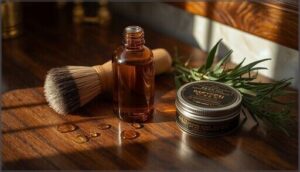
Want a low-heat approach to beard straightening? Natural oils combined with daily brushing can gradually train your facial hair without damage. Here’s your routine for natural beard care:
- Apply 3-5 drops of jojoba or argan beard oil to damp facial hair after washing
- Work the oil through your beard with fingertips for even distribution
- Brush downward using a boar bristle brush in firm, deliberate strokes
- Repeat morning and night to soften beard hairs and reduce curl
- Seal with beard balm for added hold and beard grooming control
Preventing Damage During Straightening
Heat damage is the enemy of a healthy beard, and most guys fry their facial hair without even realizing it.
You can straighten your beard without turning it into brittle straw, but it requires a deliberate approach to protection and temperature control.
Here’s what you need to know to keep your beard strong while getting it perfectly straight.
Importance of Heat Protectants
You wouldn’t iron a shirt without protecting the fabric, so why straighten your beard without a heat protectant?
Silicones in quality beard heat protectant products form a barrier that cuts heat transfer by up to 40 percent, while panthenol boosts tensile strength by roughly 10 percent after exposure.
This thermal protection keeps your beard straightening routine from turning your facial hair brittle and damaged.
Setting Safe Temperatures
Heat settings separate beard heroes from beard disasters. Your beard straightener shouldn’t climb past 350 degrees Fahrenheit—anything hotter invites breakage and split ends you can’t reverse. For fine or damaged facial hair, dial down to 300 F or lower.
- Always test a small section for five seconds before full beard straightening
- Keep the tool moving every two to three seconds to avoid scorching
- Start low and increase heat only if two passes don’t deliver results
- Lock your temperature control to prevent accidental damage during styling
Moisturizing to Prevent Dryness
Your beard loses moisture every time heat touches it, so hydration isn’t optional. Apply beard oil with jojoba or argan right after washing—it locks in water and cuts moisture loss by 40 percent.
For deeper beard hydration and moisture balance, use a ceramide-rich beard balm weekly to rebuild your skin barrier and stop dry skin before it cracks.
Hyaluronic acid beard conditioner binds 1,000 times its weight in water, keeping beard health on track for eight hours straight.
Avoiding Overuse of Heated Tools
Heat damage prevention starts with a simple rule: limit your heated brush or beard straightening iron to two or three sessions per week. Daily hair straightening weakens fibers fast, so alternate with non-heated techniques to preserve strength.
Set safe temperature settings between 300 and 350 degrees, cap each pass at three seconds, and give your beard a 30-second cooldown between strokes for overheating protection.
Maintaining a Straight Beard All Day
You’ve straightened your beard, and now the real challenge begins—keeping it that way. Without the right products and techniques, your beard can curl back up within an hour or two, especially if you’re dealing with humidity or sweat.
Here’s how to lock in that straight look from morning until night.
Applying Beard Wax for Hold
You’ve tamed the curl—now lock it down. Beard wax acts as your hold anchor, keeping straightened facial hair in place for up to 8 hours.
Follow these beard styling essentials:
- Warm a pea-sized amount between fingertips to soften the wax formulas
- Work from skin outward, aligning hairs with their natural growth direction
- Use a comb to perfect shape and remove clumps
- Brush lightly for even distribution and matte finish
Moderate-hold beard products resist humidity up to 60 percent without frizz.
Routine Touch-Ups
Throughout the day, your beard faces wind, movement, and natural curl rebound. Quick touch-ups keep your straightening routine from falling apart.
Carry a compact comb and lightweight balm for morning prep or midday beard refresh sessions. Brush in growth direction to realign strays, then apply a dab of product to problem zones.
For best results during daily maintenance, perform these touch-up tips every 3 to 4 hours to preserve shape without reheating.
Protecting Beard Shape in Humid Conditions
When moisture rises, your straightened style crumbles fast. Humidity control demands frizz prevention products that seal cuticles and lock in shape retention without heaviness.
To master moisture management in sticky weather, follow these beard straightening essentials:
- Apply lightweight beard oil for flexible hold that resists environmental frizz
- Use mattifying balm on problem zones to control flyaways and reduce shine
- Reapply sparingly after outdoor exposure to maintain alignment without buildup
Choose water-based formulas for optimal beard health and hygiene during grooming and styling routines.
Daily Beard Care for Long-Term Results

Straightening your beard once doesn’t mean much if you’re not backing it up with solid daily care. The real key is building a routine that keeps your facial hair healthy, manageable, and trained to hold that straight shape.
Here’s what you need to lock in every single day for long-term results.
Cleansing and Conditioning Routine
You’re only as good as your grooming foundation, and that starts with a solid cleansing routine. Use a mild sulfate-free beard shampoo every 2 to 3 days to wash your facial hair without stripping natural oils.
Apply lukewarm water, then gently massage the scalp care area for 15 to 20 seconds to lift dirt from hair follicles. Rinse thoroughly and pat dry with a soft towel to minimize breakage.
Using High-Quality Beard Oils
Your beard absorbs quality like a sponge, so pick oils that actually deliver. Look for jojoba or argan as your base; they mimic natural sebum and won’t clog pores. Daily use of 3 to 5 drops keeps moisture levels high and reduces frizz within a week.
Consider these carrier oil types for best absorption rates:
- Jojoba oil for balanced hydration
- Argan oil for shine and elasticity
- Sweet almond oil for lightweight conditioning
- Fragrance free options for sensitive skin
Solid beard oil benefits start with pure ingredients.
Training Beard Hair to Stay Straight
You can’t force beard hair overnight, but consistent brushing builds muscle memory over time.
Use a heated beard straightening iron or brush every morning to reinforce beard alignment, then follow with a styling cream for beard hold.
Daily routine repetition trains stubborn hair texture to respond faster. Within two to three weeks, your beard straightening methods will require less effort as hairs learn their new direction.
Nighttime Beard Care Tips
Your straightened beard won’t last if you sleep on it wrong. Wash with a mild cleanser before bed, then apply nighttime beard oil to lock in hydration. Sleep on a silk pillowcase to reduce friction and maintain overnight beard care.
Brush gently, tie loosely with a silk wrap, and control bedroom humidity around 40-50 percent. These beard sleep tips set up your morning beard routine for success.
Professional and Advanced Straightening Options
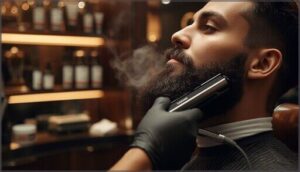
Sometimes home straightening methods aren’t enough to tame a really stubborn, curly beard. That’s when professional treatments and sophisticated options come into play.
Let’s look at what’s available beyond your bathroom counter and whether these more intensive approaches are worth your time and money.
Salon Treatments for Beards
Professional salon services give you serious firepower when your beard won’t cooperate at home. Beard keratin treatments smooth frizz for up to six weeks, while thermal straightening uses controlled heat between 350 and 410 degrees Fahrenheit to relax tight curls. You’ll find these grooming tools and products deliver results that last.
Popular beard straightening techniques at salons include:
- Keratin treatments that seal protein into each strand using formaldehyde-free formulas and flat irons
- Thermal straightening with precise temperature control to target individual curl knots along your jawline
- Beard waxing and panel styling that shape your beard while conditioning oils set a smooth look
- Facial relaxers using gentler formulas and milder temperatures to ease curl without harsh chemical exposure
Chemical Relaxers and Risks
Chemical relaxers promise a permanent fix, but they bring real danger to your face. Formaldehyde risks include respiratory problems when these products heat up during application. You’ll face scalp irritation, chemical burns, and serious hair damage from hydroxide-based formulas that break down keratin bonds.
Relaxer alternatives like heated beard straightening irons and blow-drying techniques give you control without gambling on hormonal disruption or potential cancer links from repeated chemical exposure.
Keratin Treatments for Facial Hair
You want keratin benefits without the chemical burn? Protein therapy delivers hair smoothing through hydrolyzed keratin formulas that last four to eight weeks.
These facial hair care treatments reduce frizz and improve beard texturizing while you maintain control. Apply to clean, towel-dried facial hair for 20 to 40 minutes, then lock it in with a neutralizer.
Most beard straightening kits run cheaper than salon visits for comparable beard care and maintenance results.
Consulting Beard Care Specialists
Sometimes you need backup. A beard care specialist offers a tailored consult, mapping your growth patterns and evaluating skin condition before building a custom care plan.
They’ll analyze face shape, beard density, and curl tendency to recommend the right beard styling and grooming approach.
Expect product recommendations, heat tool coaching, and follow-ups to track your beard straightening progress and adjust your mens grooming routine.
Frequently Asked Questions (FAQs)
How can I straighten my beard?
Picture a wild forest of wiry curls obscuring your jawline each morning.
You can straighten your beard using a heated beard brush, blow-dryer with comb, or mini straightening iron on low heat.
Is it better to straighten beard hair wet or dry?
Straighten on dry beard hair for safer, more controlled results. Wet Hair Straightening raises steam and Heat Damage Prevention risks, while the Dry Beard Method offers better precision and reduces keratin breakdown.
How to make a beard soft and straight?
Softening a beard takes consistent conditioning. Hit it with quality beard oil daily, work in a leave-in conditioner after washing, and use heat styling tools on low settings with a protectant spray to relax hair texture.
How do I make my beard hair straight?
You’re fighting your beard’s natural curl—work with ceramic heat tools between 300 and 450 degrees, apply a heat protectant first, then brush slowly through dry hair while securing the style with quality wax.
How do you fix a crooked beard?
A crooked beard usually stems from uneven growth or inconsistent trimming. Fix it by identifying the asymmetry, then carefully trim the longer side to match the shorter.
Regular brushing and using a heated beard straightener helps train facial hair alignment.
How to fix a curly beard?
Curly beard hair stems from follicle shape and genetics, creating tight curl patterns near the skin.
Use a heated beard straightener with heat protectant, or apply beard relaxing cream to soften curly hair texture naturally.
How often should I straighten my beard?
Like tuning a lute, your beard straightening frequency depends on hair texture and damage prevention. Most experts suggest two to three heat sessions weekly using a beard straightener, allowing proper beard recovery between applications for ideal hair straightening maintenance.
Can humidity affect beard straightening?
Yes. Humidity above 60 percent breaks hydrogen bonds in your beard hair, causing straightened styles to revert fast.
Muggy air swells individual hairs unevenly, triggering frizz and puffiness around your jawline within hours.
Are there natural ways to straighten a beard?
Rome wasn’t built in a day, and neither is a perfectly straight beard. Natural Oils, Beard Balm, and Hair Serum condition beard hair daily, while regular brushing trains Curly Beard Styling patterns over time.
What are the risks of straightening too often?
Overdoing it weakens your beard’s cuticle layer, leading to heat damage, dryness issues, and beard breakage.
You’ll also face skin irritation underneath, plus growing styling dependence on your beard straightener or straightening iron daily.
Conclusion
Picture your beard falling into a clean, controlled line—sharp edges, smooth texture, no frizz fighting back. That’s what happens when you know how to straighten the beard with the right tools and daily habits.
Heat protection keeps damage away, consistent conditioning builds strength, and proper technique locks everything in place. You’re not just taming wild hair—you’re commanding your appearance with precision.
Master the process, protect your beard, and own the look you’ve been chasing.