This site is supported by our readers. We may earn a commission, at no cost to you, if you purchase through links. This content is for general informational and educational purposes only and is not a substitute for professional medical, dermatological, or nutritional advice.

Baking soda sits in nearly every kitchen cabinet, and that convenience tempts plenty of people to smear it on their nose the moment a blackhead shows up. It’s cheap, it’s already in your house, and it feels satisfying to scrub away. But your skin’s natural pH sits around 4.5 to 5.5, while baking soda measures close to 9. That mismatch can strip your skin barrier faster than it clears pores.
Used carefully, though, it’s not off the table entirely. You just need the right ratio, the right technique, and a clear sense of when to stop. Here’s how to use baking soda for blackheads without leaving your face red, tight, and worse off than before.
Table Of Contents
- Key Takeaways
- How to Use Baking Soda for Blackheads
- Make a Gentle Baking Soda Paste
- Apply Baking Soda Without Over-Exfoliating
- Prevent Baking Soda Skin Irritation
- Choose Safer Blackhead Treatments
- Frequently Asked Questions (FAQs)
- What is the best homemade blackhead remover?
- How to remove a blackhead in 5 minutes?
- What will draw out a deep blackhead?
- How do Koreans get rid of blackheads?
- Can baking soda remove Blackheads?
- how can a teenager get rid of blackheads?
- How to get rid of Blackheads without irritating skin?
- How do you get rid of blackheads on your face?
- Does baking soda remove blackheads?
- How do you make baking soda scrub for blackheads?
- Conclusion
Key Takeaways
- Baking soda’s high pH (around 9) clashes with your skin’s natural pH (4.5-5.5), so it can strip your skin barrier faster than it clears pores.
- If you use it, mix 2 parts baking soda to 1 part water, patch test on your elbow first, and limit application to 10-15 minutes once a week (or twice for oily skin).
- Never combine baking soda with other actives like salicylic acid, retinol, or glycolic acid on the same day, since stacking exfoliants multiplies irritation risk.
- Safer, more effective alternatives exist, like salicylic acid cleansers, retinoids, or professional extraction, which target clogged pores without disrupting your skin’s pH balance.
How to Use Baking Soda for Blackheads

Baking soda can help clear blackheads, but only when you use it correctly. Skipping steps or rushing the process raises your risk of irritation. Follow this five-step routine to do it safely, from start to finish.
Start by mixing a small amount of baking soda with water to form a gentle paste, and check out this organic face care routine for clearer skin for tips on prepping your skin beforehand.
Gather Your Ingredients
Grab pure baking soda, warm water, and a small bowl before you start. Skip anything with added fragrance, since that can irritate skin.
Measure 1 tablespoon baking soda with 2 tablespoons water, stirring gradually to avoid clumps. Optional add-ins like honey, oatmeal, or lemon juice boost benefits, but test each separately first to rule out sensitivities. Baking soda works well for this purpose because it acts as a mild abrasive to exfoliate dead skin cells and unclog pores.
Patch Test Before Applying
Before that paste touches your face, test it on the inside of your elbow. Apply a quarter-sized amount and wait 24 hours, watching for redness or stinging.
Burning, hives, or swelling mean wash it off immediately with lukewarm water. No reaction? Baking soda’s alkaline nature can still shift your skin’s pH, so proceed carefully once you’ve confirmed it’s tolerated.
Cleanse and Dampen Skin
Once your patch test clears, wash your face with a gentle, alcohol-free cleanser and lukewarm water using your fingertips, not a washcloth.
Skip scrubbing. Pat dry with a towel, then blot gently until your skin feels damp, not dripping. This damp base helps the baking soda paste spread evenly without dragging or irritating your skin.
Apply Paste to Blackheads
With damp skin ready, use a clean fingertip or cotton swab to apply the paste. Keep it thin, covering only blackhead-prone zones like your nose. Don’t rub hard, light pressure prevents irritation. Adjust thickness if it’s runny.
Let it sit undisturbed for 10 to 20 minutes as a targeted spot treatment, not a full-face mask.
Rinse and Moisturize
Once time’s up, rinse with lukewarm water, never hot, since heat strips your skin’s natural oils and worsens dryness. Rinse thoroughly until no paste remains.
Pat dry gently with a clean towel instead of rubbing. While skin’s still slightly damp, apply a fragrance-free moisturizer to support your barrier and lock in hydration.
Make a Gentle Baking Soda Paste
Getting the paste right matters just as much as applying it correctly. A few small choices in how you mix it can mean the difference between gentle exfoliation and irritated skin. Here’s what to keep in mind before you start.
Baking Soda and Water Ratio
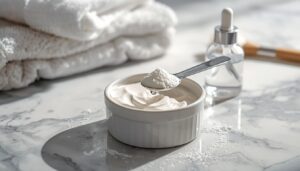
Getting the ratio right matters more than most people think.
For a gentle facial paste, start with 2 parts baking soda to 1 part water, adjusting gradually. Too much water thins the exfoliant into a runny mess; too little leaves it dry and hard to spread. Measuring accuracy prevents skin irritation, so use a measuring spoon, not guesswork.
Once your skin tolerates this simple paste, you might explore how glycolic acid benefits sensitive skin as a gentler next step in your exfoliation routine.
Achieve a Spreadable Consistency
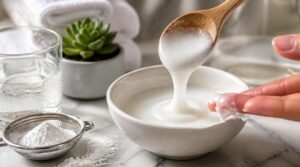
Mixing your paste right takes patience, not guesswork.
Use lukewarm water, around 100°F, and add it slowly, stirring 30 seconds between pours.
- Sift fine baking soda first for a smoother texture
- Add water gradually, never all at once
- Test between your fingers, it should flow like cream
- Adjust with small amounts until spreadable
Fresh paste works best, always mix right before applying.
Add Honey for Moisture
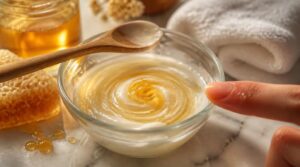
Honey isn’t just a sweetener, it’s a natural humectant that pulls water into skin.
Stir in a teaspoon while skin is still damp, since honey needs moisture nearby to work.
| Step | Action | Time |
|---|---|---|
| 1 | Mix honey in | 10 sec |
| 2 | Apply to skin | 1 min |
| 3 | Leave on | 15-20 min |
Patch test first, always.
Avoid Harsh Ingredient Combinations
Baking soda’s alkaline nature clashes with acids, so don’t stack it with other actives.
Skip benzoyl peroxide and layer acids separately on different days. Alternate retinol nights instead of mixing it into your paste routine.
This prevents pH balance disruption and skin irritation. Watch fragrance irritants in add-ins, and always patch test new products before your face meets them.
Apply Baking Soda Without Over-Exfoliating
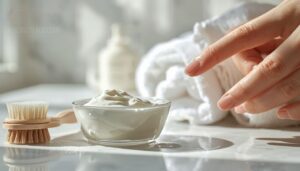
Application technique matters just as much as the paste itself. How you apply baking soda determines whether you get gentle exfoliation or irritated, damaged skin. Here’s what to keep in mind before you touch paste to your face.
Use Gentle Circular Motions
How you move matters as much as what you’re using. Apply the paste with light fingertip pressure in small circular motions, never scrubbing. Focus on the T-zone where blackheads cluster, using wider circles on cheeks and lighter pressure near your nose.
If you want to extend this gentle approach beyond your face, these body exfoliation tips for home use follow the same light-touch philosophy.
This technique boosts circulation while protecting your skin’s barrier, giving you real exfoliation without the harsh abrasion.
Keep Contact Time Short
Timing makes or breaks this treatment. Rinse promptly after massage, don’t let baking soda sit and dry on your skin.
Shorten application time to protect your barrier:
- Cracked, flaky patches that sting in the shower
- Redness that lingers for hours
- Tightness that makes smiling uncomfortable
- Breakouts from stripped, unbalanced skin
- Sensitivity that ruins your favorite serums
Limit mask duration to 10-15 minutes max. Avoid prolonged exposure, always remove before drying out completely.
Target Blackhead-Prone Areas
Not every inch of your face needs equal treatment. Focus on your T-zone, the forehead, nose, and chin, where oil glands work overtime and blackheads cluster most.
Go heavier on nose pores since they’re larger and more visible. Cheeks get a lighter touch to avoid over-drying.
For body zones like the back or chest, mix baking soda into a gentle cleanser first. Isolated bumps call for spot treatment instead of broad application.
Avoid Broken or Inflamed Skin
Skip any area with cuts, active breakouts, or inflammation, baking soda will only make things worse. Bright red patches, swelling, or rising pain mean stop immediately and rinse.
If your skin already runs sensitive or reactive, this treatment probably isn’t for you. Recognizing skin sensitivity early saves you from a much longer recovery later.
Remove All Baking Soda Residue
Once you’ve avoided irritated skin, focus on getting the paste completely off. Rinse thoroughly with water first, then wipe with a damp cloth to lift leftover powder.
- Check hairline and jaw for missed residue
- Use a vinegar solution if powder clings
- Dry and check surface under good light
- Avoid reapplying paste over unrinsed skin
Prevent Baking Soda Skin Irritation
Baking soda can throw off your skin’s natural balance if you’re not careful. Irritation doesn’t always show up right away, so prevention matters more than reaction. Here’s what you need to know to keep your skin calm and protected.
Limit Treatment Frequency
More isn’t better here. Once a week is the safest ceiling for most skin, though resilient, oily skin may tolerate two sessions if no irritation shows up.
| Skin Type | Max Frequency |
|---|---|
| Dry/Sensitive | Once every 10-14 days |
| Oily | 1-2x weekly |
Stick to a schedule and let your skin’s response guide any adjustments.
Protect Your Skin Barrier
Strength isn’t automatic, your acid mantle needs help staying intact. Baking soda sits around pH 9, which knocks your skin’s natural 4.0-5.8 range off balance and weakens barrier protection.
Rinse thoroughly, then apply a noncomedogenic moisturizer within minutes. This locks in moisture, helps ceramide production, and helps restore pH balance before dryness sets in.
Avoid Other Exfoliants
Since your barrier is already stressed, don’t layer on more actives. Avoid mixing acids with baking soda, including glycolic, salicylic, or retinol products, the same day.
This kind of exfoliant stacking multiplies irritation risk fast. Practice chemical exfoliant separation instead: pick one method per day, patch test new actives separately, and let pore cleansing happen gradually rather than all at once.
Watch for Warning Signs
Your skin talks. Learn to listen before overexfoliation sets in.
Your skin speaks before it suffers, so listen closely before overexfoliation takes hold
Stop immediately if you notice:
- Redness and burning that doesn’t fade in minutes
- Itching, tightness, or swelling resembling hives
- Pigment changes or dark spots forming
These signal barrier damage, not deep cleaning. Even a passed patch test doesn’t guarantee safety with repeated blackhead treatments. Rinse off, skip your next session, and monitor skin for 24 hours.
Soothe Dry, Irritated Skin
Irritation calling the shots? Reach for a cold compress first, 10-15 minutes to calm burning fast.
Follow with a gentle cleanser, then layer on barrier repair creams with ceramides and cholesterol. Pat in a hydrating moisturizer containing hyaluronic acid or squalane, and pause all exfoliation until redness fades completely.
Choose Safer Blackhead Treatments
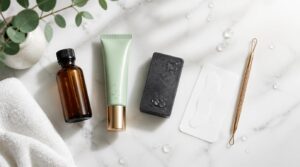
Baking soda isn’t your only option, and it’s not always the safest one. If your skin keeps reacting or your blackheads won’t budge, it’s worth looking at treatments dermatologists actually trust. Here are five safer routes to try, from drugstore products to professional care.
Salicylic Acid Cleansers
Want real chemical exfoliation without the guesswork? Try salicylic acid cleansers.
- Strength: 0.5%-3%, gels up to 7%
- Application: massage on damp skin, 60 seconds
- Frequency: start 1-2x weekly
- Pairing: moisturizer plus sunscreen
- Precautions: watch irritation, adjust slowly
Salicylic acid unclogs pores, cuts oil, and calms inflammation, more targeted than baking soda’s rough scrub.
Topical Retinoid Products
Salicylic acid works on the surface. Retinoids go deeper, speeding up cell turnover so clogged pores shed naturally.
| Retinoid | Strength | Timing |
|---|---|---|
| Adapalene | 0.1%-0.3% | Nightly |
| Tretinoin | 0.025%-0.1% | Nightly |
| Retinol (OTC) | 0.25%-1% | 2-3x weekly |
Expect 12 weeks before results show. Skip it alongside baking soda scrubs, your skin barrier can’t handle both.
Gentle Glycolic Acid Exfoliation
Where retinoids rebuild, glycolic acid resurfaces. As an alpha-hydroxy acid, it loosens the debris clogging pores at a much gentler pace than baking soda’s rough grit.
Look for these markers:
- Buffered glycolic acid, pH near 4
- Concentrations between 5%-10%
- Gel formulas for slower penetration
Start three times weekly. Sun protection is non-negotiable, glycolic acid raises sunburn risk.
Professional Blackhead Extraction
Some clogs won’t budge for any acid, gentle or not. That’s when professional extraction earns its place, using sterile tools like loop extractors after steam softening loosens debris.
Estheticians angle pressure to match follicle direction, not the flat squeeze you’d use at home. Sessions run 15-20 minutes within a facial, repeated every 4-6 weeks, finishing with hydration and SPF.
When to See Dermatologists
Extraction experiences clogged pores, but not every skin issue belongs on an esthetician’s table. See a dermatologist if acne resists treatment for months, a mole changes shape or color, or rashes like eczema keep flaring.
Persistent, unexplained symptoms, whether it’s blackheads that won’t clear or spots that look "off," deserve professional evaluation rather than more scrubbing.
Frequently Asked Questions (FAQs)
What is the best homemade blackhead remover?
Your best bet combines baking soda paste with honey for gentle exfoliation and antibacterial action, or a clay mask to pull out excess oil. Add tea tree oil for extra bacteria-fighting power, and always follow with moisturizer.
How to remove a blackhead in 5 minutes?
Mix a thick baking soda paste, then dab it onto the blackhead as a targeted spot treatment. Use gentle circular motions for under a minute, let it sit briefly, then rinse immediately, this keeps contact time short and skin protected.
What will draw out a deep blackhead?
Like a splinter buried too deep for tweezers, a stubborn plug often resists home care. Deep pore cleansing, steam treatment, and salicylic acid use soften it first, but true comedone extraction by a professional is usually what finally draws it out.
How do Koreans get rid of blackheads?
Korean skincare relies on double cleansing first, then a BHA toner routine to dissolve sebum. Add a clay mask once or twice weekly, gentle exfoliation, and consistent moisturizer aftercare, rather than harsh scrubs to clear blackheads.
Can baking soda remove Blackheads?
Only partly. Baking soda works as a mild physical exfoliant, lifting surface debris, but its alkalinity disrupts your skin’s natural pH balance. It won’t dissolve pore-clogging oil like salicylic acid does, so treat it as temporary polish, not real removal.
how can a teenager get rid of blackheads?
Start with a twice-daily salicylic acid cleanser, gentle enough for young skin. Wash morning and night, moisturize with a non-comedogenic formula, and skip harsh scrubbing. Consistency matters more than intensity for teen blackhead prevention.
How to get rid of Blackheads without irritating skin?
Patch test first, then use gentle circular motions and short contact time. Target only blackhead-prone areas, avoid broken skin, rinse fully, moisturize after, and limit sessions to twice weekly to prevent irritation.
How do you get rid of blackheads on your face?
The fix isn’t one product, it’s a routine. Combine facial steaming to open pores, gentle exfoliation to lift dead skin, and consistent oil production control.
Baking soda paste, used sparingly, helps this cycle without replacing safer options like extraction tools or tea tree spot treatment.
Does baking soda remove blackheads?
Not really. Baking soda can temporarily exfoliate skin, but it doesn’t dissolve pore-clogging oil the way blackheads need. Its alkaline nature disrupts pH balance, risking skin irritation. Professional alternatives, like salicylic acid, address the actual problem more reliably.
How do you make baking soda scrub for blackheads?
Mix a 1:1 baking soda ratio with water for paste texture, or try 2 parts soda to 1 part water. Add a honey addition for moisture, then apply with gentle circular motions to exfoliate.
Conclusion
Think of your skin barrier like a garden fence. Knock down too many boards, and everything gets in: bacteria, dryness, redness. That’s the real risk here.
Knowing how to use baking soda for blackheads means treating it as an occasional tool, not a daily habit. Patch test first, keep sessions short, and moisturize after every rinse.
When your skin keeps fighting back, trade the box in your pantry for a dermatologist-approved routine built to actually last.