This site is supported by our readers. We may earn a commission, at no cost to you, if you purchase through links. This content is for general informational and educational purposes only and is not a substitute for professional medical, dermatological, or nutritional advice.

A glycolic peel can leave skin looking clearer and smoother, but it can also turn a small mistake into days of stinging, redness, and stubborn flaking. The difference often comes down to preparation, not bravery.
I’ve seen people rush from a strong cleanser straight to an acid peel, then wonder why their cheeks feel hot long after rinsing. Glycolic acid loosens the bonds between dead skin cells, so it needs a calm, intact skin barrier and careful timing.
Learning how to use glycolic acid peel products safely means choosing a gentle strength, protecting tender areas, and knowing when to stop.
Table Of Contents
- Key Takeaways
- Prepare Your Skin for a Glycolic Peel
- How to Use a Glycolic Acid Peel
- Neutralize and Remove The Peel Safely
- Follow Proper Glycolic Peel Aftercare
- Use Glycolic Peels Without Over-Exfoliating
- Frequently Asked Questions (FAQs)
- How long do you leave a glycolic acid peel on?
- What should I put on my face after a glycolic acid peel?
- What should you never mix with glycolic acid?
- How do I use a glycolic acid peel correctly?
- Are banana peel acidic?
- How does a glycolic acid peel work?
- Is a glycolic acid peel right for You?
- What are the pros and cons of a glycolic peel?
- How much does a glycolic peel cost?
- Who’s a good candidate for a glycolic peel?
- Conclusion
Key Takeaways
- Prepare first: avoid glycolic peels on irritated or sunburned skin, stop other strong actives for several days, patch-test, and protect eyes, lips, nostrils, and mouth corners with petroleum jelly.
- Start with a low-strength, beginner-friendly peel, apply a thin even layer to clean, fully dry skin, and use a very short first contact time while watching closely for burning or swelling.
- Neutralize and rinse immediately if you feel strong stinging, pain, rapid redness, or swelling, then use only gentle barrier-supporting moisturizer and broad-spectrum SPF 30 during recovery.
- Space treatments at least two weeks apart, avoid picking flaking skin or adding exfoliants too soon, and contact a dermatologist for blistering, severe pain, infection signs, or lasting irritation.
Prepare Your Skin for a Glycolic Peel
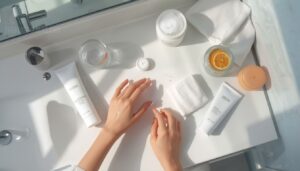
A glycolic peel works best when your skin is calm, clean, and properly protected. Skipping preparation can increase burning, irritation, and uneven results. Before you apply the peel, take these five safety steps.
For extra comfort, use these soothing tips for skin after ingrown hair removal if your complexion feels sensitive beforehand.
Check Skin Suitability
Before you peel, assess your skin type, skin sensitivity, and skin tolerance. Don’t use glycolic acid on sunburned, cracked, irritated, or reactive skin.
For allergy testing, include a patch test in your skin prep routine: apply product to a protected patch test site, such as your inner arm, then monitor reaction twice daily for 7–10 days. If discomfort develops, consult a dermatologist.
Use broad-spectrum SPF 30 sunscreen before sun exposure, as glycolic acid can increase photosensitivity.
Stop Irritating Skincare Ingredients
Stop retinoids and strong acne actives for two to three days before treatment, including benzoyl peroxide, salicylic acid, and prescription acne products. Layering these with glycolic acid can overwhelm your barrier repair process and cause burning.
Choose fragrancefree skincare, and skip essential oils, alcohol-based toners, scrubs, and harsh cleansers. Wash gently, don’t over-wash, and avoid hot showers, sun exposure, saunas, and other heat triggers before your scheduled contact time.
Patch Test 24 Hours Before
After stopping actives, do a patch test 24 hours before your glycolic acid peel. Apply diluted product to a quarter-sized spot inside the arm or elbow crease, away from washing. For reaction monitoring, watch skin sensitivity for 24–48 hours:
- faint redness
- itching
- swelling
- bumps
- blistering
Skip treatment after any reaction. Negative results carry false-negative risks, so use postpeel aftercare.
Cleanse and Dry Skin
After a clear patch test, cleanse with lukewarm water and a gentle, fragrance-free cleanser with a pH balance around 4 to 5. Avoid regular soap, scrubs, and over-washing, especially if you have dry skin, since tightness signals stripping. Rinse completely, then pat skin dry with a soft towel.
Your face should feel clean, calm, and fully dry before applying the glycolic acid peel.
Protect Delicate Facial Areas
Before application, shield sensitive areas with a thin layer of petroleum jelly around your eyes, lips, nostrils, and mouth corners. Use a cotton swab or tapered disposable applicator for precision tool use, keeping product well away from mucous membranes.
If your patch test showed sensitivity, don’t peel these zones. Low concentration peels require careful skin tolerance checks. Remove the barrier after rinsing and neutralizing solution, then reapply before aftercare.
How to Use a Glycolic Acid Peel
Once your skin is prepared, apply the peel with a careful, controlled approach. The right concentration, tools, and timing make a major difference in how your skin responds. Follow these steps to apply glycolic acid evenly while protecting delicate areas.
After rinsing, gently pat skin until damp, then seal in comfort with a facial moisturizer for dry skin.
Choose a Beginner-Safe Concentration
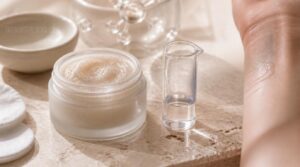
Start low concentration to give your skin room to adapt. Choose a beginner-safe glycolic acid peel with 5–7% concentration, preferably a cream formulation, which is usually gentler than liquids or gels. Patch test first, then monitor skin response closely.
Aim for a pH balance of 3.0–4.0. Use consistent aftercare, and make a gradual increase of only 2–3% after several months without irritation.
Gather Clean Application Tools
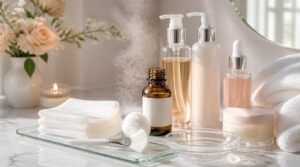
Before you begin, set up a clean, controlled workspace so nothing interferes with your peel.
- Use a 1-inch synthetic fan brush or folded 4×4 cm gauze. Avoid natural bristles, which absorb acid.
- Wipe reusable tools with 70% isopropyl alcohol, then air-dry. Keep gauze single-use.
- Set out a cotton ball, soft cloth, cleansing oil, nonsoap cleanser, pH-balanced skincare, petroleum jelly, and neutralizer. Store peel sealed in amber glass.
Apply a Thin, Even Layer
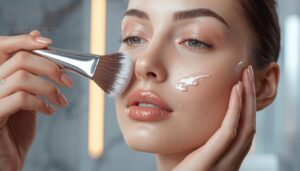
Load your fan brush with 1-2 milliliters of glycolic acid solution, removing excess so it won’t drip onto your skin.
Work in sections, forehead first, then the cheeks, chin, and jawline, treating the nose last with a lighter touch. Use horizontal strokes, then vertical, to make sure coverage is even. The layer should appear uniformly translucent, with no pooling or visible droplets.
Avoid Eyes, Lips, and Nostrils

Keep your glycolic acid peel one-quarter inch away from the eyelids, lip line, nostril edges, and mouth corners. These areas have thinner skin and moist tissue, so acid can travel, sting, and cause irritation quickly.
Protect Sensitive Facial Zones by applying petroleum jelly after skin is fully dry. Use a lightly loaded brush, never swipe into barriers, and keep saline nearby for accidental contact.
Follow The Recommended Contact Time
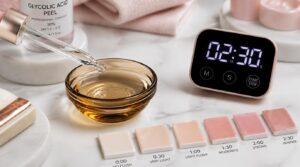
Start with short duration: leave your glycolic acid peel on for 15 to 30 seconds the first time, even if the label allows longer. Set a timer, then monitor skin response closely.
Adjust for sensitivity. If stinging, swelling, or strong redness appears, neutralize immediately. Increase time gradually, by 15 to 30 seconds per session, only when skin tolerance is good. Neutralize after timer to protect your pH balance.
Neutralize and Remove The Peel Safely
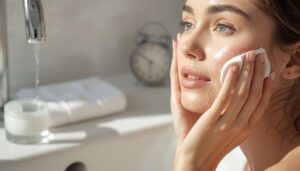
Once the contact time is up, remove the peel promptly and carefully. Your skin may feel warm or tingly, but sharp burning or intense discomfort means you should stop immediately. Follow these steps to neutralize the acid, rinse your skin, and protect your barrier.
Watch for Excessive Irritation
Watch your skin closely during the contact time. Mild tingling can be normal, but burning, itching, or tightness means your skin tolerance has been exceeded, especially if you skipped a patch test or recently used retinoids, vitamin C, or acids.
Stop immediately for swelling, blistering, intense pain, or rapid redness. Redness that remains beyond 24 hours may become postinflammatory erythema, an inflammatory response requiring professional evaluation.
Apply The Recommended Neutralizer
At the first sign of excessive burning, apply the neutralizer solution generously with a cotton pad, using gentle patting motions across every treated area.
- Follow your kit’s stated timing
- Protect edges with petroleum jelly
- Let liquid pool lightly
- Reapply where stinging persists
- Confirm the sharp acidic odor fades
This peel neutralization step helps restore pH and protects skin barrier function before aftercare and postpeel care.
Rinse Thoroughly With Cool Water
Once the neutralizer has done its job, rinse the treated skin promptly with cool water. It should feel soothing, not icy or sharp, and should comfortably lower the heat that can follow a glycolic acid peel.
Let gentle running water sweep evenly over every treated area. Don’t rub or scrub, especially around the eyes, nostril edges, lips, and mouth corners. Controlled rinsing protects sensitive skin and gets it ready for aftercare.
Remove All Peel Residue
After your cool water rinse, inspect skin under good lighting for all peel residue. Apply the neutralizing solution at its labeled time, then re-rinse so water carries material away.
- Thin film
- Tiny clumps
- Hairline pooling
- Jawline traces
Don’t wipe before rinsing, or transfer residue to towels and tools. This check gets post-peel, pH-balanced skin ready for barrier-repair aftercare.
Gently Pat Skin Dry
Use a clean, ultra-soft facial towel to pat dry, never rub. Press lightly two or three times over each area, starting at your face, then moving to the neck and décolleté.
Pay attention behind the ears and within the chin crease. Use a fresh towel section for each fold. Leave skin slightly damp for one to two minutes, then apply your barrier-repair moisturizer. For sensitive post-peel skin, use feather-light pressure.
Follow Proper Glycolic Peel Aftercare

Your skin is more vulnerable after a glycolic peel, so the next few days matter as much as the application itself. Keep your routine simple, protective, and focused on recovery. Follow these aftercare steps to support healing and avoid unnecessary irritation.
Soothe Burning and Redness
Burning should settle, not build. Start cool compress therapy within an hour: press a cotton towel, 15–20°C, on skin for minutes, changing it. Skip ice. Cooling masks may help if fragrance-free.
At 24–48 hours, apply an anti-redness serum for redness reduction.
Follow intervention timing, prioritize gentle skincare, hydration barrier support, and sun protection post-peel to limit postinflammatory hyperpigmentation.
Apply a Barrier-Repair Moisturizer
After peel moisturizing starts once you rinse: apply a fragrance-free moisturizer to slightly damp skin. Choose barrier repair ingredients, including ceramides, cholesterol, fatty acids, and humectants, to support barrier function and skin barrier repair.
This moisturizer texture guide: use a cream, in an even protective layer. For pH compatibility, choose near 5. These skin comfort tips support ceramide synthesis too.
Wear Mineral SPF 30
After a glycolic peel, Daily Sun Protection is nonnegotiable. Apply a broad-spectrum sunscreen with SPF 30 to all exposed skin 15 minutes before daylight exposure, then reapply every two hours outdoors.
Choose mineral sunscreen: Zinc Oxide Coverage and Titanium Dioxide Protection form a surface barrier that reflects UV. These Mineral Sunscreen Benefits support SPF 30 Application while skin recovers after.
Avoid Makeup and Active Ingredients
Skip makeup immediately after a glycolic acid peel. Foundation, powders, fragrance, and preservatives can sting, trap irritants, or complicate cleansing.
Keep active ingredients off your face for 24 to 48 hours: retinoids, benzoyl peroxide, acids, and hydroquinone.
Choose a Fragrance-Free Moisturizer, use Gentle Cleansing Only, and keep Barrier Support Simple. Follow moisturizer tips, sunscreen, and patch test results. Avoid exfoliants.
Never Pick Flaking Skin
That flaking skin is proof your glycolic acid peel is working. Don’t pick at it, no matter how tempting.
Picking creates three serious problems for your peel aftercare routine:
- Scarring risk from disrupted healing layers
- Infection hazards as open sores invite bacteria
- Uneven pigmentation that damages skin texture for months
Let the natural shedding process finish.
Use Glycolic Peels Without Over-Exfoliating
Knowing how to apply a glycolic peel is only half the equation — knowing when not to reach for it again is just as important. More isn’t better here, and pushing too hard, too fast is one of the fastest ways to undo the progress you’ve made. Here’s what you need to keep your routine balanced and your skin on track.
Knowing when to pause glycolic peels matters as much as application—more is not better when your skin needs recovery
Space Peels Two Weeks Apart
When your skin is still recovering from one session, booking another too soon works against you. A two-week minimum between peels gives your skin barrier time to rebuild.
Biweekly scheduling at 20-30% concentrations is clinically supported, with research showing a 40% reduction in hyperpigmentation after six treatments. Rushing that process won’t speed up your results; it will set them back.
Adjust Frequency by Skin Type
Two weeks is just the floor, not the prescription for everyone.
Dry and sensitive skin types often need three to four weeks between sessions to avoid ongoing irritation, while oily skin can tolerate biweekly peels if no burning occurs.
Combination skin should pace around its most reactive zone, usually the cheeks.
For mature or post-menopausal skin, space peels conservatively, as dryness amplifies sensitivity over time.
Recognize Over-Exfoliation Warning Signs
Treatment frequency is too high if your face stops feeling calm between sessions. Watch for:
- Persistent redness or heat that lingers after exfoliation.
- Stinging, burning, tightness, or ongoing peeling, especially when bland products sting.
- A shiny, waxy appearance or unexpected breakouts, which can signal skin barrier stress and photosensitivity.
Stop acids even after a clear patch test; reassess treatment frequency.
Know The Typical Healing Timeline
Healing timeline guides treatment frequency and session scheduling. If your skin barrier still stings, wait.
| Stage | Expected skin recovery |
|---|---|
| Initial Reaction Period | Tightness, redness, tingling: 12–24 hours. |
| Peeling Onset Duration | Flaking begins 24–72 hours, lasts 2–5 days. |
| Skin Brightening Timeline | Brighter by days 4–10; Redness Resolution Timeline may take 2–4 weeks. |
Complete Healing Milestones: light peels heal in 7–10 days.
Seek Professional Care When Needed
When to Consult a Dermatologist: stop exfoliants, book dermatologist consultation for worsening irritation. Seek urgent help for:
- pain, blistering
- swelling, hives, trouble breathing
- pus, fever, spreading redness
- white, leathery patches
- burning or dark marks
Recognizing Allergic Reactions, Signs of Infection, Managing Persistent Irritation, and Adjusting Treatment After Complications helps with peel burn prevention. Discuss professional peel, patch test, and treatment frequency.
Frequently Asked Questions (FAQs)
How long do you leave a glycolic acid peel on?
Leave it on only as your label directs. Beginners may start at 15–30 seconds or up to 5 minutes, depending on concentration. Professional peels vary. Neutralize immediately for frosting, strong burning, or uniform redness.
What should I put on my face after a glycolic acid peel?
Apply aloe vera soothing gel, then a thin layer of fragrance-free moisturizer or Barrier-repair cream. Use Gentle cleanser use only. Finish with Mineral sunscreen SPF 30, a broadspectrum sunscreen, and avoid active products.
What should you never mix with glycolic acid?
Think of glycolic acid as sandpaper, don’t add more friction. Keep benzoyl peroxide, retinoids, salicylic acid, strong Vitamin C, physical scrubs, tranexamic acid, and hydroquinone separate to prevent burning, dryness, and barrier damage on skin.
How do I use a glycolic acid peel correctly?
Start with a patch test. Prep skin thoroughly, choose a low concentration, and apply evenly. For glycolic acid peel chemical exfoliation, neutralize promptly, rinse gently after 15–30 seconds, then protect aftercare with moisturizer and SPF daily.
Are banana peel acidic?
Yes, banana peels are mildly acidic, with a pH around That’s close to neutral, so they won’t resurface skin like glycolic acid, but they do contain phenolic compounds that can mildly affect skin.
How does a glycolic acid peel work?
When you apply a glycolic acid peel, its small molecules penetrate the surface and dissolve the lipid bonds holding dead skin cells together. This chemical exfoliation process speeds up epidermal turnover, revealing fresher, brighter skin beneath.
Is a glycolic acid peel right for You?
Glycolic acid peels can improve skin texture, reduce acne, and fight hyperpigmentation, but sensitive or compromised skin may not tolerate them well. If your skin reacts easily, starting at a lower concentration makes exfoliation safer.
What are the pros and cons of a glycolic peel?
Used correctly, a glycolic acid peel can smooth your skin texture, boost collagen, and reduce hyperpigmentation through controlled exfoliation. The trade-offs are real: higher sun sensitivity, an irritation risk, and some necessary recovery time afterward.
How much does a glycolic peel cost?
Price, potency, and provider all shape what you’ll end up paying. A professional glycolic acid peel usually runs $50 to $200 per session. At-home kits cost less but can vary widely in concentration and strength.
Who’s a good candidate for a glycolic peel?
People with mild acne, dull skin, or early sun damage tend to be strong candidates, but those with a history of keloids, active cold sores, or recent isotretinoin use should always consult a dermatologist first.
Conclusion
Peel the process back, and safe results come from patience, not pressure. When you know how to use glycolic acid peel products with gentle preparation, brief contact time, and barrier-focused aftercare, you give your skin room to renew without forcing it.
A little warmth may pass, but persistent burning, swelling, or rawness means stop and reset. Treat each peel like a measured step, not a race, and clearer-looking skin has a safer path forward.