This site is supported by our readers. We may earn a commission, at no cost to you, if you purchase through links. This content is for general informational and educational purposes only and is not a substitute for professional medical, dermatological, or nutritional advice.
Your skin turns red and stings within minutes of putting the razor down. Sound familiar? Razor burn hits almost anyone who shaves, and it shows up fast, right when you’re rushing out the door.
The good news: you can calm it down quickly with a few simple steps. You don’t need a drawer full of products, just the right technique and a little patience.
This guide walks you through how to soothe razor burn fast, tell it apart from bumps or something more serious, and stop it from coming back.
Table Of Contents
- Key Takeaways
- What Razor Burn Looks Like and Why It Happens
- How to Soothe Razor Burn Fast
- Safe Home and Over-the-Counter Treatments
- How to Prevent Razor Burn
- When Razor Burn Needs Medical Care
- Frequently Asked Questions (FAQs)
- How long will razor burn last?
- Why is my razor burn so painful?
- Does vaseline heal razor burn?
- Does rubbing alcohol stop razor burn?
- How to get rid of razor burn fast?
- How do you treat a razor bump in women?
- What to do if you have a razor burn?
- What is the best natural razor burn treatment?
- How long does it take for a razor burn to heal?
- What makes razor burn worse?
- Conclusion
Key Takeaways
- The moment you feel razor burn, stop shaving, apply a cool compress for 15-20 minutes, then follow up with pure aloe vera gel to calm redness fast.
- Razor burn shows up as a flat, scattered rash within minutes, while razor bumps take days to form as raised, pus-filled spots caused by ingrown hairs.
- Most razor burn heals on its own within two to three days if you skip fragrance, alcohol, and scrubbing, and stick to gentle, pH-balanced products instead.
- Prevent razor burn by shaving with the grain, using sharp blades replaced every 5-7 shaves, and applying plenty of shaving cream for a smooth glide.
What Razor Burn Looks Like and Why It Happens
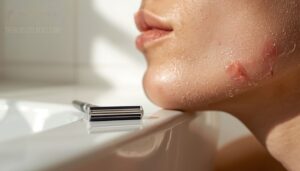
Razor burn shows up fast, usually within minutes of shaving. It’s easy to confuse with other skin issues if you don’t know what to look for. Here’s what causes it, how to spot it, and who’s most likely to deal with it.
If your skin’s already red and irritated, these tips to soothe razor burn quickly can help calm things down before it gets worse.
Common Razor Burn Symptoms
When your skin stings right after shaving, that’s razor burn talking. Expect redness patches, a burning sensation, and itchy skin in the shaved area.
Tenderness area and stinging discomfort often follow, sometimes with mild swelling. This is your skin’s inflammatory response to irritation, usually easing within hours to days with proper skin sensitivity care and redness reduction steps. Common triggers include shaving against hair growth or using a dull blade without enough lubrication.
Razor Burn Versus Razor Bumps
That stinging patch isn’t always razor burn. Razor bumps look different, small raised pimple-like spots, sometimes pus-filled, appearing days later instead of within the hour.
Identification comes down to timing and shape: flat red rash means burn, raised bumps with trapped hair mean pseudofolliculitis barbae. Bumps stem from hair curling back into skin, not simple irritation.
Razor Burn Versus Herpes
Bumps are one thing, but some people worry about herpes instead. The two don’t look alike.
Herpes forms fluid-filled blisters in clusters, often with tingling first, then crusting after they burst. Razor burn stays a flat, scattered rash, no blisters, no crusting. Herpes is contagious.
Unsure which one you have? See a clinician for testing.
Common Shaving Mistakes
Testing which one you have isn’t the only step. Most razor burn traces back to technique, not luck.
- Dull blades tug instead of cutting clean
- Shaving against the grain raises resistance
- Skipping skin prep leaves hair stiff
- Heavy pressure scrapes skin unnecessarily
- Repeated passes over one area worsen irritation
Fix these, and burn often stops before it starts.
Sensitive Skin Risk Factors
Not everyone razors the same skin. Sensitive skin affects roughly half of women and 40% of men, raising reaction risk.
Age, gender, race, sleep disorders, and menstrual cycles all play a role. Hormonal shifts and poor sleep weaken skin barrier repair.
Spicy food, alcohol, and harsh cosmetics add fuel. Know your triggers, and adjust your shaving technique accordingly.
How to Soothe Razor Burn Fast
Razor burn feels worse than it needs to once you know what to do next. The right steps, taken in order, calm your skin fast and stop the irritation from spreading. Here’s exactly what to do, starting the moment you notice it.
Stop Shaving Irritated Skin
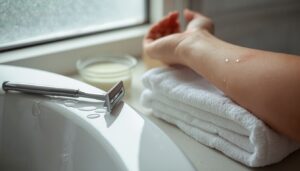
Put the razor down first. Repeated passes over the same patch of skin only pile on more friction, and friction is what caused the burning in the first place.
If irritation persists, this step-by-step guide to shaving the pubic area safely walks through gentler techniques that reduce friction from the start.
- Wait four to five days before your next shave
- Keep the area free of new products or blades
- Let redness fade before touching skin again
Give it a break and healing starts on its own.
Apply a Cool Compress

Cold works fast on angry skin, and that’s exactly what you need right now.
Soak a clean washcloth in cold water, wring it out, and hold it against the area for 15 to 20 minutes. Ice cubes wrapped in a damp cloth work too, just never place ice directly on skin. Wait two hours before reapplying. This simple step calms inflammation and buys time before your next move: aloe vera gel, witch hazel, or a cucumber yogurt mix.
Cleanse Without Scrubbing

Scrubbing feels productive, but it only adds more damage to skin that’s already inflamed.
Wash with a gentle cleanser using cold water and bare fingertips, no washcloths or loofahs. Choose pH-balanced skincare that’s sulfate-free and fragrance-free to protect skin hydration levels.
- Pat dry, don’t rub
- Skip exfoliating scrubs
- Use fingertips only
- Rinse with cool water
Apply Pure Aloe Vera

Aloe vera’s gel comes from the inner leaf, separate from the outer green layer, and cools skin on contact.
Apply a thin layer to affected skin. If using a fresh leaf, drain the yellow latex first, then use only the clear gel.
| Benefit | Effect |
|---|---|
| Anti-inflammatory | Reduces redness |
| Moisturizing | Repairs barrier |
| Cooling | Calms burning |
Use Fragrance-Free Moisturizer

Scent is often the hidden trigger behind lingering redness. Choose a fragrance-free moisturizer with ceramides for barrier function repair, plus glycerin for hydration without irritation. Check labels for "fragrance" or "parfum," even on products marked "unscented."
- Ceramide-rich lotion
- pH-balanced formula
- Glycerin or hyaluronic acid
- No dyes or parabens
- Head-to-toe sensitive skin use
Safe Home and Over-the-Counter Treatments

Once the initial burning eases, your skin still needs support to finish healing. Several home and over-the-counter options can calm redness, lock in moisture, and repair your skin barrier. Here’s what actually works, and what to skip.
Colloidal Oatmeal for Itching
When itching won’t quit, oats can help. Colloidal oatmeal offers real anti-inflammatory and itch relief, backed by decades of dermatology use.
Mix plain oats with water for a simple oatmeal paste, or try an oatmeal honey mixture for extra soothing. Apply as a skin soothing paste for ten minutes, or use an oatmeal compress. An oatmeal bath also calms dry skin and reduces scratching, with moisturizing effects lasting up to two weeks.
Petroleum Jelly for Dryness
Once itching settles down, dry skin often needs a moisture boost. Petroleum jelly works as an occlusive moisturizer, sealing water into your skin instead of adding it.
Apply a thin layer after your shower while skin is still damp for the best hydration barrier. It’s gentle enough for sensitive areas and helps prevent further irritation as your skin heals.
Ceramides for Barrier Repair
Petroleum jelly seals moisture in, but ceramides rebuild what shaving stripped away. Your ceramide lipid barrier sits in the stratum corneum, cementing skin cells together like mortar between bricks.
Ceramides rebuild what shaving strips away, cementing skin cells together like mortar between bricks
Choose a ceramide moisturizer formula listing ceramide NP or AP alongside cholesterol and fatty acids. This ceramide cholesterol pairing mimics your skin’s natural makeup, restoring ceramide skin hydration and reducing water loss as irritation heals.
Short-Term Hydrocortisone Use
Skin still angry after ceramides? Reach for hydrocortisone cream at 1% strength, the lowest potency for mild skin irritation.
Wash hands, apply a thin layer, rub in gently. Use twice daily, max three days.
- Watch for burning or dryness
- Stop if irritation worsens
- Skip if infection is suspected
- Avoid during pregnancy without advice
- See a clinician if unsure
Ingredients and Remedies to Avoid
Steer clear of anything that stings before it soothes. Alcohol based products and witch hazel dry out skin further, while fragrance, apple cider vinegar, harsh soaps, exfoliating acids, and hot water all worsen irritation.
| Skip This | Why | Use Instead |
|---|---|---|
| Alcohol/witch hazel | Strips natural oils | Fragrance-free lotion |
| Apple cider vinegar | pH too acidic | Colloidal oatmeal |
| Undiluted oils | Risk of burns | Diluted tea tree oil |
How to Prevent Razor Burn

Treating razor burn helps, but stopping it before it starts saves you the trouble entirely. Prevention comes down to a few simple habits you can build into your regular shaving routine. Here’s what actually works.
Soften Skin Before Shaving
Dry hair resists the blade, and that’s where nicks start. Wet skin first with a warm water soak in the shower for two to three minutes, letting steam hydration soften each strand.
Gentle cleansing with a mild cleanser lifts dirt and dead cells. Pre-shave oil adds a protective layer, locking in moisture retention before your razor ever touches skin.
For a smoother finish, explore how pre-shave oil supports a close, irritation-free shave.
Use Shaving Cream Generously
A thin layer won’t cut it. Use enough shaving cream to fully coat the area, an almond-sized amount for the face, more for legs.
Apply in circular motions for even coverage. This builds a lubrication layer that softens hair, improves blade glide, and lowers skin irritation risk.
- Rinse the razor between strokes
- Add more cream if it feels dry
- Cover the whole shaving zone
- Don’t rub it in too thin
- Reapply for longer sessions
Shave With Hair Growth
Which way does your hair grow? Find out, then shave that direction, not against it.
Shaving with hair growth cuts irritation risk and improves shave comfort. Going against the grain digs the blade into follicles, raising razor burn and ingrown hair odds.
Use short strokes, light pressure, and rinse the blade often for a smoother, more comfortable shave.
Replace Dull Razor Blades
A dull blade doesn’t cut, it drags. That’s often the real cause of your burn.
Check for:
- Tugging instead of gliding
- Rough, scratchy strokes
- Extra passes needed
Replace blades every 5-7 shaves. Rinse and dry the razor after each use, store it in a holder, and reuse the handle with fresh cartridges only.
Follow Post-Shave Skin Care
What you do in the next five minutes matters as much as the shave itself.
Rinse with cool water for 30 seconds, then pat dry with a soft towel. Never rub.
| Step | Why It Matters |
|---|---|
| Cool rinse | Removes debris, calms redness |
| Pat dry | Prevents friction |
| Alcohol-free aftershave | Soothes without drying |
Finish with an aloe vera gel or balm containing witch hazel, coconut oil, or vitamin E. Skip tight clothing.
When Razor Burn Needs Medical Care

Most razor burn fades on its own within a few days. Some cases don’t follow that pattern and need a closer look. Here’s what tells you it’s time to check in with a doctor.
Normal Razor Burn Timeline
Razor burn follows a predictable clock. Immediate onset hits within minutes, redness peaks at 24-48 hours, healing starts day 3, and full recovery lands by day 7-10.
Timeline order:
- Onset (minutes)
- Peak irritation (1-2 days)
- Healing to recovery (3-10 days)
Sensitive skin or dull blades can stretch this out.
Persistent or Worsening Irritation
That seven to ten day window is a guideline, not a guarantee. If redness or bumps stick around longer, something’s blocking healing.
| Cause | What’s Happening | Fix |
|---|---|---|
| Fragrance/alcohol products | Strips oils, delays repair | Switch to aloe vera gel |
| Dull blade | Microscopic tears reopen | Replace and rinse blade |
| Repeat shaving | Adds trauma | Apply cold water, hydrocortisone |
Chronic irritation warrants a dermatologist visit.
Signs of Skin Infection
A dermatologist visit isn’t just for stubborn bumps. Watch for spreading redness, warmth, swelling, or tenderness to touch, these signal bacterial infection, not simple irritation.
Add unusual odor or swollen lymph nodes near the area, and you’re looking at more than skin microbiome imbalance. See a doctor for topical treatment before it worsens wound healing outcomes.
Blisters, Sores, or Discharge
Fluid filled bubbles between skin layers point to something past simple burn. Blisters form when repeated rubbing damages the epidermis, and they can burst, ooze, or scab over.
Check discharge color: clear serum is normal healing, but yellow or green signals infection. Wash gently, pat dry, cover with a soft dressing, and call your dermatologist if sores won’t close.
Severe Pubic Area Symptoms
Groin skin reacts fast, and worse than other areas. Watch for a pea-sized lump in the crease, pubic lymph swelling from bacteria entering nicks. Pain past 72 hours, spreading redness, warmth, or pus means infection, not simple burn.
Skip aspirin paste on broken skin. Use cold water compresses, then call your dermatologist for antibiotics or hyperpigmentation treatment once healed.
Frequently Asked Questions (FAQs)
How long will razor burn last?
Shave on Monday, red bumps by Tuesday, gone by Thursday, that’s typical. Most razor burn clears within 2 to 3 days, though sensitive skin or untreated cases can stretch toward a full week or longer.
Why is my razor burn so painful?
That sting happens because shaving causes microscopic skin disruption, triggering inflammation and exposed nerve endings. Friction breaks down your skin barrier, leaving irritated tissue more sensitive to touch, air, even fabric, which is why burning feels sharper on already-tender skin.
Does vaseline heal razor burn?
Not exactly. Vaseline doesn’t heal skin, but as an occlusive treatment it locks in moisture, easing dryness and stinging. Petroleum jelly helps comfort and a stronger moisture barrier while irritation fades on its own.
Does rubbing alcohol stop razor burn?
No, it doesn’t. Rubbing alcohol dries skin, stings raw patches, and disrupts skin barrier repair. Skip it. Choose cold water, aloe vera gel, or witch hazel instead, gentler options that calm redness without the sting.
How to get rid of razor burn fast?
Press a cool compress on skin for 20 minutes, then smooth on pure aloe vera gel. Add hydrocortisone for swelling, witch hazel as an astringent, and a fragrance-free aftershave balm to lock in moisture.
How do you treat a razor bump in women?
Wash gently, then apply a cool compress to calm swelling. Use pure aloe vera gel or witch hazel to soothe redness, and try salicylic acid to clear trapped hairs. Skip tight clothing until skin heals.
What to do if you have a razor burn?
Stop shaving right away. Cool the area with a cold, damp cloth, then apply aloe vera gel or witch hazel. Follow with a fragrance-free moisturizer and skip tight clothing until redness fades.
What is the best natural razor burn treatment?
Pure aloe vera gel cools irritation fast, often within an hour. Chilled cucumber slices, cooled oatmeal soaks, and coconut oil calm redness naturally. Witch hazel tightens and soothes, while diluted tea tree oil fights bacteria without harsh chemicals.
How long does it take for a razor burn to heal?
Mild cases clear in two to three days; more severe irritation can linger up to a week, or even two. Recovery speed depends on skin sensitivity, soothing ingredients, and whether you let irritated skin fully rest before shaving again.
What makes razor burn worse?
Several habits compound irritation: shaving against the grain, dull blades, dry shaving, and excessive pressure. Repeated strokes over one area, hot water, fragranced products, and stress-induced inflammation all worsen symptoms and slow healing.
Conclusion
Razor burn is a small storm that passes fast when you treat it right. Knowing how to soothe razor burn fast comes down to a few habits: cool the skin, skip the scrub, and moisturize without fragrance. Give your skin a full day off the razor whenever redness flares.
Sharp blades, gentle strokes, and post-shave care keep irritation from returning. Master these basics, and shaving becomes routine again, not a daily gamble with your skin.