This site is supported by our readers. We may earn a commission, at no cost to you, if you purchase through links. This content is for general informational and educational purposes only and is not a substitute for professional medical, dermatological, or nutritional advice.

Fenugreek seeds carry a compound called 4-hydroxyisoleucine, one of the few plant chemicals shown to influence follicle activity at the cellular level. Grandmothers across South Asia knew this decades before biochemists gave it a name, soaking a spoonful of seeds each night and working the gel into their scalps by morning.
That gel matters. Mucilage release, seed-to-powder ratios, soak times, each detail changes how much your scalp actually absorbs.
Knowing how to use methi for hair correctly separates a treatment that strengthens strands from one that just sits there, doing little. The steps ahead cover soaking, blending, application, and the safety checks most guides skip entirely.
Table Of Contents
- Key Takeaways
- How to Use Methi for Hair
- Best Methi Treatments for Hair
- Methi Hair Mask Recipes
- Methi Benefits, Frequency, and Results
- Methi Side Effects and Safety
- Frequently Asked Questions (FAQs)
- How long does fenugreek take to work on hair?
- What is the best way to use fenugreek for hair?
- Can we apply methi paste on hair daily?
- How long does it take for fenugreek to work for hair growth?
- Can I spray fenugreek water on my hair every day?
- Are there any side effects of fenugreek seeds for hair?
- How long does it take for fenugreek to grow hair?
- How often should methi be applied to hair?
- Can methi be used with other hair oils?
- Does methi affect hair texture or color?
- Conclusion
Key Takeaways
- Soak methi seeds for eight hours to unlock their gel-like mucilage, then blend into a smooth paste and apply from scalp to ends for best absorption.
- Stick to two to three applications a week since overuse strips natural oils and can cause scalp irritation, and always patch test before your first full application.
- Real results take patience: expect softer strands in 2-3 weeks, less shedding by 4-8 weeks, and visible density gains around 8-12 weeks, with full benefits needing three to six months.
- Methi can’t reverse grey hair or override your genetics, and anyone on diabetes medication, blood thinners, or SSRIs should check with a doctor first due to potential interactions.
How to Use Methi for Hair
Methi works best when you follow a clear process, not a rushed one. Every step, from picking your form of seeds to the final rinse, affects how much benefit your scalp actually gets. Here’s exactly how to do it right, one step at a time.
If you want to compare application methods, this step-by-step onion juice hair growth guide shows a similar scalp-first technique worth borrowing.
Choose Seeds or Methi Powder
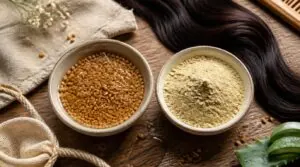
Seeds or powder? Both come from fenugreek seeds, but they behave differently. Whole seeds retain more flavonoids and saponins, plus better iron bioavailability once soaked. This matters because fenugreek seeds are especially rich in iron and mineral content, which helps hair health when absorbed effectively.
Powder offers convenience and finer texture for a smoother methi hair mask, though processing can reduce vitamin retention. Seeds also last longer in storage, up to six months, if kept airtight and dry.
Soak Seeds for Eight Hours

Whichever form you picked, soaking fenugreek seeds overnight (or for a solid eight hours) unlocks their gel-like mucilage. Use one tablespoon per cup of filtered or distilled water, this ratio balances gel formation and mineral clarity.
Drain but don’t rinse afterward; the softened, soaked methi seeds hold onto compounds you’ll need next for your fenugreek paste and hair mask.
Blend Into a Smooth Paste

Drop those soaked methi seeds into a blender with warm water (40-45°C), which boosts mucilage release by 25%.
- Process 30 seconds to break seed coats
- Continue 90 seconds for smooth texture
- Add coconut oil after initial blending
- Mix yogurt in during final stage
- Refrigerate leftover fenugreek paste up to 72 hours
Your hair mask should reach a uniform, gel-like consistency before scalp application.
Apply From Scalp to Ends

Once your paste reaches that gel-like texture, work it into the scalp first using fingertip circles, then carry it down through mid-lengths to ends. This root to tip method keeps coverage even.
Section hair to avoid missed spots, and reduce pressure as you move outward. A proper scalp massage boosts absorption without heavy buildup on strands.
Rinse and Shampoo Thoroughly

Wash-off day matters as much as application day. Wet hair fully with lukewarm water, then shampoo thoroughly, massaging roots for a full 30 seconds. Rinse until water runs clear, no soapy residue left behind. If strands still feel coated, a second rinse clears remaining paste. Finish with a cool water rinse for shine and smoother cuticles.
Best Methi Treatments for Hair
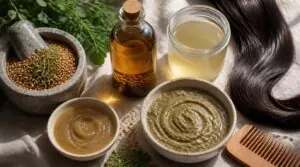
Not every hair concern calls for the same methi treatment. A paste works differently than an oil, and a rinse solves a different problem than a mask. Here’s how to match the right preparation to what your scalp and strands actually need.
If you’re unsure where to start, figuring out your ideal scalp oiling frequency can help you pick the right methi format for your routine.
Methi Paste for Hair Thinning
Thinning hair often comes down to weakened follicles and disrupted growth cycles, and this is where methi paste earns its reputation. Fenugreek seeds pack 23-26% protein, feeding keratin production at the root.
Grind soaked seeds into scalp paste, massage in circular motions for 2-3 minutes, leave 30-45 minutes. Phytoestrogens support DHT inhibition, slowing follicle miniaturization, one of several natural hair thinning solutions worth trying consistently.
Methi Oil for Dry Scalp
Dry, flaky scalp needs oil, not more water. Steep methi seeds into coconut oil for deep moisture retention, then massage in for 5-10 minutes to boost absorption.
- Warms scalp circulation
- Loosens flakes gently
- Locks in hydration
- Eases itchiness fast
Apply weekly, leave a few hours or overnight, then rinse thoroughly with shampoo.
Methi Rinse for Shine
Want mirror-level shine without silicones? Soak 1 tablespoon methi seeds overnight, strain into fenugreek water, and use as a post-shampoo application twice weekly.
| Step | Detail |
|---|---|
| Soak | 8 hrs, 1 cup water |
| Apply | Scalp to ends |
| Sit | 5 min |
| Rinse | Gentle final rinse |
| Frequency | 2x weekly |
This routine boosts moisture retention and scalp health through consistent coverage.
Methi Mask for Dandruff
Flaking, itchy scalp? A methi yogurt mask works as an antifungal dandruff scalp treatment. Mix fenugreek paste with 3 tbsp plain yogurt until spreadable, apply to scalp, cover with a shower cap, leave 30-40 minutes, then rinse with lukewarm water and mild shampoo.
Use this methi yogurt hair pack once or twice weekly for scalp itch relief within a weekly hair routine; expect results in 3-4 weeks.
Methi Conditioner for Breakage
Snapping strands need moisture, not more protein. Fenugreek mucilage coats each shaft, locking in moisture retention and improving hair elasticity.
- Soak 2-3 tbsp seeds, mix into fenugreek paste
- Apply post-shampoo for scalp-nourishing conditioner
- Leave 20 minutes, rinse thoroughly
- Use weekly for hair breakage reduction
- Pair with gentle detangling to protect natural hair strengthening
Methi Hair Mask Recipes

Plain methi paste works well on its own, but pairing it with other ingredients can target specific hair concerns more precisely. Each addition changes what the mask does, from calming an irritated scalp to boosting moisture or shine. Here are five combinations worth trying, depending on what your hair needs most.
Methi and Aloe Vera Mask
When irritation and dryness team up on your scalp, aloe vera’s cooling effect brings quick relief. Mix 1 tablespoon fenugreek paste with 1 tablespoon aloe vera gel, add water for spreadable consistency.
| Step | Action | Time |
|---|---|---|
| 1 | Mix paste and gel | 2 min |
| 2 | Apply to scalp | – |
| 3 | Leave on | 30 min |
Use weekly for calmer, healthier scalp skin.
Methi and Coconut Milk Mask
For softer, smoother strands, swap aloe for coconut milk. Soak methi seeds overnight, then grind with about one cup of coconut milk per small bowl of seeds until you reach a paste-like consistency, adjusting amounts for hair length.
Apply scalp to ends with your fingers, gentle strokes only. Leave 30 minutes, rinse with diluted shampoo. Use weekly for measurable hair softening results.
Methi and Yogurt Mask
Yogurt brings protein and live cultures into the mix, a nice pairing for scalp health. Mix methi powder with plain whole-fat yogurt, adding water for consistency control until it’s creamy, not runny.
Apply scalp to ends, cover with a cap, leave 20-30 minutes. Rinse and shampoo. Use weekly for hair growth support.
Methi and Coconut Oil Mask
If yogurt feeds your scalp, coconut oil locks that moisture in. Mix 2 tablespoons ground fenugreek seeds with 1 tablespoon warmed coconut oil into a smooth paste.
Apply scalp to ends, focusing on dry sections. Cover, leave 30 minutes, then shampoo out. This hair strengthening treatment suits brittle strands needing deep nourishment, used once weekly.
Methi and Henna Mask
Since henna alone dyes but doesn’t strengthen, pairing it with methi covers both jobs. Use a 1:1 fenugreek henna ratio, soaked overnight, blended into a lump-free paste. Watch paste consistency, it should coat a spoon without dripping.
Apply scalp to ends, massage gently, leave 1-2 hours. Rinse technique matters: use lukewarm water and gentle shampoo to avoid stripping color or protein content.
Methi Benefits, Frequency, and Results

Methi earns its reputation through measurable science, not folklore. Its protein content, circulation-boosting compounds, and antifungal properties each play a specific role in scalp and follicle health. Here’s what the research actually shows about nutrients, usage frequency, and realistic timelines for results.
Nutrients Supporting Stronger Hair
What makes methi seeds so effective isn’t one nutrient but several working together. Seeds pack 23-26 grams of protein per 100 grams, fueling keratin production for genuine Protein Hair Strength. Add 33-35mg iron for follicle oxygen delivery, nicotinic acid for circulation, and protein-rich mucilage plus lecithin for shaft strength.
That’s real Zinc Follicle Health and Essential Amino Acids support, backing stronger, more resilient strands.
Scalp and Dandruff Benefits
Dandruff often starts with microbiome imbalance, an overgrowth of Malassezia furfur that triggers flaking and irritation. Fenugreek seeds bring antifungal properties that curb this fungus while loosening keratin buildup between corneocytes, so flakes lift away more easily.
Regular use improves scalp hydration and eases seborrheic dermatitis symptoms, calming itch and restoring a healthier, more balanced scalp environment.
Recommended Weekly Usage
More isn’t better here. Cap sessions at three per week, mixing paste, water, and oil without overlapping forms on the same day.
Oily scalp? Once weekly, 20 minutes max. Sensitive scalp? Start weekly, extend to twice only after two irritation-free weeks. Overuse strips natural oils and risks rebound oiliness. Consistent use over three to six months yields real hair fall reduction and lasting scalp health improvement.
Expected Hair Growth Timeline
Patience matters more than product here. Hair grows roughly half an inch monthly, so three to six months of consistent use is the realistic visible results timeline, not three weeks.
While you wait for growth, it helps to know that baby bangs can balance a small forehead by drawing attention up to your eyes and cheekbones.
Methi helps the anagen phase where follicles are actively producing hair, but it can’t override your natural hair cycle duration. Expect gradual hair fall reduction before you notice actual length gains.
Limits of Greying Claims
Can methi really turn grey strands back to black? Not permanently. Your melanocyte function is genetically programmed, and no topical treatment overrides that DNA-based pathway.
Melanocyte function is genetically programmed, so no topical treatment—methi included—can permanently reverse grey hair
Clinical evidence gaps are real here: no randomized trials confirm lasting reversal. Most darkening is a temporary color effect, closer to henna than biology. Individual response varies, and genetic resistance often explains why results differ so much.
Methi Side Effects and Safety

Methi is gentle for most people, but it’s not risk-free. Your scalp, your medications, and even your hormones can all react in ways worth knowing about beforehand. Here’s what to watch for before you make it part of your routine.
Always Perform a Patch Test
Before your first full application, run a patch test. Rub a small amount of paste behind your ear or on your inner forearm, in a quarter-sized area, and leave it undisturbed for 7 to 10 days, checking twice daily.
This simple skin sensitivity check catches allergic reactions and cross-reactivity risk before topical application becomes consistent use.
Stop if Irritation Develops
Even after a clean patch test, watch your scalp during the first few uses. Discontinue use immediately if you notice burning, redness, swelling, or hive-like bumps, whether during application or hours later.
Delayed reactions count too. Irritation showing up the next day, or spreading past the treated area, still signals an allergic response. Rinse thoroughly and skip reapplying until you’ve ruled out sensitivity.
Avoid Excessive Internal Consumption
Topical use is one thing, swallowing methi dana is another. The FDA lists fenugreek as GRAS, but caps safe daily intake at 21 grams. Beyond that, liver toxicity risk climbs.
Watch for:
- Diarrhea or cramping
- Maple syrup odor in sweat/urine
- Dizziness
- Low potassium
Start with 1/4 teaspoon internally.
Medication and Blood Sugar Risks
Fenugreek seeds lower blood glucose, which matters if you’re on diabetes medications. Combined with insulin or sulfonylureas, this raises hypoglycemia risk. Check glucose levels before and after use.
Blood thinners and SSRI antidepressants may also interact. Ask your doctor about dosage limits before adding methi internally, and keep monitoring your numbers if you notice dizziness or unusual fatigue.
Pregnancy and Breastfeeding Precautions
Pregnant or breastfeeding? Keep methi topical only, never ingested, and follow intact scalp application with a fresh skin exposure patch test first.
- Skip broken skin or active rashes
- Limit contact time; rinse promptly
- Wash hands, avoid nipple/areola contact
Already on blood thinners? Confirm pregnancy safety with your clinician before any methi hair routine.
Frequently Asked Questions (FAQs)
How long does fenugreek take to work on hair?
Patience isn’t exactly a strength for anyone staring at a mirror, but methi rewards it anyway: softer texture within 2-3 weeks, less shedding by week 4-8, and visible hair density gains around 8-12 weeks of consistent use.
What is the best way to use fenugreek for hair?
Soak fenugreek seeds overnight, mix into a smooth paste, and massage into your scalp for 30-45 minutes, twice weekly. This routine strengthens follicles, calms dandruff, and helps steady growth over three to six months.
Can we apply methi paste on hair daily?
Like a strong spice best used sparingly, methi paste rewards restraint. Skip daily application; stick to twice weekly.
Overuse invites scalp irritation and dryness, since fenugreek’s active compounds need recovery time between treatments to work safely.
How long does it take for fenugreek to work for hair growth?
Expect softer strands within 2-3 weeks, reduced breakage by 4-6 weeks, and real density gains around 8-12 weeks. Full hair growth benefits usually need 3-6 months of consistent follicle stimulation, since scalp hair grows just 1-5cm monthly.
Can I spray fenugreek water on my hair every day?
Daily watering doesn’t make a garden grow faster, and your scalp works the same way. Two to three weekly applications suit most hair types best, supporting scalp circulation and follicle health without risking irritation from overuse.
Are there any side effects of fenugreek seeds for hair?
Yes. Watch for allergic reactions (especially with legume sensitivity), scalp irritation, or digestive upset if swallowed. Always patch test first, cap internal doses, and check medication interactions if you’re diabetic, pregnant, or on blood thinners.
How long does it take for fenugreek to grow hair?
Hair grows about half an inch monthly, so patience matters here. Researchers still don’t confirm fenugreek speeds that clock. Most people notice less shedding within weeks, but real hair growth timelines, if they happen, take three to six months of consistent use.
If you’d like another botanical to pair with your routine while you wait, these hair products with centella asiatica are worth a look for scalp care.
How often should methi be applied to hair?
Two to three times weekly works best for methi paste on thinning hair, while dandruff-prone scalps benefit from twice-weekly oil massages. Consistency matters more than frequency alone, so stick with your chosen schedule for several months to see real results.
Can methi be used with other hair oils?
Think of methi as a base note, not a solo act. Blending soaked fenugreek seeds with coconut, olive, or castor oil creates a richer carrier mix, boosting scalp absorption and coating hair follicles more evenly.
Does methi affect hair texture or color?
Texture softens noticeably thanks to mucilage-driven moisture retention, smoothing the cuticle for added shine.
Color stays put, though, since fenugreek seeds carry no dyeing pigments, unlike henna.
Rinse thoroughly afterward to avoid scalp residue buildup.
Conclusion
Sticky seed gel won’t fix thinning hair overnight, and no mask rewrites your genetics. But knowing how to use methi for hair correctly, from soak time to rinse routine, gives your scalp real nutrients it can actually absorb, not just folklore.
Stick to twice-weekly applications, patch test first, and give it twelve weeks before judging results. Consistency builds stronger strands.
Your grandmother wasn’t wrong. She just never had the biochemistry to explain why it worked.