This site is supported by our readers. We may earn a commission, at no cost to you, if you purchase through links. This content is for general informational and educational purposes only and is not a substitute for professional medical, dermatological, or nutritional advice.
Somewhere between 40 and 50 percent of men who shave regularly deal with ingrown hairs—and for people with curly or coarse hair, that number climbs even higher. A single hair curling back into the follicle triggers an inflammatory response that your skin treats like a foreign invader, producing the red, tender bumps that can linger for weeks.
Most people blame their razor, but the blade is rarely the whole story. Shaving technique, skin prep, and hair type all work together to either protect your skin or set it up for a cycle of irritation.
The right ingrown hair from shaving solution starts with understanding exactly where that cycle breaks down.
Table Of Contents
- Key Takeaways
- What Causes Ingrown Hairs After Shaving
- Signs of an Ingrown Hair
- How to Prevent Razor Bumps
- Shave After a Warm Shower
- Use Fragrance-free Shaving Cream
- Shave in The Hair-growth Direction
- Use Short, Gentle Single Strokes
- Choose Single- or Two-blade Razors
- Replace Blades After 3–5 Shaves
- Exfoliate to Remove Dead Skin
- Moisturize After Every Shave
- Avoid Tight Clothing Post-shave
- Reduce How Often You Shave
- How to Treat Ingrown Hairs
- 10 Best Ingrown Hair Products
- 1. Topicals High Roller Ingrown Hair Serum
- 2. Hylands PRID Drawing Salve
- 3. Mario Badescu Drying Lotion
- 4. Paulas Choice Skin Perfecting BHA Liquid
- 5. Neosporin First Aid Triple Antibiotic Ointment
- 6. Cortizone 10 Aloe Itch Relief Cream
- 7. Fur Ingrown Exfoliating Oil
- 8. Cetaphil Acne Relief Body Wash
- 9. Billie AHA Spray for Ingrown Hairs
- 10. Thayers Alcohol Free Witch Hazel Toner
- When Professional Treatment Makes Sense
- Frequently Asked Questions (FAQs)
- When should I see a dermatologist?
- Are certain ethnicities more susceptible?
- Do ingrown hairs resolve on their own?
- Can dietary changes reduce ingrown hairs?
- Are electric shavers better than razors?
- Can ingrown hairs cause permanent skin discoloration?
- Does diet or hydration affect ingrown hair frequency?
- Are ingrown hairs contagious or spreadable between people?
- Can ingrown hairs develop on any body area?
- Do hormonal changes make ingrown hairs more likely?
- Conclusion
Key Takeaways
- Shaving technique, blade choice, and hair type work together to cause ingrown hairs—blaming the razor alone misses most of the problem.
- Replacing blades every 3–5 shaves, shaving with the grain, and using a single- or two-blade razor cuts your ingrown hair risk more than any product can.
- Salicylic acid, warm compresses, and fragrance-free moisturizer form the core treatment trio—used consistently, they resolve most cases within one to four weeks.
- If bumps persist past two weeks, spread, or show signs of infection, stop self-treating and see a dermatologist before scarring sets in.
What Causes Ingrown Hairs After Shaving
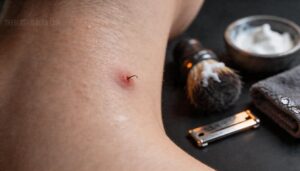
Ingrown hairs don’t just happen randomly — your shaving habits and hair type both play a real role. Understanding exactly what triggers them is the first step to breaking the cycle for good.
Digging into how shaving direction affects ingrown hairs can reveal surprisingly simple fixes that make a real difference.
Here are the most common causes to know.
Curly, Coarse, or Thick Hair
Curly, coarse, or thick hair is wired to work against you after shaving. Because the shaft curves back toward the skin, regrowing hair often re-enters the follicle instead of emerging cleanly — triggering follicle blockage and inflammation.
- Pre-shave conditioning softens coarse hair, reducing curl-back
- Curl-friendly razor designs lift hair before cutting
- Texture-aware exfoliation clears dead cells from dense follicles
- Coarse hair moisturizers and post-shave cooling calm irritated skin
Shaving Too Close to Skin
Chasing that extra-smooth finish often backfires. Shaving too close strips away skin cells, causing Skin Barrier Damage that leaves your follicles exposed and raw.
Each aggressive pass creates Microcut Risks — tiny invisible injuries that invite bacteria in.
Uneven Pressure Bumps form where you press hardest, and repeated close shaving triggers Follicle Inflammation and Pigment Changes that linger long after the razor’s down.
Excessive pressure can heighten razor burn risk.
Multi-blade Razor Irritation
more blades don’t mean a better shave — they often mean more trouble.
The lift-and-cut mechanism in multi-blade cartridges pulls hair upward before trimming it, increasing the chance it curls back under your skin.
Blade spacing packs several edges close together, causing repeated passes over the same skin patch. That repeated contact strips your skin barrier, fuels postshave inflammation, and triggers razor bumps.
Dull or Dirty Razor Blades
A dull blade drags instead of cuts — and that tugging is exactly what forces hair to curl back under the skin. Edge micro damage, debris build-up, and blade corrosion all quietly sabotage your shave before you notice any bumps forming.
- A worn razor edge causes extra passes, multiplying follicle irritation
- Debris build-up clogs the blade, creating uneven, jagged cuts
- Blade corrosion roughens the surface, worsening skin friction with every stroke
A simple cleaning routine and respecting blade lifespan — replacing after 3–5 shaves — keeps your razor sharp and your skin clear.
Shaving Against The Grain
That extra-close shave feels satisfying — until the bumps show up two days later. Shaving against the grain is one of the most common mistakes in shaving technique, and the tradeoff isn’t worth it.
Hair growth mapping matters here: when a clean, sharp razor cuts against your natural direction, blade angle optimization shifts, shorter hair tips curl backward, and trapped regrowth becomes almost inevitable.
Tight Clothing and Friction
What you wear right after shaving matters more than most people realize.
Tight clothing traps heat and moisture against freshly shaved skin, creating the perfect environment for hair follicle blockage. Elastic stretch friction and shear stress effects from movement repeatedly drag fabric across vulnerable follicles. That pressure-induced irritation, combined with sweat friction and heat retention impact, inflames the skin before regrowth even begins.
Frequent Shaving and Pore Blockage
Shaving too often keeps your skin in a constant Micro Irritation Cycle, never fully recovering between sessions. Dead Skin Accumulation combines with Blade Residue Transfer and Occlusive Post-Shave Products to seal follicle openings shut.
Poor Hair Regrowth Timing means fresh hair hits blocked, inflamed pores head-on.
Proper shaving techniques to avoid razor bumps — including a sharp razor and exfoliating spray — help break this pore clogging pattern.
Signs of an Ingrown Hair
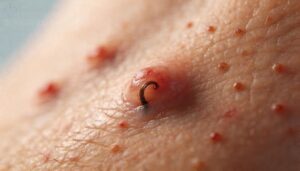
Ingrown hairs don’t always announce themselves the same way, and that’s what makes them tricky to catch early. skin sends signals — some obvious, some easy to dismiss as a random irritation.
Here’s what to look for.
Red Bumps After Shaving
Red bumps after shaving aren’t always just razor bumps — the cause matters. Genetic hair curl, blade angle adjustment, and even environmental heat influence how aggressively hair re-enters the skin.
Watch for these telltale signs:
- Small, raised red bumps clustered near follicles
- Allergic reaction bumps from fragranced products disrupting skin pH management
- Visible ingrown hair looped beneath the surface
- Inflammation that salicylic acid or hydrocortisone cream can calm
- Bumps that worsen after warm compresses without proper cleansing
Itching, Tenderness, and Soreness
That itch-soreness combo after shaving isn’t random — it’s your nerve fiber types, specifically C-fibers and A-delta fibers, firing in response to inflammatory mediators, your skin releases during postshave irritation. Skin barrier repair stalls when you keep scratching.
Try cooling vs heating strategically: a cold compress first calms razor burn, then topical analgesics like hydrocortisone cream reduce deeper inflammation and tenderness.
White Pustules or Pus-filled Bumps
A white, pus-filled center isn’t just a blemish — it’s your immune system flooding an irritated follicle with fluid and cells. That yellowish bump is a pustule, and it can signal early folliculitis if it spreads.
Watch for warning signs:
- White or yellow center surrounded by red, inflamed skin
- Clustered bumps across the beard line or neck
- Bumps that worsen without warm compress treatment
- Skin infection signs needing antibiotic ointment
- Pustule culture testing if bumps keep returning
Hair Trapped Beneath The Skin
Sometimes a bump has no visible head — just a firm, raised spot with a dark line or dot lurking underneath. That’s a trapped hair, and your follicle structure is fundamentally walled off by a keratin plug. Dead cells cause pore blockage, triggering an inflammatory cascade that keeps the hair coiled beneath the surface.
| What You See | What’s Happening |
|---|---|
| Dark dot under skin | Hair looping beneath epidermis |
| Firm, raised bump | Blocked follicles trapping regrowth |
| Persistent redness | Inflammatory cascade continuing |
| Discoloration afterward | Scar hyperpigmentation developing |
Ongoing hyperkeratinization makes it worse, inviting microbial colonization that can escalate into folliculitis. Skin barrier repair becomes critical before the cycle repeats.
Razor Bumps Vs. Shaving Rash
Both issues look similar at first, but the inflammatory mechanism is different. Razor burn — or shaving rash — shows up quickly, spreading broadly as surface-level irritation.
Razor bumps are localized, slower to form, and tied directly to folliculitis from trapped hairs.
Symptom timing matters for your management approach: salicylic acid helps both, but the healing timeline for true razor bumps runs longer.
Dark Marks and Post-shave Scarring
Those lingering dark spots after postshave bumps resolve? That’s Post‑inflammatory Hyperpigmentation — your skin’s melanin activity spiking in response to irritation.
- Deeper inflammation increases scar tissue formation risk
- Repeated shaving cycles accumulate pigment faster
- Skin barrier restoration speeds dark spot fading
- Picking bumps worsens hyperpigmentation and delays healing
Scar tissue management starts with stopping the cycle early.
Warning Signs of Infection
Stopping the hyperpigmentation cycle matters, but there’s something more urgent to catch early — infection.
If spreading redness, persistent warmth, or swelling expansion develops around an inflamed bump, that’s your signal. Increasing pain, pus drainage from a pustule, or a hot-to-touch sensation means follicle inflammation has crossed into active infection.
Don’t wait — skin inflammation that worsens daily needs medical attention.
How to Prevent Razor Bumps
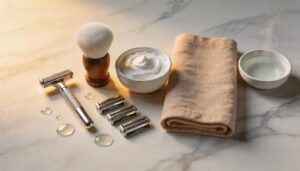
Preventing razor bumps isn’t about luck — it’s about building a few smart habits around how and when you shave. Small changes to your routine can make a real difference in how your skin responds.
what actually works.
Shave After a Warm Shower
A warm shower isn’t just comfort — it’s skin preparation that works for you.
Steam-Induced Softening relaxes hair shafts and hydrates follicles, creating Enhanced Hair Lift, so your razor catches hair higher up.
That Warm-Prep Slip reduces blade drag considerably, shortening your Irritation Window.
- Use warm not hot water to avoid stripping skin oils
- Shave within minutes of showering, while skin stays pliable
- Softer hair means fewer passes with a clean sharp razor
- Always shave in the direction of hair growth on prepped skin
- Reduced Blade Drag means less follicle trauma per stroke
Use Fragrance-free Shaving Cream
Fragrance-free shaving cream does more than just lubricate — it actively helps protect the skin barrier during every stroke. Fragrances are a leading cause of contact dermatitis, so allergy risk reduction starts with ingredient transparency on the label.
These formulas still deliver gentle lathering and sensitive skin suitability without hidden irritants that inflame follicles. Less post-shave skin irritation means fewer ingrown hairs forming beneath the surface.
Shave in The Hair-growth Direction
Shaving in the direction of hair growth is one of the most effective proper shaving techniques to avoid razor bumps. Grain mapping techniques help you identify which way each area grows — because facial hair alone can shift directions four different ways.
- Use directional shave guides to map your neck, jaw, and cheeks separately
- Apply skin tension management by stretching skin lightly for better blade angle optimization
- Follow blade angle and clean razor hygiene for consistent post-shave recovery
Use Short, Gentle Single Strokes
Short, gentle strokes are one of the most overlooked proper shaving techniques to avoid ingrown hairs. Blade angle control stays consistent when your hand moves in small, deliberate passes — roughly one to two inches — shaving in the direction of hair growth.
Stroke pressure management matters too: a sharp blade on a single-blade razor needs almost no force. Light contact reduces clog buildup and limits follicle trauma considerably.
Choose Single- or Two-blade Razors
The razor you pick matters more than most people realize.
Single-blade razors create less blade friction against your skin, reducing the chance of hair getting cut below the surface — a leading cause of ingrown hairs.
Two-blade options offer a gentler middle ground compared to multi-blade cartridges.
Both support proper shaving techniques to avoid ingrown hairs, and their cost efficiency and waste reduction make the learning curve worthwhile.
Replace Blades After 3–5 Shaves
A dull blade is one of the most overlooked causes of razor burn and ingrown hairs. Most people hold onto blades far too long. Follow a simple blade replacement schedule — swap out every 3–5 shaves — and your skin will thank you.
Watch for these blade dullness indicators before your next shave:
- Tugging or dragging instead of a smooth glide
- Visible rust or discoloration — replace immediately, no exceptions
- Increased redness or bumps after shaving
- Residue buildup between blades that rinsing won’t clear
- Any sensation of extra pressure needed to cut
Preventing ingrown hairs through proper blade maintenance costs far less than treating infected bumps. A hygiene maintenance routine that includes regular blade swaps also reduces corrosion risk, keeping razor edge dullness — and irritation — from sneaking up on you.
Exfoliate to Remove Dead Skin
Dead skin is the silent saboteur behind most ingrown hairs.
Physical exfoliation with a loofah or exfoliating gloves lifts that buildup mechanically, while chemical exfoliation using salicylic acid (a BHA) or glycolic acid (an AHA) dissolves the cellular bonds trapping hairs underneath.
Enzyme scrubs offer a gentler middle ground for sensitive skin care.
Exfoliate regularly two to three times weekly — never daily.
Moisturize After Every Shave
Exfoliating clears the path — but moisturizing is what keeps it open.
Hydration timing matters more than most people realize. Apply your moisturizer right after patting skin dry, while it’s still slightly damp, so the formula locks in water before evaporation starts.
Build your post-shave routine around these four principles:
- Barrier Repair Benefits: Shaving strips natural oils, leaving skin vulnerable — moisturizer rebuilds that skin barrier fast.
- Ingredient Selection: Reach for hyaluronic acid, ceramides, or glycerin — they hydrate without clogging pores.
- Moisturizer Types: A noncomedogenic moisturizer like CeraVe cream works well for most shaved areas.
- Consistency: Every shave deserves moisture — skipping it makes regrowth rougher and bumps more likely.
Avoid Tight Clothing Post-shave
Once your skin barrier repair work is done, what you wear next can undo it fast. tight clothing creates friction directly over open follicles, bending short hairs back into the skin and triggering postshaving bumps.
| Situation | Better Choice |
|---|---|
| Loose Fit Guidelines | Cotton underwear, relaxed shorts |
| Moisture‑Wicking Underwear | Athletic mesh or bamboo fabric |
| Delayed Tight Dress | Wait 4–6 hours before wearing jeans |
Breathable Fabric Choices and Heat‑Minimizing Layers reduce follicle irritation substantially — especially around the bikini line, thighs, and underarms — where avoiding tight clothing isn’t just advice, it’s damage control.
Reduce How Often You Shave
Clothing friction isn’t the only thing working against you — shaving frequency matters just as much. A Hair Growth Break gives your skin recovery time between sessions, letting follicles reset before the next blade pass.
- Space out shaves for better Shave Scheduling
- Try Clipper Trimming to reduce irritation
- Commit to Long-Term Reduction over quick fixes
How to Treat Ingrown Hairs
Getting rid of an ingrown hair doesn’t have to be complicated — you just need the right steps in the right order. Most cases respond well to simple home care when you’re consistent and patient.
Here’s what actually works.
Apply a Cold Compress First
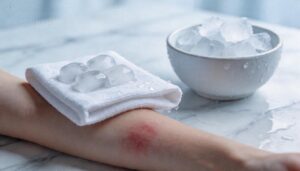
When that ingrown hair bump flares up red and angry, reach for a cold compress first. Cold therapy timing matters — apply it within the first hour when inflammation peaks. Wrap ice in a clean cloth (never apply direct ice to skin) and hold it on for 15–20 minutes.
Watch for skin numbness signs like hardening or unusual paleness, and remove it immediately. Pat dry after.
Use a Warm Compress Daily

Once the cold compress calms that initial flare, switch to warmth. A daily warm compress — soaked, wrung out, and folded into a square — applied for up to 20 minutes boosts circulation, softens the tissue around the follicle, and aids natural inflammation reduction.
Heat safety matters: stop immediately if it stings. This simple step readies your skin and nudges trapped hair toward the surface.
Try Salicylic Acid or BHA

Salicylic acid — a BHA, or beta hydroxy acid — works as a chemical exfoliant by dissolving into the follicle and loosening dead skin that traps hair beneath the surface.
For BHA application frequency, start once daily, then ease back if dryness appears — that’s your skin tolerance tip.
Use spot treatment technique directly on the bump.
Always follow with moisturizer, since combining BHA with moisturizer prevents barrier damage.
Soothe Inflammation With Hydrocortisone
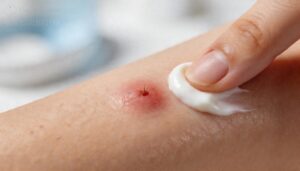
When inflammation turns a small bump into a throbbing, red welt, 1% hydrocortisone cream is your fast reset. This topical steroid suppresses cytokines driving that redness within hours.
For strength selection, stick to 1% on sensitive areas. Dosage timing matters — apply twice daily, maximum three days.
Always layer a moisturizer after shaving for barrier restoration. Watch for skin thinning with prolonged use — that’s your side effect monitoring cue. Use it after, never during, exfoliation.
Keep The Area Clean

Your skin is trying to heal — don’t let bacteria crash the party.
A solid Post-Shave Hygiene routine matters more than most people realize:
- Rinse with lukewarm water and a fragrance-free cleanser to remove debris
- Wash your hands before touching the area — Clean Hands & Tools prevent added bacteria
- Pat dry; never wipe, which reopens irritated follicles
- Wear breathable cotton for airflow and Drying & Breathability
Use Topical Antibiotic Ointment
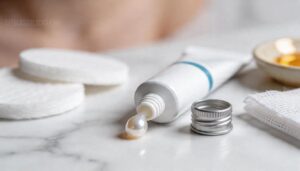
When an topical antibiotic ointment gets infected, a topical antibiotic ointment becomes your first real line of defense. Neosporin and similar first aid ointment options work by targeting surface bacteria directly at the bump.
| Ointment Selection Criteria | Why It Matters |
|---|---|
| Application timing tips | Apply after cleansing, 1–3x daily |
| Allergy risk assessment | Avoid neomycin if sensitive |
| Shelf-life and storage | Check expiry; store below 25°C |
| Combining with moisturizers | Apply ointment first, moisturizer after |
| Antibiotic ingredients | Bacitracin targets gram-positive bacteria |
Keep antibiotic ointment use focused — infection control only, not hair extraction.
Avoid Picking or Squeezing Bumps
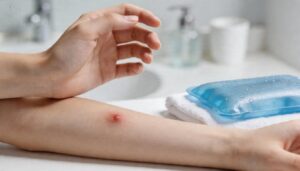
Keeping your hands off the bump is one of the hardest habits to build — but it matters more than most people realize. Picking breaks the skin barrier, lets bacteria in, and can turn a minor irritation into a bacterial infection that leaves lasting marks. Habit awareness and hand hygiene go further than you’d think.
Picking an ingrown hair breaks your skin barrier, invites bacteria, and trades a minor bump for a lasting scar
- Use cold compresses or topical steroids instead of your fingers to manage the urge.
- Practice distraction techniques — keep hands busy when irritation flares.
- Let anti-inflammatory treatments and healing patience do the work; prevent scarring by simply waiting.
Help The Hair Surface Naturally
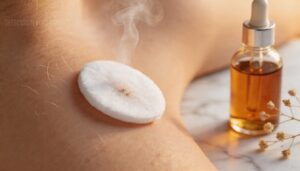
Once you’ve stopped touching the bump, give your skin something useful to do instead. A Warm compress for 10–15 minutes softens the skin through Warm Skin Softening, relaxing the follicle so the trapped hair surfaces on its own.
| Method | How It Helps | Key Ingredient |
|---|---|---|
| Warm compress | Warm Skin Softening opens the pore | Moist heat |
| Light oil | Light Oil Lubrication, Sebum Distribution | Tea tree oil |
| Gentle exfoliant | Cuticle Flattening, clears dead cells | Salicylic acid |
Pair that with a witch hazel toner to tighten follicles, then exfoliate regularly to rebuild your Ceramide Barrier Boost and keep regrowing hair moving outward, not inward.
10 Best Ingrown Hair Products
The right product can make a real difference when you’re dealing with stubborn ingrown hairs. From exfoliating serums to soothing creams, there are options that target every stage of the problem.
Here are ten that dermatologists and skin-care enthusiasts consistently reach for.
1. Topicals High Roller Ingrown Hair Serum
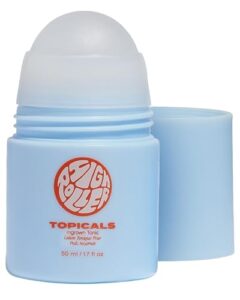
If you’re dealing with stubborn razor bumps on your face, underarms, or bikini line, the Topicals High Roller Ingrown Hair Serum is worth keeping in your routine. Its roll-on design delivers salicylic acid and glycolic acid directly to problem spots, clearing dead skin cells that trap hairs beneath the surface.
Niacinamide and zinc PCA help calm visible redness.
At $26 for 1.7 fl oz, it’s a targeted, leave-on treatment — but give it several weeks of consistent daily use before judging results.
| Best For | Anyone dealing with ingrown hairs or razor bumps on the face, underarms, or bikini area — especially people with curly hair who struggle after shaving or waxing. |
|---|---|
| Primary Use | Ingrown hair & razor bumps |
| Skin Sensitivity | Patch-test for AHA/BHA sensitivity |
| Format | Roll-on tonic |
| Key Ingredient | Salicylic acid & glycolic acid |
| Price (USD) | $26.00 |
| Volume / Size | 1.7 fl oz (50 mL) |
| Additional Features |
|
- Roll-on applicator makes it easy to target specific spots without mess
- Combines salicylic and glycolic acid to exfoliate and reduce redness at the same time
- Vegan and cruelty-free, so no animal-derived ingredients
- Takes several weeks of daily use before you’ll see real results
- Won’t do much for dark spots or hyperpigmentation left behind by healed bumps
- People with sensitive skin may find the acids irritating — patch test first
2. Hylands PRID Drawing Salve
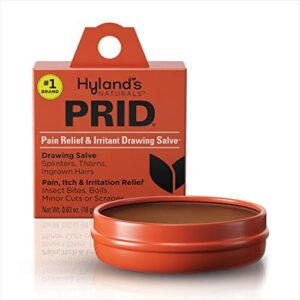
For something a little more old-school, Hyland’s PRID Drawing Salve takes a different approach. Instead of exfoliating acids, it uses ichthammol and botanicals like arnica and calendula to soften skin and help draw embedded hairs toward the surface.
Apply it twice daily to a clean area and cover it with a bandage.
The thick, waxy texture stays put — though the smell is strong, so fair warning.
Results take several days, but it’s a solid option for stubborn, deep-set bumps.
| Best For | Anyone dealing with stubborn, deep-set splinters, cysts, or ingrown hairs who prefers a more traditional, botanical-based approach over chemical exfoliants. |
|---|---|
| Primary Use | Drawing out embedded skin debris |
| Skin Sensitivity | May irritate delicate skin |
| Format | Thick salve |
| Key Ingredient | Drawing salve actives |
| Price (USD) | Not listed |
| Volume / Size | 18 g (0.63 oz) |
| Additional Features |
|
- Thick, sticky texture stays in place under a bandage — no mess, no reapplying every hour
- Combines ichthammol with botanicals like arnica and calendula for a gentler, more natural formula
- Compact size makes it an easy addition to any first-aid kit
- The smell is strong and can be a real dealbreaker for sensitive noses
- Results are gradual — don’t expect overnight fixes, it can take several days
- The waxy texture can feel rough and may cause some dryness or flaking on delicate skin
3. Mario Badescu Drying Lotion
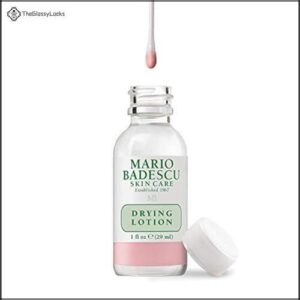
Mario Badescu Drying Lotion is a cult-favorite spot treatment that works overnight on surface-level blemishes — and yes, it pulls double duty on ingrown hair bumps too.
The formula combines salicylic acid, sulfur, and zinc oxide to dry out inflammation and clear blocked follicles.
Dip a clean cotton swab into the pink sediment at the bottom — don’t shake it — and dab it directly onto the bump before bed.
By morning, redness and swelling are noticeably reduced.
| Best For | Anyone dealing with occasional surface-level breakouts who wants a fast, targeted overnight fix without messing with the skin around it. |
|---|---|
| Primary Use | Spot acne treatment |
| Skin Sensitivity | Can cause dryness or irritation |
| Format | Spot-treatment lotion |
| Key Ingredient | Salicylic acid, sulfur & zinc oxide |
| Price (USD) | Not listed |
| Volume / Size | 1 fl oz (30 mL) |
| Additional Features |
|
- Dries out whiteheads and pustules fast — most people see real results by morning
- A tiny dab goes a long way, so one bottle lasts for months
- Stays right where you put it, so healthy skin around the spot is left alone
- Can dry out or irritate skin if you use it too often on the same spot
- Won’t do much for deep cystic acne — it’s really built for surface-level stuff
- Has a strong medicinal smell and can flake off overnight
4. Paulas Choice Skin Perfecting BHA Liquid
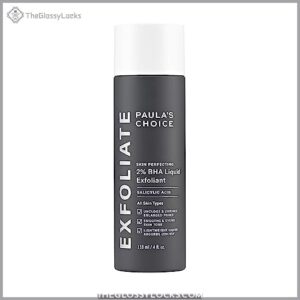
Paula’s Choice Skin Perfecting BHA Liquid works deeper than a typical toner — its 2% salicylic acid penetrates into the follicle, dissolving the dead skin buildup that traps hairs beneath the surface. It’s fragrance-free, non-comedogenic, and leaves no residue, so you can layer it under moisturizer or makeup without issue.
Apply it with a cotton pad after cleansing, once daily to start.
The green tea extract helps calm irritation while the BHA clears the way for hair to grow through normally.
| Best For | Anyone dealing with blackheads, clogged pores, or oily skin who wants a simple leave-on exfoliant they can fit into their daily routine. |
|---|---|
| Primary Use | Pore exfoliation & blackheads |
| Skin Sensitivity | Initial irritation possible |
| Format | Liquid exfoliant |
| Key Ingredient | 2% salicylic acid (BHA) |
| Price (USD) | $37.00 |
| Volume / Size | 4 oz (118 mL) |
| Additional Features |
|
- 2% salicylic acid goes deep into pores to break up oil and debris — not just surface-level exfoliation
- Fragrance-free and non-comedogenic, so it won’t irritate sensitive or acne-prone skin
- Absorbs clean with no greasy residue, making it easy to layer under moisturizer or makeup
- The $37 price tag is on the higher end compared to drugstore BHA options
- Expect a short purging phase — things might look worse before they get better
- Increases sun sensitivity, so you’ll need to commit to wearing SPF every day
5. Neosporin First Aid Triple Antibiotic Ointment
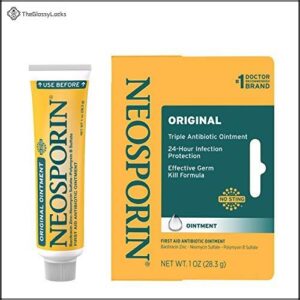
When an ingrown hair gets infected — red, swollen, and angry — Neosporin’s triple antibiotic formula goes to work fast. It combines bacitracin zinc, neomycin sulfate, and polymyxin B to shut down bacterial growth before it spreads.
The petroleum-based ointment creates a moist healing environment through HeliDerm technology, which helps your skin close the wound cleanly and with less scarring.
Apply a fingertip-sized amount one to three times daily after cleaning the area.
At under $9, it’s a practical, proven first-aid staple.
| Best For | Anyone dealing with minor infected ingrown hairs who wants a fast, affordable, over-the-counter fix without a trip to the doctor. |
|---|---|
| Primary Use | Minor wound care |
| Skin Sensitivity | Safe for sensitive skin |
| Format | Ointment tube |
| Key Ingredient | Triple antibiotic blend |
| Price (USD) | $8.97 |
| Volume / Size | 1 oz (28 g) |
| Additional Features |
|
- Triple antibiotic combo (bacitracin, neomycin, polymyxin B) hits bacteria from multiple angles
- HeliDerm technology keeps the area moist, which speeds up healing and reduces scarring
- Cheap and easy to find — under $9 and fits in any first-aid kit or travel bag
- Not safe for anyone with neomycin or bacitracin allergies — can cause a skin reaction
- The petroleum base can feel greasy and leave a shiny residue on visible skin
- Only works on minor surface infections — if the ingrown hair is deep or severely infected, you’ll need something stronger
6. Cortizone 10 Aloe Itch Relief Cream
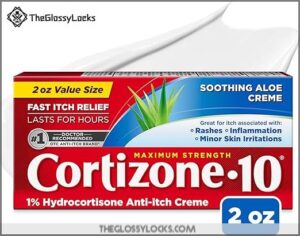
When inflammation takes over, Cortizone 10 Aloe Itch Relief Cream is the steadying hand you need. Its 1% hydrocortisone directly reduces swelling and itching by calming the immune response in irritated skin.
Aloe barbadensis leaf juice adds moisture without grease, keeping the skin barrier intact while healing happens. Apply it two to three times daily on clean, dry skin.
At $8.97 and fragrance-free, it’s a smart, gentle addition to your ingrown hair routine.
| Best For | Anyone dealing with bug bites, poison ivy, eczema flare-ups, or contact dermatitis who wants fast itch relief without a hefty price tag. |
|---|---|
| Primary Use | Itch & inflammation relief |
| Skin Sensitivity | Fragrance-free, dye-free |
| Format | Cream tube |
| Key Ingredient | 1% hydrocortisone & aloe vera |
| Price (USD) | $8.97 |
| Volume / Size | 2 oz (56 g) |
| Additional Features |
|
- The 1% hydrocortisone gets to work quickly, calming redness and itch within minutes.
- Aloe vera keeps skin moisturized without that greasy, heavy feeling.
- Fragrance-free and dye-free, so it’s gentle enough for sensitive skin.
- Long-term use can thin the skin — it’s not meant to be a daily moisturizer.
- Possible parabens in the formula, which is a red flag if you’re sensitive to them.
- Kids and people with chronic skin conditions should check with a doctor before using it regularly.
7. Fur Ingrown Exfoliating Oil
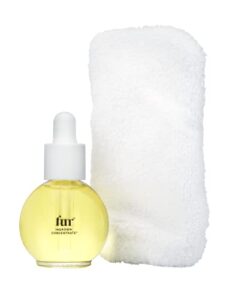
Oil and a mitt — that’s a smarter combo than it sounds. Fur Ingrown Concentrate pairs a tea tree and tamanu oil blend with a textured finger mitt, tackling ingrowns from two angles at once.
In the shower, the mitt buffs away dead skin. Out of it, the dropper delivers antimicrobial tea tree oil and tamanu directly onto stubborn bumps, calming redness and softening scar tissue.
At $34 for a travel-friendly 0.5 oz bottle, it’s a precise, clean-formula spot treatment that lasts two to three months.
| Best For | Anyone dealing with recurring ingrown hairs after shaving or waxing who wants a targeted, clean-formula treatment that actually addresses the problem rather than masking it. |
|---|---|
| Primary Use | Ingrown hair prevention |
| Skin Sensitivity | Subtle scent, generally gentle |
| Format | Dropper oil concentrate |
| Key Ingredient | Tea tree oil & tamanu oil |
| Price (USD) | $34.00 |
| Volume / Size | 2.4 oz (0.5 fl oz) |
| Additional Features |
|
- Tea tree and tamanu oil combo calms redness, fights bacteria, and helps soften scar tissue from old ingrowns
- The included exfoliating mitt adds real value — it helps prevent new ingrowns before they start
- Compact and travel-friendly; a little goes a long way, lasting two to three months with regular spot use
- At $34 for just 0.5 oz, the cost per ounce is pretty steep compared to similar options
- Too small for full-body use — if you’re treating larger areas regularly, you’ll burn through it fast
- Only works if you’re consistent; skip a few sessions after hair removal and you won’t see much difference
8. Cetaphil Acne Relief Body Wash
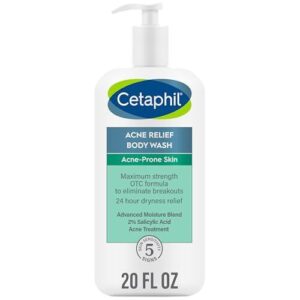
If your back and chest keep breaking out after shaving, this one’s worth keeping in the rotation.
Cetaphil Acne Relief Body Wash uses 2% salicylic acid to dissolve dead skin cells and clear clogged follicles — the exact blockage that traps regrowing hair.
What keeps it gentle is the Enhanced Moisture Blend: glycerin, shea butter, and soybean oil hold hydration for 24 hours so your skin barrier stays intact.
It’s fragrance-free, dermatologist-tested, and won’t strip sensitive skin raw.
| Best For | Anyone dealing with back or chest breakouts, especially after shaving or workouts, who wants acne treatment without drying their skin out. |
|---|---|
| Primary Use | Body acne & blemishes |
| Skin Sensitivity | Hypoallergenic, fragrance-free |
| Format | Non-foaming body wash |
| Key Ingredient | 2% salicylic acid & shea butter |
| Price (USD) | Not listed |
| Volume / Size | 20 oz (567 mL) |
| Additional Features |
|
- 2% salicylic acid clears clogged pores and helps prevent new breakouts on the body
- Glycerin, shea butter, and soybean oil keep skin moisturized for 24 hours — no tight, stripped feeling
- Fragrance-free, hypoallergenic, and dermatologist-tested, so sensitive skin can actually handle it
- No lather at all, which takes some getting used to if you’re used to a foamy wash
- Can feel greasy or hard to fully rinse off, particularly if you have oily skin
- The pump may not dispense the last bit of product without removing it from the bottle
9. Billie AHA Spray for Ingrown Hairs
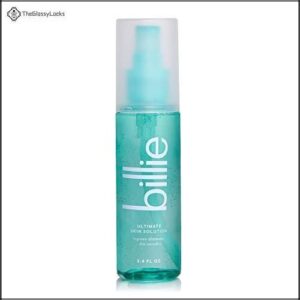
When you need something that works all over — legs, bikini line, anywhere you shave — Billie’s AHA Spray makes coverage easy.
One spritz delivers salicylic acid to break down dead-skin buildup and stop hairs from curling back under the surface.
The AHA and BHA combo resurfaces skin while aloe vera calms redness in the same step.
At $16.66 for 3.4 oz, it’s a practical daily add-on. Sensitive skin? Patch-test first — the formula is potent.
| Best For | Anyone who shaves their legs or bikini line regularly and wants a simple, spray-on way to cut down on ingrown hairs and razor bumps. |
|---|---|
| Primary Use | Post-shave ingrown hair care |
| Skin Sensitivity | Patch-test recommended |
| Format | Spray bottle |
| Key Ingredient | AHA, BHA & aloe vera |
| Price (USD) | $16.66 |
| Volume / Size | 3.4 fl oz (100 mL) |
| Additional Features |
|
- The AHA/BHA combo does real exfoliation work — breaks down dead skin and keeps hairs from curling back under
- Spray nozzle makes full-body coverage quick and even, no rubbing required
- Aloe vera helps calm post-shave redness right away, so you’re not waiting for irritation to settle
- The burn on freshly shaved skin is no joke — sensitive skin folks should patch-test before going all in
- The chemical scent is strong enough to cause coughing, so you’ll want good ventilation when you use it
- It can leave skin dry, so you’ll likely need to follow up with a moisturizer to keep things balanced
10. Thayers Alcohol Free Witch Hazel Toner
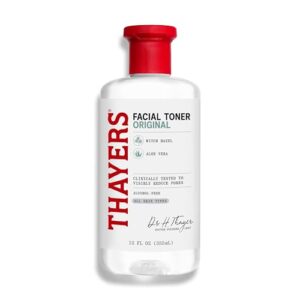
Sometimes the gentlest option does the most. Thayers Alcohol-Free Witch Hazel Toner ($10.99 for 12 oz) skips harsh alcohol entirely, using certified organic witch hazel extract alongside aloe vera and glycerin to calm post-shave skin without stripping it dry.
That combination matters — alcohol-free means your follicles get soothed, not stressed.
Swipe it on with a cotton pad after shaving to tighten pores and reduce redness. It’s fragrance-free, dermatologist-tested, and gentle enough for sensitive or reactive skin types.
| Best For | Anyone with sensitive, post-shave, or pregnancy-related skin who wants a gentle, hydrating toner without harsh alcohol or fragrance. |
|---|---|
| Primary Use | Pore toning & aftershave |
| Skin Sensitivity | Fragrance-free variant available |
| Format | Liquid toner |
| Key Ingredient | Witch hazel & aloe vera |
| Price (USD) | $10.99 |
| Volume / Size | 12 oz (370 mL) |
| Additional Features |
|
- Alcohol-free formula soothes instead of strips — great for sensitive or reactive skin
- Pulls double duty as a toner, after-shave rinse, nail prep, or calming spray for sunburn and bug bites
- Dermatologist-tested, vegan, and easy on the wallet at $10.99 for 12 oz
- Won’t give that strong astringent "squeaky clean" feel some oily-skin folks are looking for
- Scented versions contain fragrance, so sensitive users need to double-check the label before buying
- You’ll still need a moisturizer after — this isn’t a standalone skincare step
When Professional Treatment Makes Sense
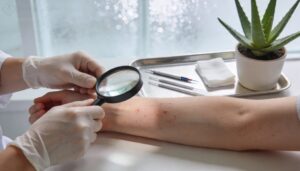
Home remedies work for most ingrown hairs, but sometimes your skin needs more than a warm compress and a BHA serum. If you’ve been dealing with the same stubborn bumps for weeks, or they keep coming back no matter what you do, it’s time to bring in a professional.
Here’s when to stop DIY-ing and what your options actually look like.
Ingrown Hairs Lasting Over Two Weeks
Two weeks is the turning point. If an ingrown hair hasn’t resolved by then, chronic inflammation is likely keeping the follicle stuck in a cycle it can’t break alone. Delayed healing factors like ongoing friction, pore blockage, and skin barrier compromise all slow recovery and raise your long-term scarring risk.
- Chronic follicular irritation can trigger post-inflammatory hyperpigmentation, leaving dark marks behind
- Re-shaving over the area resets the blockage before it clears
- Persistent bumps increase infection risk from repeated bacterial exposure
- Medical management of ingrown hair infections may require prescription-strength topical steroids for inflammation
Painful, Swollen, or Infected Bumps
Swelling that spreads, pus collecting under the skin, or a bump that throbs—these are signs of deep tissue infection, not a standard ingrown.
Watch for fever alongside an inflamed bump or red streak spread outward from the site.
If you’re immunocompromised, these escalate faster.
Antibiotic ointment or pills, 1% hydrocortisone, and alternating warm and cold compresses aren’t enough here—see a doctor.
Recurrent Ingrown Hairs in One Area
When the same patch keeps flaring, your follicle healing cycle is stuck in a loop. Genetic skin sensitivity, hormonal growth patterns, and environmental irritants can all drive that cycle.
Microbiome impact matters too—disrupted skin bacteria keep follicles vulnerable.
Standard exfoliation methods for hair follicle health help, but a dermatologist may recommend laser hair removal, electrolysis, or incision and drainage to break the pattern for good.
Folliculitis That Needs Prescription Treatment
When home remedies stop working, folliculitis often needs prescription-level care. Dermatologists usually escalate treatment when bumps persist beyond two weeks, spread widely, or risk scarring — especially with pseudofolliculitis barbae.
Watch for these prescription triggers:
- Topical antibiotics like clindamycin or mupirocin for localized bacterial infection
- Oral antibiotics like doxycycline for severe or spreading cases
- Topical steroids to calm inflammation alongside antibiotic therapy
- Oral antifungals like ketoconazole when fungal folliculitis is confirmed
- Resistance management strategies to prevent antibiotic overuse complications
A dermatology referral keeps your skin — and treatment plan — on track.
Laser Hair Removal for Long-term Reduction
Laser hair removal targets melanin in each follicle using selective photothermolysis — disrupting regrowth without damaging surrounding skin. Proper Skin Tone Matching and Wavelength Selection determine which device works best for you.
| Parameter | Why It Matters |
|---|---|
| Fluence Adjustment | Controls energy per pulse for safe, effective heating |
| Session Interval Planning | Aligns treatment with active hair growth cycles |
| Cooling Systems | Protect skin, improve tolerance across sessions |
| Laser Epilation | Reduces ingrown risk long-term |
Electrolysis for Permanent Hair Removal
Electrolysis is the only FDA-recognized permanent hair removal method — and for stubborn, recurring ingrown hairs, that distinction matters.
Through precise probe insertion into each follicle, energy destroys hair-producing cells using galvanic electrolysis, thermolysis technique, or blend mode.
This follicle targeting works on all hair and skin types, making electrolysis a permanent solution for recurring ingrown hairs where laser falls short.
When to See a Dermatologist
If bumps stick around past two weeks, grow more painful, or show rapid spreading redness, or feverish skin reaction, that’s your sign to stop self-treating. Persistent inflammation, pus that won’t drain, and suspicious lesion changes all fall outside what home care can fix.
Dermatologists follow clinical guidelines for incision and drainage, identifying when to seek professional medical help before unresponsive home care becomes a bigger problem.
Frequently Asked Questions (FAQs)
When should I see a dermatologist?
Think of it like a check engine light — if persistent redness, unusual skin lesions, or systemic symptoms appear after two weeks of failed home remedies, dermatologists can prevent scarring through proper medical skin consultation.
Are certain ethnicities more susceptible?
Yes.
People with curly or wavy hair face higher ingrown hair risk due to follicle angle differences and hair texture genetics, which cause strands to curl back into skin more easily.
Do ingrown hairs resolve on their own?
Most ingrown hairs resolve on their own within one to four weeks.
Skin regeneration, inflammation reduction, and basic self-care practices help speed healing, but deep hair traps or signs of infection often need more than waiting.
Can dietary changes reduce ingrown hairs?
Diet won’t cure ingrown hairs, but it does influence skin’s inflammatory response.
Hydration and skin resilience, anti-inflammatory foods, zinc, micronutrient support, and a low glycemic diet all help your follicles recover faster.
Are electric shavers better than razors?
Electric shavers win in skin sensitivity and prevent ingrown hair after shaving, especially for curly hair texture. Single-blade razors offer closer shave closeness, but carry higher irritation risk.
Factor in maintenance requirements and cost comparison before choosing.
Can ingrown hairs cause permanent skin discoloration?
They can — but it’s rarely permanent. Post-inflammatory Hyperpigmentation occurs when melanin overproduction darkens the skin after inflammation settles. With consistent skin healing process support, most marks fade.
If those dark marks seem to linger for weeks, understanding what causes acne spots to linger can help you choose the right fade-focused routine.
Does diet or hydration affect ingrown hair frequency?
both matter.
Dry skin after hair removal makes hair curl back more easily, while high Glycemic Load diets fuel follicle inflammation.
Protein Intake, Micronutrient Balance, and Body Weight Effects all shape how your skin heals.
Are ingrown hairs contagious or spreadable between people?
No, ingrown hairs aren’t contagious — that’s a contagion myth worth clearing up. Ingrown hair is irritation, not infection.
Bacterial transmission only becomes a risk if you share grooming tools or pick at an infected bump.
Can ingrown hairs develop on any body area?
Technically, any hair-bearing skin can develop them.
Your scalp, back, buttocks, abdomen, nostrils, eyebrows, and bikini area are all fair game — hair follicle structure and hair texture matter more than location.
Do hormonal changes make ingrown hairs more likely?
Hormonal changes absolutely can.
androgen surge from PCOS influence, pregnancy hormones, or your menstrual cycle shifts hair texture toward coarser, curlier growth — making ingrown hairs more likely with every shave.
Conclusion
Studies show that up to 60 percent of people with coarse or curly hair develop chronic razor bumps without changing their routine. That statistic matters because it tells you this isn’t a willpower problem—it’s a technique and biology problem.
Your ingrown hair from shaving solution lives in the details: the direction you shave, the blade you choose, the products you reach for after. Get those right, and your skin finally gets to heal.