This site is supported by our readers. We may earn a commission, at no cost to you, if you purchase through links. This content is for general informational and educational purposes only and is not a substitute for professional medical, dermatological, or nutritional advice.

That small dark dot with a curved loop under your skin isn’t always safe to remove. Some ingrown hairs sit right at the surface, ready to lift out with sterilized tweezers. Others hide 0.5mm deep, curved and stubborn, and pulling at those raises your risk of follicular rupture to 12%.
Grabbing tweezers the moment you spot a bump feels satisfying, but timing and technique decide whether you heal clean or end up with a scarred, infected mess. Your face, neck, and bikini line each carry their own rules, and skipping them can turn a minor irritation into something that needs a dermatologist’s hands, not yours.
Here’s how to tell which ingrown hair is yours to handle, and which one isn’t.
Table Of Contents
- Key Takeaways
- Choose The Safest Ingrown Hair Removal Method
- How to Remove Ingrown Hair at Home
- Ingrown Hair Removal Aftercare
- Treat Infected or Stubborn Ingrown Hairs
- Prevent Ingrown Hairs From Returning
- Frequently Asked Questions (FAQs)
- What’s the easiest way to remove an ingrown hair?
- Do ingrown pubic hairs eventually go away?
- How do you draw out a deep ingrown hair?
- What is the most effective way to remove ingrown hairs?
- How do you draw out deep ingrown hairs?
- How to get rid of an ingrown hair lump?
- How do you remove ingrown hair?
- How to get rid of an ingrown toenail?
- How to get rid of ingrown hair without shaving?
- What are the different types of ingrown hair treatments?
- Conclusion
Key Takeaways
- Only pull an ingrown hair yourself if you can clearly see the loop near the surface after a warm compress; if it’s buried 0.5mm deep or curved, digging raises your infection risk to 12%, so it’s time for a dermatologist instead.
- Always sterilize your tweezers or needle first, then lift the hair gently in the direction it grows rather than yanking against it.
- Watch for red flags like spreading redness, fever above 38.5°C, pus, or a bump lasting more than 14 days or growing past 5mm, since these mean you need professional care like an incision or antibiotics.
- Prevent future ingrown hairs by shaving with the grain using a sharp blade, exfoliating two to three times a week, and wearing loose clothing to cut down on friction.
Choose The Safest Ingrown Hair Removal Method

Not every ingrown hair calls for the same fix, and grabbing tweezers too soon can do more harm than good. Your safest move depends on how deep the hair sits, how your skin looks, and where on your body it’s hiding. Here’s how to size up your situation before you touch anything.
If you’d rather avoid the ingrown hair fight altogether, this guide to shaving techniques that prevent ingrown hairs is worth a read before your next razor pass.
Visible Hair Near Surface
A visible ingrown hair sits just under the skin, showing as a small dark dot with a curved loop you can see. This is your green light for safe home removal.
Check under natural light. If the loop shows clearly after a warm compress and gentle exfoliation, you’re set to proceed with sterilized tweezers.
Deeply Trapped Ingrown Hairs
Not every ingrown hair plays fair. When the loop stays hidden beneath 0.5mm of skin, you’re dealing with a deeply trapped hair curved at 30 degrees or more, often a firm, tender papule.
Don’t dig. Forcible removal raises follicular rupture risk to 12%. Instead, book a dermatologist consultation for a sterile 1-2mm incision or shallow needle extraction after warm compress prep.
Don’t dig—forcing a trapped hair out raises follicular rupture risk to 12%, so let a dermatologist handle deep extractions
Mild Irritation Versus Infection
Not all bumps mean trouble. Mild irritation stays under 2cm, aches at 1-3/10, and fades in 48 hours. Infection spreads past 5cm, throbs at 6-9/10, and brings pus or fever. If over-exfoliation is what triggered the bump in the first place, brushing up on choosing between chemical exfoliants and physical scrubs can help you avoid round two.
- Redness expanding after 48 hours
- Pain jumping within 12 hours
- Skin temp rising over 2°C
- Visible pus forming
- Symptoms lingering beyond 72 hours
Call your dermatologist if these appear.
Areas Requiring Extra Caution
Location changes the risk math. The face carries dense nerve endings, so go slow. Neck skin scars easily—use a light touch. Underarm and groin sit near lymph nodes; infection there spreads fast. On the bikini line, friction from tight clothing worsens things—switch to loose-fitting clothes. Always warm compress first, sterile tweezers only, or book a dermatologist consultation.
When Extraction is Unsafe
Some situations call for hands-off. Skip extraction if you have uncontrolled diabetes, take blood thinners, or have active eczema, psoriasis, or a cold sore near the site—infection and scarring risks climb fast. Same goes for fever, spreading redness, or recent heart attack.
Five red flags meaning "see a dermatologist instead":
- Temperature above 38.5°C
- Pus within 24 hours
- HbA1c over 9%
- Swollen lymph nodes over 1cm
- Blind extraction with no visible loop
How to Remove Ingrown Hair at Home
You’ve confirmed the hair sits close to the surface, so it’s safe to handle yourself. Doing it right takes a few careful steps, not just a quick tug with tweezers. Here’s exactly how to do it safely at home.
Start by sterilizing your tweezers with rubbing alcohol, then gently grip the hair at its base and pull in the direction it grows—if you’re curious about how much hair is typically removed in a trim, it’s worth checking beforehand so you know what to expect.
Clean Hands and Skin

Your hands touch every step ahead, so start clean. Wash with soap and running water for 20 seconds, scrubbing fingertips and under nails where germs hide.
Skip harsh scrubbing, though. Over-washing dries skin and weakens its barrier. A gentle lather, full rinse, and pat dry keeps hands clean without adding irritation to skin you’re about to treat. Maintaining proper skin barrier function is essential for preventing infection during procedures.
Apply a Warm Compress

Heat softens skin and coaxes trapped hair upward. Grab a clean, lint-free washcloth, warm it in water or the microwave 30 seconds, then wring out excess.
Test temperature first—too hot damages skin. Apply 5-15 minutes, up to 4 times daily during the first 48 hours. Uncomfortable heat? Remove it. Never use on broken skin or active infections.
Gently Exfoliate The Follicle
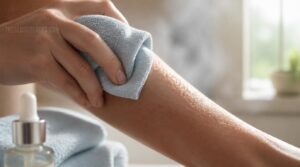
Buildup on top of skin traps hairs before they surface. After your warm compress, exfoliate gently—fingertips or a soft washcloth, 30 seconds max.
- Physical: light circular motions
- Chemical: salicylic acid, thin layer
- Never scrub hard or long
- Stop if skin stings
Skip it on broken or inflamed skin. Rinse well before moving to tweezers.
Sterilize Needle and Tweezers

Skip this step, and you’re risking infection, not just irritation. Wash the needle and tweezers first, then choose one: boil 20 minutes, steam 20 minutes, or flame the tip 10-15 seconds. Rubbing alcohol disinfects but doesn’t fully sterilize. Let tools cool completely before touching skin. Never handle a sterilized needle with bare fingers.
Release Visible Hair Without Digging
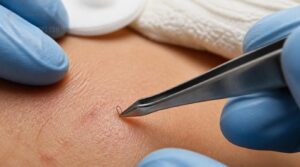
Now the payoff: with your sterilized tweezers at a 45-degree angle, slide tips around the loop and lift gently, pulling with hair growth. No hair loop visible? Stop. Digging causes scarring.
- Recheck after warm compress
- Pull, don’t yank
- Loosen skin first with exfoliation
- Wear looser clothing after
Not there yet? Try salicylic acid tomorrow.
Ingrown Hair Removal Aftercare

Getting the hair out is only half the job. What you do in the next 24 to 48 hours decides whether your skin heals clean or gets angrier. Here’s how to protect it.
Cleanse and Pat Skin Dry
Right after extraction, wash the area with a gentle cleanser at 38°C, then rinse cool for 10 seconds. Pat dry with a soft cotton towel using light blot-and-lift presses—never rub. Finish drying within 30 seconds; damp skin left too long invites bacteria.
Proper skin preparation now keeps infection risk low.
Apply Fragrance-Free Moisturizer
Once skin is dry, apply a fragrance-free moisturizer within 5 minutes. Look for ceramides and niacinamide (2%+) to support skin barrier function and calm inflammation fast.
- Restores barrier lipids
- Locks in hydration
- Reduces redness quickly
- Prevents comedogenic buildup
Press in gently for 10 seconds—don’t rub. This postshave care step boosts hydration retention and eases healing noticeably.
Pause Shaving and Hair Removal
Give that follicle a break. Pause shaving entirely for 5-7 days, letting irritation surface naturally and redness fade within 24-48 hours.
Skin elasticity improves noticeably by week two. Many patients report a genuine confidence boost and less grooming stress once razors go untouched.
Bonus: skipping cartridges saves cash while hair regrows slightly thicker, not worse.
Reduce Clothing Friction
While that follicle rests, your clothes matter too. Choose loose, breathable fabrics over tight denim, which raises friction and irritation.
Look for flatlock seams and moisture-wicking layers instead of rough cotton blends. Anti-chafing treatments help on tight workout gear.
Proper fit adjustments at the waist and thighs cut friction a lot, giving irritated follicles real skin recovery time to heal undisturbed.
Monitor for Infection Signs
A watchful eye now prevents bigger problems later. Check the spot daily for Fever, Redness Spread, or Pus Discharge.
Watch for three warning signs:
- Increasing Pain or Warm Skin
- Spreading redness beyond the bump
- Pus needing antibiotic ointment
Any bacterial infection warrants antiseptic care and a dermatologist consultation—sometimes incision and drainage becomes necessary.
Treat Infected or Stubborn Ingrown Hairs

Sometimes an ingrown hair doesn’t play by the rules. It gets angrier, deeper, or more painful than a home fix can handle. Here’s how to know when it’s time to bring in backup, and what that treatment actually looks like.
Stop Manual Hair Extraction
Some hairs fight back. If a bump won’t quit after 14 days or grows past 5 mm, stop picking at it. Same goes for three-plus infections a year, or any keloid history.
| Sign | Action | Why |
|---|---|---|
| Nodule >5mm, 14+ days | Stop, see dermatologist | Deep tissue risk |
| 3+ infections yearly | Pause hair removal | Recurrence pattern |
| Keloid history | Avoid mechanical removal | Scar risk |
Dermatologist Hair Removal
Once picking becomes pointless, hand it over. Your dermatologist works under magnification with sterile tweezers, lifting hairs cleanly in minutes.
For lasting control, options include:
- Laser hair removal — cuts regrowth up to 70% after three sessions
- Electrolysis for permanent removal
- Electric shavers or chemical depilatories between visits
A proper dermatologist consultation builds your long-term plan, not just a one-time fix.
Prescription Topical Treatments
Sometimes home care isn’t enough, and that’s your dermatologist’s cue to prescribe. Tretinoin (0.025-0.1%) exfoliates nightly, clearing debris in about two months.
Antibiotic creams like clindamycin fight infection over 5-7 days. Steroid cream calms inflammation short-term.
Eflornithine slows regrowth with laser pairing. Combination formulas combine salicylic acid and zinc PCA for faster, gentler results.
Abscess Incision and Drainage
When a pocket of pus forms, tweezers won’t cut it. That’s an abscess, and it needs incision and drainage at a dermatologist consultation.
- The dread of a swollen, throbbing bump
- Relief once pressure finally releases
- Confidence knowing it’s handled safely
Expect a local anesthetic injection, incision along tension lines, hemostat for loculations, then post-procedure packing.
Spreading Redness, Fever, Worsening Pain
Your body is telling you something’s wrong. Redness spreading past 5 cm, fever above 38.5°C, throbbing pain, or foul discharge means cellulitis, not a simple bump.
Skip the tweezers entirely. See a dermatologist for antibiotics, possible incision and drainage, or a steroid injection. If fever persists beyond 48 hours despite warm compresses, get evaluated within 24 hours — don’t wait it out.
Prevent Ingrown Hairs From Returning

Once you’ve cleared this ingrown hair, your next job is keeping new ones from showing up. That takes a few small changes to your shaving and skincare routine, nothing drastic. Here’s what actually helps.
Shave With Hair Growth
Run your razor with the grain, not against it. Fighting hair growth direction slices at odd angles, driving cut ends back into the follicle.
Before each pass, check which way hair lies. On legs it’s usually downward; underarms vary. Go slow, use light pressure, and let shave gel do the softening work, not force.
Choose a Sharp Single-Blade Razor
Direction matters, but the tool in your hand matters too. Choose a sharp single-blade razor honed to a 15-degree edge, sharper than bulky cartridges, sliced cleanly through hair instead of tugging it. That clean cut means fewer jagged ends causing razor burn or ingrown hairs.
Rinse under warm water, dry with a soft cloth, and strop every 20-25 shaves to keep that edge working for you.
Lubricate Skin Before Shaving
A sharp blade still needs help gliding. Lubricate skin before shaving with pre-shave oil or gel—it cuts drag up to 30%, softens hair fast, and preps skin for a clean pass.
- Rinse with warm water first
- Apply 2-3 drops pre-shave oil
- Use shave gel or cream, wait 2 minutes
- Try a shaving brush for even lather
Exfoliate Two to Three Times Weekly
Smooth skin isn’t a one-shot deal—it’s built through rhythm. Exfoliate two to three times weekly, mixing a loofah glove or exfoliating glove with dual salicylic glycolic acid.
| Skin Type | Best Method | Frequency |
|---|---|---|
| Oily | Salicylic acid | 2x/week |
| Dry | Lactic acid | 1x/week |
| Sensitive | Mandelic acid | 1x/week |
This schedule cuts ingrown hairs by 30%. Always moisturize after.
Consider Laser or Electrolysis
When shaving keeps failing you, permanent hair removal deserves a look. Two dermatologist recommended options:
- Laser hair removal: best for light skin, dark hair, 6-8 sessions
- Electrolysis: works on any skin type, 12-20 sessions
- Compare cost: $150-500/session versus $50-150/hour
- Both deliver long-term results and real ingrown hair prevention
Frequently Asked Questions (FAQs)
What’s the easiest way to remove an ingrown hair?
Your best bet: a warm compress for 10-15 minutes to soften skin, then sterilized tweezers to gently lift visible hair. Never dig if it’s buried, that’s how you risk infection and scarring.
Do ingrown pubic hairs eventually go away?
Yes, most resolve within 1 to 2 weeks untouched. Warm compresses twice daily can shrink that to about 5 days. Watch for pus, spreading redness, or fever—those signal infection needing prompt medical care.
How do you draw out a deep ingrown hair?
Coax it up like a splinter, not a weed you yank. Start with warm compresses for 10-15 minutes, then gentle exfoliation with salicylic acid. Once visible, use sterile tweezers to lift it free, followed by antibiotic ointment.
What is the most effective way to remove ingrown hairs?
Combine warm compress application with gentle exfoliation and sterilized tool extraction using tweezers on visible hairs. For stubborn or recurring cases, professional laser treatment or electrolysis, plus prescription retinoids, deliver lasting results beyond home care alone.
How do you draw out deep ingrown hairs?
Patience pays off here: soften skin with warm compresses 3-4 times daily, then use gentle salicylic acid exfoliation. Once the tip surfaces, lift it free with sterile tweezers—never dig or force it out.
How to get rid of an ingrown hair lump?
Soften that lump with a warm compress for 10-15 minutes, then exfoliate gently using salicylic acid. Once hair surfaces, extract with sterile tweezers. Watch for infection signs; consider antibiotic ointment if irritation persists.
How do you remove ingrown hair?
Picture a razor bump on your leg, hair tip barely peeking through. Gently exfoliate with a soft brush or salicylic acid, then apply a warm compress 10-15 minutes to draw it out naturally.
How to get rid of an ingrown toenail?
Soak your foot in warm water 15-20 minutes daily, then tuck cotton or waxed floss under the nail edge. Cleanse with antiseptic, apply antibiotic ointment, wear loose footwear, and monitor daily for spreading redness or pus.
How to get rid of ingrown hair without shaving?
No razor, no problem. Warm up, exfoliate, extract. Warm compress for 10 minutes, then gentle exfoliation with salicylic acid loosens the plug. Finish with sterilized extraction using clean tweezers, pulling with hair growth direction.
What are the different types of ingrown hair treatments?
Your options range from chemical exfoliants like salicylic or glycolic acid to warm compresses, adapalene retinoids, and anti-inflammatory creams. For stubborn cases, professional treatments such as laser hair removal or electrolysis destroy follicles for lasting relief.
Conclusion
That dot under your skin will test your patience before it tests your skill. Mastering ingrown hair removal methods means knowing when to act and when to wait. Surface hairs reward a steady hand; deep ones punish impatience. Warm compresses, sterile tools, and gentle technique turn a risky habit into a controlled routine.
But redness, swelling, or fever change the rules instantly. Skip the extraction, call your dermatologist, and let healing—not force—finish the job.