
This site is supported by our readers. We may earn a commission, at no cost to you, if you purchase through links.
You’re staring at that electric blue Splat dye, wondering if mixing it with conditioner will give you that dreamy pastel shade without frying your hair. It’s a tempting shortcut, and plenty of DIY colorists swear by it—but here’s the truth: diluting Splat with conditioner can backfire in ways that turn your bold transformation into a patchy nightmare.
The pigment molecules in Splat are designed to grab onto your hair at full strength, and when you water them down with conditioner, you’re gambling with unpredictable fading, uneven saturation, and color that might wash out after a single shampoo.
Before you start mixing, you need to understand exactly how this combination behaves on your hair, what ratios actually work, and which alternatives give you pastel shades without the risk.
Table Of Contents
- Key Takeaways
- Can You Mix Splat Hair Dye With Conditioner?
- Risks of Mixing Splat Dye and Conditioner
- How to Mix Splat Hair Dye With Conditioner
- Application Tips for Mixed Splat Dye
- Alternatives to Mixing With Conditioner
- Maintaining Hair Health and Color Vibrancy
- Frequently Asked Questions (FAQs)
- Can you mix Splat hair dye with conditioner?
- Is it okay to mix hair dye with conditioner?
- Can I mix hair dye with conditioner to make it lighter?
- Why do people mix hair dye and conditioner?
- Is Splat Hair Dye safe to use?
- What is the best way to apply Splat Hair Dye?
- Is it possible to mix Splat Hair Dye with a toner?
- Is it possible to dilute Splat Hair Dye with water?
- Does Splat Hair Dye work on all hair types?
- Does mixing affect Splats staining on skin?
- Conclusion
Key Takeaways
- Mixing Splat hair dye with conditioner dilutes pigment concentration by 20-40%, creating softer pastel shades but risking uneven color, faster fading, and patchy results that may wash out after just a few shampoos.
- If you decide to mix, use a 1:1 ratio for mid-tones, 1:2 for lighter shades, or 1:3 for pastels with a clear, sulfate-free conditioner—always strand-test first since hair porosity dramatically affects how color grabs and deposits.
- Clear or white mixing bases deliver better results than conditioner because they preserve pigment stability and brightness without blocking color molecules, while color-depositing conditioners refresh faded shades between dye sessions without harsh reapplication.
- Maintaining vibrant Splat color requires sulfate-free shampoos, cool water rinses, weekly deep conditioning, and UV protection to prevent premature fading and keep your bold hues looking fresh.
Can You Mix Splat Hair Dye With Conditioner?
Yes, you can technically mix Splat hair dye with conditioner, but it’s not recommended for most situations. The combination can interfere with how the color bonds to your hair, leading to unpredictable results that may disappoint you.
If you’re unsure whether diluting works for your hair type, check out this guide on mixing hair dye with conditioner for safer alternatives.
Before you experiment, it’s important to understand how Splat works, why people try this mix, and what you can realistically expect from the outcome.
How Splat Hair Dye Works
Splat Hair Dye uses a direct depositing formula that coats your hair shaft with vibrant pigment molecules, with no harsh developer needed. Unlike traditional permanent dyes, this color depositing dye relies on dye chemistry that bonds to your hair’s outer cuticle layer, making it perfect for bold, temporary transformations.
- Pigment binding happens on the surface, not deep inside your hair cortex
- Hair porosity affects how intensely the color grabs and shows up
- Fade prevention depends on proper aftercare and minimizing washing frequency
It’s important to be aware of the risks associated with permanent hair damage concerns before using products like Splat Hair Dye.
Common Reasons for Mixing With Conditioner
You might want to dilute dye for pastel shades or softer color intensity control, giving you creative freedom to customize your look! Mixing conditioner as a mixing medium can reduce irritation for sensitive scalps, ease application with better slip for even distribution, and stretch your product further.
Some folks use it for hair damage reduction, turning bold pigments into wearable washes that feel gentler on processed strands.
Expected Results When Mixing
When you mix Splat hair dye with conditioner, you’ll see color shift analysis in action as your vibrant hair color results turn softer, lighter, and more pastel. Mixing ratio impacts are real—more conditioner means weaker color deposition and reduced dye penetration rates.
Here’s what to expect:
- Muted shades that drop one to two levels lighter
- Lower vibrancy by 20 to 40 percent
- Creamier texture for easier spreading
- Reduced staining around your hairline
- Faster fading by about 2 to 4 washes
Hair porosity effects also matter, so always strand test first!
Risks of Mixing Splat Dye and Conditioner
Before you go rogue and start mixing conditioner into your Splat dye, you need to understand what can go wrong.
The chemistry behind direct dyes like Splat is actually pretty delicate, and adding conditioner throws a wrench into the process.
Here’s what you’re risking when you mix the two together.
Chemical Interference and Color Fading
When you mix Splat hair dye with conditioner, you’re basically disrupting the dye’s chemical process and inviting color fading. pH Balance Importance comes into play here—conditioner’s ingredients can shift the dye’s ideal environment, causing Color Shift Causes like uneven tones.
Understanding professional hair color blending techniques helps you avoid these mixing mistakes and achieve the vibrant, lasting results you’re after.
Mixing Splat dye with conditioner disrupts the chemical process, shifting pH balance and inviting uneven tones and premature fading
Light Exposure Effects worsen this instability, breaking down pigments faster. Dye Stability Factors like oxidation and moisture also accelerate fading when conditioner interferes with proper binding to your hair shaft.
Uneven Color and Patchy Results
Patchiness is the price you often pay when you mix Splat hair dye with conditioner, leaving you with a DIY disaster instead of that bold, vibrant look you wanted. Hair porosity and dye distribution become unpredictable, making color correction tricky and patchy fixing frustrating.
Here’s why uneven color happens:
- Conditioner dilutes pigment inconsistently, creating light and dark patches across sections
- Hair dye dilution affects saturation, leaving some strands vibrant while others fade quickly
- Thick, clumpy mixtures deposit more dye in certain spots, amplifying unevenness
- Hair dye mixing ratios become unstable, preventing uniform coverage
- Fading prevention becomes impossible when dye doesn’t bind evenly to your hair shaft
Rushing application worsens patchy results, and fixing them means reapplying or using toning treatments—extra steps you could’ve avoided.
Potential for Complete Color Failure
Disaster strikes when you dilute the dye too much—your color formulation collapses, leaving you with zilch. When you mix Splat hair dye with conditioner, oils and silicones can block pigment binding, preventing molecules from gripping your hair shaft. Color Failure Risks multiply fast, triggering Dye Stability Issues that no amount of reapplication fixes easily.
| What Goes Wrong | Why It Happens |
|---|---|
| Washed-out, barely-there color | Hair dye dilution weakens pigment concentration drastically |
| Color vanishes within days | Pigment Binding Problems prevent dye from anchoring securely |
| Uneven fade and strange tones | pH clashes alter how pigments stick and release |
Fading Prevention Strategies won’t salvage botched jobs—you’ll need Color Correction Methods, meaning clarifying treatments, strand tests, and starting over with undiluted dye.
How to Mix Splat Hair Dye With Conditioner
If you’ve weighed the risks and decided to mix Splat with conditioner anyway, there’s a right way to do it. The key is choosing the right products and getting your ratios correct, so you don’t end up with a muddy mess.
Here’s how to pull it off without completely sabotaging your color.
Choosing The Right Conditioner

Not all conditioners play nice with Splat hair dye, so Product Compatibility matters! You need a clear or white conditioner without sulfates, heavy oils, or silicones—these Conditioner Ingredients can block pigment.
Look for colorsafe products designed for your Hair Type Analysis, whether fine or coarse. Lightweight formulas work best to mix Splat hair dye with conditioner without disrupting Moisture Levels or causing uneven results.
Recommended Mixing Ratios
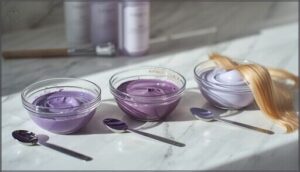
Think of mixing hair dye with conditioner like adjusting a guitar amp—small tweaks shift the whole vibe! Here are Ratio Guidelines to nail your Color Depth:
- 1:1 ratio yields mid-tone results with balanced Pigment Distribution across most hair types.
- 1:2 ratio (one part dye, two parts conditioner) creates lighter shades by reducing Dye Concentration.
- 1:3 ratio achieves pastel tones through dilution methods that soften color deposition.
- Test first on a strand to confirm your Mixing Techniques deliver expected results.
Step-by-Step Mixing Instructions
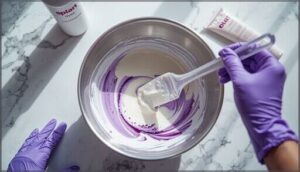
Ready to take control of your color? Start by gathering Splat hair dye, a sulfate-free conditioner, gloves, and a non-metal bowl—mixing hair dye with conditioner demands smart Dye Preparation!
| Step | Action | Why It Matters |
|---|---|---|
| 1 | Measure dye and conditioner at your chosen ratio | Ensures consistent Color Theory results |
| 2 | Blend thoroughly with a plastic spatula | Prevents streaks, maintains Dye Stability |
| 3 | Test on a small strand first | Confirms hair dye application outcome before full commitment |
These Mixing Techniques respect Hair Porosity and prevent color-safe shampoo from fighting uneven pigment later!
Application Tips for Mixed Splat Dye
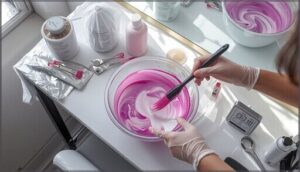
Once you’ve mixed your Splat dye with conditioner, the way you apply it makes all the difference between vibrant results and washed-out color. You’ll want to set yourself up for success before you even open that bowl.
Here’s how to prep your space, apply the mixture like a pro, and time everything perfectly for the bold color you’re after.
Preparing Your Hair and Work Area
Before you go wild with color, set yourself up for success by nailing the prep work. Wash your hair with a clarifying or sulfate-free shampoo the day before to remove buildup that messes with hair porosity and color absorption.
Towel dry to about ninety percent dampness, detangle gently with a wide-tooth comb, and protect your skin, clothes, and surfaces from inevitable stains!
Proper Application Techniques
Now that your work area is battle-ready, it’s time to master the application. Section your hair into four quadrants for even color distribution and tackle each zone systematically.
Use these dye application tips for smooth color blending:
- Apply mixed Splat hair dye from roots to mid-lengths first
- Work the mixture toward ends with gloved fingers or a tint brush
- Saturate each section completely to prevent patchy results
Processing Times and Rinsing
Once you’ve saturated all sections, leave the Splat hair dye mixture on for the recommended processing time—usually 15 to 30 minutes.
When rinsing, use lukewarm rinse water temperature to protect hair fiber safety and prevent color bleed. Rinse until water runs clear, then follow with a sulfate-free shampoo or color-safe shampoo to lock in color deposition while optimizing your rinse cycle for vibrant, lasting results.
Alternatives to Mixing With Conditioner
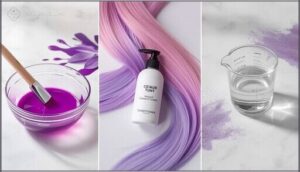
If you’re worried about the risks of mixing conditioner with Splat, you’re not stuck with just one option. There are actually better alternatives that give you control over shade and intensity without compromising color payoff.
Let’s explore three proven methods that deliver the results you want while keeping your color vibrant and true.
Using Clear or White Mixing Bases
Base Selection makes all the difference when you want to dilute the dye without conditioner interfering. Clear mixing bases preserve brightness and let color theory work in your favor, while white bases create opacity for true pastels.
You’ll gain Viscosity Control and Pigment Stability that conditioner can’t deliver, ensuring reliable color deposition. These dedicated hair dye mixing mediums protect your Mixing Techniques from chemical interference.
Achieving Pastel or Lighter Shades Safely
You can pastelize your shade by mixing white base with Splat using Pastel Color Theory: start with one part dye to two parts white base. Hair Porosity affects uptake, so strand-test first on bleached sections.
This method beats trying to dilute the dye with conditioner because it won’t block pigment.
Follow with color safe shampoo and sulfate-free conditioner for Toner Maintenance without sacrificing your creative vision.
Refreshing Color With Color-Depositing Conditioners
Color depositing products offer a smarter path for Vibrant Shade Maintenance between dye sessions. These conditioners add temporary pigment while moisturizing, giving you control over fading without reapplying harsh chemicals. Learn how to hydrate and maintain vibrant hair color.
Color Revitalization Tips for bold shades:
- Apply color depositing conditioner weekly to counteract Hair Porosity Effects and lock in pigment.
- Leave on towel-dried hair for 3-5 minutes for even saturation.
- Rinse thoroughly with cool water as a Fading Prevention Method.
- Pair with color safe shampoo for complete color maintenance.
This hair color revitalizing technique respects your creative vision.
Maintaining Hair Health and Color Vibrancy
Once you’ve achieved your dream color, the real work begins: keeping it vibrant and your hair healthy. Bold Splat shades require consistent care to resist fading and maintain their punch.
Here’s how to protect your investment and keep your color looking fresh between dye sessions.
Post-Dye Conditioning and Care
Your color won’t last if you skip the aftercare! Once you’ve rinsed that vibrant Splat out, post-dye conditioning becomes essential for color locking and damage control. Deep condition weekly to restore moisture balance and support hair repair, keeping your bold hues alive. Use color-safe formulas to protect vibrancy tips, and rinse with cool water to seal the cuticle and lock in that fearless shade.
| Aftercare Step | Purpose | Frequency |
|---|---|---|
| Deep conditioning mask | Restore moisture, support hair repair | Weekly |
| Leave-in conditioner | Seal cuticle, lock in color | After each wash |
| Cool water rinse | Close cuticle, boost vibrancy tips | Every wash |
| Color-safe conditioner | Prevent dullness, maintain moisture balance | 2–3 times per week |
| Heat protectant spray | Shield from fade, damage control | Before styling |
Sulfate-Free Products for Longevity
Switching to sulfate-free shampoo is your supreme color preservation hack! Sulfate-free products skip harsh detergents that strip pigment, protecting your rebellious hues and boosting hair moisture without sacrificing scalp comfort. These gentle cleansing formulas extend color longevity while reducing environmental impact through biodegradable surfactants.
- Sodium cocoyl isethionate cleanses without stripping natural oils or color
- Lauryl glucoside foams gently for effective hair color maintenance
- pH balanced blends seal the cuticle, locking in vibrancy
- Plant derived options support sustainability and reduce aquatic pollution
Tips to Prevent Premature Fading
Protecting your vivid shade requires strategic daily habits that extend dye longevity while keeping your strands healthy! Cool water washes, sulfate-free formulas, and UV shields form your color preservation arsenal, while tracking shade retention helps you adjust maintenance routines for peak vibrancy maintenance based on hair porosity.
Balance washing frequency with your hair’s needs to prevent hair color fading and boost hair dye longevity through consistent color retention practices!
| Fading Prevention Strategy | How It Works | Frequency |
|---|---|---|
| Cool water rinses | Reduces dye molecule release | Every wash |
| Color depositing conditioner | Refreshes faded hue | Every 1-2 weeks |
| UV protective products | Shields from sun damage | Daily outdoors |
| Clarifying wash | Removes buildup dulling color | Once monthly |
Frequently Asked Questions (FAQs)
Can you mix Splat hair dye with conditioner?
Yes, you can blend Splat with conditioner to soften those electric hues into dreamy pastels, though color dilution affects vibrancy.
Understanding dye chemistry and hair porosity helps you master semipermanent hair color mixing successfully.
Is it okay to mix hair dye with conditioner?
Mixing hair dye with conditioner dilutes pigment concentration, reducing color vibrancy by 20 to 40 percent.
This process also disrupts dye stability and chemical reactions, which can compromise moisture balance, increase hair porosity, and cause uneven color damage.
Can I mix hair dye with conditioner to make it lighter?
You can dilute hair dye with conditioner, but it usually creates a softer tint rather than a genuinely lighter shade.
Mixing ratios and hair porosity affect vibrancy, often causing faster color fade instead of predictable pastel results.
Why do people mix hair dye and conditioner?
You want softer shades without harsh chemicals, or you’re chasing pastel dreams on a budget.
Mixing hair dye with conditioner offers shade adjustment and color enhancement while providing some hair protection during the coloring process.
Is Splat Hair Dye safe to use?
Splat hair dye is generally safe when you follow package directions and take proper safety precautions. Patch tests help prevent allergic reactions and scalp irritation, while minimizing hair damage and ensuring better color longevity.
What is the best way to apply Splat Hair Dye?
Start with clean, dry hair divided into four to six sections. Apply the dye from roots to ends using gloves and an applicator brush, saturating each strand evenly before wrapping with a plastic cap.
Is it possible to mix Splat Hair Dye with a toner?
Mixing Splat with toner is technically possible, but toner formulations neutralize warm undertones, which can alter or counteract Splat’s vibrant hues.
Dye stability and color neutralization depend heavily on toner compatibility and mixing ratios.
Is it possible to dilute Splat Hair Dye with water?
You can dilute Splat hair dye with water, but it weakens color payoff and creates a runnier consistency that’s harder to apply evenly.
Water dilution risks uneven coverage and faster fading compared to conditioner-based methods.
Does Splat Hair Dye work on all hair types?
Yes, Splat hair dye works on all hair types, but results vary widely. Base color influence and porosity effects determine vibrancy—bleached hair shows the boldest semipermanent color, while darker bases yield muted tones.
Does mixing affect Splats staining on skin?
When you dilute Splat with conditioner, you’ll notice lighter skin staining because the pigment concentration drops. The conditioner creates a barrier that reduces dye transfer and helps stains wash off more easily during rinsing.
Conclusion
You’ve learned the ratios, you’ve weighed the risks, and you’ve discovered the alternatives—now it’s about making the choice that matches your vision.
Mixing Splat hair dye with conditioner can deliver softer shades, but only if you follow the rules and accept the trade-offs. If you want lasting vibrancy without the guesswork, stick with dedicated mixing bases or color-depositing conditioners.
Your hair deserves color that’s as bold as your creativity, not compromised by shortcuts.