This site is supported by our readers. We may earn a commission, at no cost to you, if you purchase through links. This content is for general informational and educational purposes only and is not a substitute for professional medical, dermatological, or nutritional advice.
Run your fingers through your hair and hear a crunch instead of a swish. That straw-like feel didn’t happen overnight—it’s months of heat tools, harsh dyes, and hard water finally catching up with your strands. Split ends, frizz that won’t quit, breakage in your brush: these are your hair’s way of waving a white flag.
Here’s the good news. You don’t need a salon budget to fix it. Natural products for dry damaged hair repair—think coconut oil, honey masks, and a splash of apple cider vinegar—can rebuild what heat and chemicals stripped away, one treatment at a time.
Table Of Contents
- Key Takeaways
- Signs Your Hair Needs Repair
- Top 5 Natural Hair Repair Products
- Best Oils for Deep Moisture
- DIY Masks for Damaged Hair
- Natural Scalp Repair Treatments
- Nutrition for Stronger Hair Growth
- Preventing Future Hair Damage
- Frequently Asked Questions (FAQs)
- How to fix dry straw like hair?
- How do I rehydrate my hair naturally?
- What is the best treatment for dry hair during menopause?
- How do you treat dry damaged hair naturally?
- What is the best natural treatment for dry damaged hair?
- How can I make my dry, damaged hair healthy again?
- How long does it take to repair dry hair?
- Can hormonal changes affect hair dryness and damage?
- Are there specific hairstyles that worsen dry hair?
- How does hard water impact hair dryness?
- Conclusion
Key Takeaways
- Watch for signs like breakage, split ends, straw-like texture, dullness, and an itchy scalp, since your hair shows damage before it gets worse.
- Natural oils like coconut, olive, argan, jojoba, and castor each work differently, some penetrate the shaft while others seal in moisture on the surface.
- DIY masks made from kitchen staples like honey, avocado, banana, egg, yogurt, and pumpkin can deeply nourish and repair damaged strands.
- Preventing future damage means washing less often, reducing heat styling, avoiding harsh coloring, detangling gently, and trimming split ends regularly.
Signs Your Hair Needs Repair
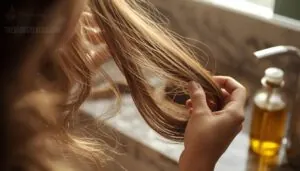
Your hair talks to you long before real trouble sets in, you just have to know what it’s saying. From the way it feels to how it looks in the mirror, there are clear clues pointing to damage. Here are five signs telling you it’s time for some serious repair work.
Learning how to tell if your hair is damaged means paying closer attention to texture, shine, and breakage before things get worse.
Breakage and Frizz
Ever notice your hair getting fuzzy right when the weather turns muggy? That’s cuticle alignment breaking down. Humidity swelling lets moisture invade the shaft, puffing strands up and out.
Breakage looks different, snapped, uneven pieces sticking out everywhere. Both signal weakened fiber structural integrity and poor moisture balance, and both mean your hair’s begging for a real deep conditioning treatment, not just a quick spritz. You can identify damage by looking for broken disulfide bonds that compromise hair integrity.
Split and Frayed Ends
Once cuticle layers wear away completely, you’re looking at split ends — that classic Y-shape at the tip. Fraying starts at your oldest hair (the ends) and worsens with handling.
Managing hair dehydration matters here, since severe dryness causes deeper, branching splits.
Trimming frequency benefits are real: regular trims remove damage before it spreads further up the shaft.
Straw-like Texture
Grab a strand and stretch it — snap back fast, or feel brittle like actual straw? That’s high porosity talking. Damaged cuticles leave gaps, so moisture escapes as fast as you add it.
This quick elasticity testing trick reveals what’s really happening beneath the surface, especially after sun, heat, or salt water exposure. Poor moisture retention is the real culprit behind that dry, crunchy feel.
Dull, Rough Strands
Hold a strand up to the light — does it shine, or just sit there flat? That’s light reflection loss, often from cuticle damage or hard water impact leaving mineral buildup behind.
Rough cuticles scatter light instead of reflecting it smoothly, while static charge makes strands stand apart, worsening that lackluster look. Regular deep conditioning with natural hair care remedies helps restore smoothness and moisture, bringing genuine shine back.
Dry, Itchy Scalp
Why won’t that itch quit, even after washing? Your scalp barrier health takes a hit from harsh products, cold weather, or leftover residue, triggering dryness and flaking.
Sometimes it’s seborrheic dermatitis or a fungal issue brewing underneath. Try aloe vera juice for scalp irritation relief, and switch to gentle, natural hair care to lock in moisture and calm seasonal dryness triggers for good.
Top 5 Natural Hair Repair Products
Ready to stop guessing and start shopping smart? You don’t need a full salon cabinet to nurse damaged hair back to health, just a handful of proven picks. Here are five products worth adding to your routine right now.
1. Eat Pretty Seasonal Nutrition Beauty Guide

Ever notice how your hair reflects what’s on your plate? That’s the whole idea behind Eat Pretty, a 208-page seasonal nutrition guide packed with 85+ beauty-boosting foods. It ties hair health to whole-body nutrition, covering biotin, omega-3s, and hormone balance month by month.
You’ll get charts, nearly 20 recipes, and practical grocery guidance for building a "beauty pantry." It’s less about quick fixes and more about feeding your strands from the inside out, season after season.
| Best For | Anyone who wants a food-first approach to healthier hair, skin, and nails, plus a great gift option for wellness-minded friends or family. |
|---|---|
| Natural Origin | Nutrition-based guidance |
| Hair/Skin Benefit | Supports hair health |
| Certification | None stated |
| Format | 208-page book |
| Usage Method | Dietary/lifestyle changes |
| Shelf Storage | N/A shelf book |
| Additional Features |
|
- Covers 85 beauty-boosting foods with clear science on biotin, omega-3s, and antioxidants
- Seasonal structure makes it easy to adjust eating habits throughout the year
- Includes charts, lists, and nearly 20 recipes for practical, real-world use
- Nutritional research is from 2014, so some findings may be outdated
- Focuses on lifestyle changes rather than medical or dermatological treatment
- Requires consistent effort to prep recipes and apply the guidance yourself
2. Pure Peppermint Essential Oil
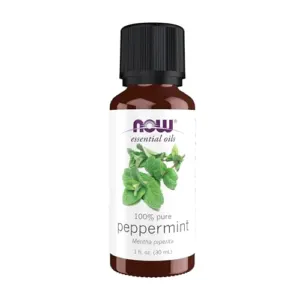
That tingly scalp feeling isn’t just invigorating, it’s menthol at work. Peppermint oil runs 35 to 55 percent menthol, steam-distilled straight from the leaves, which explains the cooling punch the moment it touches your skin.
This 1 ounce bottle is 100% pure, vegan, and tested for purity in-house. Since it’s highly concentrated, always dilute it with a carrier oil before applying, a few drops go a long way for scalp massages that boost circulation and comfort.
| Best For | Anyone looking for a natural, invigorating scent to use in aromatherapy, diluted scalp massages, or as a fresh alternative to synthetic air fresheners. |
|---|---|
| Natural Origin | 100% pure oil |
| Hair/Skin Benefit | Aromatherapy skin refresh |
| Certification | In-house tested |
| Format | 1 oz bottle |
| Usage Method | Diffuse or topical |
| Shelf Storage | Store away from children |
| Additional Features |
|
- 100% pure, undiluted, and vegan essential oil, steam-distilled from the plant for a true, unaltered scent
- Tested in-house for purity and identity, so you know what you’re getting
- Versatile use, from diffusing for a mental boost to diluted scalp massages that support circulation
- Highly concentrated, so it must be diluted with a carrier oil before applying to skin
- The strong mint scent can be overpowering for those sensitive to intense smells
- Requires careful storage away from children, even with the child-resistant cap
3. Raw Extra Virgin Organic Coconut Oil
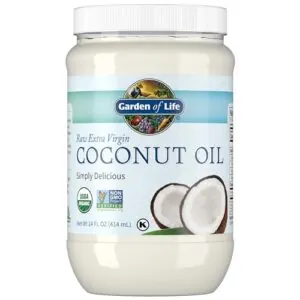
Coconut oil earns its spot on this list because it doesn’t just sit on your hair, it actually gets in. Thanks to its medium-chain fatty acids like lauric and caprylic acid, it penetrates the cortex instead of coating the surface.
This 14-ounce jar is cold-pressed, USDA Organic, and completely unrefined, no bleaching or hydrogenation involved. Use it as a pre-shampoo mask: warm a tablespoon between your palms, work it through dry ends, and leave it on for 30 minutes before washing out.
| Best For | Anyone looking for a natural, multi-purpose oil that works as both a deep-conditioning hair treatment and a clean ingredient for everyday cooking. |
|---|---|
| Natural Origin | Raw unrefined oil |
| Hair/Skin Benefit | Deep hair conditioning |
| Certification | USDA Organic, Non-GMO |
| Format | 14 oz jar |
| Usage Method | Cook or apply topically |
| Shelf Storage | Store cool dry place |
| Additional Features |
|
- Cold-pressed and unrefined, so it keeps more of its natural nutrients intact
- Penetrates the hair shaft rather than just sitting on top, thanks to its medium-chain fatty acids
- Certified USDA Organic and Non-GMO, with no bleaching or hydrogenation involved
- Solid at cooler room temperatures, so it needs to be warmed before applying to hair or skin
- A little goes a long way, but the jar may not last as long for those using it for both cooking and hair care
- Strong coconut scent may not appeal to everyone
4. Pompeian Organic Robust Extra Virgin Olive Oil
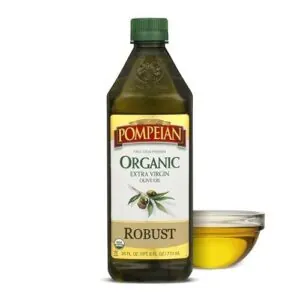
Not all olive oil belongs in your pantry versus your hair routine, but this one earns both spots. Pompeian’s rich variety is first cold-pressed and USDA Certified Organic, packed with polyphenols that help protect strands from oxidative damage.
Warm a tablespoon and massage it through dry lengths as a pre-wash treatment. The dark glass bottle keeps light from breaking down those antioxidants, so freshness holds up between uses—something your hair (and your salad dressing) will thank you for.
| Best For | Home cooks who want a bold, organic extra virgin olive oil for everyday cooking, dressings, and finishing dishes. |
|---|---|
| Natural Origin | Extra virgin olive oil |
| Hair/Skin Benefit | Skin-friendly cooking oil |
| Certification | USDA Organic, Kosher |
| Format | 24 fl oz bottle |
| Usage Method | Cook or drizzle |
| Shelf Storage | Store cool dry place |
| Additional Features |
|
- USDA Certified Organic and Non-GMO Project Verified, with first cold-pressed extraction for quality
- Naturally occurring polyphenols and a robust, full-bodied flavor great for sautéing, marinades, and vinaigrettes
- Gluten-free, non-allergenic, and certified authentic by the North American Olive Oil Association
- Strong, bold flavor may overpower more delicate recipes
- Being a liquid product, it requires careful handling to avoid spills
- Larger 24 Fl Oz bottle may not suit those wanting smaller quantities
5. Organic Pumpkin Puree

Pie filling isn’t the only job this jar can do. Organic pumpkin puree brings vitamin A, potassium, and zinc to the table, plus a naturally smooth texture that spreads through hair like a dream.
Mix a few tablespoons with a spoonful of honey for a quick mask. Work it through dry ends, leave it for 15-20 minutes, then rinse well. Your strands get a temporary coat of shine and softness—no baking required.
| Best For | Home bakers and DIY beauty enthusiasts who want an organic, multi-purpose pantry staple for both pie-making and simple hair treatments. |
|---|---|
| Natural Origin | 100% organic puree |
| Hair/Skin Benefit | Not applicable |
| Certification | Organic certified |
| Format | 15 oz x3 pack |
| Usage Method | Bake or cook |
| Shelf Storage | Refrigerate after opening |
| Additional Features |
|
- 100% organic ingredients with a smooth, pureed texture ideal for baking
- Convenient pack of 3, so you always have some on hand for recipes or masks
- Doubles as a nourishing hair treatment when mixed with honey
- Multi-pack format may be more than needed for occasional use
- Requires proper storage once opened to stay fresh
- Not shelf-stable long-term after opening, so timely use is necessary
Best Oils for Deep Moisture
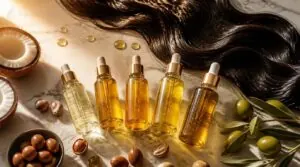
Not all oils work the same way once they hit your hair, and that matters more than you’d think. Some soak in deep, some seal moisture on the outside, and some do a bit of both. Here are five oils worth keeping in your routine, and what each one actually brings to the table.
Coconut Oil Penetration
Ever wonder why coconut oil actually sinks in while other oils just sit on top? It comes down to lauric acid diffusion — small molecules slipping through the cuticle into the cortex, especially when porosity is higher from damage.
- Warm the oil slightly for better flow
- Apply to damp, damaged strands
- Leave on 30+ minutes for real absorption
Fractionated coconut oil penetrates fastest thanks to lower viscosity.
Olive Oil Protection
Where coconut oil sinks in, olive oil stands guard. Its oleic acid coats each strand, locking moisture inside while shielding against oxidative stress.
Extra virgin varieties bring phenolic antioxidants like oleuropein and oleocanthal, fighting free radicals that worsen dryness. It’s also fairly heat-resistant, so warming it for masks won’t break down its protective punch—making it a solid natural remedy for repair.
Argan Oil Shine
Want that mirror-like finish everyone talks about? Argan oil smooths the cuticle so light bounces off strands instead of scattering.
- Shine boost from cuticle sealing
- Frizz control for flyaways
- Antioxidant protection via vitamin E
Massage a few drops through damp ends as a leave-in step—damaged hair drinks it up, gaining softness without grease.
Jojoba Hot Oil Treatments
Argan’s shine is nice, but jojoba plays a different game entirely—it’s structurally close to your scalp’s own sebum, so it blends in rather than sitting on top.
Warm a dime-size amount, massage into your scalp and lengths, and leave it 20-30 minutes before washing.
Frizz smooths out, flakes calm down, and hair feels conditioned, not coated. Look for cold-pressed, 100% pure jojoba for best results.
Castor Oil for Thickness
Thick and syrupy, castor oil works differently than the others. Its ricinoleic acid content creates an occlusive seal that locks in moisture and prevents breakage, so strands stay intact longer, appearing fuller over time.
It also boosts scalp circulation, supporting growth from the root. Since it’s sticky, mix a few drops with a lighter carrier oil and apply to ends or scalp only.
DIY Masks for Damaged Hair
Oils are great, but sometimes your hair needs a bigger dose of nourishment in one sitting. That’s where masks come in, packing your kitchen’s best ingredients into a treatment you leave on and let work. Here are five you can whip up tonight, no special trip to the store required.
Honey and Avocado Mask
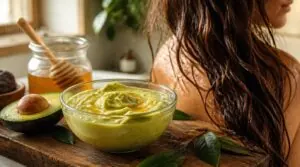
Nature’s own conditioner: honey pulls moisture in and locks it there, while mashed avocado coats each strand with smoothing fats. Together they fight oxidative damage with natural antioxidants, leaving hair softer and shinier.
Apply to clean, damp hair for 10–20 minutes, then rinse with lukewarm water. Repeat weekly for best results.
Banana and Olive Oil
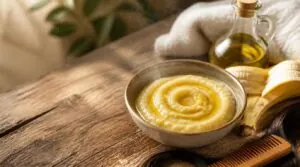
Mash a ripe banana into a bowl, and you’ve got the base for one of the most soothing DIY hair masks around. The pulp’s naturally creamy texture clings to strands instead of dripping off, while olive oil adds slip that eases detangling and forms a light moisture barrier.
Together, they:
- Coat each strand for smoother texture
- Reduce friction and mechanical stress
- Deliver potassium and vitamin B6
- Leave hair feeling less straw-like
Egg and Yogurt Mask
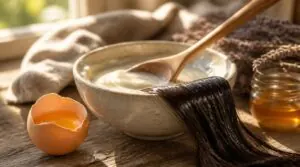
Ever wonder why old-school beauty routines still swear by breakfast staples? Egg proteins form a temporary protective coating on each strand, while yogurt’s lactic acid gently softens texture.
Mix one egg with two tablespoons plain yogurt, work through damp hair, focus on ends. Leave 15-20 minutes max—patch test first, since scalps can react. Rinse with cool water, then shampoo thoroughly to avoid lingering odor.
Pumpkin and Honey Treatment

Your fall pumpkin isn’t just for pie—it packs gentle enzymes that exfoliate your scalp naturally. Mix ¼ cup pumpkin puree with 2 tablespoons honey for serious moisture binding.
- Softens dry, itchy scalp
- Adds post-treatment slip
- Smooths rough texture
- Rinses clean with lukewarm water
- Boosts shine
Apply scalp-to-ends, leave 20 minutes, rinse thoroughly. This DIY hair mask helps with damaged hair repair beautifully!
Mayonnaise Moisture Mask
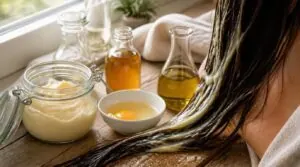
Yes, that jar in your fridge doubles as a hair mask. Egg yolk brings lecithin for a stable emulsion, vinegar smooths the cuticle, and oil creates slip plus an occlusive barrier that locks in moisture.
Slather 3-4 tablespoons scalp-to-ends, cap for 30 minutes, then rinse with cool water. This budget-friendly DIY hair mask genuinely aids damaged hair repair—no fancy ingredients required!
Natural Scalp Repair Treatments
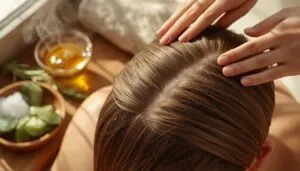
Healthy hair actually starts at the scalp, not the ends. If yours feels itchy, tight, or just plain unhappy, a few natural remedies can calm things down fast. Here are five scalp treatments worth adding to your routine.
Aloe Vera Soothing
Grab that aloe plant on your windowsill—it’s scalp medicine! Aloe’s cooling gel calms scalp inflammation and soothes redness fast, thanks to polysaccharide moisture that hydrates without grease.
- Reduces itchiness
- Calms irritation
- Boosts hydration barrier
- Feels lightweight
- Works as aloe vera juice rinse
Massage it in weekly. Your scalp’s foundation for healthy hair starts here—simple, natural remedies really do work.
Apple Cider Vinegar Rinse
Once your scalp feels calmer, it’s time to tackle buildup. Apple cider vinegar works because its acidity restores proper pH balance, sealing the cuticle so hair feels smoother and shinier. If you’re unsure how often your hair actually needs this kind of deep cleanse, pairing it with a personalized hair care routine guide can help you time your rinses around your specific hair type and scalp needs.
Mix 1 part ACV to 2-3 parts water—never apply it straight, since undiluted vinegar can irritate skin and eyes. Pour this hair rinse over damp hair after shampooing. Regular use clears buildup and reduces flaking, leaving strands hydrated and defined.
Black Tea Scalp Rinse
Your kitchen cabinet holds another rinse worth trying: black tea. It’s packed with caffeine and antioxidants that stimulate circulation and guard against oxidative stress. The tannins offer a gentle conditioning effect, helping strands feel firmer.
Brew it strong, cool it, then massage into your scalp for 30-60 minutes before rinsing—many notice reduced shedding and richer color, especially on dark hair.
Witch Hazel Irritation Relief
Witch hazel works as a natural astringent, tightening tissue and calming redness on a fussy scalp. Its tannins and flavonoids bring antioxidant, anti-inflammatory power to irritation.
Apply as a topical tonic after washing:
- Reduces redness
- Calms itchiness
- Tightens tissue
- Soothes scalp burn-out
- Fits easily into home spa routines
Peppermint Oil Massage
Feel that tingle? That’s menthol going to work, cooling and stimulating your scalp in one go.
Dilute peppermint oil in coconut or jojoba oil first, then massage in small circles for a few minutes to boost scalp circulation and follicle stimulation. Always patch test before applying.
| Do | Avoid |
|---|---|
| Dilute properly | Applying near eyes |
| Weekly use | Leaving on too long |
| Patch test | Broken, irritated skin |
Nutrition for Stronger Hair Growth
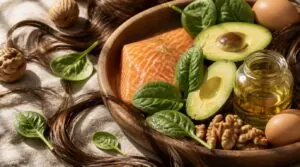
Healthy hair doesn’t just start in the shower, it starts on your plate. What you eat shows up in every strand, from root to tip. Here are five nutrients worth adding to your daily menu.
Protein for Strand Strength
Your hair is basically 91% protein, so skimping on it shows up fast as breakage and limp strands.
Keratin needs amino acids to rebuild disulfide bonds, the tiny sulfur links giving hair its strength. Add eggs, salmon, or Greek yogurt to meals for steady peptide repair from the inside out. Pair that with protein-rich DIY masks, and you’re supporting cationic protein deposition where it’s needed most: right on damaged strands.
Beyond diet, calming the scalp itself matters too—MSM’s anti-inflammatory benefits for hair growth help create the healthy follicle environment those rebuilt strands need to thrive.
Iron-rich Foods
Low iron can quietly stall hair follicle health, leading to shedding you didn’t see coming.
Nutrient deficiencies show up fast in strands, so eat a mix of sources:
- Oysters, clams, mussels (Seafood Iron Sources)
- Spinach, kale, chard (Leafy Green Benefits)
- Lentils, beans, chickpeas (Legume Mineral Content)
- Fortified Grain Nutrition like whole wheat bread
- Pumpkin seeds, almonds (Nut Seed Iron)
This combo helps with hair strengthening and steady hair breakage prevention.
Biotin Support
Ever wonder why biotin gets so much hype? It’s because this B-vitamin acts as a coenzyme for five carboxylases, enzymes your body needs for metabolism and tissue repair.
Absorption happens through a sodium-dependent transporter in your gut, so a steady diet matters more than mega-doses.
Snack on egg yolks, milk, or fortified flour for real hair strengthening and breakage prevention.
Vitamin C Collagen Support
Think of vitamin C as your collagen construction crew. It powers the Collagen Hydroxylation Process, stabilizing proline and lysine for strong fibers, then helps with Enzymatic Cross-linking Support so strands resist breakage.
Its antioxidant muscle brings Oxidative Stress Protection, guarding Follicle Structural Integrity during Tissue Repair Patterns.
Load up on citrus, bell peppers, or collagen peptides—your scalp’s connective tissue will thank you.
Healthy Fats for Moisture
Skip the serums for a second—what you eat shapes your hair just as much. Omega-3 fatty acids from salmon, flaxseed, or walnuts calm inflammation and support your skin barrier. Avocados and olive oil bring monounsaturated fats that lock in moisture, while coconut oil’s saturated fats coat strands directly. These essential fatty acids work from the inside out, keeping both scalp and strands hydrated.
Preventing Future Hair Damage

Repairing damage is only half the battle, keeping it from coming back is where the real win happens. The good news? Most future breakage comes down to a handful of everyday habits you can adjust starting today. Here are five simple changes that protect your progress for good.
Wash Less Often
Daily washing strips your scalp’s natural oils and disrupts hair hydration. Scalp oil buildup takes 1-3 days to develop, so try:
- Washing 2-3x weekly
- Using lukewarm water, not hot
- Rinsing sweat residue after workouts
- Choosing gentle, sulfate-free shampoo
- Conditioning dry ends between washes
This balance keeps roots clean without over-drying your lengths.
Reduce Heat Styling
Your flat iron can undo a week of DIY hair masks in one pass. Stick to the right heat settings—the lowest that still styles—and always apply a heat protection barrier first.
| Habit | Damage Risk | Better Fix |
|---|---|---|
| Wet styling | High | Reduce drying time first |
| Repeated passes | High | Airflow styling techniques |
| No cool finish | Medium | Cool air finishing |
Natural oils boost hair hydration between sessions, helping repair damaged hair from the inside out.
Avoid Harsh Coloring
Permanent dyes hit harder than semi-permanent ones, and ammonia cranks up irritation risk on already-damaged strands.
Choose ammonia free alternatives whenever you can, especially after a heat styling session. Color stripping ingredients rob hair of oils it desperately needs, leaving ends brittle and dull.
Gentler formulas protect color vibrancy while reducing chemical irritation, so your DIY hair masks actually have healthy hair to work with, not damage control.
Detangle Gently
Your color’s protected—now protect the strands themselves. Tangles yank on fragile hair, causing hair breakage right at the root.
- Use wide-tooth combs on wet hair
- Try the bottom-up technique, working knots loose first
- Add detangling spray slip before combing
- Pat dry with a microfiber towel
Sectional combing keeps dry and frizzy hair calmer, no yanking required!
Trim Damaged Ends
Here’s the truth: split ends don’t stay put. They travel upward, turning one frayed tip into inches of damaged hair.
Split ends never stay put—they travel upward, turning one frayed tip into inches of damaged hair
| Trim Type | What It Removes | Best For |
|---|---|---|
| Micro-trim | Fraying tips only | Length retention |
| Point cut | Angled damage | Softer edges |
| Blunt cut | Surface splits | Uniform ends |
Sharp scissors and regular end inspections stop breakage before it spreads—no guesswork required!
Frequently Asked Questions (FAQs)
How to fix dry straw like hair?
Straw-like strands crave deep conditioning treatment and consistent moisture retention.
Try a weekly hair mask, lower heat styling, and hydrating leave-ins with glycerin or aloe vera.
Protect strands outdoors, and you’ll notice softer, more elastic hair within weeks!
How do I rehydrate my hair naturally?
Soak strands with water till fully saturated, not just misted, then lock it in with a humectant like honey or aloe, followed by an oil seal. This combo rehydrates hair naturally and keeps moisture from escaping as it dries.
What is the best treatment for dry hair during menopause?
Since estrogen deficiency weakens your skin’s barrier function, pair occlusive oils like coconut or argan with weekly hair masks for lasting moisture and elasticity.
Menopausal scalp dryness responds well to gentle, consistent natural remedies rather than harsh chemical treatments.
How do you treat dry damaged hair naturally?
Ready to give your strands a real fix? Focus on moisture retention and cuticle health restoration: honey’s natural humectant pull, coconut oil penetration, gentle detangling, and DIY hair masks work together to repair damaged hair naturally, from root to end.
What is the best natural treatment for dry damaged hair?
Coconut oil stands out for true lipid penetration, strengthening the shaft from within. Pair it with a honey hair mask for humectant moisture, plus an apple cider vinegar rinse to restore scalp pH balance and seal the cuticle for lasting repair.
How can I make my dry, damaged hair healthy again?
Boost moisture retention with a coconut oil hair mask, restore cuticle health using apple cider vinegar rinses, and improve elasticity versus dryness through weekly deep conditioning—your damaged strands will regain strength, shine, and softness within weeks.
How long does it take to repair dry hair?
Mild dryness can feel softer in 1 to 6 weeks with consistent DIY treatments, but moderate to severe hair damage often needs 6 to 12 months of regrowth. Managing expectations matters—true repair follows regrowth timelines, not overnight fixes.
Can hormonal changes affect hair dryness and damage?
Yes—hormones act like weather systems for your hair. Estrogen and moisture dip in menopause, thyroid metabolism slows growth, and DHT follicle sensitivity or cortisol cycle disruption can dry strands, weaken scalp health, and trigger hair loss.
Are there specific hairstyles that worsen dry hair?
Tight ponytails, braids, and wet updos worsen dry, frizzy hair through tension breakage and traction alopecia risks. Sleeping friction and heat styling add more damage. Loosen styles, detangle gently, and let hair dry before tying it up.
How does hard water impact hair dryness?
Calcium and magnesium in hard water coat your strands, causing mineral buildup that blocks moisture absorption. This weakens the cuticle barrier, disrupts scalp oils, fades color faster, and leaves hair dry, dull, and prone to frizz.
If your ends already feel rough and porous from this cycle, tackling how to repair damaged high porosity hair alongside your wash routine will help moisture actually stay put.
Conclusion
Your hair has survived a thousand blow-dries and lived to tell about it—that’s strength worth honoring. Real repair isn’t magic, it’s consistency: coconut oil on Tuesday, a honey mask on Friday, patience every day between. Natural products for dry damaged hair repair work because they rebuild what heat destroyed, strand by strand. Skip the shortcuts. Trust the process. Your strands remember every kind choice you make, and slowly, they’ll reward you with shine, strength, and that satisfying swish you’ve been chasing.