This site is supported by our readers. We may earn a commission, at no cost to you, if you purchase through links. This content is for general informational and educational purposes only and is not a substitute for professional medical, dermatological, or nutritional advice.

Psoriasis doesn’t just affect your skin—it rewires your daily life. Choosing clothes, shaking hands, sitting through a meeting without scratching: every small moment carries an extra weight most people never notice.
About 125 million people worldwide live with this cycle of flares and remissions, and many quietly wonder whether there’s something gentler than another prescription cream. The answer isn’t a single miracle fix, but a practical toolkit—remedies grounded in real evidence that work with your skin instead of against it.
What follows covers the most effective natural options, from what you put on your skin to what you eat and how you live.
Table Of Contents
- Key Takeaways
- Natural Remedies That Calm Psoriasis
- Moisturizing Habits That Protect Skin
- Bath Soaks and Gentle Cleansing
- Foods and Supplements That May Help
- Lifestyle Choices and Safety Limits
- Frequently Asked Questions (FAQs)
- Can home remedies help psoriasis?
- Is there a cure for psoriasis?
- What foods are good for psoriasis?
- How can I manage psoriasis effectively?
- How do I get rid of my psoriasis naturally?
- Can psoriasis be cured holistically?
- What is the best treatment for psoriasis?
- What clears psoriasis fast?
- Can psoriasis ever be cured?
- What did the Native Americans use to treat psoriasis?
- Conclusion
Key Takeaways
- Natural ingredients like aloe vera, colloidal oatmeal, and capsaicin cream have real evidence behind them and can meaningfully reduce psoriasis symptoms when used correctly and consistently.
- Moisturizing right after bathing—while skin is still slightly damp—locks in hydration far more effectively than applying it later, making timing just as important as product choice.
- What you eat matters: an anti-inflammatory diet rich in omega-3s, low-GI foods, and probiotics can quietly reduce flare frequency alongside topical treatments.
- Natural remedies have real limits—joint pain, rapid plaque spread, or signs of infection are clear signals to stop self-managing and see a dermatologist instead.
Natural Remedies That Calm Psoriasis
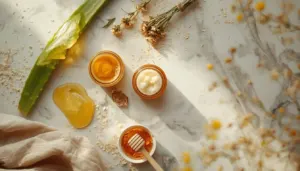
Some natural ingredients have real science behind them — not just tradition.
Others, though, are just filler — so it’s worth checking out which fast hair growth products actually have the research to back them up.
Used correctly, they can take the edge off redness, itch, and scaling without harsh side effects.
Here’s what’s worth knowing about each one.
Aloe Vera Gel for Redness and Itch
When psoriasis flares, aloe vera can be your first line of calm. Its anti-inflammatory polysaccharides ease skin inflammation and deliver real itch relief, fast.
Here’s how to use it safely:
- Choose a pure aloe vera gel with no added fragrance
- Do a patch test on a small area first — allergy risk is real
- Apply a thin layer for a gentle cooling sensation
- Stop if redness increases
For more details, see the anti‑inflammatory and antimicrobial properties.
Colloidal Oatmeal for Dryness Relief
Colloidal oatmeal works differently from aloe — instead of cooling inflammation, it builds a protective shield. Its oat particle suspension coats your skin, while beta-glucan hydration pulls moisture in and holds it there.
That skin film formation quietly limits water loss for up to two weeks.
With a low irritation risk and real extended moisture retention, oatmeal baths are a smart, gentle cornerstone of moisturizing strategies for dry skin.
Capsaicin Cream for Itching and Pain
Where oatmeal shields, capsaicin cream takes a different approach — it works by gradually desensitizing sensory nerves beneath your skin. Yes, you’ll likely feel a burning sensation at first.
That’s expected. With consistent application timing and daily use over several weeks, that burn fades, and so does the itch.
Monitor skin irritation closely, and never apply it to broken skin.
If redness or discomfort develops, switch to a gentler formula — the best numbing creams for tattoos and waxing include options across a range of lidocaine concentrations, so you can dial back the strength without sacrificing too much relief.
Coal Tar Products for Plaque Control
Coal tar works differently than capsaicin — it targets the root of plaque psoriasis by slowing the rapid skin cell growth that drives skin scaling. Available in cream, lotion, and gel formulation types, this topical treatment also breaks down existing plaques.
Application techniques are straightforward, though staining and odor are real drawbacks. Used as directed, it’s a well-established, safe option for flare-up prevention.
Oregon Grape Topical Support
Oregon grape — specifically Mahonia aquifolium — is one of the quieter natural remedies for psoriasis, but don’t overlook it. Its active compound, berberine, carries berberine antimicrobial and anti-inflammatory properties that help calm irritated skin.
Use creams at 10% extract strength, following this application frequency guide:
- Apply a thin layer to affected areas once daily
- Run a patch test protocol for 48 hours first
- Watch for skin sensitization risk — stop if redness worsens
- Support skin barrier repair by pairing with your moisturizer
Tea Tree Oil Safety and Dilution
Tea tree oil has real antimicrobial benefits, but it demands respect. Never apply it undiluted — that’s a fast track to irritation or a contact allergy.
Pairing tea tree oil with gut-friendly habits like eating kimchi or kefir can amplify results, since foods that fight acne from the inside out work best alongside a consistent topical routine.
For safe dilution practices for essential oils, aim for 1–2 drops per teaspoon of carrier oil — roughly a 1–2% concentration. Patch testing for 48 hours first is non‑negotiable. Store it in a dark container, and always protect your eyes during application.
Moisturizing Habits That Protect Skin
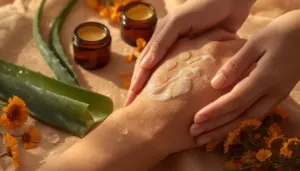
When you have psoriasis, your skin’s natural barrier is compromised — it loses moisture faster and struggles to protect itself. The good news is that the right moisturizing habits can make a real difference in how your skin feels day to day.
Here are five simple practices worth building into your routine.
Use Thick Creams or Ointments
Think of thick creams and ointments as a seal for your skin. Petrolatum ointment benefits include forming a water-resistant layer that slows moisture loss from psoriasis plaques.
For natural skin barrier support, ceramide-rich formulas replenish what psoriasis depletes. These occlusive agents and heavy creams outperform thin lotions on dry, scaling skin.
Before committing, patch testing safety matters—test a small area first.
Apply Moisturizer After Bathing
Timing matters more than you think. Immediate damp application—right after you pat dry—locks in moisture before it escapes. Don’t wait until your skin feels tight.
- Dab with a towel, leave skin slightly damp
- Apply over‑the‑counter moisturizers using thin-medium layering across plaques
- Extend plaque border coverage to prevent dry-ring scaling
- Seal with occlusives, then allow a post-application wait before dressing
Consistent skin hydration after oatmeal baths or colloidal oatmeal soaks amplifies every benefit.
Pre-soak Scales With Occlusive Oils
Scales don’t shed easily on their own — they need a head start. Applying an occlusive film of coconut oil, olive oil, or jojoba oil 30–60 minutes before bathing is an oil pretreatment for scale softening at its most practical. The oil acts like a slow-working key, loosening tight plaques before water ever touches them.
| Oil | Occlusive Strength | Best Use |
|---|---|---|
| Coconut oil | High | Thick plaque areas |
| Olive oil | Moderate–High | Sensitive or dry skin |
| Jojoba oil | Moderate | Face and delicate areas |
| Shea butter | Very High | Severely cracked skin |
| Petrolatum | Maximum | Overnight barrier support |
Contact Duration matters — shorter than 30 minutes reduces scale softening noticeably. Always do Patch Testing first, since even natural moisturizing oils as occlusive agents can irritate reactive skin. Oil Selection should match your tolerance, not just availability.
Choose Fragrance-free, Dye-free Products
what you put on your skin matters just as much as how often you apply it. For fragrance and synthetic dyes are quiet troublemakers — they substantially raise the risk of skin irritation from topical agents.
When choosing over-the-counter moisturizers for eczema and psoriasis, keep sensitive skin compatibility front and center:
- Pick dermatologist recommendations like Vanicream, CeraVe, or Cetaphil
- Check ingredient transparency — no "fragrance" or FD&C dyes listed
- Look for certification labels tied to defined fragrance-free standards
- Consider eco-friendly packaging as a signal of cleaner formulations
- Verify claims by scanning the actual ingredient list, not just the front label
Use a Humidifier in Dry Air
Dry indoor air acts like a slow drain on your skin barrier. A humidifier helps counter that — especially in winter when heating strips moisture from every room.
Place one in your bedroom or living area for targeted room placement benefits.
cool vs warm mist based on comfort, use clean filtered water to minimize water quality impact, and clean it regularly to avoid mold.
Bath Soaks and Gentle Cleansing
The way you bathe matters more than most people realize when you’re managing psoriasis.
Small changes to your bath routine can ease itching, soften stubborn scales, and protect your skin barrier instead of stripping it.
Here’s what actually helps.
Take Lukewarm, Short Baths

Your bath temperature matters more than you’d think. Sticking to Temperature Guidelines means keeping water between 90°F and 100°F — comfortably warm, never hot. Short Soak Duration of 15–20 minutes protects your skin barrier without stripping natural oils.
Follow these basics for Hydration Retention and Sensitive Area Comfort:
- Keep water lukewarm, not steaming
- Limit soaks to 15–20 minutes
- Monitor for dizziness — Safety Monitoring matters
- Avoid hydrotherapy extremes that worsen dryness
- Pat skin gently dry afterward
Add Colloidal Oatmeal to Bathwater

Once your lukewarm bath is ready, add about 1 cup of colloidal oatmeal — your Oatmeal Dosage — directly to the running water. For Dissolution Method, let it disperse fully until the water turns milky. That coating is your Skin Barrier Coating at work.
Follow Soak Time Guidance: 15–20 minutes, then moisturizer immediately.
Practice Allergy Monitoring if irritation appears.
| Step | What to Do | Why It Helps |
|---|---|---|
| Oatmeal Dosage | Add 1 cup to bathwater | Delivers effective itch relief |
| Soak Time Guidance | Soak 15–20 minutes | Protects skin without over-drying |
| Allergy Monitoring | Stop if redness worsens | Ensures safe use for psoriasis |
Try Epsom Salt Soaks
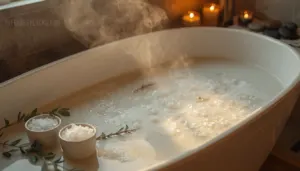
Colloidal oatmeal soothes beautifully, and Epsom salt offers something different — targeted relief for inflammation and joint aching. As a home remedy for psoriasis, it works simply: warm water boosts the Magnesium Dissolution Rate, letting magnesium sulfate fully dissolve and soften plaques.
- Match your Warm Water Temperature — lukewarm, never hot
- Follow a 2-cup Soak Volume Ratio per standard tub
- Soak 15–20 minutes, mindful of Soak Frequency — not nightly
- Observe Open Wound Caution — broken skin means skip it
Use Dead Sea Salt Baths

Dead Sea salt baths stand apart from other natural remedies because their mineral composition — rich in magnesium, calcium, and potassium — goes far beyond what plain salt offers.
For psoriasis relief, solution strength matters: aim for roughly 2% at home. Keep soak timing to 20 minutes in warm water for real barrier support and skin hydration.
Watch for irritation monitoring cues — any burning means stop.
Pat Skin Dry, Then Moisturize
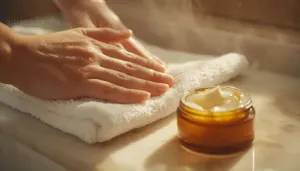
Once you step out, resist the urge to rub. Gentle patting pressure with a soft towel choice keeps irritated skin calm — and stopping short of complete dryness matters.
That partial dryness retention is your window.
Apply over-the-counter moisturizers for eczema and psoriasis immediately, using enough moisturizer amount to fully cover affected areas. Timing of application within minutes promotes natural skin barrier support for psoriasis effectively.
Foods and Supplements That May Help
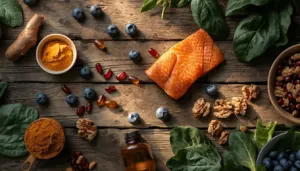
What you eat and what you take as supplements can quietly work in your skin’s favor. It won’t replace your treatment plan, but the right choices may take some of the edge off your symptoms.
Here’s where it’s worth paying attention.
Add Omega-3-rich Foods
Think of omega-3 fatty acids as a quiet firefighter for inflamed skin. Oily fish like salmon, mackerel, and sardines offer the most direct EPA and DHA — your skin-calming priority. A 3-ounce salmon portion delivers roughly 4.5 g.
Omega-3s from oily fish like salmon act as quiet firefighters, calming inflamed skin from within
Plant sources like chia seeds and walnuts provide ALA.
Fortified foods and fish oil supplements round out an anti-inflammatory diet when dietary changes feel overwhelming.
Consider Curcumin With Black Pepper
Curcumin — turmeric’s active compound — is one of the more promising natural remedies for psoriasis, but there’s a catch: it barely absorbs on its own. That’s where black pepper comes in. Piperine dose matters here; just 5–20 mg dramatically boosts bioavailability, roughly doubling how much your body actually uses. Look for supplement formulations listing both.
- Inhibits inflammatory pathways driving plaques
- Promotes an anti-inflammatory diet naturally
- Clinical evidence shows reduced plaque severity
- Enhanced absorption means real, measurable results
- Check safety interactions if you take blood thinners
Check Vitamin D Status
Low vitamin D quietly worsens psoriasis — and most people don’t know they’re deficient until tested. A simple Serum 25(OH)D test reveals your status and guides supplement dosage adjustment precisely.
| Factor | Why It Matters |
|---|---|
| Deficiency threshold values | Below 20 ng/mL signal risk |
| Sunlight exposure evaluation | UVB rays trigger vitamin D production |
| Skin pigmentation | Reduces UVB absorption |
| Age over 50 | Lowers production efficiency |
| Risk factor identification | Guides targeted supplementation |
Support Gut Health With Probiotics
Your gut microbiome does more than digest food — it quietly shapes your immune system modulation. Probiotic strain selection matters here; Lactobacillus and Bifidobacterium strains have the strongest evidence for lowering inflammatory markers tied to psoriasis.
Incorporate fermented food sources like kefir or kimchi daily. Prebiotic pairing with fiber-rich foods strengthens their effect.
Consistent dosage timing — same time each day — improves results after about eight weeks.
Follow a Low-glycemic Diet
What you eat sends signals to your immune system.
Swapping high glycemic index foods — white bread, sugary snacks — for low GI fruits, whole grain choices, and legumes keeps blood sugar steadier. Add protein pairing and healthy fats at each meal to slow glucose absorption further.
Portion control matters too. These dietary changes are a quiet but powerful part of an anti-inflammatory diet for psoriasis.
Lifestyle Choices and Safety Limits

What you do every day matters just as much as what you put on your skin. Your habits around stress, weight, and sun exposure can either quiet psoriasis or stir it back up.
worth paying attention to.
Reduce Stress With Meditation or Yoga
Stress doesn’t just wear you down mentally — it can light up a psoriasis flare almost overnight. That’s why stress reduction techniques for skin conditions matter so much.
Practices like meditation, yoga, Mindful Stretching, and Pranayama Breathing train your nervous system to slow down.
Breath Awareness, Guided Visualization, and Yoga Nidra all give your skin a fighting chance to heal.
Maintain a Healthy Weight
Your mind and body are more connected than you might think — and your weight is part of that picture. Obesity raises both your risk of psoriasis and its severity.
Weight loss through physical activity, portion control, calorie tracking, and an anti-inflammatory diet can noticeably ease flares.
Better sleep quality and awareness of medication effects also support healthy weight management for psoriasis.
Avoid Smoking and Limit Alcohol
lifestyle modification levers matter more than most people realize: smoking and alcohol. Both are well-known psoriasis trigger avoidance targets.
tobacco cessation removes nicotine and harmful chemicals that worsen inflammation and slow skin healing — and the benefits build over years. secondhand smoke carries similar risks.
alcohol reduction, aim for several alcohol-free days each week, since the impact of alcohol on psoriasis severity is real and measurable.
Use Sunlight Carefully, Not Excessively
Sunlight can actually work in your favor — but only if you respect its limits. natural UVB therapy helps calm plaques in many patients.
Time it right: UV timing matters, so midday sun hits hardest.
Wear protective clothing, seek shade strategies when intensity peaks, and never chase a tan. Sunburn prevention isn’t optional — a single bad burn can trigger a serious flare.
Know When Natural Remedies Are Not Enough
Natural remedies can take you far, but they’ve real limits. If you notice severe itch disruption stealing your sleep, rapid plaque spread to new areas, or infection signs like warmth and pus, it’s time for a clinical assessment of psoriasis severity.
Joint pain warning signals or any eye involvement alert you to possible psoriatic arthritis — and no topical treatments for psoriasis replace that conversation with your doctor.
Frequently Asked Questions (FAQs)
Can home remedies help psoriasis?
Yes, home remedies like oatmeal baths, aloe vera, and tea tree oil can genuinely ease symptoms.
They won’t cure psoriasis, but they help manage dryness, itch, and flares day-to-day.
Is there a cure for psoriasis?
Honestly, no — there’s no cure for psoriasis yet. But remission is real. With the right natural remedies and an overall approach, many people keep symptoms quiet for months, sometimes years.
What foods are good for psoriasis?
Focus on an anti-inflammatory diet.
Load your plate with leafy green vegetables, antioxidant berries, legume proteins, and fiber-rich grains.
Add Omega-3 fatty acids, healthy fats, nuts, Probiotics, Curcumin, and Vitamin D to support your skin.
How can I manage psoriasis effectively?
Persistent, purposeful, and patient-centered care makes all the difference.
Managing psoriasis effectively means blending Medical Therapy Options with an integrated approach — combining Regular Dermatology Visits, stress reduction techniques, moisturizing strategies, and diet and lifestyle changes.
How do I get rid of my psoriasis naturally?
Getting rid of psoriasis naturally isn’t a single fix — it’s a combination of consistent habits.
Natural remedies, smart diet and lifestyle changes, and targeted care work together to calm flares and protect your skin.
Can psoriasis be cured holistically?
Psoriasis has no permanent cure — integrated or otherwise.
But integrated approach using integrative medicine, anti-inflammatory diet, and stress reduction techniques can meaningfully reduce flares and help you live more comfortably long-term.
What is the best treatment for psoriasis?
No single treatment works for everyone.
Biologic agents, systemic drugs, and small molecule inhibitors target psoriasis at its root, while topical treatment, natural remedies like aloe vera and turmeric, and an integrated approach through combination therapy and treatment monitoring offer real, lasting relief.
What clears psoriasis fast?
Fast relief sounds simple, but psoriasis often clears the slowest when you rush it.
UVB phototherapy, biologic injections, and topical steroids work the quickest — natural options like aloe vera, curcumin, and Epsom salt support healing steadily alongside them.
Can psoriasis ever be cured?
Not yet.
Psoriasis stems from a genetic predisposition that makes your immune system attack healthy skin. Disease-modifying research and biologic therapy continue advancing, but long-term remission — not a permanent cure — remains today’s realistic goal.
What did the Native Americans use to treat psoriasis?
Native Americans turned to plants like Balsam Poplar Buds, Oregon grape (Mahonia aquifolium), Aloe Vera, Yarrow Leaf Poultice, Willow Bark Extract, White Sage Infusion, and Juniper Berry Salve as herbal anti-inflammatory therapies for troubled skin.
Conclusion
Psoriasis doesn’t pause—but neither do you. Finding the right natural remedy for psoriasis is less about chasing a cure and more about building daily habits that tip the balance toward calm skin.
Moisturize consistently, eat to reduce inflammation, manage stress before it controls you, and respect your skin’s limits.
These aren’t small steps—they’re the foundation of real, lasting relief.
Your skin is listening to every choice you make. Make them count.