This site is supported by our readers. We may earn a commission, at no cost to you, if you purchase through links. This content is for general informational and educational purposes only and is not a substitute for professional medical, dermatological, or nutritional advice.
Oxybenzone shows up in your bloodstream within hours of applying most chemical sunscreens, sometimes reaching levels the FDA flags for further study. Your skin absorbs more than you’d think from that daily spritz. Mineral formulas skip that problem entirely, sitting on the surface and doing their job through physical reflection instead of chemical absorption.
That distinction matters when you’re slathering something on your face 365 days a year.
Natural sun protection for skin isn’t about ditching sunscreen or trading efficacy for peace of mind. It’s about choosing zinc oxide over questionable filters, understanding what "reef-safe" actually means, and building habits—clothing, shade, timing—that work alongside your sunscreen rather than depending on it alone. Here’s what actually holds up under scrutiny, and what to leave on the shelf.
Table Of Contents
- Key Takeaways
- Best Natural Sun Protection Methods
- Top 10 Natural Sunscreens
- 1. Hawaiian Tropic Mineral Sunscreen SPF 50
- 2. Colorescience No-Show Mineral Sunscreen
- 3. La Roche Posay Tinted Mineral Sunscreen
- 4. Sun Bum Mineral Face Sunscreen
- 5. Dr Jart Mineral Sunscreen SPF 50
- 6. ISDIN Eryfotona Actinica Mineral Sunscreen SPF 50
- 7. Bare Republic Vanilla Coco Sunscreen Spray
- 8. Bare Republic Mineral Matte Sunscreen
- 9. Colorescience SPF 50 Body Sunscreen
- 10. Coola organic sunscreen spf 50
- Natural Sunscreen Ingredients to Know
- Ingredients and Formats to Avoid
- Choosing Skin-Safe Sun Protection
- Frequently Asked Questions (FAQs)
- What naturally protects skin from sun?
- Is there a natural alternative to sunscreen?
- Which is the best homemade sunscreen?
- How to protect skin from sun damage naturally?
- Is there a natural substitute for sunscreen?
- Can natural sunscreens expire or lose effectiveness?
- How should natural sunscreen be stored for longevity?
- Can natural sunscreen stain clothing or swimwear?
- Are natural sunscreens suitable for acne-prone skin?
- How often should you reapply natural sunscreen throughout the day?
- Conclusion
Key Takeaways
- Mineral sunscreens with zinc oxide or titanium dioxide protect skin by reflecting UV rays on the surface instead of being absorbed into the bloodstream like chemical filters such as oxybenzone and octinoxate.
- Effective natural sun protection combines daily mineral SPF with UPF clothing, shade during peak hours (10am–3pm/4pm), and antioxidant-rich skincare rather than relying on any single method.
- Ingredients like oxybenzone, retinyl acetate, and citrus oils pose real risks (hormone disruption, irritation, phototoxicity), while DIY sunscreen recipes and natural oils alone can’t provide reliable SPF protection.
- Reapplication every two hours (or after swimming/sweating), proper storage away from heat, and choosing non-nano, cream-based formulas over sprays all help maintain consistent, safe protection.
Best Natural Sun Protection Methods
Sun protection isn’t just about what you put on, it’s about the choices you make all day long. Your skin deserves layers of defense that work together, from your morning routine to your afternoon plans. Here are five natural strategies worth building into your daily life.
If you’re ready to go deeper, this guide to natural sun protection strategies for everyday skin breaks down how clothing, timing, and gentle habits work alongside sunscreen to keep your skin barrier truly protected.
Mineral Sunscreen Daily
Mineral sunscreen works the moment it touches your skin, no 20-minute wait like chemical formulas require. Zinc oxide and titanium dioxide sit on top, reflecting UV rays instead of absorbing them. These ingredients create a physical UV barrier to protect your skin surface.
Quick daily habits:
- Apply generously
- Layer after moisturizer
- Choose non-comedogenic formulas
- Reapply every two hours
- Don’t skimp near hairlines
Broad-spectrum protection, minimal white cast—your skin barrier stays undisturbed while UV rays bounce right off.
UPF Clothing and Hats
Your clothes can block UV rays too, no reapplication needed. Fabric weave density determines protection: tighter knits block more radiation than loose ones, even in lightweight fabrics.
Look for hats with a 6cm brim or longer, plus neck flaps for hairline coverage.
Bonus: quality UPF holds up wet or dry, though gentle washing preserves that protection—harsh laundering shortens garment longevity over time.
Shade During Peak Hours
Timing matters as much as coverage. Seek shade from 10am to 3pm, when UV radiation peaks regardless of clouds.
Since the sun’s angle shifts constantly, recheck your spot—morning shade often turns to direct exposure by noon.
Pack a portable umbrella for beaches or parks, and pair shade with mineral sunscreen containing zinc oxide for backup UVA/UVB defense against sunburn.
Antioxidant-rich Skin Care
Shade and mineral sunscreen handle the outside; antioxidants defend from within your skin. Vitamin C working with vitamin E and ferulic acid boosting neutralizes free radicals sunscreen misses.
- Vitamin C for brightness
- CoQ10 repair support
- Green tea polyphenol power
- Layer serums under mineral SPF
These botanical extracts strengthen skin barrier protection, complementing—never replacing—your daily zinc oxide routine.
Sun-safe Daily Habits
Habits matter as much as products. Reapply your natural or mineral sunscreen every two hours, and immediately after swimming or towel drying, since friction and water strip zinc oxide fast.
Practice peak hour shade seeking between 10 a.m. and 4 p.m., stay covered even under cloud cover, and check your skin regularly for new spots. Small routines prevent sunburn better than any single product.
Top 10 Natural Sunscreens
Not all mineral sunscreens are created equal, and picking the right one can feel overwhelming with so many options on the shelf.
You want broad-spectrum protection that won’t irritate your skin, leave a chalky cast, or clog your pores.
Here are ten formulas worth your attention, each tested and reviewed for real-world performance.
1. Hawaiian Tropic Mineral Sunscreen SPF 50
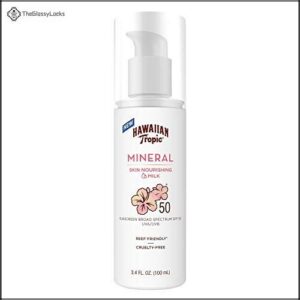
Hawaiian Tropic Mineral SPF 50 delivers 100% mineral actives with zero oxybenzone or octinoxate—broad-spectrum coverage without the endocrine-disruption concerns tied to chemical filters.
Kukui nut and coconut botanicals soften the milky texture, so it rubs in fast without that dreaded white cast. Water resistance holds for 80 minutes, making it reliable for beach days or sweaty hikes.
At 3.4 ounces, it’s travel-ready and vegan-formulated—practical protection that doesn’t ask you to compromise on skin comfort or conscience.
| Best For | Beachgoers and outdoor enthusiasts with sensitive skin who want reliable mineral sun protection without white cast or harsh chemical filters. |
|---|---|
| Mineral Formula | Yes |
| SPF Rating | 50 |
| Broad Spectrum | Yes |
| Water Resistance | 80 minutes |
| Paraben Free | Yes |
| Sensitive Skin Suitable | Yes |
| Additional Features |
|
- 100% mineral actives provide broad-spectrum UVA/UVB protection without oxybenzone or octinoxate
- Lightweight, non-greasy formula with coconut and kukui nut botanicals prevents white cast and clogged pores
- Travel-friendly 3.4 oz size with vegan formulation suits on-the-go, conscious skincare routines
- Water resistance lasts only up to 80 minutes, requiring frequent reapplication during swimming or heavy sweating
- Tropical scent may be irritating or unwanted for users with fragrance sensitivities
- Mineral sunscreens can sometimes feel thicker or harder to blend than chemical alternatives, despite the lightweight formula
2. Colorescience No-Show Mineral Sunscreen
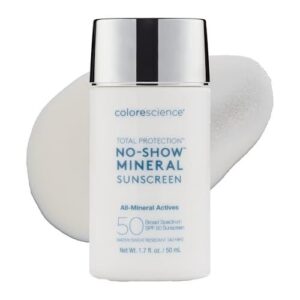
No-Show Mineral swaps the beach-day formula for something you’d actually wear to the office. Non-nano zinc oxide takes care of UV duty while EnviroScreen technology protects against blue light and pollution—zero white cast across skin tones, thanks to a silicone-like matrix that vanishes on contact.
Bisabolol calms reactive skin, and the velvety, oil-free finish doubles as a makeup primer. Water resistance runs a modest 40 minutes, so it’s built for desk days, not open water.
| Best For | People who want a lightweight, invisible everyday sunscreen for the office or daily wear rather than extended time outdoors. |
|---|---|
| Mineral Formula | Yes |
| SPF Rating | 50 PA++++ |
| Broad Spectrum | Yes |
| Water Resistance | 40 minutes |
| Paraben Free | Yes |
| Sensitive Skin Suitable | Yes |
| Additional Features |
|
- Blends seamlessly with zero white cast on all skin tones
- Doubles as a makeup primer with a velvety, oil-free finish
- Protects against blue light and pollution, not just UV rays
- Only 40 minutes of water resistance, so it’s not suited for swimming or heavy sweat
- Requires frequent reapplication if exposed to water or sweat
- Mineral formula may feel different on skin than chemical sunscreens
3. La Roche Posay Tinted Mineral Sunscreen
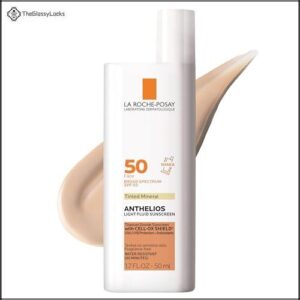
Titanium dioxide does the UV filtering here, but it’s the iron oxide tint that earns this one a spot on your bathroom shelf. Cell-Ox Shield technology pairs those minerals with antioxidants, catching free radicals your SPF alone would miss.
La Roche Posay Thermal Spring Water adds a soothing touch, ideal if redness is a recurring issue for you. The finish blends across most skin tones without that chalky cast mineral formulas are known for.
| Best For | People with sensitive or redness-prone skin who want daily SPF 50 protection along with a lightweight tint that blends into most skin tones. |
|---|---|
| Mineral Formula | Yes |
| SPF Rating | 50 |
| Broad Spectrum | Yes |
| Water Resistance | 40 minutes |
| Paraben Free | Yes |
| Sensitive Skin Suitable | Yes |
| Additional Features |
|
- 100% mineral formula with Cell-Ox Shield technology adds antioxidant protection beyond standard SPF
- Fragrance-free, paraben-free, and gentle enough for sensitive skin
- Blendable tint across four shades gives a matte, healthy-looking finish without a chalky cast
- Mineral formula may rub or sweat off more easily than chemical sunscreens
- Water resistance lasts only 40 minutes, so reapplication is needed after swimming or sweating
- Only available in four tint shades, which may not suit every skin tone
4. Sun Bum Mineral Face Sunscreen
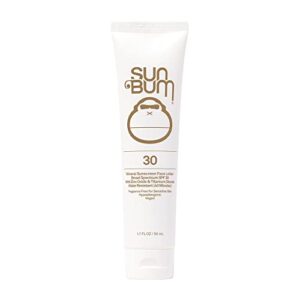
Zinc oxide and titanium dioxide team up here for broad-spectrum coverage, but it’s the matte finish that makes this one double as a primer under makeup. Non-tinted and fragrance-free, it’s built for sensitive skin that reacts to nearly everything else.
Reapply every two hours, or after 80 minutes in the water. The tradeoff for that clean, chemical-free formula? A visible white cast some users will need to work in.
| Best For | People with sensitive skin who want a chemical-free sunscreen that can double as a makeup primer. |
|---|---|
| Mineral Formula | Yes |
| SPF Rating | 30 |
| Broad Spectrum | Yes |
| Water Resistance | 80 minutes |
| Paraben Free | Yes |
| Sensitive Skin Suitable | Yes |
| Additional Features |
|
- Zinc-based mineral formula offers broad-spectrum protection without harsh chemicals
- Matte finish works well as a primer before makeup application
- Gluten-free and cruelty-free, making it a solid ethical choice
- Leaves a visible white cast on the skin
- Needs reapplication every 2 hours, or after 80 minutes of swimming or sweating
- Requires applying 15 minutes ahead of sun exposure for it to work properly
5. Dr Jart Mineral Sunscreen SPF 50
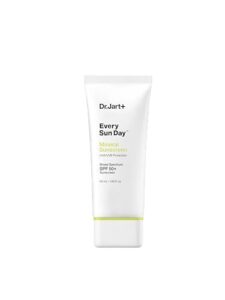
Weightless enough to forget you’re wearing it, this zinc oxide formula skips the chalky feel that turns so many mineral sunscreens into a chore. It layers under makeup without pilling, leaving a soft matte finish that oily and combination skin types tend to love.
Sensitive skin? This one’s built for you, with a light citrus scent as its only real fragrance note. Broad-spectrum SPF 50 protection comes in a 3.03-ounce tube, making it easy to toss in a bag for reapplication on the go.
| Best For | People with sensitive, oily, or combination skin who want lightweight mineral sun protection they can wear comfortably under makeup. |
|---|---|
| Mineral Formula | Yes |
| SPF Rating | 50 |
| Broad Spectrum | Yes |
| Water Resistance | Not specified |
| Paraben Free | Not specified |
| Sensitive Skin Suitable | Yes |
| Additional Features |
|
- Physical UV protection from zinc oxide and titanium dioxide that reflects and scatters UVA/UVB rays
- Lightweight, matte formula that layers smoothly under makeup without pilling
- Gentle enough for sensitive skin, with a light citrus scent for a refreshing feel
- Mineral formulas like this one tend to have a thicker consistency than chemical sunscreens
- The citrus scent may not suit those sensitive to added fragrance
- Compact 3.03-ounce size means it may need to be repurchased fairly often
6. ISDIN Eryfotona Actinica Mineral Sunscreen SPF 50
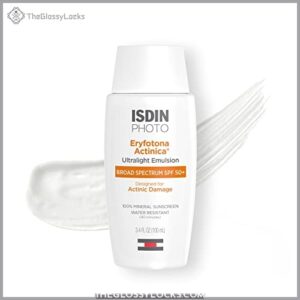
If matte finish isn’t your priority, repair might be. ISDIN’s Eryfotona Actinica brings something different to the table: patented DNA Repairsomes technology with photolyase enzymes designed to address existing UV damage, not just block new rays.
Built on 11% zinc oxide with SPF 50 protection, Vitamin E rounds out the antioxidant defense. The ultralight emulsion absorbs fast and doubles as a primer.
It’s pricier than most, water resistant for 40 minutes, and ideal for anyone managing visible sun damage who wants active repair alongside daily protection.
| Best For | Anyone managing visible sun damage who wants active repair alongside daily broad-spectrum protection, especially those with sensitive skin needing a mineral-only formula. |
|---|---|
| Mineral Formula | Yes |
| SPF Rating | 50+ |
| Broad Spectrum | Yes |
| Water Resistance | 40 minutes |
| Paraben Free | Not specified |
| Sensitive Skin Suitable | Yes |
| Additional Features |
|
- Patented DNA Repairsomes technology with photolyase enzymes helps address existing UV damage, not just prevent new damage
- Ultralight, fast-absorbing, non-greasy texture that doubles as a makeup primer
- All-mineral SPF 50 protection with Vitamin E, water resistant for up to 40 minutes
- Higher price point compared to many competitors
- May leave a white cast on some skin tones
- Requires shaking before each use, and has a light scent upon application
7. Bare Republic Vanilla Coco Sunscreen Spray
For beach days that call for speed over precision, this spray delivers non-nano zinc oxide protection at SPF 50 in a 6 fl. oz. can. Water resistance holds up to 80 minutes, which covers most swim sessions.
If fragrance-free formulas matter to you, Bondi Sands’ spray also skips added scent, making it a solid pick among the best sunscreens for swimming.
The vanilla-coconut scent turns application into something you’ll actually enjoy, though fragrance-sensitive skin should patch test first. Shake well before each use; the minerals settle fast. Grape seed and raspberry seed oils add light hydration, making this a solid grab-and-go option for active families.
| Best For | Active families and beach-goers who want fast, fragrance-forward mineral sun protection without fussing over precise application. |
|---|---|
| Mineral Formula | Yes |
| SPF Rating | 30 or 50 |
| Broad Spectrum | Yes |
| Water Resistance | Not specified |
| Paraben Free | Not specified |
| Sensitive Skin Suitable | Yes |
| Additional Features |
|
- Non-nano zinc oxide offers broad-spectrum SPF 50 protection without chemical actives
- 80 minutes of water resistance holds up through most swim sessions
- Grape and raspberry seed oils add light hydration while the vanilla-coconut scent makes it pleasant to use
- Minerals settle quickly, so shaking well before each use is a must
- Fragrance-sensitive skin may react, making a patch test wise before full use
- Mineral formulas like this often need more careful, even application than chemical sunscreens
8. Bare Republic Mineral Matte Sunscreen
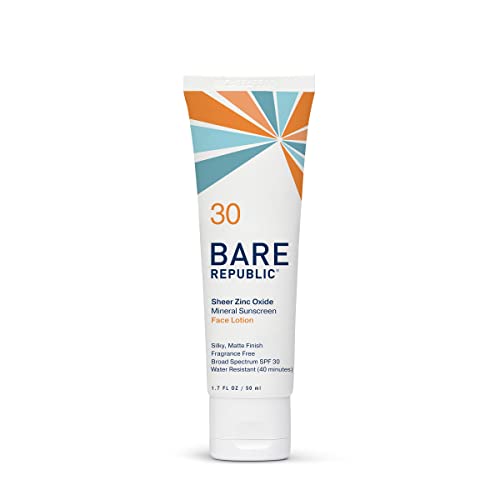
If shine control matters more to you than scent, this one’s your pick. Zinc oxide provides broad-spectrum coverage while the cream-to-powder texture dries down matte, cutting the greasy look chemical formulas often leave behind.
It’s Hawaii Reef Compliant, vegan, and skips synthetic fragrances and parabens, with raspberry, grape, and carrot seed oils layered in for antioxidant support. Made in the USA, it’s built for daily wear under makeup. Expect possible white cast on deeper skin tones, depending on the variant you choose.
| Best For | People who want a matte, shine-free sunscreen for daily wear that’s reef-safe and gentle on sensitive skin. |
|---|---|
| Mineral Formula | Yes |
| SPF Rating | Not specified |
| Broad Spectrum | Yes |
| Water Resistance | Not specified |
| Paraben Free | Yes |
| Sensitive Skin Suitable | Not specified |
| Additional Features |
|
- Cream-to-powder formula dries down matte, cutting the greasy finish common in chemical sunscreens
- Reef Compliant, vegan, and free of synthetic fragrances and parabens
- Infused with raspberry, grape, and carrot seed oils for added antioxidant protection
- May leave a white cast on deeper skin tones depending on the variant
- Mineral formulas can sometimes feel heavier than chemical alternatives for some users
- Packaging may vary from what’s shown in product images
9. Colorescience SPF 50 Body Sunscreen
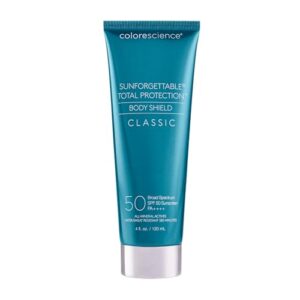
For body coverage that doubles as skincare, this one stands out. 100% mineral actives paired with EnviroScreen Technology shield against UVA, UVB, pollution, and blue light, while mineral pearl pigments leave a subtle, pearlescent glow rather than a chalky finish.
It’s water and sweat resistant for 80 minutes, dries lightweight, and stays non-comedogenic enough for acne-prone skin. Dermatology tested and free of chemical filters, it’s a solid pick if you want protection that feels more like a treatment than an afterthought.
| Best For | People with sensitive or acne-prone skin who want lightweight, all-day body sun protection for outdoor activities involving water or sweat. |
|---|---|
| Mineral Formula | Yes |
| SPF Rating | 50 PA++++ |
| Broad Spectrum | Yes |
| Water Resistance | 80 minutes |
| Paraben Free | Yes |
| Sensitive Skin Suitable | Yes |
| Additional Features |
|
- 100% mineral protection with 12% zinc oxide shields against UV, pollution, HEV blue light, and IR
- Non-comedogenic, oil-free, and hypoallergenic, making it gentle on sensitive and acne-prone skin
- Free from parabens, phthalates, synthetic fragrances, and talc, with a universal shade that blends into all skin tones
- Water and sweat resistance only lasts up to 80 minutes, so reapplication is needed during extended activity
- Physical mineral formula may require more thorough cleansing to fully remove at the end of the day
- As a mineral-only sunscreen, it may leave more of a visible cast compared to chemical formulas for some users
10. Coola organic sunscreen spf 50
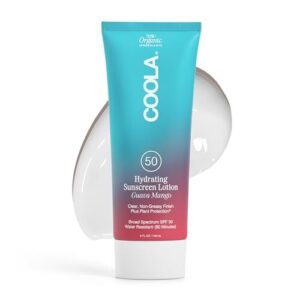
Rounding out the list is a face sunscreen built around COOLA’s Plant Protection Complex, blending red raspberry seed and buriti oils with prickly pear extract for antioxidant backup. It’s 70% certified organic, fragrance-free, and non-comedogenic, making it a gentle daily option for sensitive skin.
Hawaii Reef Compliant under Act 104, it delivers broad-spectrum SPF 50 with 80 minutes of water resistance. Lightweight and matte-finished, it layers well under makeup for everyday wear.
| Best For | This sunscreen is best for people with sensitive skin who want a lightweight, fragrance-free daily face SPF that layers well under makeup. |
|---|---|
| Mineral Formula | Yes |
| SPF Rating | 50 |
| Broad Spectrum | Yes |
| Water Resistance | 80 minutes |
| Paraben Free | Yes |
| Sensitive Skin Suitable | Yes |
| Additional Features |
|
- Broad-spectrum SPF 50 protection with 80 minutes of water resistance
- Antioxidant-rich, 70% certified organic formula that’s gentle and non-comedogenic
- Hawaii Reef Compliant (Act 104), lightweight, and matte-finished for everyday wear
- Requires reapplication at least every 2 hours
- Needs to be reapplied after towel drying or heavy sweating
- Limited to facial use, so a separate body sunscreen is still needed
Natural Sunscreen Ingredients to Know
Not every ingredient on a sunscreen label deserves your trust, but a few genuinely earn their spot on your skin. Knowing what’s actually doing the work helps you shop smarter and avoid paying for hype. Here’s what to look for, and what to expect from each one.
Zinc Oxide Protection

Zinc oxide sits on top of your skin like armor, reflecting and scattering UV rays instead of absorbing them.
It’s photostable, covers both UVA and UVB, and calms irritation rather than causing it.
Three things make it stand out:
- Non-nano particles stay on the surface
- Consistent protection that won’t break down
- Gentle enough for sensitive, reactive skin
Titanium Dioxide Coverage
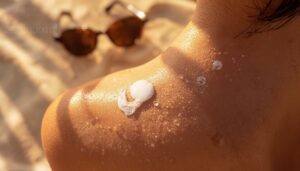
Titanium dioxide works as a physical blocker, sitting on skin to scatter UV radiation rather than absorbing it. Particle size matters here: nano forms reduce white cast while larger particles offer more opaque coverage.
Even, generous application matters most. Thin or patchy layers break the protective film, so rub it in fully—ears, hairline, neck included—for uniform film formation and lasting water resistance stability.
Iron Oxide Tinting
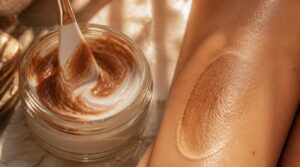
Ever wonder why your tinted sunscreen actually looks like your skin? That’s iron oxide doing its job—dispersed pigment offering visible light blocking and near-infrared protection beyond standard UV filters.
Beyond zinc oxide and titanium dioxide, iron oxide helps with:
- Pigment shade matching for natural coverage
- Hyperpigmentation management in melasma-prone skin
- Enhanced protection when layered with mineral sunscreens
Antioxidant Botanical Extracts

Sunscreen isn’t the whole story—your skin’s antioxidant defenses matter too. Rosemary, olive leaf, and pomegranate extracts pack polyphenols that neutralize free radicals through radical scavenging, donating electrons before oxidative damage sets in.
Reducing power assays confirm this activity, and standardized extracts guarantee consistent potency batch to batch. Antioxidant teamwork amplifies protection, making these plant extracts a smart complement—not substitute—for organic sunscreen, addressing pollution-driven oxidative stress your SPF alone can’t touch.
Oils With Limited SPF

Coconut oil, olive oil, and almond oil sound protective, but their SPF sits around 2–8, far below what daily sun exposure demands. Oil SPF reliability is inconsistent, coverage skews UVB-only, and thin, uneven film thickness leaves gaps.
Skip DIY beauty recipes claiming otherwise—natural oils create false security risks without genuine broad-spectrum defense.
Ingredients and Formats to Avoid
Not every sunscreen deserves a spot on your bathroom shelf, and some ingredients can quietly work against your skin’s health. Knowing what to skip is just as important as knowing what to reach for. Here’s what to steer clear of, and why it matters.
Oxybenzone and Octinoxate
Trust matters most when it’s invisible—which is exactly the problem with oxybenzone and octinoxate. Both are FDA-permitted organic UV filters, yet studies flag endocrine disruption risks and systemic absorption potential after repeated use.
Oxybenzone and octinoxate are FDA-permitted, yet studies link them to endocrine disruption and systemic absorption
- Oxybenzone: linked to hormone disruption
- Octinoxate: detected in blood samples
- Both harm marine ecosystems
- Both accumulate systemically
- Choose oxybenzonefree, octinoxatefree, natural sunscreens instead
Skip chemical sunscreens; opt for organic filter alternatives protecting you and reefs alike.
Retinyl Acetate Concerns
Retinyl acetate, a vitamin A derivative added for anti-aging claims, doesn’t stay put on skin—it converts to retinol and adds to your systemic vitamin exposure. Regulators flag real teratogenicity risks at higher doses, plus irritation and poor photochemical stability under UV. Dose-dependent accumulation matters here.
When scanning labels for nontoxic sunscreens, treat this active ingredient as one more entry on your avoid list.
Fragrant Citrus Oils
That lemony scent in "natural" sunscreens sounds appealing, but limonene and other citrus compounds carry real phototoxicity risks. Essential oils like lemon or lime increase UV sensitivity, triggering burning or irritation right when you need protection most.
Citrus scent strength also varies batch to batch. For sun care, skip fragrant citrus oils entirely—your skin’s barrier deserves calmer, non-reactive natural skincare remedies instead.
Spray Sunscreen Inhalation
Spray sunscreens create fine aerosol particles that drift into your breathing zone, irritating the mouth and throat. Wind worsens drift; kids inhale more relative to their size.
To stay safer:
- Spray into hands first
- Apply outdoors, avoid windy days
- Skip children’s faces entirely
- Stop if it reaches eyes or nose
Creams remain the nontoxic choice for topical, irritation-free application.
Unverified DIY Formulas
Ever seen a Pinterest recipe promising "SPF 30" from coconut oil and zinc powder? Homemade sunscreen recipes can’t guarantee real protection—SPF testing accuracy requires lab conditions you simply can’t replicate at home.
Particle dispersion issues cause clumping, leaving uneven coverage dangers behind. Without preservatives, microbial growth risks rise fast, and pH stability concerns affect irritation. Skip DIY formulas entirely; proven natural sunscreen alternatives protect without guesswork or skin toxicity risks.
Choosing Skin-Safe Sun Protection
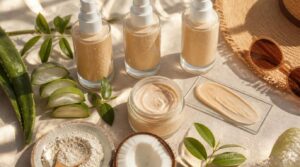
Picking the right sunscreen isn’t just about SPF numbers, it’s about reading labels like you actually know what they mean. A few key details separate a truly skin-safe formula from one that’s just good marketing. Here’s what to check before you toss a bottle in your cart.
Broad-spectrum SPF Labels
Broad spectrum means a sunscreen shields you from both UVA and UVB radiation, not just one. In the US, this claim requires passing FDA critical-wavelength testing.
Look for SPF 50 paired with broad spectrum on the label—that combo unlocks risk-reduction wording tied to skin cancer prevention. Some brands add PA ratings (PA+++) for extra UVA confidence.
Sensitive Skin Formulas
Reactive skin needs more than SPF—it needs barrier lipid support from ceramides and fatty acids, plus soothing agents like allantoin or bisabolol.
Fragrance-free formulas cut irritation risk further. Look for "hypoallergenic" labeling on mineral sunscreens, since zinc oxide already calms inflamed skin. Creams beat sprays here: non-irritating delivery matters when your skin reacts to everything, and natural ingredients minus added fragrance keep flare-ups at bay.
Non-nano Mineral Actives
"Non-nano" isn’t a marketing buzzword—it’s a particle-size promise. These mineral active ingredients sit on your skin’s surface, scattering UV rather than absorbing into your bloodstream.
- Zinc oxide protection without penetration worries
- Visible, reassuring surface coating
- No nano-absorption risks lurking beneath skin
- Physical blockers that work immediately
NonNano Zinc Oxide requires adequate layer thickness—apply thin, and that protective film adhesion fails you.
Reef-friendly Claims
Reef-friendly sounds reassuring, but courts have found the phrase genuinely ambiguous—ingredient-specific or general claim?
| Term | What It Signals | Verification Needed |
|---|---|---|
| Reef-friendly | No oxybenzone/octinoxate | Check full ingredient list |
| Reef-safe | Mineral-based formula | Look for non-nano labeling |
| Eco-friendly | Broad, unqualified | Often legally shaky |
Zinc oxide and titanium dioxide dominate this space, but unqualified labels invite scrutiny.
Cream Versus Spray Use
Cream wins on Coverage Uniformity, forming an even film instead of drifting mist. Sprays risk patchy application on feet, ears, and neck.
Cream also offers better Dose Control and Application Stability, staying put through sweat and wind. Sprays raise Inhalation Risks near your face.
Verdict: use cream mineral sunscreen daily; reserve spray only for quick Reapplication Speed over clothing.
Frequently Asked Questions (FAQs)
What naturally protects skin from sun?
Your skin, your shield, your first defense: melanin absorption, lipid barriers, and antioxidant networks all work together naturally. Melanin blocks UV rays, skin lipids strengthen that barrier, while shade, hats, and mineral sunscreen with zinc oxide add extra protection.
Is there a natural alternative to sunscreen?
Mineral blockers, UPF clothing, shade, and antioxidant-rich botanicals offer real, chemical-free protection—but none fully replace broad-spectrum sunscreen.
Combine plant-based sun safety habits with zinc oxide or titanium dioxide daily for genuinely dependable, natural UV defense.
Which is the best homemade sunscreen?
Your best DIY recipe combines non-nano zinc oxide (about 2 tablespoons) with shea butter or coconut oil as carrier oils, plus wax for stability.
Test small batches first—zinc oxide safety and proper mixing determine whether your homemade sunscreen actually protects.
How to protect skin from sun damage naturally?
Think of it as building an armor suit, not slapping on one shield.
Layered protection wins: zinc oxide’s UV reflection, antioxidant boost from vitamin C and E, UPF clothing, shade, and consistent habits together manage cumulative UV exposure far better than sunscreen alone ever could.
Is there a natural substitute for sunscreen?
Not a full one. UPF clothing, shade, and antioxidant-rich foods help, but oils like jojoba or raspberry seed offer only weak, unreliable natural SPF—true chemical-free protection still needs mineral actives like zinc oxide daily.
Can natural sunscreens expire or lose effectiveness?
Yes—don’t let your guard down. Heat and time break down UV filters, causing texture changes and reduced SPF. Even photostable zinc oxide degrades eventually. Check expiration dates, store away from heat, and toss anything past three years.
How should natural sunscreen be stored for longevity?
Keep your bottle sealed tight in a cool, dark place—15°C to 30°C—away from bathroom humidity and car dashboards. Heat and light oxidize plant oils fast. Watch for odor or texture shifts; that’s rancidity signaling reduced efficacy.
Can natural sunscreen stain clothing or swimwear?
Sunscreen residue can leave its mark like sand in a shoe—small but persistent. Mineral transfer, iron oxide discoloration, and oil residue cause yellow-orange stains, especially on light cotton fabric near seams and swimwear panels.
Are natural sunscreens suitable for acne-prone skin?
Absolutely—zinc oxide’s low comedogenic risk and proven bacteria-inhibiting action make mineral formulas genuinely acne-friendly.
Look for a noncomedogenic formula with matte finish; it curbs shine, prevents pore clogging, and calms UV-induced inflammation without triggering breakouts.
How often should you reapply natural sunscreen throughout the day?
That "one application lasts all day" myth doesn’t hold up in testing. Reapply every two hours outdoors, right after swimming or toweling off, and every four to six hours near windows—since UV radiation exposure and friction both break down natural SPF faster than you’d think.
Conclusion
Think of zinc oxide as a shield wall, not a chemical gamble absorbed into your bloodstream. That’s the heart of natural sun protection for skin: visible, physical defense you can trust daily.
You don’t need fifteen products or a lab coat to get this right. Grab a broad-spectrum mineral formula, add UPF clothing, respect peak-hour shade, and you’ve built a routine that actually holds up.
Your skin remembers every choice. Make today’s a smart one.