This site is supported by our readers. We may earn a commission, at no cost to you, if you purchase through links. This content is for general informational and educational purposes only and is not a substitute for professional medical, dermatological, or nutritional advice.

Two clients sit in my chair with the same shoulder-length cut. One leaves with a few sun-kissed pieces around her face. The other leaves glowing from nape to crown. Both got balayage, yet their results, bills, and calendars look nothing alike.
That’s the real gap in partial balayage vs full balayage. It shapes how bright your hair looks, how well it blends grays, and how often you’ll book a return visit. Costs run from $120 to $400, and touch-ups stretch from 10 to 16 weeks.
Here’s how each option works, so you can walk into your next appointment ready to choose.
Table Of Contents
- Key Takeaways
- Partial Balayage Vs Full Balayage: Key Differences
- Partial Balayage: Placement, Coverage, and Results
- Full Balayage: Coverage, Brightness, and Results
- Partial Vs Full Balayage: Salon Upkeep
- Partial Vs Full Balayage: Damage and Aftercare
- Choosing Partial or Full Balayage for You
- Frequently Asked Questions (FAQs)
- Should I get a partial or full balayage?
- Can you show me pictures of partial balayage and full balayage?
- How often do you get a partial balayage?
- Does full balayage include roots?
- What is Partial Foilyage?
- Are there any recommended products for color protection?
- Is Partial Balayage suitable for any hair type?
- Is there a cost difference between Partial Balayage and Full Balayage?
- Can balayage work on dark hair colors?
- How does balayage affect chemically treated hair?
- Conclusion
Key Takeaways
- Partial balayage brightens just your top layers and face-framing pieces for a soft, lower-cost glow ($120-$200), while full balayage lightens your whole head for even, dramatic brightness ($180-$400).
- You’ll book touch-ups less often with partial balayage (every 12-16 weeks) than with full balayage (every 10-12 weeks), and a toning or gloss service every 4-6 weeks keeps either look from turning brassy.
- Full balayage blends grays well only when they make up 30% or less of your hair, so you’ll likely need root tinting beyond that.
- Partial balayage means less bleach time and less damage, but either option stays healthy with sulfate-free shampoo, weekly masks, bond-protecting products, and minimal heat.
Partial Balayage Vs Full Balayage: Key Differences
Although both techniques use hand-painted lightener for a soft, blended finish, they differ in how much hair gets lightened. Partial balayage brightens select sections, like your top layers and face-frame, while full balayage lightens throughout the entire head.
If you’re curious how lightener behaves on different hair types, this guide to hair photobleaching techniques explains how to keep that soft, blended glow healthy.
That gap affects your cost, your appointment length, and your hair maintenance level. Your hair type and color matter too, since darker or damaged strands respond differently to lightener. So which option fits your goals, budget, and routine? Let’s break it down.
Partial Balayage: Placement, Coverage, and Results
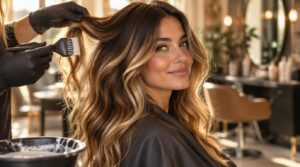
Partial balayage puts the brightness where it counts. Your colorist focuses on the top layer and your faceframing pieces, sweeping lightener from mid-shaft to ends so the sun-kissed effect looks natural. Lower layers stay untouched, which adds depth and dimension.
Since hair color placement is freehand, you can customize it. Want a glow around your face or soft crown highlights? Share your goals during your salon consultation.
The result? Soft, lived-in strands that grow out gracefully, with no harsh lines. Because the roots stay darker, balayage grows out softly, so maintenance is usually needed only every 3 to 6 months compared with 6 to 8 weeks for foil highlights.
Full Balayage: Coverage, Brightness, and Results
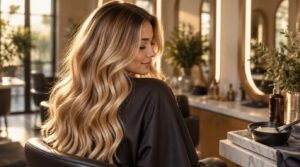
Full balayage takes the sun-kissed effect all the way around your head. Your colorist lightens the nape, sides, and crown, so no section gets left behind. When you move or style your hair, you won’t spot any untouched patches.
If you’re worried about cost, you can still get that all-over glow by browsing affordable balayage hair coloring near you and comparing local stylists’ portfolios.
The payoff is even brightness and lift from top to bottom. Surface and root layers lighten together, giving you more shine. To keep that brightness from turning brassy, a purple shampoo for blonde highlights can neutralize yellow tones between salon visits.
One note on gray coverage: full balayage blends grays well when they make up 30% or less of your hair. Beyond that, you’ll likely want root tinting.
Partial Vs Full Balayage: Salon Upkeep

Your color doesn’t stop at the chair, so planning your salon upkeep matters just as much as picking the look. Partial and full balayage ask for different things from your calendar and your budget. Here are the two points to weigh before you book.
Appointment Length and Cost
Think of your chair time like a road trip: partial balayage is the scenic shortcut, and full balayage is the long way round.
| Service | Time and Cost |
|---|---|
| Partial balayage | 45 minutes to 3 hours, $120-$200 |
| Full balayage, short hair | 3-4 hours, $180-$300 |
| Full balayage, long hair | 4-5+ hours, $250-$400 |
| First-time consultation | Add 15-20 minutes |
Your hair length drives both numbers, so be realistic when you plan your salon appointment booking. Add the consultation if it’s your first balayage visit, and always hold extra salon appointment time for toner or gloss.
If you’re starting from dark brown, this step-by-step guide to lightening dark brown hair to light brown helps you picture the process and plan your appointment time.
Which one fits your week and budget?
Touch-Up Frequency and Toning
Usually, your touchup schedule depends on how much hair you’ve lightened. Partial balayage grows out softly, so you can often wait 12 to 16 weeks. Full balayage shows regrowth sooner, so plan on 10 to 12 weeks.
| Service | Partial | Full |
|---|---|---|
| Touch-up | 12-16 weeks | 10-12 weeks |
| Toning or gloss | 4-6 weeks | 4-6 weeks |
| Refresh | 8-12 weeks | 4-6 months |
Don’t skip the toning or gloss service, though. Every 4 to 6 weeks, it cancels brassiness and restores shine without re-lightening. It’s the easiest hair color maintenance habit you can master, and it keeps your color looking salon-fresh between visits.
Toning or gloss every four to six weeks cancels brassiness and restores shine, keeping your color salon-fresh without re-lightening
Partial Vs Full Balayage: Damage and Aftercare

The biggest difference comes down to exposure. Partial balayage processes in about 45 minutes, while full balayage can take three hours, so your hair condition stays stronger with less bleach time.
Damage prevention starts before you leave the chair. Here’s your aftercare routine at a glance:
| Step | Do this | Why |
|---|---|---|
| Wash | Wait 48 hours | Protects cuticle |
| Shampoo | Sulfate-free | Keeps color |
| Mask | Weekly protein | Repairs bonds |
| Sleep | Silk pillowcase | Cuts friction |
Skip heat when you can. Use protectant when you can’t.
Choosing Partial or Full Balayage for You

Subtle or bold? Softer or brighter? Your answer points straight to your match.
Partial balayage gives you a sunkissed glow without a big commitment. Full balayage delivers dramatic, all-over brightness.
Ask yourself:
- What’s your base shade: lighter or darker?
- How bright do you want to go?
- Do you want a lowmaintenance hairstyle?
- How healthy is your hair?
- What’s your budget per visit?
Bring your answers to a hair consultation and let your colorist guide you toward the look you’ll love.
Frequently Asked Questions (FAQs)
Should I get a partial or full balayage?
Think of your hair as a canvas: do you want a light brushstroke or a full repaint? Choose partial balayage for subtle glow and lower cost, or full balayage for bold brightness, then book a suited consultation.
Can you show me pictures of partial balayage and full balayage?
Ironically, the best way to picture your color is to stop picturing it.
Bring hair inspiration photos of partial balayage and full balayage to your salon consultation, then use a personalization consultation to match them closely.
How often do you get a partial balayage?
Most people book a partial balayage retouch every 8 to 12 weeks, especially for face-framing pieces and the crown. Add a gloss between salon visits, and you can stretch it to 16 weeks.
Does full balayage include roots?
Full balayage covers your whole head, but it doesn’t color your roots solid. This hair color technique softly blends toward them, so regrowth stays low maintenance. Partial balayage does the same, just in fewer sections.
What is Partial Foilyage?
Partial foilyage blends the foilyage technique with a freehand technique. Your colorist paints face-framing pieces and crown strands, then wraps them in foil for extra lift. It’s brighter than partial balayage, with a salonfresh glow.
Are there any recommended products for color protection?
Yes, and a few smart picks go a long way. Choose a sulfate-free shampoo with UV protection to support hair color longevity, then add a bond-protecting product like Olaplex and a color-safe leave-in spray for lasting vibrancy.
Is Partial Balayage suitable for any hair type?
Picture a friend with fine, coily curls and a coworker with thick, straight hair. Both can wear partial balayage. Any hair type works. Your colorist considers hair texture types, thickness, and hair length considerations.
Is there a cost difference between Partial Balayage and Full Balayage?
Wondering what your wallet will feel? Yes, full balayage costs more. Nationally it averages $193, while partial balayage runs about $ You’re paying for roughly double the lightener and extra time in the chair.
Can balayage work on dark hair colors?
Dark hair isn’t a roadblock, it’s a rich canvas. Partial balayage adds soft, naturallooking highlights around your face, while full balayage drives a bolder hair color transformation through hair lightening, all without harsh lines.
How does balayage affect chemically treated hair?
Balayage hits chemically treated hair harder, since lightener raises porosity and strips protein, so hair damage adds up fast. Use bondprotecting products, deposit-only toners, and moisture-sealing creams to protect your hair color vibrancy and strength.
Conclusion
Subtle or striking, low-maintenance or all-in: your hair can’t be everything at once, and that’s the point. Partial balayage vs full balayage comes down to how much brightness you want and how often you’ll visit the salon. Love a soft glow and fewer appointments? Go partial. Crave dimension from root to tip and gray blending? Go full.
Pick the one that fits your life, then book it with confidence. Your colorist will handle the rest.