This site is supported by our readers. We may earn a commission, at no cost to you, if you purchase through links. This content is for general informational and educational purposes only and is not a substitute for professional medical, dermatological, or nutritional advice.
Your beard follicles were counted before you took your first breath. Whatever density you got at birth is the ceiling, and no amount of staring into the bathroom mirror at 2 a.m. will raise it.
But patchiness isn’t always a life sentence. Beards keep changing into your late 20s, with the chin and mustache filling first and the cheeks lagging behind. Thyroid issues, infections, and even alopecia areata can also carve gaps into otherwise healthy growth.
Sort out which one you’re dealing with, and patchy beard filling tips stop being guesswork. Here’s how to grow, trim, and style what you’ve got.
Table Of Contents
- Key Takeaways
- Causes of Patchy Beards: Genetics, Age, and Medical Conditions
- Patchy Beard Filling Tips: Grow, Trim, and Conceal Sparse Areas
- Supporting Healthy Beard Growth With Nutrition and Daily Care
- Patchy Beard Treatments: Evidence, Safety, and When to See a Dermatologist
- Top 6 Grooming Products for Styling a Patchy Beard
- Frequently Asked Questions (FAQs)
- Can beard patches permanently disappear with treatment?
- What age does beard growth typically peak?
- Do beard transplants work for patchy areas?
- Can shaving more frequently stimulate beard growth?
- How long should I wait before considering medical intervention?
- Does shaving make a patchy beard grow thicker?
- How long until a patchy beard fully fills in?
- Can stress cause my beard to look patchy?
- Do beard growth supplements actually work for patches?
- Conclusion
Key Takeaways
- Your beard density is set at birth and keeps developing into your late 20s, so you’ll want to figure out whether genetics, age, hormones, or a medical issue like alopecia areata or infection is behind your patches before you pick a fix.
- You can make patches look fuller right now by growing your beard out for four to six weeks, trimming longer areas to match sparse ones, and brushing hairs toward thin spots.
- You’ll get the best-studied results from 5% minoxidil paired with sterile microneedling, but gains take 24 to 48 weeks and fade if you stop, while biotin supplements won’t help unless you’re deficient.
- You should see a dermatologist if your patches are sudden and round, or if you notice scaling, pustules, pain, or scarring, since untreated infections can cause permanent hair loss.
Causes of Patchy Beards: Genetics, Age, and Medical Conditions

Patchy spots don’t show up by accident, and knowing the cause puts you in control. Some causes are written in your DNA, while others come from age, hormones, or a medical issue. Here are the five you need to understand before you pick a fix.
If fatigue or weight changes come with your patches, see how thyroid issues cause hair thinning and whether that could be your trigger.
Genetic Growth Patterns
Genetics decide your beard long before you ever pick up a trimmer. Beard follicle density is fixed at birth, so some zones simply have fewer hairs, and no product changes that.
Your androgen receptors matter too. Shorter CAG repeats in the AR gene mean more sensitive follicles and denser growth. These genetic factors in beard growth explain why your cheeks lag behind your chin.
Age And Beard Development
Age matters as much as genes. Your beard keeps changing into your late 20s, so a patchy beard at 19 isn’t a verdict. Your chin and mustache fill first, and your cheeks follow.
A patchy beard at 19 isn’t a verdict, because your beard keeps changing into your late 20s
Think of your beard early growth phase as a work in progress. Minoxidil and microneedling respond best here. By your beard mature growth phase, results fade.
Hormonal Influences
Hormones run the show. Testosterone and DHT drive beard growth, but androgen receptor distribution in your follicles decides how much you get. Normal levels don’t guarantee density. Thyroid issues, high prolactin, and low IGF1 levels can also thin things out.
Before you chase hormone optimization, get bloodwork. Hormonal balance for facial hair starts with knowing your real numbers, not guessing.
Alopecia Areata
Bloodwork clean, but the patches stay? Look at alopecia areata. It’s an autoimmune condition where your immune system attacks follicles, leaving smooth, round, non-scarring bald spots in your beard.
See a dermatologist for a proper diagnosis. Some cases even regrow on their own. Don’t self-treat with minoxidil or microneedling first. Until then, topical hair fibers hide any patchy beard spots.
Skin Infections And Inflammation
A patch isn’t always genetics. Infections can wreck beard skin health and thin your growth. Watch for these:
- Pus-filled bumps (bacterial)
- Scaly red papules (fungal)
- Clustered blisters (viral)
- Ingrown hairs
Skip the guessing. Book a beard dermatologist consultation, then follow smart beard skin care. Untreated sycosis scars permanently.
Pairing that brushing habit with beard hair fall control tips keeps follicles healthier while your dermatologist treats any underlying skin issues.
Staphylococcus aureus infection of the follicles, known as folliculitis barbae, can progress to sycosis barbae, causing scarring and permanent hair loss. Don’t confuse it with beard alopecia areata or delay beard alopecia treatment.
Patchy Beard Filling Tips: Grow, Trim, and Conceal Sparse Areas
You can fix a patchy beard, and you don’t need a miracle to do it. These patchy beard filling tips give you control, step by step.
Grow it out for four to six weeks first. Hair covers gaps as it lengthens, and beard growth rarely looks even early on.
Then trim. Match longer areas to sparse zones, overlap with guards under 3mm, and never over-trim. Use beard oils and a boar bristle brush to train hairs toward thin spots. Add fibers or dye for quick coverage.
Minoxidil and microneedling get plenty of hype, but they belong in the treatment conversation, not here.
Imagine this:
- Walking into every room fully confident.
- Skipping the mirror panic.
- Hearing "nice beard."
- Owning your look.
Supporting Healthy Beard Growth With Nutrition and Daily Care

Your beard is a garden, and patchy spots are just thirsty soil.
Feed it first. Beard nutrition sets the ceiling for every one of your patchy beard filling tips, so cover biotin, zinc, iron, and omega-3s before anything else.
| Nutrient | Source | Why it helps |
|---|---|---|
| Biotin | Eggs | Builds keratin |
| Zinc | Oysters | Balances sebum |
| Omega-3s | Fatty fish | Calms inflammation |
Wash your beard two or three times weekly with lukewarm water and a sulfate-free cleanser. Hot water strips oils. Pat dry, don’t rub.
Then add beard oils. Jojoba mimics your natural sebum, softens hair, and keeps skin underneath healthy.
Brush daily with a boar bristle brush, but go gently. Sleep on a silk pillowcase, skip smoking, and save minoxidil and microneedling for later.
Patchy Beard Treatments: Evidence, Safety, and When to See a Dermatologist
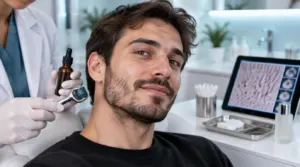
Think treatments are overkill for a patchy beard? Maybe. But if grooming tricks haven’t worked, evidence-backed options are worth knowing.
Topical minoxidil 5% is your best-studied choice. Apply it twice daily and expect shedding at weeks 2 to 6. Gains take 24 to 48 weeks, and they vanish within months if you quit. If you’re curious how the first few months might look, this minoxidil beard growth timeline walks through realistic density gains, from early peach fuzz to fuller coverage.
Pair it with sterile microneedling at 0.5 to 1.5 mm, weekly or biweekly. It beats minoxidil alone.
Finasteride and PRP? Evidence for beards is thin, and finasteride carries sexual side effects.
See a dermatologist or one of the beard specialists if loss is sudden and round, which suggests alopecia barbae. Scaling, pustules, pain, scarring, or no change after three to six months means it’s time to book.
Top 6 Grooming Products for Styling a Patchy Beard
You’ve got the basics down, so now it’s time to pick your tools. The right grooming products make a patchy beard look fuller, cleaner, and fully under your control. Here are six picks that earn a spot on your counter.
1. Andis reSURGE Titanium Foil Shaver Black
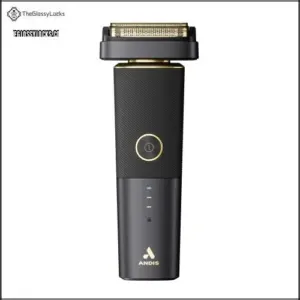
Want crisp edges that make sparse spots look intentional? The Andis reSURGE gives you that control.
Two independent gold titanium foils, both hypoallergenic, shave close along your neckline and cheek lines at 9,900 strokes per minute. The easy pivot head follows your jaw, and the integrated long hair trimmer takes care of stray length. You’ll get 60 minutes per charge, and USB-C charging keeps travel simple.
Shave wet if your skin’s sensitive, since dry shaving can irritate. Expect to replace the foil about every six months. A magnetic cover protects the head in your bag.
| Best For | Men who want a close, comfortable shave and sharp neckline and cheek edges, especially those with sensitive skin who prefer wet shaving and need a travel-friendly, USB-C rechargeable shaver. |
|---|---|
| Product Type | Foil shaver |
| Key Material | Gold titanium foils |
| Best For | Sharp edges, sensitive skin |
| Portability | USB-C, magnetic cover |
| Price | N/A |
| Main Drawback | Foil replacement needed |
| Additional Features |
|
- Two independent gold titanium hypoallergenic foils shave close at 9,900 strokes per minute, and the integrated long hair trimmer handles stray length.
- The pivot head follows the contours of your face and jaw, and wet/dry use makes it glide smoothly and clean up easily.
- Up to 60 minutes of shaving per charge, USB-C charging, and a magnetic foil cover make it convenient for travel.
- The foil may need replacing about every 6 months, and that replacement is not covered under warranty.
- Some users report inconsistent battery life and occasional foil breakage.
- Dry shaving can irritate sensitive skin.
2. Philips Norelco Beard and Hair Trimmer
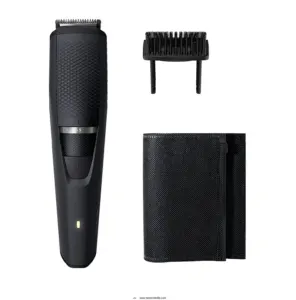
Patchy spots don’t have to run the show. The Philips Norelco Beard and Hair Trimmer (BT3210/41) gives you control over every uneven zone.
Dual cut stainless steel blades work fast and cut evenly, so sparse areas look intentional. The Lift&Trim comb captures low-lying hairs in a single pass, which means fewer passes and less guesswork. You’ll get up to 90 minutes of cordless use from the lithium ion battery, plenty for careful touch-ups.
Pop off the detachable head to rinse it clean. Keep in mind you get 10 length settings, each 1 mm apart. That’s enough for most patchy beards, not every style.
| Best For | Men with patchy or uneven beards who want a cordless trimmer that catches low-lying hairs and cleans up easily. |
|---|---|
| Product Type | Beard trimmer |
| Key Material | Stainless steel blades |
| Best For | Patchy, uneven beards |
| Portability | Cordless, 90 minutes |
| Price | N/A |
| Main Drawback | Only 10 length settings |
| Additional Features |
|
- Up to 90 minutes of cordless use on the lithium ion battery
- Lift&Trim comb captures low-lying hairs in a single pass, so you need fewer passes
- Detachable head makes cleaning and maintenance easy
- Some users report power issues, such as difficulty turning the unit off
- Durability feedback is mixed, with reports ranging from a few months to years
- Only 10 length settings, each 1 mm apart, which may not suit every styling need
3. Bevel Beard Balm Hair Pomade
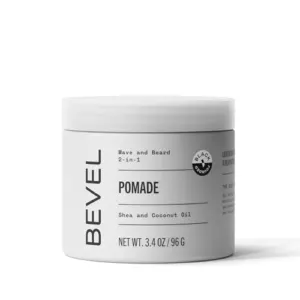
Once the trimmer has done its job, you need something to finish the look. Bevel Beard Balm Hair Pomade is a butter-based formula that melts into your beard and hair.
It’s infused with Sweet Almond Oil, Coconut Oil, Shea Butter, and Cocoa Butter to moisturize and cut frizz. You get soft, all-day hold without a sticky finish, so your style stays put and your hands stay clean.
It works as a 2-in-1 daily grooming product, and it also styles waves and locs with light to medium hold. The 1.7-ounce size fits easily in a bag.
Fair warning: some find it oily, and the TWD323.61 price may feel high.
| Best For | Anyone with a beard, waves, or locs who wants a moisturizing 2-in-1 grooming product with light to medium hold and no sticky finish. |
|---|---|
| Product Type | Beard balm pomade |
| Key Material | Butter-based formula |
| Best For | Moisturized, light-hold styling |
| Portability | 1.7-ounce size |
| Price | TWD323.61 |
| Main Drawback | Can feel oily |
| Additional Features |
|
- Butter-based formula with Sweet Almond Oil, Coconut Oil, Shea Butter, and Cocoa Butter moisturizes and reduces frizz in both beard and hair
- Gives soft all-day hold without a sticky finish
- Works as a 2-in-1 daily product and styles waves and locs with light to medium hold
- Some users find it oily, while others report no residue
- Some users find the texture insufficiently softening
- The price of TWD323.61 may feel high to certain users
4. Burts Bees Aloe Hemp Beard Balm
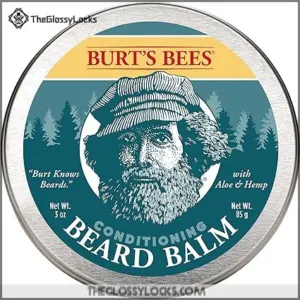
Want a balm that conditions without the junk? Burt’s Bees Aloe Hemp Beard Balm is your pick. Hemp and aloe soften coarse hairs and moisturize the skin underneath, so patchy spots feel smoother. It’s made with 99% natural origin ingredients and skips parabens, phthalates, petrolatum, and SLS.
Rub a small amount between your hands, then spread it evenly through your beard. You’ll get a fresh woodsy scent.
Keep expectations realistic. Some users find it greasy, and others report no hold.
| Best For | Men with coarse or patchy beards who want a moisturizing, natural-leaning balm that softens hair and skin and don’t need strong styling hold. |
|---|---|
| Product Type | Beard balm |
| Key Material | Hemp and aloe |
| Best For | Coarse or patchy beards |
| Portability | N/A |
| Price | N/A |
| Main Drawback | Greasy, no hold |
| Additional Features |
|
- Hemp and aloe moisturize the beard and the skin underneath for a soft, smooth feel
- Made with 99% natural origin ingredients and free of parabens, phthalates, petrolatum, and SLS
- Easy to apply by rubbing into hands and spreading evenly, with a fresh woodsy scent
- Some customers find it too greasy
- Some users report it offers no styling hold
- Ranked 489 in Beard Conditioners & Oils, a moderate market position
5. Mens Pocket Beard and Mustache Brush
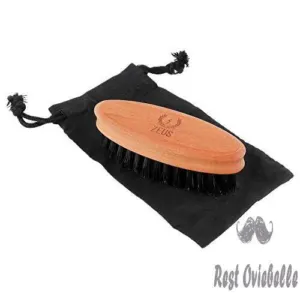
Balm only works if it reaches every hair. That’s where this pocket brush earns its place. At 3.5 inches long, it slips into your jeans or dopp kit, so you can brush after lunch or before a meeting.
The first-cut firm boar bristles spread your natural oils from skin to tip and train sparse hairs to lie in one direction. The pear wood handle feels smooth and steady, and the small head reaches your mustache and cheek edges with precision.
Know the tradeoffs. Firm bristles can feel rough on sensitive skin, and there’s no case. It costs $16.95 and is made in Germany.
| Best For | Men with short to medium beards or mustaches who want a small, durable brush they can carry in a pocket for quick touch-ups while traveling or commuting. |
|---|---|
| Product Type | Pocket beard brush |
| Key Material | Firm boar bristles |
| Best For | Short to medium beards |
| Portability | 3.5-inch pocket size |
| Price | $16.95 |
| Main Drawback | Rough on sensitive skin |
| Additional Features |
|
- Compact 3.5-inch size slips easily into a pocket or dopp kit for brushing on the go.
- First-cut firm boar bristles spread natural oils evenly and train hairs to lie in one direction.
- Smooth European pear wood handle gives a comfortable, steady grip and is made in Germany.
- Firm bristles may feel rough on sensitive skin.
- The small head may not suit very long or dense beards.
- It has no built-in case, so you need your own pouch or pocket to carry it, and at $16.95 it costs a bit more than basic brushes.
6. Boar Bristle Beard Brush for Men
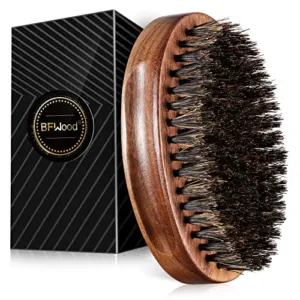
Want a brush with more heft than a pocket model? This one’s built for it.
The 100% natural boar bristles spread your beard balm evenly and move your skin’s oils out toward the tips, so sparse areas look fuller and less dry. Brush in one direction every day, and your hairs will learn to lie flat over thin spots.
The black walnut handle is oval and fits right in your palm. It gives you steady control, and the military style design feels built to last. At 3.53 ounces, it has some weight. Some guys will like that. Others won’t.
Firm bristles may feel harsh and don’t suit very fine or thin beards.
| Best For | Men with thick, full beards who want a sturdy, heavy-duty brush with firm bristles to spread beard balm evenly. |
|---|---|
| Product Type | Beard brush |
| Key Material | 100% natural boar bristles |
| Best For | Distributing beard balm |
| Portability | Palm-sized, 4.0 inches |
| Price | N/A |
| Main Drawback | Harsh, heavy design |
| Additional Features |
|
- 100% natural boar bristles spread beard balm evenly and move skin oils out toward the tips
- Black walnut handle fits comfortably in the palm and gives steady control
- Military style design with sturdy construction built for durability
- Firm bristles may feel too harsh for users who prefer softer bristles
- Not recommended for very fine or thin beards
- At 3.53 ounces, the heavy duty design may feel weighty for some users
Frequently Asked Questions (FAQs)
Can beard patches permanently disappear with treatment?
Sometimes, but it depends on the cause. A patchy beard from genetics rarely changes, while beard alopecia may regrow. Minoxidil and microneedling offer limited beard density improvement, and gains often fade.
See a dermatologist first.
What age does beard growth typically peak?
Your beard density peaks between ages 25 and 35. Follicles keep maturing through your twenties, so a patchy beard can fill in. Beard genetics set your ceiling, and beard growth gradually slows after your mid-thirties.
Do beard transplants work for patchy areas?
Yes, a beard transplant works. Surgeons move beard hair follicles from your scalp to sparse spots, and 80–95% of grafts survive. Full results take 12 months. It’s a pricey way to fix a patchy beard.
Can shaving more frequently stimulate beard growth?
No, shaving won’t stimulate beard growth. Your follicles sit beneath the skin, and a razor never touches them. Genetics set your growth, not your blade. Blunt stubble just feels coarser, so a patchy beard looks thicker than it is.
If you do shave, prepping properly matters, and this guide to shaving curly beard hair shows how to avoid ingrowns.
How long should I wait before considering medical intervention?
Give your patchy beard four to six months of steady growth first. Start minoxidil and you’ll need three to six months of daily use before judging it. Circular bald spots, scaly patches, or fast spreading? Book beard specialists now.
Does shaving make a patchy beard grow thicker?
Shaving a patchy beard is like mowing a lawn: the grass looks different, but the seeds stay put. Beard thickness comes from your follicles, not your razor. Shaving only trims growth, so your beard grooming routine can’t change density.
How long until a patchy beard fully fills in?
Give your patchy beard three to four months of uninterrupted growth. That’s the beard natural growth timeline that shows your true coverage. Most beards hit peak density around month six, though age and genetics can stretch it.
Can stress cause my beard to look patchy?
Can stress wreck your beard? Yes, absolutely. It pushes follicles into rest, so a patchy beard appears months later.
How to fix a patchy beard? Try beard stress management and stress reduction for hair growth.
Do beard growth supplements actually work for patches?
Beard supplements aren’t magic seeds. Unless you’re deficient, biotin supplements won’t fill a patchy beard.
Minoxidil has real trial evidence, though. Testosterone supporting foods help only when your levels are low, so test first.
Conclusion
Picture Marcus, 24, who shaved his cheeks bare every week out of frustration. Six months of patience, a decent trimmer, and one dermatologist visit later, his cheeks finally caught up with his chin.
That’s the real lesson behind any patchy beard filling tips list: diagnose first, then act. Keep skin healthy, and style around the gaps instead of fighting them. Your beard isn’t broken, it’s still becoming. Stay patient. Wear it like you meant it.