This site is supported by our readers. We may earn a commission, at no cost to you, if you purchase through links. This content is for general informational and educational purposes only and is not a substitute for professional medical, dermatological, or nutritional advice.

Citrus peel has been used in traditional hair care for centuries, but pomelo specifically? That’s a newer addition to most routines. Pomelo oil for hair growth is gaining real traction, and the reasons are worth understanding before you reach for the bottle.
The oil contains terpenes, bioflavonoids, and fatty acids that work on scalp condition rather than directly switching follicles back on. That distinction matters. Your scalp environment has a bigger impact on your hair than most people realize.
This guide covers what the research actually shows, how to use the oil correctly, and what changes you can realistically expect.
Table Of Contents
- Key Takeaways
- What is Pomelo Oil, and Can It Help Hair Growth?
- Pomelo Oil Benefits for Scalp and Hair Health
- How to Use Pomelo Oil for Hair Growth
- Pomelo Oil Safety, Side Effects, and Storage
- Pomelo Oil Vs. Grapefruit Oil for Hair Growth
- Frequently Asked Questions (FAQs)
- Is pomelo good for hair growth?
- What is the most powerful oil for hair growth?
- What do Mexicans use for hair growth?
- What is the Chinese secret for hair growth?
- Where can you buy quality pomelo oil?
- Does pomelo oil work for all hair types?
- Can pomelo oil be used during pregnancy?
- How does pomelo oil compare to rosemary oil?
- Can pomelo oil be combined with minoxidil?
- Conclusion
Key Takeaways
- Pomelo oil improves your scalp environment — reducing inflammation and buildup — rather than directly switching dormant follicles back on, so results depend on consistent, long-term use over months, not weeks.
- Its active compounds (terpenes, bioflavonoids, and fatty acids) offer antioxidant and mild circulation-boosting effects, but no dedicated clinical trials confirm it directly stimulates hair growth in humans.
- Always dilute pomelo oil in a carrier oil before applying it to your scalp, do a 24-hour patch test first, and store it in a sealed amber bottle away from heat and light to preserve its potency.
- Rosemary oil currently has stronger clinical backing for hair follicle stimulation than pomelo oil, making it the smarter primary choice if regrowing hair is your main goal — pomelo oil works better as a supportive scalp-health addition.
What is Pomelo Oil, and Can It Help Hair Growth?

Pomelo oil comes from the peel of the pomelo fruit and contains active compounds that may support hair growth. Before you add it to your routine, it helps to know what the research actually backs and where the gaps still are. Here’s what to keep in mind.
For a closer look at how natural plant-based oils interact with hair health, this guide on natural oils for skin and hair care offers useful context on what to realistically expect from topical oil treatments.
Evidence and Limitations
Few dedicated clinical hair studies on pomelo oil exist. Most evidence is extrapolated from broader citrus oil research.
Here’s what the evidence shows:
- Antioxidant properties may protect your scalp
- Hair follicle stimulation isn’t clinically confirmed
- Pomelo Oil for Hair Growth lacks direct trial data
- Product formulas vary, affecting results
Hair loss evidence is still limited, but there’s genuine potential here.
Realistic Results Timeline
Given the limited evidence, patience really matters. Hair grows roughly 1 cm per month, so real change takes weeks.
| Timeframe | What to Expect |
|---|---|
| Weeks 1–4 | Shinier strands, less frizz |
| Weeks 8–12 | Reduced breakage, smoother feel |
| Months 3–6 | Possible density improvements |
Your hair growth cycle controls the pace. It’s why Pomelo Oil for Hair Growth needs consistent, repeated use to work.
Just as you track your hair growth progress, understanding how laser treatment supports ingrown hair prevention can help you build a fuller, more consistent scalp care routine.
Pomelo Oil Benefits for Scalp and Hair Health

Pomelo oil brings more than just scent to your scalp care routine. Its compounds work on several levels, from circulation to cleansing, each with a specific role in supporting healthier hair. Here’s what the research points to across five key areas.
Bioactive Nutrient Profile
Citrus peel extracts contain over 60 volatile compounds. Pomelo oil’s key bioactives fall into three groups:
- Citrus bioflavonoids that fight oxidative stress
- Terpene-based antioxidants from volatile fractions
- Fatty acids in cold-pressed varieties
Vitamin C stays mainly in fresh peel tissue, not the oil itself. So what you’re getting from pomelo oil depends on its extraction and storage.
Scalp Circulation Support
Those terpenes may do more than protect your cells. Massaging pomelo oil for hair growth into your scalp creates mild warmth, which can help scalp circulation at the surface.
| Factor | Effect | Evidence |
|---|---|---|
| Scalp massage | Helps blood circulation | Moderate |
| Terpene compounds | Stimulate scalp microcirculation | Limited |
| Regular application | May improve circulation | Anecdotal |
That said, the overall effect still stays indirect and modest.
Pairing this approach with a warm organic hair oil scalp massage technique can gently amplify those benefits over time.
Antioxidant Scalp Protection
The antioxidant properties in pomelo oil help protect your scalp from oxidative stress. A stressed scalp can’t support healthy hair growth. Here’s what those antioxidants actually do for your scalp health:
- Neutralize free radicals on your scalp
- Reduce inflammation around hair follicles
- Support follicle health at the cell level
- Improve scalp hygiene over time
- Create better conditions for hair growth
Cleansing and Exfoliation
Keeping up with scalp hygiene is easier when you’ve got the right tools. Pomelo oil applied before shampoo helps loosen surface debris and buildup, so your shampoo can rinse it all away.
Scalp pH balance matters too. A disrupted pH encourages dandruff. Citrus essential oils like pomelo support scalp exfoliation, though for persistent flaking, pair it with a medicated shampoo.
Follicle Growth Potential
Imagine applying pomelo oil daily and seeing growth within a few weeks. That outcome depends on whether your hair follicles actually shift into the active growth phase. Pomelo oil may help stimulate hair follicles by easing scalp inflammation that keeps them dormant.
Direct human evidence is still limited, so treat it as supportive rather than a guaranteed hair growth solution.
How to Use Pomelo Oil for Hair Growth
Using pomelo oil for hair growth comes down to how you apply it. There are a few simple methods that work well depending on your routine and how much time you have. Try one or work through all three to see what fits best.
Diluted Scalp Massage

Always do a patch test first. Mix two drops of pomelo oil with one tablespoon of carrier oil for safe essential oil dilution. For a reliable patch test, essential oil test strips can help you check for skin sensitivity before applying pomelo oil more widely.
Then apply your scalp massage oil:
- Part hair into sections for full coverage
- Work in circles to boost scalp circulation
- Focus on areas needing hair follicle stimulation
Leave it on for ten minutes, then wash it out.
Pomelo Oil Hair Mask
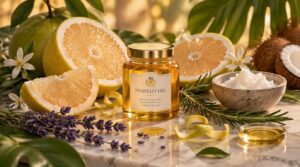
This citrus fruit packs real benefits into a simple DIY formula. Mix 1/4 cup of coconut oil with 2 tablespoons of pomelo oil, then add 10 drops each of lavender and rosemary essential oils. Store it in an airtight container.
Massage the hair mask into your scalp using circular motions for five minutes to boost circulation and support hair growth, then work it through your hair from root to tip. Use pure, fragrance-free ingredients to keep hair nourishment high and irritation risk low.
A scalp massager brush can deepen those circular motions and help the mask absorb more evenly into the scalp.
Shampoo and Rinse Methods

Want a low-effort entry point? Add two to three drops of pomelo oil to your shampoo before each wash. Mix it well in your palm so it doesn’t separate.
Massage it into your scalp and leave it one to two minutes before rinsing. That contact time is what promotes scalp health and hair growth stimulation.
Rinse thoroughly with warm water.
Pomelo Oil Safety, Side Effects, and Storage
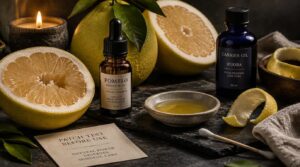
Before you try any of those application methods, do a patch test first. Apply a small, diluted amount to your inner wrist and wait 24 hours. Some reactions are delayed and won’t show up right away.
Pomelo oil is concentrated, so using it undiluted can cause irritation, redness, or itching on your scalp. Make sure you dilute it in a carrier oil before every use. If your scalp is sensitive or already inflamed, start with a lower concentration and build up gradually.
For storage, keep your oil in a cool, dark place with the cap tightly closed. An amber bottle works best. Heat and light break down the oil’s compounds over time, which can change the scent and reduce effectiveness.
A dedicated amber glass dropper bottle makes precise, mess-free application easier while shielding your oil from light degradation.
Pomelo Oil Vs. Grapefruit Oil for Hair Growth

Now that you know how to store your oil safely, here’s a question worth asking: does the type of citrus matter for your results?
Pomelo oil comes from Citrus maxima and often have a milder aromatic profile than grapefruit oil. Scalp sensitivity often makes this the deciding factor when you’re choosing between them.
| Feature | Pomelo Oil | Grapefruit Oil |
|---|---|---|
| Source plant | Citrus maxima | Citrus paradisi |
| Scent intensity | Mild, subtle | Sharper, stronger |
| Best for | Sensitive scalps | Most scalp types |
| Hair follicle stimulation | Possible, indirect | Possible, indirect |
Neither oil has strong clinical proof for hair growth. Both work through similar compounds that affect your scalp’s condition rather than directly restarting follicles. Your carrier oil and consistency matter more than which fruit you pick.
Neither pomelo nor grapefruit oil clinically proves hair growth; your carrier oil and consistency matter most
Frequently Asked Questions (FAQs)
Is pomelo good for hair growth?
Can pomelo oil actually boost hair growth?
Pomelo oil, from Citrus maxima, helps care a healthier scalp environment. Better scalp circulation and reduced dryness may help limit hair loss, but direct follicle stimulation isn’t clinically confirmed.
What is the most powerful oil for hair growth?
No single oil wins that title. Rosemary oil has the strongest clinical backing for follicle stimulation, even rivaling minoxidil in some studies. But your scalp type and hair loss cause matter more than any one ingredient.
What do Mexicans use for hair growth?
Many Mexican households rely on natural oils and scalp massage for hair growth, often paired with homemade remedies like onion juice or herbal mixes. These natural hair remedies are applied consistently, not used just once.
What is the Chinese secret for hair growth?
It’s rooted in the Yao women of China’s famous Long Hair Village, who regularly rinse their hair with rice water and pomelo peel essential oil to boost scalp circulation and encourage natural hair follicle stimulation.
In fact, pomelo peel essential oil contains over 90% limonene, a compound known for its vasodilating scalp circulation benefits that mirror the effects of minoxidil by enhancing blood flow to hair follicles.
Where can you buy quality pomelo oil?
A client once found high-quality cold-pressed pomelo peel essential oil on a trusted essential oils website. Check health food stores, specialty online shops, or brand websites. Always look for organic certification and a batch COA.
Does pomelo oil work for all hair types?
Think pomelo oil suits all hair types equally? It doesn’t. Oily or fine hair shows buildup much faster. Curly or wavy hair usually experiences it fairly well, but your scalp type matters most.
Can pomelo oil be used during pregnancy?
Caution is your best friend when you’re pregnant. Pomelo oil has no confirmed pregnancy safety record. Its citrus compounds can irritate sensitive scalps, so always check with your own doctor before any hair growth use.
How does pomelo oil compare to rosemary oil?
Say you’re comparing two essential oils. Rosemary has more hair-growth trials behind it. Pomelo’s evidence is still emerging. Both support scalp health, but rosemary oil currently offers the strongest research backing for hair follicle stimulation.
Can pomelo oil be combined with minoxidil?
You can combine them, but apply minoxidil first. Always let it fully dry on a clean scalp before adding pomelo oil. Applying the oil beforehand reduces absorption and may increase your risk of scalp irritation.
Conclusion
Think of a client who starts using pomelo scalp oil twice a week. Within six to eight weeks, she notices less shedding and a much calmer scalp. No overnight miracle, just slow, steady improvement that builds on itself.
Pomelo oil for hair growth is not a cure. It is a tool that works best when your scalp is nourished and balanced. Use it regularly, stay patient, and you’ll give your hair the healthiest start possible.