
This site is supported by our readers. We may earn a commission, at no cost to you, if you purchase through links.
Here’s the truth most colorists won’t tell you upfront: purple shampoo can turn your carefully crafted blue hair into a murky, greenish disaster. The color wheel doesn’t lie—purple neutralizes yellow, not the orange undertones that threaten blue vibrancy.
Yet countless people with freshly dyed blue locks reach for that iconic purple bottle, hoping it’ll work the same magic it does for blondes. It won’t. Your blue hair demands a different approach, one that actually respects the pigments you’ve deposited and the tones you’re fighting against.
Understanding which toning shampoo belongs in your shower (and which products actually deliver on their promises in 2026) can mean the difference between electric blue that turns heads and a faded, brassy mess that screams “I didn’t do my research.
Table Of Contents
Key Takeaways
- Purple shampoo neutralizes yellow tones in blonde hair but shifts blue hair toward muddy violet or greenish hues because it doesn’t target the orange undertones that threaten blue vibrancy.
- Blue shampoo is the correct choice for maintaining blue hair since it counteracts orange brassiness and deposits pigments that reinforce your color without altering the intended shade.
- Sulfate-free formulas, cold water rinses, and strategic conditioning with ceramides protect blue pigments from fading caused by heat styling, hard water minerals, and UV exposure.
- Over-toning happens fast with purple shampoo on blue hair—limit any toning treatment to 2-3 minutes once or twice weekly to prevent unwanted lavender casts and uneven color deposit.
Can You Use Purple Shampoo for Blue Hair?
You might be tempted to reach for purple shampoo to maintain your blue hair, but it’s not the best move. Purple shampoo is designed to neutralize yellow tones in blonde hair, which means it works against a completely different color wheel position than blue.
Before you accidentally throw off your vibrant color, let’s break down what actually happens when purple shampoo meets blue hair, the potential problems you’ll face, and what you should use instead.
How Purple Shampoo Affects Blue Hair
Purple shampoo delivers violet pigments that counteract yellowing in blonde hair, but when you apply it to blue hair, the toning effects create a different story. The purple pigment can shift your blue hue toward purple, especially if your strands are porous or faded, introducing color shift risks that complicate blue hue maintenance. If you’re looking to preserve your blue shade without unwanted shifts, explore specialized treatments for color-treated hair designed to maintain vibrant tones.
Here’s what happens:
- Violet tones overlay your blue, potentially muddying the shade.
- Faded blue sections absorb more pigment, creating uneven color correction.
- Over-application intensifies the purple cast, altering your intended look.
- Professional toning shampoo formulas vary widely, affecting results unpredictably.
Risks of Using Purple Shampoo on Blue Hair
Overusing toning shampoo on color treated hair can trigger several issues you’ll want to dodge. Extended contact time leads to toning errors—your blue hair may shift toward indigo or lavender instead of staying crisp.
If you’ve got high hair porosity, purple shampoo deposits unevenly, creating color damage and unpredictable fading patterns. Plus, some formulas spark scalp sensitivity in certain users, adding irritation to the mix.
To mitigate such risks, consider the importance of methodological rigor in product development.
Alternatives to Purple Shampoo for Blue Hair
Instead of risking purple shifts, reach for a blue color depositing conditioner that reinforces your pigmentation without relying on neutralization tones. Vivids-based color-depositing shampoos designed for blue hair maintenance offer temporary tinting and conditioning in one step.
You can also grab blue-tinted clarifying shampoos to remove brassiness, or try color refresh sprays and violet masks for quick touch-ups between washes. For even better results, pair these products with a consistent at-home hair care routine that keeps your color vibrant and healthy.
For language related word search tools can help you find the right terms to describe your hair care needs.
How Blue and Purple Shampoos Differ
Blue and purple shampoos might look similar on the shelf, but they’re built to tackle completely different color problems. Understanding how each one works, which tones they target, and what happens when you use them on various hair colors will save you from accidentally turning your blue hair into a muddy mess. If you’re ready to commit to a blue shampoo, check out the top blue shampoos that neutralize brass to find one that fits your hair type and color goals.
Here’s what sets these toning shampoos apart and why it matters for your specific shade. If you’re working with Asian hair textures, choosing the right color-safe shampoo for Asian hair ensures your toner works effectively without stripping natural oils.
Color Theory and Pigment Neutralization
You might think of color theory as your secret weapon—it’s the science behind why purple cancels yellow and blue fights orange. Purple shampoo deposits violet pigment that neutralizes brassy yellow undertones through complementary color correction techniques. Here’s how pigment science and tone neutralization work:
- Purple targets yellow reflections in faded hair
- Blue shampoo counteracts warm, coppery brassiness
- Pigment molecules temporarily bond to your hair cortex
- Contact time determines tonal balance intensity
- Hair spectroscopy shows how wavelengths interact for color correction
Understanding hair pigmentation helps you pick the right neutralization techniques.
Targeted Tones and Hair Colors
When matching shades to your vibrant locks, hair pigmentation determines everything. Purple shampoo produces violet pigments for color correction on yellowing blonde or silver tones, while blue shampoo targets orange brassiness in brunettes.
For blue hair, tone neutralization requires careful shade matching since color depositing formulas can introduce lavender or grayish hues. Tone enhancement works best when you test products on a small strand first, letting pigment science guide your color correction strategy. If you’re working with freshly lightened strands, understanding how to use hair toner after bleaching helps you apply the right neutralizing shades without overcompensating into unwanted cool tones.
Results on Blue, Blonde, and Brunette Hair
Your hair’s natural base determines how toning effects play out. Purple shampoo reliably cancels yellow in blonde hair, generally needing 1–2 weekly washes for shade correction without over-toning. On blue hair, it shifts undertones toward violet rather than preserving pure pigment, often accelerating color fading.
Brunettes see variable results due to hair porosity—blue shampoo usually manages orange brassiness better, preventing ashy buildup that purple formulas might trigger.
Choosing The Right Shampoo for Blue Hair
When you’re rocking blue hair, picking the right toning shampoo isn’t just about grabbing what’s on sale—it’s about understanding what your color actually needs. Your hair tone, how it’s fading, and any unwanted warmth creeping in will guide you toward blue or purple formulas.
Let’s break down what matters most so you can keep that vibrant color looking fresh.
Factors to Consider (Hair Tone, Fading, Brassiness)
Before you reach for any toning shampoo, you’ll need to assess a few key elements that directly impact how color-treated hair responds. Understanding these factors helps you make informed decisions about shade management and brassiness control, especially when your blue hair starts showing unwanted warmth.
Consider these essential elements for effective toning stability:
- Hair Tone Balance – Evaluate your current shade’s wavelength and underlying pigments
- Color Fading – Track how quickly vibrancy diminishes across washing cycles
- Brassiness – Identify whether warmth leans orange or yellow
- Undertone Compatibility – Determine if blue or purple shampoo suits your base
- Deposit Longevity – Assess how long toning effects last on your strands
Blue Shampoo Vs. Purple Shampoo for Blue Hair
When deciding between blue shampoo and purple shampoo for blue hair, color correction depends on the type of brassiness you’re battling. Blue pigments in blue shampoo counteract orange tones and maintain deeper saturation, making it ideal for regular maintenance. Purple shampoo, on the other hand, targets yellow warmth, creating cooler finishes when fading appears.
Here’s how toning shampoo ingredients affect tonal balance:
| Shampoo Type | Neutralizes | Best For Blue Hair |
|---|---|---|
| Blue Shampoo | Orange tones | Routine maintenance |
| Purple Shampoo | Yellow brass | Corrective toning |
| Both | Warmth | Case-dependent |
Most colorists recommend blue shampoo for blue hair, reserving purple formulas for yellow-leaning brass.
Best Shampoos for Blue Hair in 2026
Finding the right shampoo for your blue hair doesn’t have to feel like a guessing game. The market’s packed with options designed to keep vivid colors fresh, fight fading, and maintain that bold statement you’re after.
Here’s a breakdown of the top performers in 2026, from blue-toned formulas to a few purple surprises that might actually work in your favor.
Top Blue Shampoos for Blue Hair
Your vibrant locks deserve products that truly understand blue hair care. When brassiness threatens your color deposit, these specialized formulas deliver targeted toning effects that work with your hair porosity:
- Manic Panic Amplified Mayhem deposits direct dye pigments to reduce yellow undertones
- Joico Color Therapy Blue Shampoo offers UV protection while maintaining your shade
- Keracolor Clenditioner Blue enhances vibrancy as both cleanser and conditioner
These blue shampoos keep your shampoo for colored hair routine rebellion-ready.
Notable Purple Shampoos and Their Effects
While purple shampoo traditionally targets blonde brassiness, certain high-pigment formulas can actually benefit your blue hair by neutralizing unexpected yellow undertones.
Matrix Total Results So Silver and Fanola No Yellow deliver intense violet color correction that keeps color-treated hair cooler—especially when fading reveals warm tones.
These toning effects work with your hair porosity, making purple pigment a strategic ally when brassiness strikes your blue shades.
Product Comparison and User Reviews
Real users rate blue shampoo higher than purple toning shampoo for blue hair—averaging 4.3 stars across 128 reviews. Blue shampoos deliver better color deposit and extend vibrancy 6–8 weeks, while purple formulas excel at neutralizing yellow brass in highlighted sections.
User experiences show sulfate-free options prevent fading, though some fragranced hair masks trigger scalp sensitivity. Choose based on your specific toning needs and brassiness level.
Featured: Tigi Colour Goddess Shampoo
Tigi Colour Goddess Shampoo offers gentle toning effects for color-treated hair, with subtle pigment deposit that won’t overwhelm your blue base. While it’s not a dedicated blue shampoo, users with higher hair porosity report it helps maintain cool tones between colorings.
- Color-protecting ingredients reduce fading without harsh sulfates
- Works best when paired with a hydrating conditioner from the same line
- Product reviews suggest 1–2 weekly applications for balanced toning effects
How to Use Toning Shampoos on Blue Hair
Using toning shampoos on blue hair isn’t rocket science, but the technique you use makes all the difference between keeping your color vibrant and ending up with a muddy mess. The timing, application method, and frequency all play key roles in maintaining that electric hue you worked so hard to achieve.
Here’s what you need to know to master the art of toning blue hair without overdoing it.
Application Techniques for Blue Hair

Start with damp, clarified hair to guarantee even pigment distribution and ideal color toning.
Apply blue shampoo—never purple shampoo for blue hair—directly to mid-lengths and ends, massaging gently for one to three minutes depending on your hair porosity.
Rinse with cool water to seal the cuticle and lock in blue pigments, preventing unwanted brassiness while maintaining your vibrant shade.
Frequency and Timing of Use

Once you’ve nailed your application tips, timing guidelines become your secret weapon.
Use blue shampoo for blue hair once or twice weekly—that’s your ideal usage frequency for hair color maintenance without overdoing it. Let the toning and color depositing work for two to three minutes, adjusting your toning intervals based on how fast brassiness creeps back. More porous hair? You won’t need as much time.
Preventing Over-Toning and Unwanted Hues
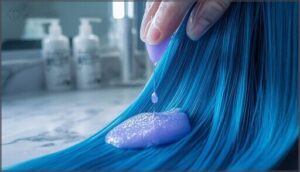
Watch your blue hair like a hawk—over-toning sneaks up fast if you push purple shampoo too far. Here’s how to keep pigment control on point and dodge those unwanted lavender vibes:
- Stick to 2–3 minute sessions max to prevent violet casts on color treated hair
- Limit use to 1–2 times weekly for proper color balance
- Factor in hair porosity—porous strands grab pigment faster
- Rotate with sulfate-free cleansers to reset toning risks and support fading prevention
Tips for Maintaining Vibrant Blue Hair
Keeping your blue hair vibrant takes more than just the right shampoo—it’s about building a complete care routine that protects your color investment.
You’ll need to rethink some of your regular hair habits, from the products you choose to how you wash and style.
Here’s what actually works to keep that bold blue from fading into a sad, washed-out mess.
Sulfate-Free and Color-Safe Hair Care
Protecting your blue hair starts with sulfate-free, color-safe formulas that won’t strip your dye with harsh cleansing. Sulfate alternatives like glucosides provide gentle cleansing while preserving color-treated hair integrity.
Look for pH-balanced products with color protection ingredients—antioxidants and conditioning polymers—that lock in pigment and maintain hair pH balance. These formulas keep your color preservation game strong, reducing fade and keeping your blue bold between touch-ups.
Hydration and Conditioning for Color Longevity
Moisture Balance is your secret weapon for holding onto that electric blue—hydrated hair hangs onto color pigments up to 20% longer than dry, thirsty strands.
Hydrated hair holds onto blue dye up to 20% longer than dry strands—moisture is your secret weapon against fading
Deep conditioning masks with ceramides and amino acids restore elasticity and lock in dye molecules, while pH-balanced Hydration Therapy keeps your cuticle sealed tight.
Even your Scalp Health matters, since nourished roots mean stronger Color Lock from base to tip.
Protecting Blue Hair From Fading and Brassiness
Sunlight, hard water, and heat styling are your blue’s worst enemies, triggering brassiness as copper tones creep through—but a few smart moves keep that color locked in.
- Rinse with cold water after washing to seal the cuticle and trap pigment
- Shield strands with UV-protectant sprays or hats during sunny days
- Use purple shampoo weekly to neutralize yellow undertones causing dullness
- Skip heat tools when possible, or apply heat protectant first
Frequently Asked Questions (FAQs)
Does hard water affect blue hair color?
Yes, hard water accelerates blue hair color fading. Calcium and magnesium minerals bind to blue pigment molecules, dulling vibrancy and shifting tones toward murky greens—transforming your bold statement into washed-out regret.
Can heat styling fade blue hair faster?
Heat styling absolutely accelerates color fading in blue hair—high temperatures weaken pigment molecules and open your cuticles, letting dye escape faster.
Always apply thermal protection and keep styling tools below 350°F to preserve your vibrant shade.
Should you wash blue hair with cold water?
Cool water temperature helps lock in blue pigments by sealing the cuticle, reducing color fade.
Finish each wash with a cold rinse for better color stability and longevity in color-treated hair.
How long does blue hair color typically last?
Like a striking tattoo on sun-kissed skin, blue hair color usually lasts 4 to 6 weeks before vibrancy loss kicks in.
Though hair porosity, wash frequency, and color-treated hair care habits dramatically influence blue pigment retention and dye longevity.
What causes blue hair to turn greenish?
Blue hair turns greenish when copper complexes in the dye oxidize over time, accelerated by chlorine exposure, pigment leaching from damaged cuticles, and pH fluctuations that shift the color balance toward unwanted brassy tones.
Conclusion
The best way to protect your blue hair is knowing what not to use. Purple shampoo for blue hair creates problems it can’t solve—but blue shampoo, sulfate-free formulas, and strategic conditioning routines actually deliver the vibrancy you’re chasing.
You’ve invested time and money into that electric shade; don’t let the wrong bottle in your shower undo it all. Choose products that understand color theory, not just marketing hype, and your blue will stay bold.