This site is supported by our readers. We may earn a commission, at no cost to you, if you purchase through links. This content is for general informational and educational purposes only and is not a substitute for professional medical, dermatological, or nutritional advice.

Grab the wrong Nioxin box, and you’ll waste months on a system that fights your hair type instead of helping it. Color-treated strands need different care than natural ones. Fine hair drowns under formulas built for coarse, thinning hair.
Here’s the thing: four systems exist because thinning shows up differently for everyone—sebum overload, cuticle damage, miniaturized strands, take your pick. Nioxin engineered each kit around a specific scalp profile, not a one-size-fits-all promise.
So which Nioxin system should you use? Match your hair’s actual condition to the right kit, and you’ll see scalp comfort improve within weeks, not seasons.
Table Of Contents
- Key Takeaways
- Which Nioxin System Should You Use?
- Match Your Hair Type Before Buying
- Choose by Thinning Level
- How to Use Your Nioxin Kit
- Results, Consistency, and Safety
- Frequently Asked Questions (FAQs)
- How do I know which Nioxin system to use?
- What is the difference between the Nioxin shampoos?
- Is Nioxin system 1 good for hair loss?
- What is the difference between Nioxin 4 and 6?
- How long does it take to see results from using Nioxin?
- Does Nioxin work for all stages and types of hair loss?
- Is Nioxin safe to use during pregnancy or breastfeeding?
- Can Nioxin reduce scalp itchiness or flaking?
- How often should Nioxin be applied daily?
- Are Nioxin products safe for sensitive skin?
- Conclusion
Key Takeaways
- Choose your Nioxin kit based on two factors—whether your hair is natural or color-treated and how advanced your thinning is—since Kit 1 and 2 suit natural hair (early vs. progressed thinning) while Kit 3 and 4 suit color-treated hair (light vs. advanced thinning).
- Apply the full system three times weekly in the correct order (cleanse, condition, treat) for at least 90 days, since scalp comfort improves in 2-4 weeks but real density gains take several months.
- Expect early side effects like temporary shedding (about 10% of users) and scalp irritation (about 46% of users) as normal signs of the growth cycle resetting, not reasons to quit.
- See a dermatologist instead of relying on Nioxin if you notice patchy hair loss, persistent scalp inflammation, or thinning linked to systemic health changes, since Nioxin only addresses scalp buildup, not underlying medical conditions.
Which Nioxin System Should You Use?

Standing in the hair care aisle staring at four boxes won’t get your follicles any healthier. Nioxin narrowed six systems down to four for a reason—less guesswork, faster results. Here’s how each kit breaks down, so you can grab the right one and get moving.
Once you’ve picked a system, it helps to check the label against this guide on key ingredients to look for in hair care so you know exactly what you’re paying for.
Kit 1 for Natural Hair
Kit 1 is your starting point if you’ve never colored your hair and you’re just noticing a little extra shedding.
This three-step routine pairs a clarifying shampoo with niacinamide-rich conditioner and scalp treatment to nourish follicles and regulate sebum. Built for natural hair textures, it targets early thinning before it becomes a bigger problem—think prevention, not repair.
For best results, apply the full Kit 1 system three times per week.
Kit 2 for Visible Thinning
Notice more scalp than you used to? That’s your cue for Nioxin System 2—built for natural hair with progressed thinning.
It delivers:
- Sebum control for a balanced scalp
- UV scalp protection against sun stress
- Density improvement in weeks
- Scalp strength against breakage
Use it three times weekly. Skip it, and you’re jogging when you should be sprinting.
Kit 3 for Colored Hair
Color makes hair gorgeous—and fragile. If you’ve dyed, highlighted, or chemically treated your strands, Nioxin System 3 is your match for light thinning.
It fights sebum and residue without stripping color vibrancy. The scalp treatment balances moisture, so strands stay soft, not brittle. Follow a color-safe routine: cleanse, condition, treat—three times weekly. Skip harsh clarifying shampoos elsewhere. Think of it as color insurance with thinning protection built in.
Kit 4 for Advanced Thinning
Progressed thinning on color-treated hair needs more than surface fixes. Nioxin System 4 pairs a color-safe cleanser with UV scalp shielding and strengthening actives—niacinamide, peppermint oil—to rebuild strength.
- Visible scalp peeking through your part
- Fear of washing out your color investment
- Strands snapping before they even grow
- Feeling stuck between thinning and fading
- Wanting fullness without sacrificing vibrancy
Three times weekly, for 30 days. That’s your commitment.
Old Systems 5 and 6
Still shopping with an old box of Nioxin System 5 or 6? Here’s the deal: those are legacy kits, now folded into Kit 3 and Kit 4.
Nioxin System 5 formulation for coarse hair mapped into Kit 3; Nioxin System 6’s advanced-thinning benefits now live in Kit 4.
Keeping buildup in check matters even more once hair starts thinning, which is why exploring hair care products for seniors with thinning hair can help you choose a routine that supports scalp health alongside these Nioxin kits.
Coarse or thick hair, progressed thinning, color-treated strands? Skip the search — grab Kit 4.
Match Your Hair Type Before Buying

Picking a kit number isn’t enough—you’ve got to know your hair’s actual profile first. Grabbing the wrong match wastes money and stalls your results. Here’s what to check before you buy.
Natural Versus Color-Treated Hair
Your cuticle health is the real dividing line here. Natural, non-colored hair keeps intact layers that lock in moisture and shine — think of it as a house with all its shingles on.
Color-treated strands? Raised cuticles, higher porosity, faster moisture loss.
- Natural hair: balanced sebum, uniform porosity
- Color-treated hair: chemical damage, tangling risk
- Both need a matching Nioxin System for real results
Chemically Processed Hair
Ever wonder why relaxed or bleached hair snaps mid-brush? Blame disulfide bond damage and keratin protein loss — chemically treated hair loses tensile strength fast.
| Issue | Cause | Nioxin Fix |
|---|---|---|
| Porosity | Cuticle gaps | Moisture-lock treatment |
| Scalp inflammation | Residual chemicals | pH-balanced cleanse |
| Color fading | Sequential processing | Color-safe kits 3/4 |
Your hair thinning treatment needs to address structural damage, not just density.
Fine, Medium, or Coarse
Grab a single strand — can you barely feel it? That’s fine hair, under 0.04mm, and it needs lightweight formulas or it goes flat fast.
Medium hair (0.04-0.07mm) works with moderate products fine. Coarse strands exceed 0.07mm — think volume versus bulk: coarse hair fakes fullness even when thinning. Match your Nioxin System to actual strand diameter, not guesswork, for real hair thickness enhancement.
Scalp Oil and Buildup
Your scalp isn’t just oily or dry—it’s a battlefield of sebum buildup, product residue, and dead skin fighting for control. Excess sebum clogs hair follicles fast, especially mixed with mineral deposits from hard water.
Left unchecked, Malassezia yeast thrives on that oil, worsening scalp health.
Nioxin’s clarifying formulas cut through it—because a clean scalp is non-negotiable for real thickening results.
Hair Breakage Versus Thinning
Snapping strands or thinning follicles? These aren’t the same fight. Follicle vs shaft is your first diagnostic question: breakage shows uneven lengths and frizz, while thinning reveals scalp visibility at the part.
Identifying root causes matters before buying anything. Spot short, choppy pieces? That’s damage. Notice widening part width? That’s density loss.
Pick your Nioxin system accordingly—breakage needs strengthening, thinning needs follicle support.
Choose by Thinning Level

How thin is too thin? Your scalp is already answering that question, you just need to know what to look for. Here’s how to read the signs and match them to the right kit.
Light Thinning Signs
Catch it early, and you’re playing offense, not defense. Light thinning shows up subtly: a slightly wider part line, more scalp visibility under bright bathroom lights, or a ponytail that feels just a touch smaller. You might notice wispy, shorter strands mixed in with longer ones.
These early signs mean Kit 1 or Kit 3 can still work wonders for hair density improvement.
Progressed Thinning Signs
Ignore that early-stage hint—progressed thinning is louder. You’ll notice persistent shedding that doesn’t quit, widening part lines, and hair strand miniaturization producing finer, weaker texture. Volume and shape hold changes too; styles that once looked full now fall flat.
This is where hair loss management gets urgent. Kit 2 or Kit 4 targets this stage directly—don’t wait for it to worsen.
Visible Scalp Areas
Your part line, crown, temples, and frontal hairline don’t thin uniformly—each tells its own story. Part line visibility widens first; crown exposure follows as strands lose lift. Watch frontotemporal corners too—temple thinning reshapes your hairline’s frame. Fine strand contrast makes any of these areas look worse than they are.
Know which zone you’re fighting before picking your Nioxin System.
Density Versus Strand Thickness
Two people can have identical scalp coverage yet totally different hair—that’s the twist most people miss.
Density measures strand count; strand diameter measures individual thickness. Fine hair with high density can outperform coarse hair with low density on total volume.
Nioxin Systems address both: exfoliating buildup for density, strengthening actives for hair thickness improvement. Know which one’s failing you.
When to See a Specialist
When does a kit stop being the answer? If shedding won’t quit, patches form, or your scalp shows real inflammation, that’s your cue.
Watch for:
- Patchy hair loss instead of even thinning
- Redness, sores, or scalp inflammation that lingers
- Thinning tied to fatigue, postpartum changes, or other systemic symptoms
See a dermatologist. Nioxin treats scalp buildup—not root conditions requiring real hair loss treatment.
How to Use Your Nioxin Kit
Bought the right kit? Good—now don’t waste it on a sloppy routine. The order and timing of each step matter just as much as the formula itself. Here’s exactly how to use it, step by step.
Cleanse The Scalp First

Skip the shampoo shortcuts — clarifying is where results start.
Wet hair thoroughly first; this initial rinse loosens buildup before cleanser touches your scalp. Section hair for even coverage, then work shampoo into roots with a root double cleanse, lathering twice to strip oil and residue.
| Step | Action | Time |
|---|---|---|
| Rinse | Saturate scalp | 30 sec |
| Section | Divide hair | 1 min |
| Cleanse | Double-lather roots | 1 min |
| Contact | Let product sit | 15 min |
| Rinse | Warm water | 30 sec |
Condition Hair Lengths

Why do most people drown their scalp in conditioner? Wrong move.
Mid-length application is the rule here — start at your ears, work to ends. This step is about hydration, not scalp care.
Condition the hair for hydration and slip: smoother strands mean less friction, less breakage, easier detangling. Skipping this invites dryness and tangles that undo your progress.
Keep it off your scalp — avoiding buildup matters for thinning hair.
Apply Scalp Treatment
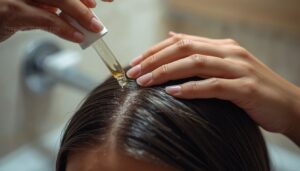
This is where the real work happens. Part your hair in sections to expose the scalp — direct follicle contact is the entire point.
Use fingertips, not palms, working the leave-in scalp treatment into roots with gentle pressure. Re-part as you go for full coverage. Don’t rinse — proper contact time means letting it sit, uninterrupted, until your next wash.
Use Three Times Weekly

Why not daily? Because your scalp needs recovery time, not constant bombardment.
Three times weekly hits the sweet spot — think Monday, Wednesday, Friday. This cadence:
- Prevents active ingredient overload
- Reduces irritation risk
- Builds routine consistency
- Lets you track progress accurately
- Absorbs missed applications easily
Miss a day? No panic — just resume your Nioxin System rhythm. Consistency beats ideal every time.
Daily Leave-in Option

Got a frizzy day between wash cycles? That’s where the daily leave-in earns its spot in your hair regimen.
Spray it on damp or dry hair, scalp to ends — no rinsing required. You’ll get instant lightweight hydration, smoother strands, and real scalp comfort. It’s fully compatible with your Nioxin System steps, making it a smart daily bridge for anyone managing hair thinning without overloading their routine.
Results, Consistency, and Safety

Picking the right kit is only half the job. What happens next—week by week, wash by wash—determines whether you stick with it or quit too soon. Here’s what to actually expect, from first results to when a doctor’s opinion matters.
Expected Results Timeline
So how fast will you see change? Scalp comfort and reduced shedding often show up in 2-4 weeks.
Visible results in 30 days are realistic for many, but true density improvement usually needs several months.
Think marathon training, not a sprint. Consistency impact drives everything—skip washes, and your timeline stretches out fast.
Temporary Shedding Phase
Here’s the part that scares people off: about 10% notice more shedding those first few weeks. That’s your telogen phase kicking in—follicles shifting cycles, not dying.
Shedding intensity can look dramatic, even alarming. Stay the course. It’s temporary, and follicles stay intact, prepping for regrowth. Skip this stage, and you’ll never reach the density gains waiting on the other side.
Scalp Irritation Risks
Shedding’s one thing—irritation’s another. About 46% of users report some scalp irritation or itching, often from contact dermatitis triggers like sulfates or leave-in actives sitting too long.
Barrier disruption makes things worse, especially with hot showers or rough towel-drying afterward.
- Rinse thoroughly, don’t linger
- Skip scalding water on treatment days
- Patch-test if you’ve reacted to hair products before
Stopping Nioxin Use
Quitting cold turkey? Your scalp notices. Expect a temporary shedding spike within weeks as the growth cycle resets—density often drifts back to baseline within 1-3 months.
Don’t just walk away empty-handed. Swap in a replacement routine, or you’re basically canceling your gym membership without a new fitness plan. Keep monitoring breakage, not just shed hairs, and track scalp comfort as irritation fades.
Stopping Nioxin without a replacement routine is like canceling your gym membership with no new fitness plan
Pregnancy and Breastfeeding Guidance
Should you keep using your Nioxin System while pregnant or nursing? Slow down first. Patch test any product on a small scalp patch, since pregnancy shifts skin reactivity fast.
Skip products touching the areola while breastfeeding—simple product transfer prevention. Irritation, rash, or scalp inflammation? Stop and call your dermatologist. Your hair loss prevention routine can wait; your safety can’t.
Frequently Asked Questions (FAQs)
How do I know which Nioxin system to use?
Diagnosing your hair demands a two-step check: natural hair identification or color treatment status, then honest thinning severity. Evaluate texture and scalp health too—fine, coarse, oily, or flaky all shift your pick within the Nioxin System lineup.
What is the difference between the Nioxin shampoos?
Each formula solves a different problem: System 1 cleanses fine, natural hair for fullness, System 2 boosts scalp purification for thinning, System 3 offers color protection with volume, and System 6 hydrates coarse, chemically treated strands battling severe density loss.
Is Nioxin system 1 good for hair loss?
Think of System 1 as a personal trainer, not surgery: it strengthens what you’ve got.
It won’t rebuild lost density, but for early thinning and natural hair, it delivers real scalp health benefits—roughly 80% see visible improvement in 30 days.
What is the difference between Nioxin 4 and 6?
System 4 targets natural, untreated hair with progressed thinning—gentle, pH-balanced cleansing for fine textures.
System 6 targets color-treated, chemically processed hair, prioritizing color protection alongside scalp care and thinning treatment.
Same three-step routine, different active formulas for your hair’s condition.
How long does it take to see results from using Nioxin?
Patience pays off: expect visible thickness within 30 days of consistent three-times-weekly use, though real density changes ride your hair growth cycle—often the full three-month regrowth window.
Some early shedding is normal; it’s your follicles clearing house.
Does Nioxin work for all stages and types of hair loss?
Short answer: no. Nioxin targets non-scarring alopecia—androgenic pattern hair loss with viable follicles. It won’t regrow bald patches or scarred scalp. Severe thinning needs minoxidil or transplants alongside your system for real regrowth results.
Is Nioxin safe to use during pregnancy or breastfeeding?
Pregnant skin acts like a smoke detector on high sensitivity—it reacts faster. Salicylic acid warrants caution, so review ingredient labels and get clinician guidance before adding any Nioxin regimen during pregnancy or breastfeeding, protecting both your hair health and your baby’s safety.
Can Nioxin reduce scalp itchiness or flaking?
Yes—Nioxin’s Scalp Recovery targets it directly.
Pyrithione zinc fights dandruff, niacinamide and green tea extract calm irritation, and mint oil delivers instant cooling relief.
Used consistently within your hair care routine, it curbs flaking while supporting real scalp health improvement.
How often should Nioxin be applied daily?
Think of your Nioxin System like a garden: shampoo and conditioner weed the soil three times weekly, but the leave-in treatment waters it daily. Skip days, and results wilt—consistency is what actually grows density.
Are Nioxin products safe for sensitive skin?
Dermatologically tested, sure—but fragrance and sulfates can still trigger irritation. Look for sulfate-free, soothing formulas with aloe or niacinamide. Always patch test first, especially if your scalp reacts easily to new products.
If you’re navigating sensitive scalp care alongside color treatments, it’s also worth knowing how dyeing works for albino hair — where the absence of melanin actually makes gentle, sulfate-free formulas even more essential.
If you’re layering in other treatments, this guide to using Malibu crystal gel treatments can help you figure out how often to work it into your routine without overdoing it.
Conclusion
Picture two women in the same salon chair—one battling color fade, one facing bare patches—yet both grabbing Kit 2 because it’s "the popular one." Wrong move.
Knowing which Nioxin system you should use isn’t guesswork; it’s scalp science. Match your kit to your actual condition, not your friend’s results. Your scalp isn’t running someone else’s race.
Stay consistent for 90 days, and watch thinning lose its grip—for good.