This site is supported by our readers. We may earn a commission, at no cost to you, if you purchase through links. This content is for general informational and educational purposes only and is not a substitute for professional medical, dermatological, or nutritional advice.

Your razor didn’t dull because the blade is cheap. It dulled because you left foam, hair, and water to chew on it between shaves.
Shaving cream packs into the gap behind the edge, hardens, and drags across your skin on the next pass. Moisture trapped on the steel invites rust and tiny pits you can’t see until your face feels them. Good razor blade maintenance for shaving cream takes about two minutes a day, and it saves you money and irritation.
Master the five habits below, and one blade will glide through shave after shave.
Table Of Contents
- Key Takeaways
- Rinse Shaving Cream From Your Razor During Each Shave
- Clean Razor Blades After Shaving
- Dry and Store Razor Blades to Prevent Rust
- Use Shaving Cream and Gentle Pressure to Reduce Blade Wear
- Replace Razor Blades When Cleaning No Longer Restores a Comfortable Shave
- Frequently Asked Questions (FAQs)
- How to clean shaving cream from razor?
- Should you shave testicle hair?
- Is it better to trim pubic hair before or after a shower?
- What parts should you not shave?
- How to maintain a razor blade?
- How to clean shaving cream residue off razor?
- What is the lubricant on razor blades?
- What breaks down shaving cream?
- How to clean razor after shaving cream?
- Does shaving cream make blades last longer?
- Conclusion
Key Takeaways
- Rinse your razor under warm running water every pass or two, and again right after you finish, so shaving cream and hair never harden into a film that makes the blade drag and irritate your skin.
- Dry your razor by blotting it with a lint-free cloth, then air-dry it in a ventilated spot away from the shower, because wet steel rusts and pits quickly.
- Use a thick, even layer of fresh cream and light pressure with short strokes, since good lather and a gentle hand cut friction and slow blade wear.
- Replace the blade when a thorough rinse no longer restores a smooth glide, or when you see tugging, rust, or pitting, because cleaning can’t fix a worn edge.
Rinse Shaving Cream From Your Razor During Each Shave
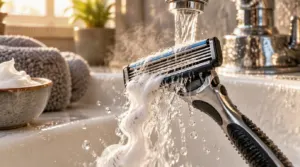
Rinse your razor every pass or two, not just at the end. Rinsing blade edges mid-shave is your best defense against clogging. Shaving cream and hair fragments build a film fast, and that film makes the blade drag. Drag means tugging. Tugging means irritation.
Since a rinsed blade still needs fresh cream to glide, these shaving cream application techniques for chest hair show how to lather evenly so every pass stays smooth.
Rinse your razor every pass or two, because clogged blades drag, dragging means tugging, and tugging means irritation
Hold the blade under flowing warm water, edge facing away from your skin. Flush both the top and the underside so shaving cream removal is complete, not half-hearted. A quick spritz won’t cut it. Hold it until the foam clears. Skip scalding water, since too much heat can wear down coatings and grips. If stubborn stubble stays wedged between the blades, a razor blade cleaning brush can gently dislodge it without dulling the edge.
Keep it up and you’ll get smoother glide, better moisture control, and blade longevity. Think of it as blade cleaning in real time.
Clean Razor Blades After Shaving
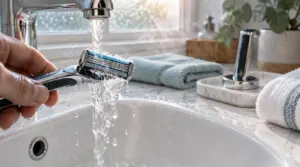
Rinsing is only round one, so your blades still need a real post-shave clean. Two quick steps keep your razor sharp, safe, and ready for the next round. Here’s what to do, and when to do it.
Pairing a clean blade with a few smart tips for shaving your legs without cuts helps your skin stay smooth and irritation-free.
Remove Trapped Cream and Hair
Grab your razor right after the shave and finish what blade rinsing started. Hold it under running water and brush across the blade gap and guard. That’s shaving cream residue removal and blade cleaning done right.
Wipe the blade face, then give it a blade inspection. Still see clumps? Re-wet and wipe. Smart moisture control starts with a clean edge.
After drying with a microfiber cloth, follow this step-by-step guide to cleaning a straight razor to keep the steel rust-free and the edge sharp between shaves.
When to Disinfect Your Razor
Clean blades still carry bacteria, so disinfecting tools is the next move. Soak the razor head in 70% isopropyl alcohol for 5 to 10 minutes, then air dry without wiping. Bacteria, dead skin cells, and product residue can form a biofilm on razor blades that survives a simple rinse.
Do it after every shave if you’re prone to bumps or redness. Otherwise, 2 to 3 times a week works. Always disinfect a new cartridge before its first use. Good razor hygiene pays off.
Dry and Store Razor Blades to Prevent Rust
Your blades are spotless, but they’re not safe yet. Wet steel is rust’s favorite snack, and it gets hungry fast.
If you’d like a gentler way to keep that steel fresh between shaves, this DIY razor blade cleaning solution recipe pairs nicely with a quick dry and upright storage.
Start with moisture management. Blot the head with a lint-free cloth. Don’t rub. Then let it air-dry for 30 to 60 minutes. Never store a wet razor, not even for a minute, because micro-pitting starts quicker than you’d think.
Now pick the spot. Razor storage recommendations say keep it dry and ventilated, far from the sink. Your shower shelf is a rust spa. Skip sealed containers and damp cabinets too. Aim for humidity at 40% or lower.
That’s dry storage done right. It’s simple blade corrosion prevention and real blade protection, and your next shave will thank you later.
Use Shaving Cream and Gentle Pressure to Reduce Blade Wear
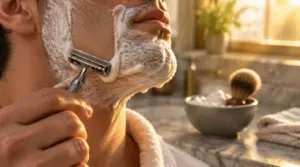
Laying down a thick, even layer of shaving cream is your first move toward blade longevity. Think of it as a slick runway for your razor. Good lather means real friction reduction, so the edge glides instead of grinding.
Now ease up. Gentle pressure is the secret. Let the weight of the razor do the work, and skip the scrubbing. Short, light strokes in one direction keep contacts low and your edge sharp.
If the lather thins or dries, stop and add fresh cream. Dry skin makes the blade plow, and that’s where blade wear reduction goes out the window. Smooth, steady passes keep you in control and your blade happy. That’s real mastery, one light stroke at a time.
Replace Razor Blades When Cleaning No Longer Restores a Comfortable Shave
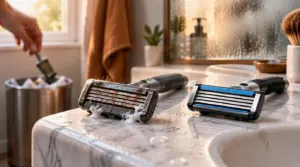
If a thorough rinse doesn’t bring back that smooth glide, your blade is done. Time to say goodbye. Cleaning clears cream and hair, but it can’t fix a worn edge.
Watch for these razor blade replacement signs: tugging, scraping, and irritation even with plenty of lather. Dull blades don’t cut, they drag. Rust spots or pitting? Toss it.
Cut your losses. Dull edges cost you comfort, and good blade sharpness is worth protecting. Hard water, coarse hair, and daily shaving all shorten blade lifespan, so build a blade maintenance schedule around how your shave feels, not the calendar. Shaving cream compatibility helps, but even the slickest lather can’t rescue a tired blade. Swap it, and your face will thank you.
Frequently Asked Questions (FAQs)
How to clean shaving cream from razor?
Rinse your razor under running water after every stroke or two, so shaving cream never gets a chance to dry. Then tap it, wipe the grooves, and finish with proper drying techniques.
Should you shave testicle hair?
Picture a tiny, tender landscape where one slip means trouble. You can shave testicle hair, but it’s optional and risky.
Use shaving cream lubrication, a fresh sharp blade, and gentle strokes for skin irritation prevention.
Is it better to trim pubic hair before or after a shower?
Dry hair is a tangled forest, so clear it first. Trim before showering for control, then shave softened skin with shaving cream. Less hair eases razor blade maintenance, blade cleaning, blade sharpness and shave quality.
What parts should you not shave?
Skip broken skin, open sores, and angry folliculitis bumps. Good shaving technique means steering your blade angle around moles, rashes, and tender spots. Your razor glide suffers there, so skin irritation and razor burn follow.
How to maintain a razor blade?
Blade maintenance is easy. Flush warm water through blades after every pass, then pat them dry. Choose dry storage over the steamy shower shelf.
Add blade oiling weekly and shaving cream lubrication for sharpness preservation.
How to clean shaving cream residue off razor?
Rinse your razor under warm running water the second you finish shaving. Fresh shaving cream melts away fast. Stubborn film? Scrub gently with an old toothbrush, then rinse again. Razor blade maintenance made easy.
What is the lubricant on razor blades?
Picture a hockey puck skating across ice. That’s your blade on a PTFE polymer coating, a factory-applied film that works like built-in blade oiling.
Strips add aloe and vitamin E, and coating helps blade longevity.
What breaks down shaving cream?
Warm water breaks down shaving cream residue fastest. Stubborn gunk? Try rubbing alcohol, vinegar, or a razor cleaner.
Favor dry storage and blade oiling. They’re your shortcut to blade sharpness preservation and blade edge retention.
How to clean razor after shaving cream?
Foam clings to steel like frosting on a spoon, so don’t let it dry. Run your razor under warm water, then scrub gently with a soft toothbrush. Dry it fully. Blade cleaning protects shave quality.
Does shaving cream make blades last longer?
Think it’s just hype? Nope. Shaving cream softens hair and adds skin protection, so you press lighter and drag less. That’s blade edge maintenance built in.
Boost blade longevity with a razor blade care routine.
Conclusion
A stitch in time saves nine, and a two-minute rinse saves your blade. Master razor blade maintenance for shaving cream, and your razor stays sharp, smooth, and ready to roll.
Rinse mid-shave, clean after, dry fully, press gently, and swap the blade the moment comfort fades. That’s the whole playbook, friend. Skip it and your face pays the bill. Follow it and you’ll glide through every shave like a hot knife through butter. Class dismissed.