This site is supported by our readers. We may earn a commission, at no cost to you, if you purchase through links. This content is for general informational and educational purposes only and is not a substitute for professional medical, dermatological, or nutritional advice.
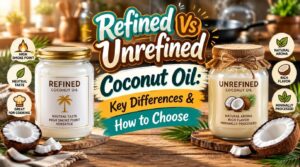
You grab a jar of coconut oil for searing steak, and halfway through cooking, your kitchen fills with smoke. The problem isn’t your pan. It’s that you bought the wrong type for the job.
The refined vs unrefined coconut oil debate comes down to processing. One is steamed and deodorized to handle 450°F heat. The other keeps its coconut aroma but smokes at 350°F. Their nutrition differs less than you’d think, yet the small differences matter for your cooking and your skin.
Here’s how the two compare, and how to pick the right jar for each use.
Table Of Contents
- Key Takeaways
- Refined Vs Unrefined Coconut Oil: Key Differences at a Glance
- How Refined and Unrefined Coconut Oil Are Made
- Nutrition and Health Effects of Refined Vs Unrefined Coconut Oil
- How to Choose and Use Coconut Oil
- Top 3 Coconut Oil Products to Consider
- Frequently Asked Questions (FAQs)
- Why do cardiologists say to avoid coconut oil?
- Which coconut oil is best for baking?
- What type of coconut oil is best for skin?
- Which type of coconut oil is healthiest?
- Which is better, unrefined or refined coconut oil?
- Can I use unrefined coconut oil instead of refined?
- Should I use refined or unrefined coconut oil on my skin?
- When should I use refined coconut oil?
- How long does coconut oil last before expiring?
- Can I switch between refined and unrefined in recipes?
- Conclusion
Key Takeaways
- Refined coconut oil is steamed, bleached, and deodorized, giving it a neutral taste and a smoke point near 450°F, while unrefined (virgin) oil keeps its coconut flavor and aroma but smokes around 350°F.
- Nutritionally, both types share nearly identical fat profiles—about 85–90% saturated fat, mostly lauric acid—though unrefined retains slightly more polyphenols and antioxidants.
- Use refined for high-heat cooking like searing and frying, and choose unrefined for baking, no-cook recipes, or when you want coconut flavor.
- Both types can raise LDL cholesterol, so treat coconut oil as an occasional fat, and store it in a cool, dark place—unrefined lasts roughly 6–12 months, refined up to 24.
Refined Vs Unrefined Coconut Oil: Key Differences at a Glance

When you compare refined coconut oil and unrefined coconut oil, the main difference comes down to processing methods. Refining strips out odor-causing compounds and impurities, so you get a neutral-tasting oil that suits savory dishes. Unrefined oil keeps more of its natural coconut flavor and aroma, which works well in baking or no-cook recipes.
For a deeper dive into how processing shapes flavor and everyday cooking results, this refined vs. unrefined coconut oil guide breaks down everything you need to know.
Refining strips coconut oil down to a neutral taste, while unrefined keeps its natural flavor and aroma
Smoke point also differs. Refined versions usually handle higher heat, while unrefined oil may smoke sooner because retained volatiles and trace compounds degrade faster.
Nutritionally, both share a similar saturated fat profile, mostly lauric acid. Refining may remove minor antioxidants like tocopherols, so unrefined options may retain slightly more. Check labels carefully, since "virgin" claims and deodorization practices vary by brand.
How Refined and Unrefined Coconut Oil Are Made
The processing method is what separates these two oils. Unrefined coconut oil comes from fresh coconut meat with minimal handling, while refined coconut oil goes through several industrial steps. Here’s how each one is made.
Unrefined Extraction Methods

Producers make virgin coconut oil two ways. Wet extraction presses fresh coconut meat, then separates the oil through settling or centrifuge extraction, often without added heat.
Dry extraction dries the meat into copra, though many unrefined makers skip copra entirely.
Cold pressed methods preserve aroma, polyphenols, and lauric acid, but the oil stays cloudy, needs filtration, and smokes around 350°F.
Refined RBD Processing

Refined coconut oil takes the opposite path from unrefined. Producers press dried copra, then run the crude oil through RBD processing: refined, bleached, deodorized.
Bleaching earth clays absorb pigments first. Deodorization follows, using 180–240°C steam to strip aroma compounds. Final refining removes free fatty acids, so you get a neutral coconut flavor, fewer antioxidants, and a smoke point near 232°C.
If you’re weighing refined against virgin, this guide to coconut oil for beard growth breaks down which type works best.
Nutrition and Health Effects of Refined Vs Unrefined Coconut Oil
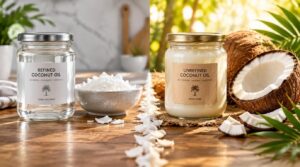
Those processing differences carry over into nutrition, though less than you might expect. Both oils share the same fatty-acid backbone: about 85–90% saturated fat, with lauric acid making up roughly half. Refined coconut oil loses some polyphenols and volatiles during deodorizing, while unrefined coconut oil keeps more of these minor compounds, which may add mild antioxidant activity.
| Feature | Refined | Unrefined |
|---|---|---|
| Saturated fat | ~Same | ~Same |
| Polyphenols | Reduced | Higher |
| Coconut flavor | Neutral | Strong |
Medium-chain triglycerides (MCTs), including lauric acid, are present in both and metabolized differently than longer-chain fats. Lauric acid converts partly to monolaurin in your body, though health effects remain debated. Either type can raise LDL cholesterol, so treat coconut oil as an occasional fat, not a daily staple. Freshness and storage matter more than processing grade.
How to Choose and Use Coconut Oil

You know the differences between refined and unrefined coconut oil, so the next step is matching the right type to the task. Your choice depends on heat, flavor, and application. Below, you’ll find practical guidance for the four situations where coconut oil comes up most.
High-Heat Cooking
If you’re searing steak or stir-frying vegetables, refined coconut oil is your pick. Its smoke point near 450°F works well for high temperature cooking without scorching. You get a neutral flavor oil, so your dish tastes like the food, not coconut.
Unrefined oil may smoke around 350°F and can scorch faster.
For heat stability across repeated cycles, refined wins.
Baking and No-Cook Recipes
Baking projects reveal the biggest differences between these oils. Unrefined coconut oil adds distinct coconut aroma; refined coconut oil works as a neutral flavor oil when you don’t want it. Consider these outcomes:
- Vanilla shortbread made with refined oil tastes clean, not tropical.
- Lime or chocolate frostings gain richness from unrefined oil.
- No-cook recipes stay firm if you keep oils cool.
Substitute 1:1, but test small batches, since texture may shift.
Skin and Hair Care
If you’ve ever slathered coconut oil on dry heels, you know it seals moisture in fast. Your skin and hair respond to occlusive films, so choose accordingly.
| Use | Pick |
|---|---|
| Sensitive skin | Refined |
| Hair conditioning agents | Either |
| Makeup remover | Unrefined |
Refined may irritate less. Unrefined offers richer moisturizing properties. Patch-test first, apply thinly, and adjust for your cuticle care needs.
For stubborn dry cuticles, a dab of coconut oil for cuticle care massaged in nightly keeps the skin soft and hydrated.
Storage and Buying Tips
Think of coconut oil as a fine wine: where you keep it shapes how it ages. Store yours in a cool, dark place away from the stove. It may solidify in cooler temps, which makes scooping easier. Expect a shelf life of 1–2 years unrefined, longer refined. For pantry storage longevity, keep lids airtight; refrigeration extension** is optional.
Top 3 Coconut Oil Products to Consider
You’ve weighed the differences, so now it’s time to pick a product. The three options below cover refined, unrefined, and skincare uses. Each one suits a different purpose, so match it to how you’ll use it.
1. Viva Naturals Organic Coconut Oil
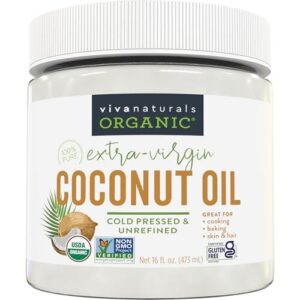
If you want unrefined coconut oil that keeps the coconut’s natural character, Viva Naturals is a solid pick. It’s cold-pressed from fresh organic coconuts, so no solvents, bleach, or high heat strip out the phytonutrients and antioxidants. You get USDA Organic certification plus Non-GMO Project Verified, Keto, Paleo, and Gluten-Free labels.
Nutritionally, one tablespoon delivers 130 calories and 14 grams of fat, with lauric acid making up roughly 45–50% of the total. Its 350°F smoke point suits baking and moderate sautéing, though you’ll notice a mild coconut flavor in your dishes.
Beyond the kitchen, clinical research on virgin coconut oil shows it may improve skin elasticity within weeks without irritation. This useful oil also works as a hair and skin moisturizer, doubling as a conditioner, detangler, or natural makeup remover. A 90-day money-back guarantee backs it up.
2. Happy Belly Organic Refined Coconut Oil
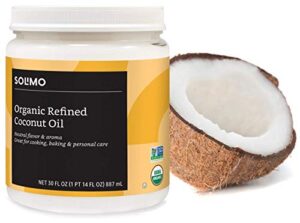
If you want coconut oil’s benefits without coconut’s flavor, Happy Belly’s refined version fits the bill. It’s certified organic and Non-GMO Project Verified, and refining strips out the aroma, so your stir-fries and baked goods taste like themselves.
The oil melts above 75°F (24°C) and solidifies when cool. Expect a higher smoke point of roughly 400–450°F, which makes it reliable for sautéing, searing, and frying. It’s dairy-free and gluten-free, so you can mix it into smoothies or coffee as a butter substitute.
Some buyers note the texture turns chunky or the oil gets too hard to scoop in cool kitchens. Store it sealed in a cool, dark place and use it within 6–12 months.
- Certified organic and Non-GMO Project Verified
- Neutral flavor with a high smoke point of roughly 400–450°F, ideal for sautéing, searing, and baking
- Versatile for smoothies, coffee, and even skin and hair care
- Texture may turn chunky rather than smooth
- Too hard to scoop when solid, especially in cooler temperatures
- Scent and flavor may be weak or undetectable, which some users may find disappointing
3. Alba Botanica Hawaiian Coconut Sunscreen Spray
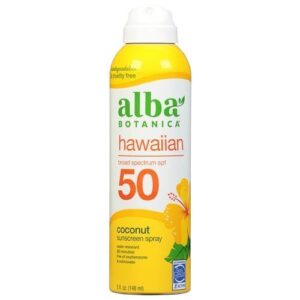
If you’re after coconut oil’s perks for your skin rather than your kitchen, Alba Botanica’s Hawaiian Coconut Sunscreen Spray is worth a look. It pairs coconut-derived emollients with SPF 50 broad-spectrum protection and hydrators like aloe vera, safflower oil, avocado oil, and chamomile extract. The air-powered canister sprays at any angle, even upside down, and holds up to 80 minutes of water resistance. It’s formulated without oxybenzone, synthetic fragrances, parabens, or sulfates, and it’s dermatologist tested and hypoallergenic.
A few caveats before you buy. Some users report the spray mechanism jamming or the cap breaking after limited use, and others notice a strong alcohol scent on application. If your skin is reactive, patch-test first. Shake well and reapply every 80 minutes when swimming or sweating.
- SPF 50 broad-spectrum protection with up to 80 minutes of water resistance
- Formulated without oxybenzone, synthetic fragrances, parabens, or sulfates, and dermatologist tested
- Air-powered spray works at any angle, even upside down, for easy application
- Spray mechanism may jam or fail to lock/unlock after limited use
- Some users notice a strong alcohol scent upon application
- Mixed reports on skin irritation and value for money
Frequently Asked Questions (FAQs)
Why do cardiologists say to avoid coconut oil?
Cardiologists say to avoid coconut oil because its saturated fatty acids raise your LDL cholesterol, which increases heart disease risk. Its lauric acid doesn’t offset this. You’ll get heartprotective benefits from olive or soybean oils instead.
Which coconut oil is best for baking?
Like a quiet understudy, refined coconut oil lets your recipe star. It’s flavorless and odorless, with a higher smoke point for baking. Choose unrefined only when you want coconut notes in vegan baking substitutes.
What type of coconut oil is best for skin?
For skin and hair care, unrefined coconut oil (virgin coconut oil) may suit you if you tolerate its scent, since its moisturizing properties remain intact. Choose refined if you prefer neutral scent.
Which type of coconut oil is healthiest?
Neither type is clearly healthier. Refined coconut oil and unrefined coconut oil share nearly identical fat profiles, mostly medium-chain triglycerides (MCTs) and lauric acid. Your total saturated fat intake matters more than processing choice.
Which is better, unrefined or refined coconut oil?
So which one deserves a spot in your pantry? Neither wins outright.
Unrefined coconut oil keeps more antioxidants and coconut flavor, ideal for baking.
Refined coconut oil’s neutral taste and higher smoke point suit high-heat cooking.
Both deliver similar MCTs.
Can I use unrefined coconut oil instead of refined?
Worried it’ll ruin your recipe? It won’t, mostly. You can substitute unrefined for refined in most cooking, but its 350°F smoke point caps you at medium heat. Expect noticeable coconut flavor and slightly more nutrients.
Should I use refined or unrefined coconut oil on my skin?
If your moisturizer stings, switch oils. For sensitive skin care, choose refined coconut oil; its neutral smell and fewer impurities may reduce irritation. For dry skin, unrefined works well, but it can clog acne-prone pores.
When should I use refined coconut oil?
Use refined coconut oil when you need a high-heat cooking oil with a smoke point near 450°F.
It’s your best baking oil substitute for neutral smell and taste, and its frying oil suitability plus longer shelf life make everyday cooking easier.
How long does coconut oil last before expiring?
Your coconut oil’s shelf life depends on type. Unopened refined coconut oil may last 18–24 months; unrefined versions, 6–12 months. Store it in a cool dark place. Check for rancid smells before use.
Can I switch between refined and unrefined in recipes?
Yes, you can swap them in most recipes. Consider the smoke point: refined grips higher heat better. Unrefined adds coconut flavor, while refined stays neutral, so your flavor profile of oils may shift slightly.
Conclusion
Think of coconut oil as a toolbox: refined is the all-purpose wrench, unrefined the specialty tool.
The refined vs unrefined coconut oil choice isn’t about which is better, but which fits the task.
Reach for refined when you sear, fry, or roast past 350°F.
Choose unrefined when you want coconut flavor in baking or a gentle option for skin.
Match the jar to the job, and you’ll never fight a smoky kitchen again.