This site is supported by our readers. We may earn a commission, at no cost to you, if you purchase through links. This content is for general informational and educational purposes only and is not a substitute for professional medical, dermatological, or nutritional advice.
Most people pick an acid based on what sounds right—salicylic for acne, glycolic for glow—without knowing why those choices hold up chemically. The distinction runs deeper than marketing.
Salicylic acid is oil-soluble, which lets it cut through sebum and reach inside the pore lining; glycolic acid is water-soluble and works at the skin’s surface, where dead cell buildup dulls your complexion and slows renewal. Same category of exfoliant, completely different targets.
Knowing which acid matches your skin’s actual problem means fewer wasted products and fewer compromised barriers—and the difference between salicylic acid vs glycolic acid is more precise than most routines account for.
Table Of Contents
- Key Takeaways
- Salicylic Acid Vs Glycolic Acid
- What is Salicylic Acid?
- What is Glycolic Acid?
- How Each Acid Exfoliates Skin
- Best Uses for Salicylic Acid
- Best Uses for Glycolic Acid
- Skin Type Suitability Guide
- Side Effects and Safety Tips
- Using Both Acids Together
- Top 5 Acid Skincare Products
- Frequently Asked Questions (FAQs)
- Which penetrates deeper, glycolic acid or salicylic acid?
- Does glycolic acid pull out blackheads?
- Is salicylic acid better than glycolic acid?
- Can I use salicylic acid and glycolic acid together?
- Is glycolic acid or salicylic acid better for feet?
- Is glycolic acid or salicylic acid better for scalp?
- Which is better, glycolic or salicylic acid?
- Can I use glycolic acid and salicylic acid together?
- Should I use glycolic or salicylic acid at night?
- How do glycolic and salicylic acids affect skin pH?
- Conclusion
Key Takeaways
- Salicylic acid’s oil-soluble chemistry lets it travel through sebum into pores, making it the right tool for acne, blackheads, and oily skin — glycolic acid stays at the surface and can’t do that job.
- Glycolic acid’s tiny molecular size accelerates dead cell turnover and stimulates collagen, which is why it outperforms salicylic acid for dullness, hyperpigmentation, and fine lines.
- Your skin type should drive the choice: oily and acne-prone skin needs salicylic acid, while dry, aging, or sun-damaged skin responds better to glycolic acid.
- You can use both acids in one routine, but layering them daily damages your skin barrier — alternate them on separate nights and always follow with SPF and a ceramide moisturizer.
Salicylic Acid Vs Glycolic Acid
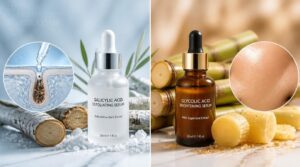
Both acids exfoliate, but they work in completely different ways and target different skin concerns. Understanding what sets them apart helps you choose the right one for your skin. Here’s what you need to know before picking a side.
If you’re also dealing with ingrown hairs, exfoliating acids can help prevent them too—another reason getting the right acid for your skin type really matters.
Key Ingredient Differences
Chemical exfoliators aren’t equal — salicylic acid and glycolic acid differ at the molecular level in ways that change everything on your skin.
| Feature | Salicylic Acid | Glycolic Acid |
|---|---|---|
| Molecular Weight | Larger, aromatic structure | Smallest alpha hydroxy acid |
| pH Level Effects | 3.0 | 3.5 |
| Penetration Depth | Deep, pore-level | Surface layers |
| Solubility Influence | Oil-soluble | Water-soluble |
Salicylic acid’s oil-soluble nature pulls it into pores, while glycolic acid’s low molecular weight drives collagen stimulation at the surface. You should also consider ingredient synergies and interactions when incorporating these acids into your routine.
BHA Versus AHA
BHA and AHA describe where each acid does its work. Salicylic acid is a beta-hydroxy acid — its structure lets it slip into pores. Glycolic acid is an alpha-hydroxy acid that stays at the surface.
That single structural difference determines everything: which skin concerns each acid actually solves, and which skin types tolerate each one best.
Oil-soluble Versus Water-soluble
Solubility is what separates these two acids in practice.
Salicylic acid is oil-soluble, meaning it mixes directly into sebum and travels into pores. Glycolic acid is water-soluble, so it distributes across the skin’s watery surface film instead.
That difference determines where each acid can actually reach — and what it can realistically fix.
Best Skin Concerns
Where each acid works best comes down to your specific skin concerns.
Acne-prone skin and oily skin benefit most from salicylic acid, which clears congestion inside the pore. Glycolic acid suits hyperpigmentation, fine lines, and sluggish skin cell turnover better, delivering a Skin Radiance Boost by working across the surface rather than inside it.
Quick Comparison Summary
Here’s a quick side-by-side to make the choice clear.
| Feature | Salicylic Acid (BHA) | Glycolic Acid (AHA) |
|---|---|---|
| Penetration depth | Deep, into pores | Surface skin layers |
| Best for | Acne, oily skin | Dullness, fine lines |
| UV sensitivity | Lower risk | Requires daily SPF |
What is Salicylic Acid?

Salicylic acid is a beta-hydroxy acid derived from willow bark, and it works differently from most exfoliants you’ve probably used. Because it’s oil-soluble, it can actually get inside your pores rather than just working on the surface. Here’s what you need to know about how it’s built, how it works, and where you’ll find it.
Beta-hydroxy Acid Basics
Salicylic acid is a beta-hydroxy acid (BHA) — meaning its hydroxyl group sits two carbon atoms away from its carboxyl group, a structure that makes it fundamentally different from AHAs like glycolic acid. Here’s what defines it chemically:
- Derived from willow bark and wintergreen leaves
- Lipophilic structure allows oil compatibility
- Maintains a pH of 3.0 for effective exfoliation
- Acts as both exfoliant and comedolytic agent
- Available in 0.5%–2% OTC concentrations
Oil-soluble Exfoliation
What sets salicylic acid apart is its lipophilic, oil-soluble structure — it dissolves into sebum rather than sitting on the skin’s surface. This oil-based delivery allows the beta-hydroxy acid to reach lipid layers that water-based acids simply can’t penetrate. For acne-prone skin, that translates to better barrier compatibility and cleaner rinse-off efficacy.
| Property | Function |
|---|---|
| Lipid layer penetration | Reaches oily buildup beneath the surface |
| Sebum dissolution effect | Breaks down excess oil and trapped debris |
| Oil-based delivery | Distributes through sebum-rich environments |
| Rinse-off efficacy | Removes dissolved residue cleanly after use |
Pore-clearing Action
Think of a pore as a narrow drain — salicylic acid clears the pipe, not just the surface.
Salicylic acid doesn’t clean the surface of your pores — it clears the pipe from the inside out
Because it’s oil-soluble, it travels into the follicle lining where sebum and dead cells accumulate. That deep pore penetration dislodges plugs that water-based acids can’t reach, lifting debris from within so rinsing actually removes it.
Acne-prone Skin Benefits
Acne-prone skin experiences more than just breakouts — it’s a cycle of clogged pores, excess sebum production, inflammation, and lingering marks.
Salicylic acid, as a beta-hydroxy acid, interrupts that cycle at multiple points. It clears debris from inside the pore, calms redness, and promotes a more balanced, smoother skin texture over consistent use.
Common Skincare Forms
Salicylic acid shows up in more product formats than most people expect. You’ll find it in a gel or cream facial cleanser, a leave-on serum, exfoliating peel pads, and even clay masks. Here are the five most common forms:
- Facial cleansers — gel or cream-based, ideal for daily use
- Leave-on serums — concentrated delivery for targeted treatment
- Exfoliating peel pads — pre-soaked, single-step application
- Spot treatments — high-strength, localized blemish control
- Clay masks — short-contact format for deeper pore clearing
What is Glycolic Acid?

Glycolic acid is an alpha-hydroxy acid sourced from sugarcane, and it works entirely on the skin’s surface rather than inside your pores. Because it’s water-soluble with the smallest molecular weight of any AHA, it absorbs quickly and gets to work faster than most acids you’ll find on a shelf.
If your skin tends to react easily, pairing glycolic acid with a calming face mask for sensitive skin can help balance the exfoliation without tipping into irritation.
Here’s what makes it worth understanding.
Alpha-hydroxy Acid Basics
Glycolic acid belongs to the alpha-hydroxy acid family — a class of organic acids defined by a hydroxyl group at the alpha position, sitting directly adjacent to the carboxylic acid group. This precise arrangement in its AHA molecular structure makes glycolic acid distinctly water-soluble.
Sourced from sugarcane, it’s one of several fruit-derived acids used in chemical exfoliation, alongside lactic, citric, and mandelic acid.
Water-soluble Exfoliation
What makes glycolic acid so effective in water-soluble chemical exfoliation is how easily it spreads across your skin in aqueous formulas. As a Leave-On Serum or Hydrating Toner Formula, it penetrates evenly without oil-phase carriers.
Unlike salicylic acid, glycolic acid needs no lipid vehicle — water carries it directly to the surface for Gentle Daily Exfoliation.
Surface Cell Turnover
Your skin sheds millions of dead cells daily through a process called desquamation, where corneocytes loosen and detach from the surface.
Glycolic acid accelerates corneocyte detachment by dissolving the protein bonds holding dead cells together, supporting a faster cell renewal rate. This keeps the outer layer from thickening unevenly — a key reason skin feels smoother after consistent use.
Brightening and Smoothing
Once dead cells lift away, what’s left underneath reflects light more evenly. That’s where glycolic acid earns its place in any Even Tone Routine — by accelerating surface renewal, it gradually fades hyperpigmentation and dullness.
Consistent use promotes real Smooth Texture Boost results, making this Gentle Exfoliation Method one of the most practical tools for visible skin brightening and smoothing.
How Each Acid Exfoliates Skin
Both acids exfoliate, but they do it in completely different ways — and that difference matters more than most people realize. Where each acid works, how deep it reaches, and what it breaks down all shape the results you’ll see in the mirror. Here’s how salicylic and glycolic acid each get the job done.
Salicylic Acid Pore Exfoliation
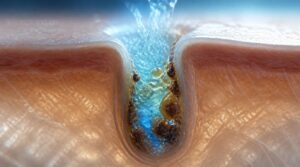
Salicylic acid doesn’t just skim the surface — it works deep inside your pores. As a beta hydroxy acid, its oil-soluble nature lets it cut through sebum and travel down the pore lining, dissolving the debris, dead cells, and oil buildup that trigger blackheads and congestion.
That’s what makes it genuinely effective for pore cleansing and sebum control.
Glycolic Acid Surface Exfoliation

Glycolic acid works differently — it stays at the surface, targeting the stratum corneum where dead cells pile up. As the smallest alpha-hydroxy acid, its molecular size lets it slip between cells and weaken the bonds holding them together, a process called corneodesmolysis.
The result is faster cell turnover, a smoother finish, and that unmistakable lit-from-within glow.
Dead Skin Removal

Both acids remove dead skin cells, but through different mechanisms. Chemical exfoliation via salicylic acid dissolves bonds within pores, while glycolic acid targets surface accumulation through corneodesmolysis.
Compared to physical scrub techniques, these chemical exfoliants support a healthier cell turnover rate with less friction damage — improving your exfoliation frequency guidelines and giving barrier recovery post-exfoliation a real head start.
Oil and Debris Breakdown
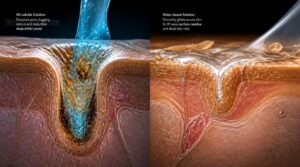
Think of your pores as drains that collect oil, debris, and dead skin cells — and salicylic acid as the only ingredient built to go down inside them. Because it’s oil-soluble, it penetrates the sebum-rich environment within each follicle, breaking apart the oily film that binds debris to pore walls and enabling the pore clearing mechanism to work where water-based products simply can’t reach.
| Breakdown Factor | Salicylic Acid | Glycolic Acid |
|---|---|---|
| Oil Film Dissolution | Deep within pores | Surface level only |
| Debris Loosening Process | Dissolves sebum plugs | Loosens dead cell bonds |
| Surface Residue Removal | Moderate | High |
Texture Improvement Differences

Two acids, two completely different routes to smoother skin. Salicylic acid drives pore depth impact by dissolving the sebum plugs that create bumpy, congested texture — so pore minimization is real, not cosmetic.
Glycolic acid works at the surface, accelerating cell renewal rate to strip away dull, uneven layers. Your skin resurfacing results depend entirely on whether roughness starts inside your pores or on top of them.
Best Uses for Salicylic Acid
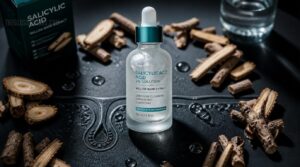
Salicylic acid has a specific job, and it does it well. If your skin handles congestion, oil, or active breakouts, this is the acid built for that work. Here’s where it truly helps.
Acne and Clogged Pores
Salicylic acid earns its reputation as the go-to acid for acne-prone skin because it works at the source. As a comedolytic agent, it penetrates deep into pores, breaking down the oil, dead skin cells, and debris that trigger bacterial imbalance and inflammation.
That’s direct clogged pore prevention — not just surface-level cleanup.
Blackheads and Whiteheads
Blackheads and whiteheads are both open and closed comedones — pores blocked by oil and dead skin. The difference is air exposure: blackheads oxidize and darken, whiteheads stay sealed beneath the surface.
Salicylic acid’s comedolytic action works on both, dissolving the plug from inside the pore before it becomes a bigger problem.
Excess Oil Control
Once the pores are cleared of those plugs, the next battle is the oil itself. Salicylic acid’s lipophilic nature lets it cut through sebum directly, something water-based acids like glycolic acid simply can’t do. It works by dissolving the oily buildup sitting inside follicles, reducing how much surfaces onto your skin.
Here’s what that looks like in practice:
- Pore buildup dissolves — salicylic acid reaches into the follicle lining and loosens oil-debris mixtures before they resurface.
- Surface shine decreases — less congestion in the pore means less oil pooling at your T-zone.
- Sebum regulation improves — consistent use promotes a more balanced oil level across oily skin areas.
- Mattifying routines strengthen — pairing salicylic acid with oil-absorbing ingredients like clay keeps excess sebum in check between applications.
Inflamed Blemish Support
Controlling oil gets you halfway there — but when a blemish turns red and swollen, that’s inflammatory acne, and it needs a different approach.
Salicylic acid’s anti-inflammatory properties reduce redness directly at the site, making it a reliable redness relief strategy for acne-prone skin. Apply it as a spot treatment at night so it works while your skin isn’t fighting other stressors.
Combination Skin Concerns
Combination skin plays both sides — oily through the T-zone, dry along the cheeks — which makes acid selection more strategic than most skin types require. Salicylic acid’s oil-soluble chemistry targets the T-zone without stripping the drier cheek zones, because it follows sebum, not water.
- Clear T-zone congestion without triggering cheek tightness
- Manage pore visibility where oil production runs highest
- Support barrier harmony by avoiding over-exfoliation on drier areas
- Adapt your application during seasonal skin shifts
- Pair with cheek hydration to keep the skin barrier intact
Best Uses for Glycolic Acid
Glycolic acid earns its place in the routine when your concerns are less about oil and more about what’s sitting on the surface — think dullness, discoloration, and the kind of texture that no amount of moisturizer seems to fix.
Because it carries the smallest molecular weight of any AHA, it pushes deeper into the stratum corneum than most surface acids can reach. Here’s where glycolic acid usually does its best work.
Dull Skin Tone
Dull skin is often a dead skin cell problem. When surface buildup thickens, your skin scatters light instead of reflecting it — and that cell renewal boost is exactly what glycolic acid delivers.
Its small molecular size dissolves the protein bonds holding dead cells in place, restoring light reflection and supporting melanin evenness for a visibly brighter complexion.
Uneven Skin Texture
Rough, bumpy skin has more than one cause — and glycolic acid targets several of them. Dead cell accumulation, dehydration, and sun damage all disrupt how evenly your skin surface reflects light. Glycolic acid dissolves the protein bonds holding those cells in place, smoothing texture from the stratum corneum down.
- Softens bumpy rough surface caused by inconsistent cell turnover
- Reduces the look of enlarged pores by clearing surface debris
- Improves texture distorted by sun damage and UV-driven irregularity
- Maintains hydration balance, easing dehydration-related roughness
- Gradually smooths scar texture irregularity through repeated exfoliation cycles
Hyperpigmentation and Dark Spots
Dark spots form when melanin synthesis spikes after acne, sun damage, or hormonal shifts. Glycolic acid targets hyperpigmentation and dark spots by dissolving the bonds between pigmented surface cells, accelerating turnover so discoloration gradually fades. For post-inflammatory care, it clears marks left after breakouts heal. Pair it with barrier protection and daily sun protection — UV exposure actively deepens pigment and stalls results.
| Dark Spot Type | Primary Cause | Glycolic Acid Role |
|---|---|---|
| Post-acne marks | Skin inflammation | Fades pigmented surface cells |
| Melasma | Hormonal shifts | Helps gradual brightening |
| Sunspots | UV exposure | Accelerates cell turnover |
Fine Lines Appearance
Fine lines catch light differently depending on how smooth and hydrated your skin surface is. Glycolic acid stimulates collagen production while accelerating cell turnover, which gradually softens shallow creases and improves how light reflects across your skin.
With consistent use, you’ll notice improved radiance and smoother surface texture — two changes that make fine lines look noticeably less defined.
Sun-damaged Skin Support
Sun damage leaves a record on your skin — hyperpigmentation, uneven tone, and dull texture that no amount of moisturizer fully corrects. Glycolic acid works at the stratum corneum to clear that backlog of damaged cells while driving collagen stimulation deeper. Pair it with daily sunscreen reapplication, antioxidant protection like vitamin C, and consistent barrier repair to get the full benefit.
- Fades UV-related dark spots by accelerating surface cell turnover
- Aids hydration recovery when paired with a ceramide moisturizer
- Works best alongside broad-spectrum UV protection every morning
Skin Type Suitability Guide
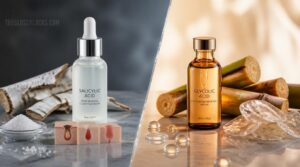
Not every acid works for every skin type, and picking the wrong one can do more harm than good. Your skin’s needs depend on its baseline behavior — whether it’s oily, dry, sensitive, or somewhere in between. Here’s how each acid lines up against the five most common skin types.
Oily Acne-prone Skin
If your skin turns shiny within hours of cleansing, that’s excess sebum at work — and salicylic acid is your most targeted tool.
Its oil-soluble chemistry lets it penetrate pores directly, dissolving sebum, bacteria, and debris where glycolic acid simply can’t reach. For oily acne-prone skin, it’s the clear first choice.
Dry Aging Skin
Dry, aging skin tells a different story than oily skin — and it calls for a different acid entirely.
As skin ages, lipid barrier function weakens, the stratum corneum loses its ability to retain moisture, and natural moisturising factors decline. Glycolic acid’s small molecular size lets it penetrate deeply, stimulating collagen and targeting surface cell turnover where aging skin needs it most.
Key reasons glycolic acid suits dry aging skin:
- Collagen stimulation helps improve elasticity over time
- It dissolves dead cell bonds to smooth rough, dull texture
- Moisture retention improves as cell turnover normalises
- It targets hyperpigmentation and fine lines in sun-damaged skin
Salicylic acid, by contrast, strips natural oils — the last thing dry aging skin needs.
Sensitive Skin Caution
Sensitive skin doesn’t follow the same rules. Both salicylic acid and glycolic acid can cause skin irritation here, even at low concentrations. Your first move should always be a patch test protocol — test inside the wrist or behind the ear before applying anything to your face. If stinging appears, that’s your answer.
Gentle acid frequency matters just as much as which acid you pick. Starting once a week gives your skin time to adapt without triggering a reaction. Pair any acid session with a moisturizer barrier — look for ceramide-based formulas — and keep sun protection daily, since increased sensitivity means UV exposure hits harder.
Compromised Barrier Risks
A compromised skin barrier changes everything. When the outer protective layer is damaged, transepidermal water loss accelerates, leaving skin tight, dull, and reactive. Applying either acid here amplifies irritation risk — redness, stinging, and peeling escalate fast. Prioritize barrier repair strategies first:
- Switch to ceramide-rich moisturizers nightly
- Pause all exfoliation until flaking resolves
- Reintroduce acids only after two weeks of stable, calm skin
Combination Skin Approach
Combination skin doesn’t fit neatly into one camp — your T-zone runs oily while your cheeks stay drier. That’s why targeted zone care matters here.
Use salicylic acid on breakout-prone areas for oil control, and apply glycolic acid only where texture or dullness is the real concern. A nightly rotation strategy keeps both acids productive without overwhelming drier patches.
Side Effects and Safety Tips
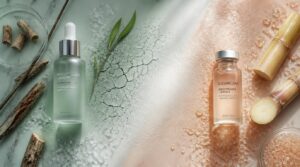
Both acids work hard for your skin, but they do come with trade-offs worth knowing before you commit. Reactions like dryness, peeling, or sensitivity aren’t uncommon, especially when you’re just starting out. Here’s what to watch for and how to use these ingredients without running into trouble.
Dryness and Peeling
Both glycolic acid and salicylic acid can cause dryness and peeling, especially when you push past your skin’s tolerance. Glycolic acid’s deep surface exfoliation disrupts the barrier faster, while salicylic acid strips natural oils from dry skin.
Support recovery with a barrier repair moisturizer after every use, and treat gentle exfoliation as a rule, not a suggestion.
Stinging or Irritation
Stinging is your skin’s early warning system. Both acids activate TRPV1 pain receptors, triggering that sharp, prickling sensation on contact, especially if your barrier is already compromised.
Glycolic acid often stings more intensely due to deeper penetration, while salicylic acid usually causes milder responses. Redness and inflammation signal you’re pushing too far — dial back frequency immediately.
Patch Testing First
Before you apply any acid to your face, patch test first — no exceptions. This applies whether you’re introducing salicylic acid to sensitive skin or testing how your barrier reacts to glycolic acid.
Here’s a simple patch testing protocol:
- Select a test site — the inner arm or behind the ear works well
- Apply a small amount and leave it for 48 to 72 hours
- Read the reaction — redness, swelling, or blistering may signal allergy
- Distinguish allergy vs irritant response — true allergic reactions worsen over time; irritation usually fades
- Use an untreated patch nearby as a negative control to rule out background redness
If anything feels off, stop immediately.
Moisturizer Support
After using salicylic acid or glycolic acid, your skin’s barrier is temporarily more vulnerable — moisturizer support isn’t optional; it’s part of the protocol.
A well-formulated moisturizer works on three levels: humectant water retention pulls moisture into the stratum corneum, occlusive film protection seals it in, and emollient skin comfort smooths the surface between exfoliation steps.
Look for noncomedogenic formulas to avoid clogging freshly cleared pores.
Daily SPF Protection
Both acids—especially glycolic acid—increase your skin’s UV sensitivity, making daily broad-spectrum SPF non-negotiable. Glycolic acid weakens the stratum corneum’s natural photoprotection, so unprotected exposure accelerates the very damage you’re trying to reverse.
Apply SPF 30 or higher about 20–30 minutes before going outside, using roughly half a teaspoon for full facial coverage. Reapply every two hours outdoors.
Using Both Acids Together
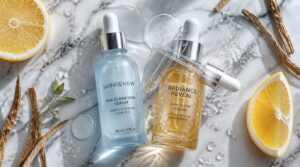
Yes, you can use both acids in your routine — but the way you combine them matters more than you’d think. Layering them carelessly is where most people run into irritation, barrier damage, and setbacks that take weeks to undo. Here’s how to do it right.
Avoid Daily Layering
Layering both salicylic acid and glycolic acid daily is one of the fastest ways to break down your skin barrier. Daily chemical exfoliant use compounds irritation risk even when each product is low-strength. Watch for these accumulation signals:
- Persistent dryness that doesn’t resolve with moisturizer
- Redness lasting beyond the day of application
- Increased sensitivity to everyday products
- Recurring flaking after each application
- Unexpected breakouts from barrier damage
Simplify to one exfoliant step per routine.
Alternate Application Nights
Once you’ve stopped daily layering, the natural next step is building a night rotation schedule — salicylic acid one night, glycolic acid the next.
This keeps both chemical exfoliants active in your routine without stacking their effects. Each acid gets separate skin contact time, which is exactly how you reduce cumulative irritation while still exfoliating consistently.
Start Slowly First
Even a perfectly timed rotation can backfire if you jump in at full intensity.
Start with once or twice a week — one acid only, low concentration. Do a patch test on a small area first. If your skin tolerates that well, increase gradually.
Salicylic acid and glycolic acid both reward patience over speed.
Watch Barrier Health
Your skin’s barrier is the real signal to watch. Persistent redness, tightness, or flaking after using salicylic acid or glycolic acid means the barrier is under stress — not adapting.
Ceramide-based moisturizers help reinforce lipid layer recovery, while humectants like glycerin counter dehydration. If stinging worsens with each use, that’s your skin telling you to back off.
Avoid Over-exfoliation
Over-exfoliation doesn’t announce itself loudly — it creeps in as persistent redness, tightness, and breakouts that won’t quit. Watch for these warning signs:
- Increased skin sensitivity after each application
- Tight, flaky texture that moisturizer can’t fix
- Stinging from products you previously tolerated
Limit exfoliation frequency, alternate salicylic acid and glycolic acid on separate nights, and always moisturize after exfoliation to support skin barrier repair.
Top 5 Acid Skincare Products
Knowing which acid suits your skin is only half the battle — the other half is finding a product that actually delivers. The market is packed with options, but a few stand out for their reliable formulations and real results. Here are five worth keeping on your radar.
1. Salicylic Acid Charcoal and Clay Mask
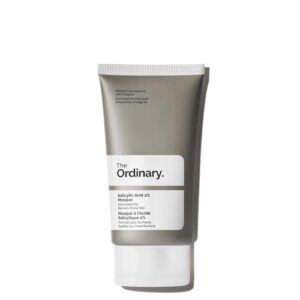
If you have oily, breakout-prone skin, this mask is worth a close look. The 2% salicylic acid formula works at the pore level, dissolving oil and dead cell buildup before it turns into congestion. Charcoal and kaolin clay pull double duty — adsorbing surface impurities while absorbing excess sebum.
It’s alcohol-, oil-, and silicone-free, so you’re not adding irritants back in. At $13.80 for 1.7 fl oz, it’s an accessible weekly treatment for clearer, smoother skin.
| Best For | Anyone with oily or breakout-prone skin who wants a no-fuss weekly treatment to keep pores clear and skin looking fresh. |
|---|---|
| Acid Type | Salicylic Acid |
| Product Form | Mask Cleanser |
| Volume / Count | 1.7 fl oz |
| Application Area | Face |
| Primary Concern | Blackheads & Pores |
| Exfoliation Type | Chemical |
| Additional Features |
|
- 2% salicylic acid goes deep to break up blackheads and pore congestion before they get worse
- Charcoal and kaolin clay soak up excess oil and surface gunk without harsh additives
- Clean formula — no alcohol, oil, or silicones — so it’s tough on pores but easy on skin
- Small 1.7 fl oz bottle means you’ll be restocking more often than you’d like
- Sensitive skin types need to watch the clock — leaving it on too long can cause irritation
- You’ll want a moisturizer on hand after, since it can leave skin feeling a bit dry
2. Neutrogena Salicylic Acid Acne Treatment Pads
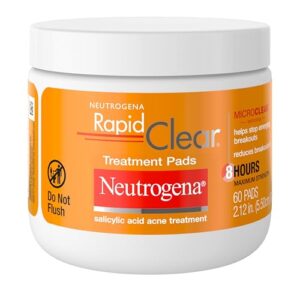
Neutrogena’s Rapid Clear Treatment Pads pack 2% salicylic acid into a pre-soaked, single-use format that treats and cleanses in one step. MicroClear technology drives the active ingredient deeper into pores, which is where acne actually starts. The formula is oil-free and non-comedogenic, so it won’t backfill the pores it’s working to clear.
One real limitation: the formula contains alcohol, which can sting on reactive skin. At 60 pads per container, it’s a practical daily option for acne-prone faces and bodies.
| Best For | Anyone dealing with acne-prone skin who wants a quick, no-rinse treatment they can use on their face or body — especially after a workout or on the go. |
|---|---|
| Acid Type | Salicylic Acid |
| Product Form | Exfoliating Pads |
| Volume / Count | 60 pads |
| Application Area | Face & Body |
| Primary Concern | Acne & Breakouts |
| Exfoliation Type | Chemical & Physical |
| Additional Features |
|
- Maximum-strength 2% salicylic acid tackles breakouts at the source
- MicroClear technology pushes the active ingredient deeper into pores for better results
- 60 pads per container makes it an easy, consistent part of your daily routine
- Contains alcohol, which can sting or dry out sensitive skin
- May leave a slightly sticky feeling after use
- The abrasive texture might be too rough for anyone with reactive or irritated skin
3. Derma E Essentials Overnight AHA Peel
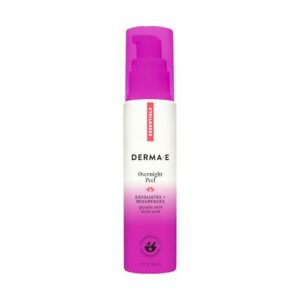
Derma E’s Overnight AHA Peel takes a gentler approach than most acid treatments. Its 5% AHA blend — built around glycolic and lactic acid — works while you sleep, dissolving the protein bonds holding dead cells in place without aggressive abrasion. Green Tea and Vitamin C add antioxidant support, while Jojoba oil offsets the dryness AHAs can trigger.
At $18.30 for 2 fl oz, it’s a smart pick for normal-to-combination skin that needs texture and radiance work without harsh downtime.
| Best For | Anyone with normal-to-combination skin looking to smooth texture, fade dark spots, and boost radiance without the harshness of stronger acid treatments. |
|---|---|
| Acid Type | Alpha Hydroxy Acids |
| Product Form | Gel Exfoliant |
| Volume / Count | 2 fl oz |
| Application Area | Face & Décolletage |
| Primary Concern | Texture & Radiance |
| Exfoliation Type | Chemical |
| Additional Features |
|
- Gentle 5% AHA blend works overnight, so you wake up to softer, brighter skin without any real downtime
- Green Tea, Vitamin C, and Jojoba oil mean you’re exfoliating and nourishing at the same time
- Clean formula — vegan, cruelty-free, no parabens, sulfates, or GMOs — at a pretty reasonable $18.30
- Some tingling or stinging when you first apply it, which can be off-putting if you have sensitive skin
- Only meant to be used once or twice a week, so results come gradually rather than quickly
- You do need to rinse it off in the morning, which adds a step to your routine
4. Pixi Glow Tonic Exfoliating Face Toner
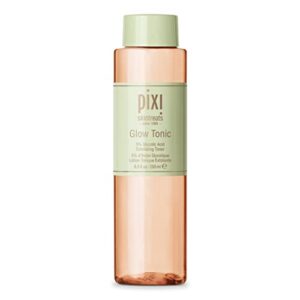
Pixi Glow Tonic keeps things refreshingly straightforward. Its 5% glycolic acid concentration sits right at the entry-level sweet spot — enough to accelerate cell turnover and dissolve surface buildup, without overwhelming a first-time acid user. The alcohol-free, vegan formula pairs that exfoliation with aloe vera and ginseng, which calm potential irritation while supporting circulation.
At 250 ml, its practical value for daily use on your face, neck, and décolletage — just don’t skip broad-spectrum SPF afterward.
| Best For | Anyone just getting into acids who wants a gentle, no-fuss daily toner that brightens skin without the drama. |
|---|---|
| Acid Type | Glycolic Acid |
| Product Form | Liquid Toner |
| Volume / Count | 8.5 fl oz |
| Application Area | Face, Neck & Décolletage |
| Primary Concern | Dullness & Uneven Tone |
| Exfoliation Type | Chemical |
| Additional Features |
|
- 5% glycolic acid is strong enough to actually work but gentle enough for beginners
- Alcohol-free and vegan formula means less irritation and no harsh drying effects
- Aloe vera and ginseng help calm skin while the acid does its job
- Results can plateau over time, so long-term users may eventually need something stronger
- Very dry skin types will likely need a heavier moisturizer to compensate
- You have to stay on top of SPF — daily acid use makes sun protection non-negotiable
5. First Aid Beauty Facial Radiance Pads
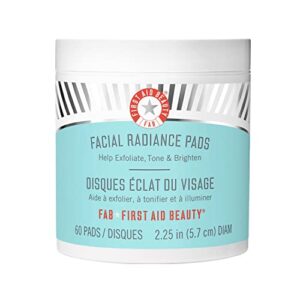
First Aid Beauty Facial Radiance Pads take a gentler approach than standalone glycolic formulas. Rather than relying on a single acid, they combine glycolic and lactic acids — lactic being milder with humectant-like properties — alongside cucumber, Indian gooseberry, and licorice root for calming and brightening support.
Pre-soaked and ready to swipe, they work daily on your face, neck, and chest. Sensitive skin types tend to tolerate this layered formulation well. Follow with moisturizer and SPF.
| Best For | Anyone with sensitive or dull skin who wants a gentle, daily exfoliant that brightens and smooths without the harshness of a single-acid formula. |
|---|---|
| Acid Type | Glycolic & Lactic Acid |
| Product Form | Exfoliating Pads |
| Volume / Count | 60 pads |
| Application Area | Face, Neck & Chest |
| Primary Concern | Texture & Dullness |
| Exfoliation Type | Chemical |
| Additional Features |
|
- Combines glycolic and lactic acids for effective but gentle exfoliation that most skin types can handle daily
- Brightening ingredients like licorice root and lemon peel help even out skin tone over time
- Pre-soaked pads make the routine quick and easy — no measuring or mixing required
- The scent can be a bit much for people sensitive to fragrance
- Won’t cut through heavy makeup or serious buildup, so you’ll still need a proper cleanser
- Some users, especially those with reactive skin, may experience irritation or breakouts at first
Frequently Asked Questions (FAQs)
Which penetrates deeper, glycolic acid or salicylic acid?
Salicylic acid penetrates deeper into pores because it’s oil-soluble, traveling through sebum to clear congestion. Glycolic acid, being water-soluble, works more effectively across the skin’s surface layers.
Does glycolic acid pull out blackheads?
Glycolic acid doesn’t directly pull out blackheads. It exfoliates the skin’s surface, loosening dead cell buildup around pores gradually — but it can’t dissolve the sebum plug inside a follicle the way an oil-soluble acid can.
Is salicylic acid better than glycolic acid?
Neither is universally better — it depends on your skin’s needs. Oily, acne-prone skin benefits more from salicylic acid, while dry or dull skin responds better to glycolic acid.
Can I use salicylic acid and glycolic acid together?
Yes, you can — but not in the same step. Layering both acids at once raises irritation risk. Alternate them by night or routine step to get the benefits without overwhelming your skin barrier.
Is glycolic acid or salicylic acid better for feet?
For feet, salicylic acid wins. It’s oil-soluble, so it cuts through thick calluses and hardened skin more effectively than glycolic acid, which only smooths the surface layer.
Is glycolic acid or salicylic acid better for scalp?
Salicylic acid wins for the scalp. Its oil-soluble nature lets it cut through sebum buildup inside follicles, reducing greasiness and flaking where it starts.
Which is better, glycolic or salicylic acid?
Neither acid is universally better — it depends on your skin concern. Oily, acne-prone skin benefits more from salicylic acid, while dull or aging skin responds better to glycolic acid.
Can I use glycolic acid and salicylic acid together?
You can, but tread carefully. Using both acids together raises your irritation risk. Most dermatologists recommend alternating — one acid per night — so your skin barrier gets the recovery time it needs.
Should I use glycolic or salicylic acid at night?
Both acids work well at night. Choose salicylic for oily, acne-prone skin — it clears pores while you sleep. Choose glycolic for dullness and texture — it resurfaces the skin’s surface layer overnight.
How do glycolic and salicylic acids affect skin pH?
Both acids lower your skin’s surface pH, but through different routes. Glycolic acid’s free-acid fraction drives the most acidification — and that fraction drops sharply as formulation pH rises.
Conclusion
Picture your skin as two distinct terrains: a congested, oil-slicked pore and a dull, thickened surface crying out for renewal. The salicylic acid vs glycolic acid decision maps directly to whichever terrain needs clearing first. Salicylic cuts through oil and reaches the pore lining; glycolic lifts dead cells from the surface.
Choose based on your skin’s actual problem, not the packaging. Precision—not guesswork—separates a routine that works from one that only sounds convincing.