This site is supported by our readers. We may earn a commission, at no cost to you, if you purchase through links. This content is for general informational and educational purposes only and is not a substitute for professional medical, dermatological, or nutritional advice.
Most guys grab a squeegee-full of foam, swipe it across their chest, and start shaving. Then they wonder why they’re covered in razor bumps by Friday. Your chest hair grows in a dozen directions at once, and a rushed lather won’t touch half of it.
Here’s the fix: treat your chest like its own project, not an afterthought to your face. Shaving cream application techniques for chest grooming demand more patience — thicker cushion, longer sit time, careful work around the nipples.
Get the prep and the pass right, and you’ll trade nicks and irritation for smooth, confident skin.
Table Of Contents
- Key Takeaways
- Prepping Your Chest for Shaving
- How to Apply Shaving Cream Correctly
- Best Razor Techniques for The Chest
- Top Products for Chest Shaving
- Post-Shave Chest Care Tips
- Frequently Asked Questions (FAQs)
- Can you put shaving cream on your chest?
- How to shave chest correctly?
- How do femboys stay hairless?
- Should you use shaving cream to shave your chest?
- How to use shaving cream on chest?
- Should you put shaving cream on your chest?
- Is it better to shave chest hair wet or dry?
- Can you use shaving cream on your chest?
- What’s the best way to shave your chest?
- How do I shave my chest without leaving red bumps?
- Conclusion
Key Takeaways
- Trim chest hair dry first, then soften it with 2-3 minutes of warm water to cut resistance by roughly 65% before shaving.
- Apply a thick, opaque layer of fragrance-free shaving cream and let it sit 30-60 seconds so it fully softens hair before your first stroke.
- Shave with the grain using light pressure, stretch skin taut, and rinse the razor after every stroke to prevent drag and irritation.
- Finish with a cool water rinse, gentle pat-dry, and fragrance-free moisturizer applied within 1-2 minutes to lock in hydration and calm redness.
Prepping Your Chest for Shaving

Great chest shaving starts before the razor ever touches your skin. Prep work makes the difference between a smooth, comfortable shave and a red, bumpy mess. Here’s exactly what you need to do first.
Warm water, gentle exfoliation, and the right pre-shave routine set the stage, and this guide on how to achieve a close shave without redness breaks down each step in detail.
Trimming Chest Hair First
Grab your clippers before you even think about shaving cream. Dry trimming first gives you a clear view of hair density and length.
Start with a longer guard setting, then work down gradually. Switch to scissors near the nipples for control. Keep blades sharp and move with the grain—short, even strokes prevent tugging and uneven patches later. Using essential grooming tools ensures a much smoother and more controlled process.
Softening Hair With Warm Water
Once trimmed, hop in a hot shower for 2-3 minutes before touching a razor. Warm water hydrates hair fast, cutting resistance by roughly 65% compared to dry strands.
A hot shower before shaving hydrates hair fast, cutting resistance by roughly 65 percent
Here’s why it matters:
- Loosens the cuticle for easier cutting
- Softens hair so it lies flatter
- Reduces that "sandpaper" scratch feeling
- Preps skin for shaving cream to grip
Skip scalding water—it dries skin unnecessarily.
Exfoliating Before You Shave
Exfoliate before that razor ever touches skin. Grab a washcloth or gentle scrub—physical or a mild exfoliating cleanser works. This clears dead skin cells, lifts flat-lying hairs for a closer cut, and prevents clogging. Use light pressure only; scrubbing too hard irritates sensitive skin.
Proper skin preparation here means smoother glides and fewer nicks once you start shaving.
Preventing Future Ingrown Hairs
Once skin’s smooth, wipe it down with a salicylic acid pad. It clears pore buildup that traps hairs before they surface.
Three habits keep bumps away long-term:
- Exfoliate 2-3 times weekly—no more, or you’ll strip your skin barrier.
- Shave with the grain, following natural hair growth direction.
- Rinse blades often to cut friction and prevent folliculitis.
How to Apply Shaving Cream Correctly
Your chest is prepped and ready, so now it’s time to get the cream right. This step matters more than most guys realize, since a sloppy application leads to razor burn and missed patches. Here’s exactly how to do it right, from picking the product to protecting your most sensitive spots.
Choosing an Unscented Shaving Cream

Your chest skin isn’t as tough as your face, so pick wisely. Go fragrance-free with soothing ingredients like aloe or glycerin.
| Look For | Why It Matters |
|---|---|
| Fragrance-free | Reduces irritation risk |
| Glycerin | Hydrates skin |
| Paraben-free | Gentler formula |
| Thick lather | Better glide |
| Sulfate-free | Less harsh on skin |
Applying a Thick, Even Layer

Squeeze a generous amount into your palm and spread it with your fingertips, not a squeegee motion. You want an opaque coverage, not a see-through film — patchy spots mean the razor catches skin instead of gliding.
Once you’ve got even coverage, hold your skin taut and follow these electric shaving tips and tricks for a closer glide around tougher spots like the jawline.
- Work in overlapping strokes
- Check for a uniform film
- Watch for watery streaks
- Rebuild thin patches, don’t restart
Consistent thickness keeps your shaving lubrication working through every pass.
Letting Cream Soften Hair First

Patience pays off here. Give that lather 30 seconds to a minute before your first stroke — rushing it means dragging a blade over hair that’s only half-softened.
| Wait Time | What’s Happening | Result |
|---|---|---|
| 0-15 sec | Cream settles | Minimal softening |
| 30-60 sec | Hair shaft hydrates | Perfect glide |
| 90+ sec | Lather dries | Increased drag |
Keep it moist, and skip drying it out.
Protecting Sensitive Areas Like Nipples
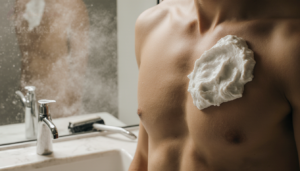
Nipples take the brunt of chest shaving because that skin is thinner and way more reactive than the rest of your chest.
Build a thick cushion of cream right over them before your blade gets close. Go light on pressure, use short strokes, and rinse often. Afterward, skip harsh soaps — a fragrance-free rinse and gentle pat-dry protects that sensitive skin barrier from unnecessary irritation.
Best Razor Techniques for The Chest

Cream is on, so now technique takes over. The right razor moves make the difference between smooth skin and razor burn. Here’s exactly how to handle the blade for a clean, comfortable shave.
Shaving With The Grain
Your chest hair doesn’t grow one way—it swirls in different directions across your pecs, stomach, and sides.
Before you shave, run clean fingers over damp skin to feel each section’s grain. Shave with the grain using short, consistent strokes and light pressure. This cuts razor drag and irritation. When curvature shifts direction, adjust your stroke to match, don’t force it straight.
Proper grain-following technique also pays off beyond the face — shaving underarm hair reduces body odor significantly by removing the surface where bacteria convert sweat into smell.
Stretching Skin Taut While Shaving
Loose skin folds are a razor’s worst enemy—they cause snagging and uneven passes.
Pull skin taut with your free hand, stretching opposite the direction you’re shaving. This flattens your chest for better blade glide.
Three tension spots matter most:
- Above the nipple
- Along rib curves
- Near the collarbone
Consistent tension means fewer nicks, less tugging, and a genuinely smooth shave.
Rinsing Your Razor Often
Good tension holds skin steady, but a clogged blade undoes all that work fast.
Rinse your razor after every stroke under warm running water, front to back. Trapped hair and cream buildup cause dragging, not cutting.
| Clogged Blade | Clean Blade |
|---|---|
| Drags, tugs skin | Glides smoothly |
| Causes razor burn | Reduces friction |
| Dulls faster | Stays sharp longer |
Rinsing often keeps your shave smooth from first stroke to last.
Reapplying Cream Between Passes
A rinsed razor still needs fresh cream to glide right. That first pass eats up lubrication fast, so reapplying restores slip and cuts friction-driven irritation.
Re-lather in a thin, even coat—don’t pile it on. Use short, gentle strokes for touch-ups rather than repeating long passes over already-worked skin, keeping your shave smooth and irritation-free.
Using Multi-Blade or Electric Razors
Not every guy wants a manual razor, and that’s fine. Multi-blade cartridges cut hair up to five times per pass, with a lubricating strip easing glide over your chest.
Prefer electric? Choose rotary vs foil based on comfort. Foils suit sensitive skin; rotaries handle patchy growth well. Keep battery life in mind, and use a cleaning station to prevent buildup and maintain a smooth shave.
Top Products for Chest Shaving
Good technique only gets you so far without the right gear backing it up. The products you choose can mean the difference between smooth skin and an angry rash. Here are five that actually earn a spot in your grooming kit.
1. Cremo Sensitive Shave Cream
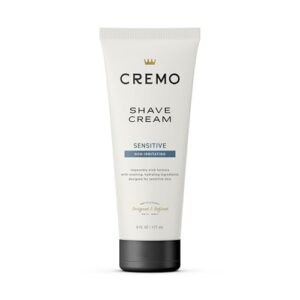
Cremo Sensitive Shave Cream earns its spot on any chest-shaving kit for one reason: it’s built for skin that fights back against irritation.
No synthetic fragrance means fewer triggers. Macadamia seed oil and aloe cushion the blade while allantoin calms redness as you go.
Use a dime-sized amount, since the formula is concentrated. A little glides a long way, cutting drag and helping you avoid nicks on tricky contours like your sternum.
| Best For | Anyone with sensitive skin who wants a barber-grade, low-irritation shave for daily grooming. |
|---|---|
| Skin Type | Normal/Dry/Sensitive |
| Volume/Weight | 15.4 oz |
| Dermatologist Tested | Yes |
| Fragrance | Fragrance-Free |
| Price | $19.99 |
| Primary Use | Facial Cleansing |
| Additional Features |
|
- Free of synthetic fragrances, making it gentler on reactive or easily irritated skin
- Essential oil blend soothes skin and helps reduce nicks, cuts, and razor burn
- Concentrated formula means a little goes a long way, lasting around 90 days
- Cream/liquid consistency may feel different from traditional shave gels, requiring an adjustment period
- Formulated specifically for sensitive skin, so it may be more than necessary for those without skin concerns
- Smaller net weight (6 fl oz) compared to some bulkier shaving cream options
2. Sandalwood Pre Shave Beard Oil
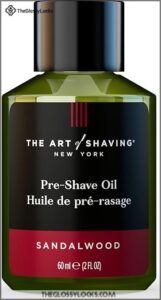
Two minutes before your razor touches skin, this is where sandalwood earns its keep. Massage a few drops into dry chest hair, working against the grain to lift each strand off the skin.
The mix of jojoba, castor, and sweet almond oils softens tough hair while creating slick glide for the blade. Meadowfoam seed oil keeps that layer stable so it doesn’t break down mid-shave.
You’ll notice less tugging on tricky spots. Vitamin E and panthenol add a conditioning finish before cream even goes on.
| Best For | Men with normal to dry skin who deal with tough, coarse beard hair and want a smoother, more comfortable shave with less irritation. |
|---|---|
| Skin Type | All Types |
| Volume/Weight | 5.1 fl oz x3 |
| Dermatologist Tested | Yes |
| Fragrance | Eucalyptus Scent |
| Price | Not Listed |
| Primary Use | Cleansing/Pre-Shave |
| Additional Features |
|
- Softens even stubborn beard hair, making it easier for the razor to glide through
- Helps guard against razor burn and irritation, especially useful for ingrown-prone skin
- Formulated with pure sandalwood oil and clinically tested for sensitive skin types
- Geared specifically toward men, so it may not appeal to a broader audience
- Designed for casual, everyday use rather than heavy-duty or professional grooming needs
- Small 2 fl oz size means it may need frequent repurchasing for daily use
3. The Shop Men’s Aftershave Toner
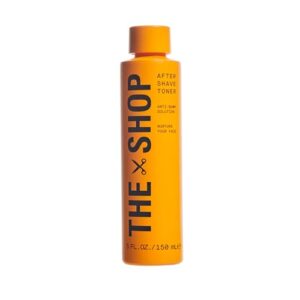
Your razor just did its job, and now it’s time to calm things down. The Shop Men’s Aftershave Toner leans on witch hazel to tighten pores and cut redness fast.
Gentle acids sweep away dead skin so follicles stay clear and bumps stay away. Swipe a thin layer across your chest right after rinsing, letting it soak in before you dress.
The cooling hit feels great on warm skin, and the barbershop scent fades quick—no overpowering cologne moment here.
| Best For | Guys who want an easy daily step to fight razor bumps, ingrown hairs, and clogged pores while keeping their skin fresh between shaves. |
|---|---|
| Skin Type | All Types |
| Volume/Weight | 4 fl oz |
| Dermatologist Tested | No |
| Fragrance | Unscented |
| Price | Not Listed |
| Primary Use | Exfoliation |
| Additional Features |
|
- Witch hazel and gentle acids team up to calm redness and keep pores clear
- Refreshing eucalyptus scent cools the skin without lingering like heavy cologne
- Vegan, cruelty-free formula that’s gentle enough for everyday use
- Formulated specifically for facial skin, so it’s not meant for broader body application
- Works best when paired with the brand’s matching face wash and lotion, which means extra purchases
- Multi-tasking formula may not deliver as strong a targeted fix as separate specialized products
4. Bevel Aftershave Balm for Men
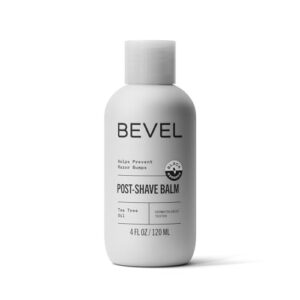
Skip the toner if your skin wants deeper repair—Bevel’s balm brings shea butter and jojoba oil into the mix. Tea tree oil adds a light antiseptic bite, while witch hazel keeps redness in check.
It’s alcohol-free, so no sting, no dryness. Massage a dime-sized amount into damp skin right after your rinse.
Built as the final step in the Bevel system, it leaves chest skin soft, calm, and bump-free—no greasy residue hiding under your shirt.
| Best For | Men prone to razor bumps and ingrown hairs who want a soothing, non-drying finish to their shaving routine. |
|---|---|
| Skin Type | All Types |
| Volume/Weight | 6 fl oz |
| Dermatologist Tested | Yes |
| Fragrance | Unscented |
| Price | Not Listed |
| Primary Use | Pre-Shave Prep |
| Additional Features |
|
- Shea butter and jojoba oil deliver long-lasting hydration without feeling greasy
- Tea tree oil and witch hazel calm redness and irritation right after shaving
- Alcohol-free formula avoids the sting and dryness of traditional aftershaves
- Works best as part of the full multi-step Bevel Shave System, not as a standalone product
- Not specifically formulated or labeled for sensitive skin, so patch testing is wise
- Higher price point than many drugstore aftershave options
5. Philips Norelco OneBlade 360 Hybrid Trimmer
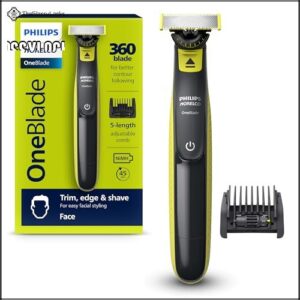
Not everyone wants blade and lather at all—that’s where the OneBlade 360 earns its spot. Its cutter runs at 12,000 strokes per minute, flexing across contours without dragging skin.
The dual-sided edge takes care of edging and bidirectional shaving in one pass. A 5-in-1 comb dials in stubble length, and it works wet or dry, foam or no foam.
Blades last roughly four months. It’s the low-maintenance option for guys who’d rather trim than lather up daily.
| Best For | guys who want a fast, low-fuss way to trim, edge, and shave without needing foam, gel, or a full wet-shave routine every day. |
|---|---|
| Skin Type | Sensitive |
| Volume/Weight | 6 fl oz |
| Dermatologist Tested | No |
| Fragrance | Essential Oil Blend |
| Price | Not Listed |
| Primary Use | Shaving |
| Additional Features |
|
- Flexible 360 blade design contours to your face for a smoother, skin-safe shave
- Versatile enough for wet or dry use, with a 5-in-1 comb for dialing in stubble length
- Blades last around 4 months, keeping maintenance low
- Doesn’t get quite as close a shave as a traditional manual blade
- Battery only lasts 45 minutes and takes 8 hours to fully recharge
- USB-A charging cable is included, but the wall adapter is sold separately
Post-Shave Chest Care Tips

Shaving is only half the job. What you do next decides whether your chest feels smooth or ends up red and irritated. Here’s how to finish the process right.
Rinsing With Cool Water
Once you’ve made your final pass, rinse your chest with cool water, not hot. Cold water constricts pores and calms redness fast, while clearing away leftover shaving cream and stubble.
Skip the ice bath, though. Aim for cool but comfortable, around 65-70°F. This cuts heat irritation, prevents temperature shock, and leaves your skin ready for a smooth shave finish.
Patting Skin Dry Gently
Grab a soft towel and pat, don’t rub. Rubbing creates friction against freshly shaved skin, sparking irritation and chafing right when your skin’s most sensitive.
Press and lift in short passes, especially in chest folds where moisture lingers. A clean, fragrance-free towel matters here—rough terry cloth or residue from strong detergent can undo all your careful shaving technique.
Moisturizing While Skin is Damp
Once you’ve patted dry, don’t wait. Apply moisturizer while skin’s still damp—that’s when humectants like glycerin grab surface water best. Emollients smooth rough patches; occlusives like petrolatum seal it all in.
- Apply within 1-2 minutes of patting dry
- Use fragrance-free formulas only
- Layer thin, even coats
- Focus on dry-prone areas first
Soothing Redness and Irritation
Some redness after shaving is normal, but don’t just wait it out. Press a cool compress against warm, inflamed skin first—this calms the flush fast.
Follow with barrier repair ingredients like ceramides or niacinamide, plus centella asiatica for extra calm. Skip anything with alcohol or fragrance; those trigger more irritation. A thin layer of aloe or hydrocortisone finishes the job, easing redness without clogging pores.
Frequently Asked Questions (FAQs)
Can you put shaving cream on your chest?
Yes—your chest deserves the same care as your face. Shaving cream creates lubrication that softens body hair, reduces skin irritation, and protects against razor burn. Just patch-test first for allergies, and use a thick, cushioning layer for safety.
How to shave chest correctly?
Trim first, soften with warm water, then shave with the grain using light pressure. Stretch skin taut, rinse the blade often, and reapply cream between passes—sharp blades and steady technique prevent razor burn across your chest’s contours.
For extra protection against stubborn bumps, reach for a shaving cream for ingrown hairs that keeps sensitive skin smooth.
For coarser or curlier hair prone to ingrowns, a purpose-built razor like those in the best razor for black men guide can make chest shaving far smoother.
How do femboys stay hairless?
Smooth skin sustains itself through smart, consistent hair removal methods, not one-time shaving. Many combine laser hair reduction for long-term results with waxing or depilatory cream for touch-ups, plus daily moisturizing to keep skin smooth between sessions.
Should you use shaving cream to shave your chest?
Absolutely—dry blades dragging across bare skin invite nicks and razor burn. Shaving cream builds lubrication over friction, softening hair while forming a cushion that protects your skin barrier. Skip it, and you’re risking irritation your chest doesn’t need during any grooming routine.
How to use shaving cream on chest?
Think of it like painting a wall: even coats matter more than speed.
Apply a thick, even layer, let it sit 2-3 minutes to soften hair, then shave with light strokes, rinsing your blade often to prevent razor skipping.
Should you put shaving cream on your chest?
Yes, always. Shaving cream gives you essential lubrication and friction reduction, softening hair while protecting your skin. Skipping it means more tugging, redness, and irritation—exactly what you don’t want during your chest shaving routine.
Pair your shaving cream with a clean blade, since simple razor blade maintenance habits keep each pass smooth and your skin calm.
Is it better to shave chest hair wet or dry?
Wet shaving is like adding oil to a rusty hinge—it just moves smoother. Water and lather cut friction and lower irritation risk, while dry shaving stays shallower, easing ingrown hair chances but leaving stubble behind.
Can you use shaving cream on your chest?
Your chest reacts to razors differently than your face, so grab a body-specific formula labeled for shaving body hair. It cuts friction, guards against irritation, and keeps skin calm—just check the safety label before your next skin care routine.
What’s the best way to shave your chest?
Trim first, then use a clean multi-blade or electric razor with the grain. Rinse often to avoid tugging, replace blades every five to seven shaves, and treat nicks with gentle, fragrance-free care afterward.
How do I shave my chest without leaving red bumps?
Grain matters, pressure matters, patience matters — get those right and bumps stay away. Shave with the grain, keep strokes light, and rinse often to prevent razor tugging, reducing friction and micro-tears that trigger inflammation and stubborn ingrown hairs.
Conclusion
Smooth skin doesn’t happen by accident — like a fresh haircut, it’s built one careful pass at a time.
Master real shaving cream application techniques for chest grooming, and razor bumps become a thing of the past.
Trim first. Lather thick. Shave with the grain, rinse cool, moisturize while damp. That’s the whole game.
Stick with this routine, and your chest will thank you every single time you reach for the razor.