This site is supported by our readers. We may earn a commission, at no cost to you, if you purchase through links.
Your colorist’s answer to whether you should condition before coloring might surprise you—it’s not a simple yes or no. The truth is, conditioning at the wrong time can create a barrier that blocks dye molecules from penetrating your hair shaft, leaving you with patchy, disappointing results.
But skipping moisture altogether? That’s how you end up with brittle, damaged strands that snap during processing. The real question isn’t whether to condition, but when and how to do it strategically.
Your hair’s porosity, the products you’re using, and your timing all shift the equation dramatically. Getting this balance right means the difference between color that fades in two weeks and vibrant results that last.
Table Of Contents
- Key Takeaways
- Should I Condition My Hair Before Coloring?
- How Conditioning Affects Hair Dye Results
- Best Practices for Pre-Color Hair Preparation
- Common Mistakes to Avoid Before Coloring
- Pre-Color Conditioning for Different Hair Types
- Frequently Asked Questions (FAQs)
- What is the recommended time to wash and condition hair before coloring?
- How long should I wait after coloring before washing my hair again?
- What should I do if my hair becomes too dry after coloring?
- How can I prevent my hair from becoming damaged after coloring?
- Can I use deep conditioning masks before coloring?
- How does hard water affect hair color results?
- Should I trim my hair before coloring appointments?
- What foods or supplements improve hair color outcome?
- Conclusion
Key Takeaways
- Don’t condition your hair 24-48 hours before coloring—heavy products create a barrier that blocks dye penetration and causes patchy, uneven results.
- Your hair’s natural oils actually protect your scalp during chemical processing, so wash 1-2 days before your appointment instead of right before.
- High-porosity or damaged hair benefits from lightweight, silicone-free conditioning 1-2 weeks prior, but skip deep treatments in the final 48 hours.
- Product buildup from silicones, styling products, or over-conditioning sabotages color absorption more than most people realize—use a clarifying shampoo three days before dyeing.
Should I Condition My Hair Before Coloring?
You’ve probably heard mixed advice about conditioning before you color—some say it’s a must, others warn against it. The truth is, it depends on your hair’s condition and the type of color you’re using.
If you’re still unsure which shade complements your unique features, choosing the right hair color based on your undertones and lifestyle can save you from costly color corrections down the road.
Here’s what you need to know about the benefits, risks, and what professionals actually recommend.
For instance, ginger’s role in hair regrowth has gained attention due to its anti-inflammatory properties and ability to improve scalp circulation.
Pros and Cons of Pre-Color Conditioning
Pre-color conditioning walks a tightrope. On one hand, it shields your cuticle from chemical reactions and improves dye adhesion on porous strands—essential for minimizing color damage during the hair coloring process. On the other, heavy conditioning methods create a barrier that blocks penetration, diluting vibrancy and throwing off your color treatment.
Timing matters—applying conditioner two days before dyeing gives your hair enough time to absorb moisture without leaving residue that interferes with color absorption.
Hair preparation means finding balance, not blanket rules.
For example, choosing the best shampoo for a bald head means prioritizing gentle formulas that respect your scalp’s natural oils without stripping them away.
Impact on Color Absorption
Conditioning changes how pigment molecules grab onto your hair cortex. When silicones or heavy products coat the strand, they block dye penetration—imagine trying to stain wood through a layer of wax.
Conditioning creates a barrier that blocks dye from penetrating your hair, like trying to stain wood through wax
Hair porosity determines color saturation, but residue shifts the equation:
- High-porosity hair absorbs unevenly when conditioner lingers
- Low-porosity strands repel pigment interaction behind product films
- Color treatment results fade faster when cuticle damage meets barrier buildup
That’s why hair preparation matters.
Expert Recommendations for Conditioning
So what do professionals actually recommend? Most colorists agree: use a lightweight, silicone-free conditioner 1–2 weeks before your color consultation if your hair’s damaged. For porous strands, a deep conditioning treatment restores moisture balance and aids damage repair. At-home or salon, avoid heavy products 48 hours prior—natural oils protect your scalp while proper hair care preps the cuticle for even color protection.
| Conditioner Types | Best For | Timing Before Color |
|---|---|---|
| Lightweight, silicone-free | Normal to fine hair porosity | 24–48 hours prior |
| Deep conditioning treatment | Damaged, high-porosity strands | 1–2 weeks before appointment |
| Clarifying (no conditioner) | Product buildup removal | Day of hair color preparation |
| Protein-infused formula | Elasticity restoration needs | 1 week before hair treatment |
| Color-safe moisturizing | Post-color maintenance only | After coloring session |
How Conditioning Affects Hair Dye Results

Conditioning before you color isn’t just about soft, manageable hair—it actually changes how dye interacts with your strands from the inside out. The products you use (and when you use them) can either help color stick beautifully or create a barrier that blocks it entirely.
Here’s what happens beneath the surface when conditioner meets hair dye.
Cuticle Protection and Color Penetration
Your hair’s cuticle acts like a gatekeeper for color penetration—when it’s healthy and intact, dye uptake becomes predictable and even. Light conditioning before coloring can soften that protective layer just enough to improve color penetration without creating chaos.
Just be careful not to overdo it—excessive damage from improper coloring can weaken that cuticle layer and lead to uneven, unpredictable results.
But here’s the catch: over-conditioning creates a barrier that blocks pigment from reaching the cortex, leaving you with patchy results and compromised hair porosity control.
Scalp Health and Sensitivity
Sensitivity on your scalp isn’t just uncomfortable—it can derail your entire color appointment. About 15 to 20 percent of adults deal with scalp irritation, especially when chemical hair products enter the picture. Natural oils provide essential scalp protection against dye reactions and hair allergies.
Here’s what you need to know:
- Patch test 24 to 48 hours before coloring to catch potential reactions
- Skip washing immediately before your appointment (those oils are your friends)
- Choose fragrance-free or hypoallergenic formulas if you have sensitive skin
- Watch for itching, redness, or burning within 24 to 72 hours post-color
- Postpone coloring if you’re dealing with active eczema or psoriasis
Your scalp health directly impacts both comfort and color correction success down the line.
Preventing Breakage and Damage
Breakage is the silent saboteur of beautiful color—and it starts long before you sit in the chair. Excessive manipulation during washing or styling can spike fiber strain by up to 40% in already damaged hair. That’s why cuticle protection and a strategic hair care routine matter just as much as the dye itself.
| Hair Fiber Repair Strategy | Breakage Prevention Impact |
|---|---|
| Protein-based conditioners (4 weeks) | 15–25% tensile strength boost |
| Heat protectants before styling | 2.5x lower cuticle damage markers |
| Silicone-free formulas | Better moisture transfer, healthier color protection |
Regular conditioning with amino acid treatments strengthens those temporary bonds, supporting long-term hair health and color damage recovery.
Best Practices for Pre-Color Hair Preparation
Getting your hair ready for color isn’t rocket science, but timing matters more than you think. The key is finding that sweet spot where your hair is clean enough to accept dye but protected enough to avoid irritation.
Let’s break down exactly when to wash, what products to skip, and how to let your scalp’s natural defenses do their job.
Ideal Timing for Washing and Conditioning

Timing makes all the difference regarding pre-coloring preparation. Wash your hair 24 to 48 hours before your appointment—this window allows sebum balance and scalp pH to stabilize naturally.
That gentle cleansing gives you a protective barrier without product buildup interfering with color absorption. Always rinse conditioner thoroughly after washing, and skip heavy treatments right before your session (your hair porosity needs breathing room for ideal dye penetration).
Avoiding Product Buildup and Silicone

Your styling products might be sabotaging your color appointment without you realizing it. Silicone-based formulas (check for dimethicone or cyclopentasiloxane on labels) create a water-resistant film that blocks dye uptake and prevents even color penetration.
Use a clarifying shampoo three days before coloring to strip residue and guarantee predictable results—your colorist will thank you for the clean canvas.
Maintaining Natural Oils for Scalp Protection

Your scalp’s natural sebum acts as a protective shield during chemical processing—don’t strip it away with aggressive washing.
Here’s how to maintain that essential oil balance:
- Wash with mild formulas 24-48 hours before coloring for gentle sebum regulation
- Skip clarifying shampoos immediately pre-appointment (save those for three days prior)
- Use lightweight conditioning esters for lipid replenishment without buildup
- Protect your scalp barrier while ensuring proper color penetration
Common Mistakes to Avoid Before Coloring
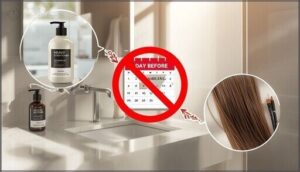
You can do everything right with your color choice and still end up disappointed if you make a few simple prep mistakes. These blunders are completely avoidable once you know what to watch for.
Let’s break down the three most common pre-color mistakes that can sabotage your results (and how to steer clear of them).
Over-Conditioning Risks
You might think more conditioning equals healthier hair, but that’s one of the biggest conditioning mistakes before coloring. Excess product creates hair residue that blocks dye interference with even color penetration, especially on fine strands.
This cuticle impact can sabotage your color-treated hair goals, leading to patchy results and unexpected color damage. Keep it simple—less is genuinely more for hair damage prevention during hair coloring.
Using Heavy or Residue-Forming Products
Beyond over-conditioning, product buildup from heavy styling products creates a surface barrier that blocks color uptake. Silicone-rich formulas and waxes leave residue effects that cause dye interference—your hair products might promise shine, but they sabotage even color penetration.
For proper hair damage prevention and healthy color-treated hair:
- Skip serums 48 hours before coloring
- Avoid leave-in treatments with silicones
- Use clarifying shampoo three days prior
- Keep hair care minimal and clean
Heat Styling and Its Effects on Color
Just as product buildup interferes with dye penetration, your flat iron and curling wand can sabotage color retention before you even start. Heat damage opens cuticles prematurely—tools at 350°F or higher accelerate color fade by degrading pigment molecules. Give your styling tools a week-long break before coloring. If you absolutely must style, use thermal protection and keep temperatures moderate (under 300°F) to preserve your hair’s integrity.
| Tool Temperature | Color Impact | Damage Risk |
|---|---|---|
| Under 300°F | Minimal fade | Low |
| 350°F+ | Accelerated pigment loss | High |
| Daily use (bleached hair) | 4–6 week fade increase | Severe |
Pre-Color Conditioning for Different Hair Types
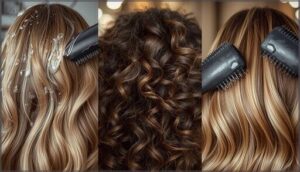
Your hair type isn’t just a detail—it’s the blueprint for how you should prep before color. Fine hair reacts differently than thick strands, and curly or damaged hair has its own set of rules.
Here’s how to condition strategically based on what you’re working with.
Fine Vs. Thick Hair Considerations
Your hair diameter matters more than you think when conditioning before color. Fine hair (20–50% thinner strands) needs lightweight formulas on ends only—heavy conditioners create barriers that block color uptake and flatten roots.
Thick hair tolerates richer moisture without weigh-down, but thorough rinsing prevents uneven penetration.
Both types benefit from strand testing to gauge your scalp sensitivity and fine-tune hair texture for better color preparation.
Curly, Coarse, and Damaged Hair Needs
When your hair texture leans toward curly, coarse, or damaged territory, moisture balance becomes your secret weapon. These porosity levels demand targeted cuticle repair before any color treatment and processing begins.
Your hair damage prevention strategy should include:
- Moderate protein treatment to strengthen without stiffening curls
- Slip-enhancing conditioners that reduce tangling during hair care and maintenance
- Lightweight oils on ends for hair color preparation tips that actually work
Recommendations for At-Home and Salon Coloring
When you’re choosing between DIY kits and professional services, scalp patch testing 48 hours before remains non-negotiable for color safety.
At-home dye formulas work best with strand tests that reveal hair porosity issues before full application, while salon consultations assess chemical treatment history and product ingredients for tailored hair color preparation tips.
Either route demands color maintenance through sulfate-free care—your pre-coloring preparation determines whether results match expectations.
Frequently Asked Questions (FAQs)
What is the recommended time to wash and condition hair before coloring?
Most colorists recommend washing 24 to 48 hours before your color appointment—this balanced wash cycle protects scalp sensitivity while removing buildup. Surprisingly, 73% of color failures stem from improper precoloring preparation timing.
How long should I wait after coloring before washing my hair again?
Wait 24 to 48 hours after your color appointment before washing. This wait timing allows color molecules to set properly, improving color retention and minimizing color fading—especially vital for color-treated hair maintenance.
What should I do if my hair becomes too dry after coloring?
Don’t panic—dry hair after color isn’t permanent. Switch to sulfate-free, hydrating shampoos, apply weekly keratin masks, use leave-in conditioners with lightweight oils, and limit heat styling.
If dryness persists beyond three weeks, consult your colorist.
How can I prevent my hair from becoming damaged after coloring?
Protect your color-treated hair by using sulfate-free shampoos, limiting washes to 2–3 times weekly, and applying deep conditioning treatments biweekly.
Heat protection is essential for damage prevention and hair restoration after any color correction or treatment.
Can I use deep conditioning masks before coloring?
Wondering if that deep conditioning treatment will sabotage your color? You can use a deep conditioning mask before coloring, but lighter formulas work best—heavy oils may block dye penetration and affect even color uptake.
How does hard water affect hair color results?
Hard water leaves mineral buildup on your hair shaft, blocking dye penetration and causing uneven color fading. You’ll notice duller, warmer tones over time—plus possible scalp irritation during processing.
Should I trim my hair before coloring appointments?
Think of trimming like pruning a plant—it clears dead growth so nutrients reach healthy parts.
Remove split ends a few days before your color appointment; your colorist can saturate cleaner lengths evenly, improving overall vibrancy and PreColor Preparation results.
What foods or supplements improve hair color outcome?
You want vibrant, lasting color? Load up on omega-rich foods, protein, and antioxidants.
Biotin, iron, and vitamin C support hair health and wellness—strengthening strands so your dye locks in beautifully without breakage.
Conclusion
Here’s the irony: most people asking “should I condition my hair before coloring” are already over-thinking it. Your hair doesn’t need rescuing with last-minute deep treatments—it needs strategic preparation.
Skip heavy conditioners 24-48 hours before coloring, but don’t strip your scalp’s natural oils either. That protective barrier matters more than silky strands.
Follow your colorist’s timing, respect your hair’s porosity, and you’ll get vibrant, lasting results without the guesswork.
- https://www.instagram.com/georgepapanikolas/?hl=en
- https://x.com/godofprompt/status/1990526288063324577
- https://www.sciencedirect.com/science/article/pii/S0749208123000268
- https://github.com/vinhphunguyen/how-to-write-a-paper/blob/master/how-to-write-paper.out
- https://pmc.ncbi.nlm.nih.gov/articles/instance/9553038/bin/pone.0275964.s005.docx