This site is supported by our readers. We may earn a commission, at no cost to you, if you purchase through links. This content is for general informational and educational purposes only and is not a substitute for professional medical, dermatological, or nutritional advice.
Skin cancer is the most commonly diagnosed cancer worldwide, yet most people treat their skin as an afterthought until something changes. A new spot. A sore that won’t heal. A biopsy result that shifts everything.
Caring for your skin after a diagnosis looks different from ordinary skincare. The products you choose, how you apply sunscreen, and what you do after a procedure all carry real consequences for recovery and long-term recurrence risk.
Good skincare tips for skin cancer patients aren’t complicated, but they do need to be deliberate and consistent.
Table Of Contents
- Key Takeaways
- Know Your Skin Cancer Care Needs
- Build Daily Sun Protection Habits
- Follow a Gentle Skincare Routine
- Support Post-Treatment Skin Healing
- Monitor Skin for Warning Signs
- Frequently Asked Questions (FAQs)
- Can makeup cause skin cancer recurrence?
- What foods help prevent skin cancer?
- Are indoor tanning beds ever safe?
- How does stress affect skin cancer risk?
- Can certain medications increase sun sensitivity?
- How does skin cancer affect mental health and well-being?
- Can children develop skin cancer from sun exposure?
- Conclusion
Key Takeaways
- Daily sun protection — broad-spectrum SPF 30+, UPF 50+ clothing, and shade between 10 a.m. and 2 p.m. — is the single most important habit you can build after a skin cancer diagnosis.
- Your post-treatment skincare routine should center on fragrance-free cleansers, ceramide-rich moisturizers, and mineral sunscreens with zinc oxide, since healing skin is far more vulnerable to irritation than healthy skin.
- Monthly head-to-toe self-checks using the ABCDE warning signs, paired with consistent photo documentation, give you the earliest possible warning if something changes between dermatology visits.
- What you eat, how well you manage stress, and which medications you take all quietly shape your skin’s ability to heal and your long-term recurrence risk — so recovery extends well beyond topical care.
Know Your Skin Cancer Care Needs

Caring for your skin after a cancer diagnosis starts with understanding what you’re dealing with. The type of skin cancer you have, your personal risk factors, and the procedures involved all shape the care your skin actually needs. Here’s what to know before building your routine.
Your dermatologist’s recommendations will likely echo the guidance behind professional skin care treatments for aging and treated skin, since protecting a compromised skin barrier is the foundation of any recovery plan.
BCC, SCC, and Melanoma
Think of skin cancer as three distinct conditions, each requiring a different approach to care.
Basal cell carcinoma (BCC) grows slowly from cells in the lower skin layer, usually on sun-exposed areas like your face and neck. Squamous cell carcinoma (SCC) is also common.
Melanoma starts in pigment-producing cells and spreads more aggressively, making early skin cancer treatment especially critical. BCC is the most prevalent, accounting for 75% of all skin cancers in light-skinned populations worldwide.
Personal Skin Cancer Risk Factors
Understanding which type you have is only part of the picture. Your personal risk profile shapes how aggressively you protect yourself.
Key factors that raise your skin cancer risk:
- Family or personal history of skin cancer
- Immunosuppression from organ transplants or medications
- Frequent UV radiation exposure or tanning bed use
Knowing these helps you build a smarter skin self-examination routine.
Biopsy and Excision Basics
Once your risk factors are mapped, your doctor may recommend a skin biopsy to evaluate a suspicious spot. The type chosen depends on depth: a shave biopsy skims the surface, while a punch biopsy reaches deeper layers.
When melanoma is suspected, skin cancer excision is the preferred approach, removing the entire lesion so pathologists can check the margins accurately.
Build Daily Sun Protection Habits

Sun protection isn’t a one-time decision — it’s a daily practice that becomes second nature with the right habits in place.
Your skin’s ability to recover and stay healthy long-term depends heavily on how consistently you shield it from UV exposure.
Here’s what that protection actually looks like, day to day.
Broad-Spectrum SPF 30 Sunscreen
The label on your sunscreen matters more than the brand. Look for two essentials: broad-spectrum sunscreen coverage and SPF 30 or higher. Broad-spectrum means the formula protects against both UVA and UVB rays, the two types of ultraviolet radiation linked to skin damage.
Mineral-based sunscreens that rely on zinc oxide or titanium dioxide are particularly well-suited for sensitive or healing skin.
After extraction, pairing a mineral sunscreen with the full safe ingrown hair extraction and aftercare routine helps protect freshly treated skin from UV damage while it heals.
Correct Sunscreen Application
Apply sunscreen 15 minutes before sun exposure so it has time to absorb. Use a broad-spectrum, mineral-based sunscreen with zinc oxide or titanium dioxide, and cover every exposed area:
- Ears, hairline, and neck
- Lips, with an SPF 30 balm
- Backs of hands and feet
- Any skin not covered by clothing
One ounce, about a shot glass, covers an average adult.
Reapplication and Water Resistance
The clock doesn’t stop when you enter the water. Water-resistant sunscreens protect for only 40 or 80 minutes of continuous immersion, and toweling off removes that protective film even faster.
Reapply your broad-spectrum SPF 30 immediately after drying, and every two hours throughout the day. Between 10 a.m. and 2 p.m., seek shade whenever you can.
UPF Clothing and Accessories
Clothing acts as a physical shield your sunscreen can’t fully replicate.
For sun protection after surgery, when skin is fragile, choose garments with a protective clothing UPF rating of 50+, which blocks about 98% of UV rays. Wear a wide-brimmed hat and sunglasses alongside your UPF clothing, and seek shade between 10 a.m. and 2 p.m. when UV peaks.
Shade and UV Avoidance
Shade is your quietest, most reliable ally. Seek shade between 10 a.m. and 2 p.m., when UV radiation peaks. Deep shade blocks far more UV than a beach umbrella, which can still expose you to radiation bouncing off sand.
Pair shade with UPF clothing, a wide-brimmed hat, and sunglasses for full protection during peak UV hours.
Follow a Gentle Skincare Routine

After treatment, your skin needs more patience than products — the wrong routine can set back healing faster than you’d expect.
A gentle, thoughtful approach makes all the difference, and it starts with understanding what your skin actually needs right now.
Here’s what to keep in mind when building a routine that helps recovery without causing irritation.
Fragrance-Free Cleansing
Fragrances are among the most common causes of contact irritation, making fragrance-free cleansers essential for sensitive or healing skin. A gentle cleanser applied to damp skin with lukewarm water helps preserve skin pH balance.
Always check every label for:
- "Parfum" or "fragrance" in the formula
- Essential oils labeled as natural
- Masking scents in "unscented" products
- Fragrance irritants in laundry detergents
Barrier-Supporting Moisturizers
Your skin’s outer layer depends on a specific mix of lipids to stay intact. Look for ceramide-rich, fragrance-free moisturizers that replenish this barrier directly.
Hyaluronic acid draws moisture into skin cells, while niacinamide helps strengthen barrier function from within. Dexpanthenol, a vitamin B5 derivative, soothes and helps repair.
Apply while skin is still slightly damp to lock in hydration.
Ingredients to Avoid
What you leave out matters just as much.
- Alcohol-based skincare strips lipids and irritates.
- Fragranced formulas trigger reactions; choose fragrance-free cleansers instead.
- Parabens and formaldehyde releasers disrupt hormones.
- Laundry detergent irritants transfer to skin through fabric.
- AHAs and BHAs are too harsh during treatment.
Choose alcohol-free personal care. Protect raw areas with white soft paraffin.
Dermatologist-Approved Product Choices
Once you know what to avoid, finding trustworthy products becomes simpler. Seek dermatologist-recommended skincare with clear ingredient labels, not marketing promises.
| Skin Need | Key Ingredient | Product Type |
|---|---|---|
| Skin barrier repair | Ceramides | Fragrance-free moisturizer |
| Daily hydration | Hyaluronic acid | Nonirritating moisturizer |
| UV skin defense | Zinc oxide | Mineral sunscreen |
Use zinc oxide or titanium dioxide mineral sunscreen on both healing and post-treatment skin.
Support Post-Treatment Skin Healing

Once your procedure is done, the real work of healing begins — and how you care for your skin in the weeks that follow makes a significant difference in your outcome.
Post-treatment skin is more vulnerable than it looks, so your routine needs to work with your body’s natural repair process, not against it.
Here’s what that care actually looks like, step by step.
Surgical Wound Care
A fresh surgical wound deserves the same careful attention you’d give any healing tissue. Gentle post-operative skincare starts with clean hands and a clean work surface. Here is what to do each day:
- Perform hand hygiene before touching the wound.
- Clean the area with a gentle cleanser and gauze.
- Pat dry, then reapply your dressing.
- Watch for redness or swelling.
Scar Care After Closure
Once the wound closes, your focus shifts to scar management.
Apply a silicone-based scar gel once or twice daily for up to four months; silicone keeps the scar area hydrated and helps flatten raised tissue.
Moisturize surrounding skin twice daily with an unscented cream like E45, and avoid picking or scratching. Loose clothing prevents friction that can irritate healing skin.
Protecting Healing Skin
Shielding healing skin from sun damage is essential after skin cancer surgery. Mineral-based sunscreens with zinc oxide won’t irritate post-surgical tissue and provide the broad-spectrum protection your recovering skin needs.
Keep the site dressed and moist alongside your silicone-based scar gel; dry, exposed skin heals more slowly. Avoid pulling or tugging during care, and commit to gentle postoperative skincare daily.
Nutrition for Skin Repair
What you eat after surgery directly shapes how well your skin heals. A protein-rich healing diet supplies the amino acids your body needs to build new tissue, while vitamin C drives collagen synthesis throughout the repair.
Omega-3 fatty acids from salmon or walnuts help manage inflammation. Hydration matters too, supporting ceramide function and hyaluronic acid moisture retention in healing skin.
Signs of Healing Complications
After surgery, your incision should gradually improve each day. If you notice spreading redness or swelling, increasing pain, or drainage that turns yellow or green, these signal infection and need prompt attention. A fever alongside worsening symptoms makes this more urgent.
Delayed healing, where the wound stays open longer than expected, also warrants a call to your dermatologist.
Monitor Skin for Warning Signs
Staying ahead of skin cancer doesn’t end after treatment — it becomes a lifelong habit of careful observation. Your skin will speak to you if you know what to listen for, and that starts with building a consistent routine. Here’s what to focus on each time you check.
Vigilance after skin cancer treatment is lifelong — your skin speaks, and knowing what to listen for starts now
Monthly Head-to-Toe Checks

Think of your skin self-examination routine as a monthly body audit. Done consistently, this dermatologic surveillance schedule becomes your first defense in skin cancer recurrence prevention. Work from head to toe:
- Scalp, hairline, face, and neck first.
- Chest, back, arms, and hands next.
- Legs, heels, soles, and between toes last.
Cutaneous surveillance is the backbone of long-term skin health monitoring.
ABCDE Melanoma Warning Signs
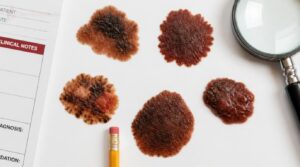
During your skin self-examination routine, the ABCDE melanoma warning signs act as a checklist. Asymmetry means one half doesn’t mirror the other. Border irregularity looks scalloped or notched. Color variation spans tan, brown, black, white, or red in one spot. Diameter above 6 millimeters is concerning. Evolving, any change in size, shape, or color, is often the most telling signal.
Photographing Skin Changes

A photo can catch what memory misses. When you add photographing skin changes to your skin self-examination routine, use the same lighting, angle, and distance each time, and place a ruler beside the lesion for scale. A macro lens for smartphone photography can reveal fine details in moles and spots that a standard camera lens might miss.
Consistent skin lesion monitoring this way builds a visual record for your dermatological follow-up, and that’s especially valuable given your skin cancer recurrence risk.
Dermatology Follow-Up Visits
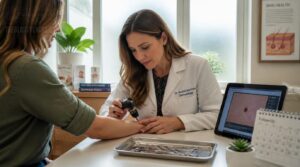
Those photos become most useful at your dermatology follow-up visits. Depending on your diagnosis, your dermatologist schedules appointments every 3–6 months during the first year, decreasing if no recurrence appears.
For invasive melanoma, skin lesion monitoring is more intensive, with visits every 4 months for three years. Your cutaneous oncology care timeline is suited to your needs, so follow your provider’s schedule closely.
Symptoms Needing Prompt Evaluation
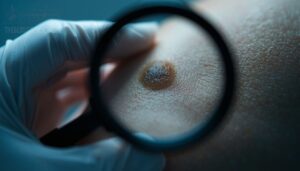
Between scheduled visits, your skin self-examination routine is your first line of response.
Don’t wait if a mole changes shape or color, a sore won’t heal within four weeks, or a shiny bump bleeds and keeps returning. These changes, possibly signaling basal cell carcinoma, squamous cell carcinoma, or melanoma, need prompt evaluation, since early skin cancer excision improves outcomes a lot.
Frequently Asked Questions (FAQs)
Can makeup cause skin cancer recurrence?
Ironically, the blush you’re most worried about isn’t your biggest threat here. No direct causal evidence links normal makeup use to skin cancer recurrence, though some ingredients are classified as potential carcinogens in ingredient analyses.
What foods help prevent skin cancer?
Fruits, vegetables, fatty fish, and nuts give your body antioxidants and omega-3s that help reduce UV-related cell damage, supporting your skin’s natural defenses alongside sunscreen and regular dermatologist visits.
Are indoor tanning beds ever safe?
Think of tanning beds as a loaded gun pointed at your skin. No safe limit exists for UV radiation from these devices. They’re classified as human carcinogens, so tanning beds are never truly safe.
How does stress affect skin cancer risk?
Chronic stress weakens your immune system’s ability to detect and destroy abnormal cells. Combined with UV radiation, this can accelerate skin cancer development, making emotional wellbeing a real part of long-term skin health.
Can certain medications increase sun sensitivity?
Yes, certain medications can increase sun sensitivity. Antibiotics, NSAIDs, and antihistamines are common culprits. They trigger phototoxic or photoallergic reactions, causing redness, rashes, or blisters after even brief sun exposure.
How does skin cancer affect mental health and well-being?
Skin cancer can unsettle your sense of safety, shift how you see your body, and put real strain on your mental health, with anxiety and fear of recurrence being common after diagnosis.
Can children develop skin cancer from sun exposure?
Children can develop skin cancer, though it’s uncommon. UV exposure in childhood builds cumulative risk over a lifetime. Even one blistering sunburn during youth can meaningfully raise the chance of melanoma later.
Conclusion
Think of your skin as a living record, one that quietly maps every hour of unprotected sun and every deliberate choice you’ve made since your diagnosis.
These skincare tips for skin cancer patients aren’t optional extras. They’re a daily commitment to protecting yourself.
Protect consistently, heal patiently, and monitor closely. Your dermatologist guides the clinical side, but between appointments, your everyday habits carry the most weight.
Stay consistent. Your skin will respond to that care.