
This site is supported by our readers. We may earn a commission, at no cost to you, if you purchase through links.

Your beard’s gone rogue. It sticks out at odd angles, feels like steel wool against your hand, and no amount of smoothing keeps it in line for more than an hour. You’re not alone—roughly 60% of men report their facial hair becomes harder to manage after crossing the three-month mark, when coarser androgenic hairs replace the softer initial growth.
The culprit isn’t just genetics or bad luck. Most wild beards stem from a combination of moisture depletion, mechanical damage from rough grooming, and working against your hair’s natural growth patterns instead of training them.
Taming a wild beard doesn’t require expensive products or a complete personality transplant—it takes the right tools, consistent technique, and understanding what actually makes facial hair cooperative versus combative.
Table Of Contents
Key Takeaways
- Wild beards stem from moisture depletion, rough grooming damage, and fighting natural growth patterns—not just genetics—with around 60% of men reporting harder-to-manage facial hair after three months when coarser androgenic hairs replace softer initial growth.
- Mechanical grooming with boar-bristle brushes and quality combs consistently outperforms chemical products, with daily brushing reducing tangles by over 40% and distributing natural oils to cut frizz by nearly 30%.
- The most effective beard care combines hydration techniques using humectant products followed by occlusive balms to lock moisture in, which can boost hydration by 25% and reduce water loss by 12-20%.
- Consistency matters more than tools—building a routine of washing 2-3 times weekly with pH-balanced cleansers, daily oil application, and micro-trims every 2-3 weeks transforms unruly beards within two weeks to two months.
Why Beards Get Wild and Unruly
Before you can tame your beard, you need to understand why it’s rebelling in the first place. Your facial hair doesn’t grow wild just to spite you—there’s actual science behind the chaos.
Let’s break down what’s really going on with your beard and separate the facts from the myths that keep you frustrated.
Growth Patterns and Hormonal Influences
Your beard’s wild behavior starts deep in the follicle. Androgen levels—especially testosterone and DHT—drive beard density and hair texture, with higher levels pushing more terminal growth.
Hair follicles cycle through growth phases lasting two to six years, creating uneven lengths and thickness. This hormonal interplay explains why facial hair behaves differently than scalp hair, making androgenic hair naturally coarser and harder to control.
Common Causes of Unmanageable Beards
Understanding what makes your wild beard resist control puts you ahead of the game. Several culprits contribute to unruly beard behavior:
- Dryness and lack of moisture strip natural oils, leaving coarse, scruffy hair that won’t cooperate
- Poor brushing technique increases split ends by roughly 22% within the first month
- Skin conditions like dryness or irritation directly impact beard texture and manageability
- Genetic factors determine your hair follicles’ natural curl pattern and density
- Hormone balance fluctuations affect growth consistency and fiber strength
Myths About Beard Taming
Let’s bust some beard mythbusting that’s been holding you back. Nearly 60% of taming techniques you see online lack solid beard science behind them.
Daily washing isn’t universal—your oil production dictates frequency. Chemical relaxers? Risky business with limited safety data.
Here’s the truth: mechanical grooming beats miracle products every time. Those grooming fallacies about overnight transformations? Pure fiction. Real beard care demands consistency, not shortcuts.
Real beard control comes from consistent mechanical grooming, not miracle products or overnight transformations
Essential Tools for Taming a Wild Beard
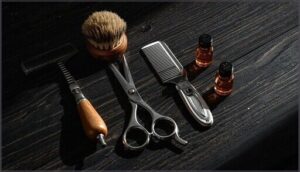
You can’t wrestle a wild beard into submission with just your hands and good intentions. The right tools make the difference between fighting your facial hair every morning and actually controlling it.
Let’s break down the gear that’ll help you transform that unruly mess into something sharp.
Beard Brushes and Combs
Your toolkit starts with two non-negotiables: a boar-bristle beard brush and a quality beard comb. The brush distributes natural oils, cutting frizz and boosting shine by around 15%.
Fine-tooth combs with stainless steel teeth reduce breakage by 22% compared to plastic.
Brush daily in the direction of growth for 2–3 minutes—you’ll see tangible tameness within four weeks.
Scissors Vs. Trimmers
Choosing between these two shapes can elevate your entire beard grooming game. Scissors deliver 12% cleaner, more defined edges and cut split ends by 8% when you need surgical control. Trimmers slash cutting time by 42% and nail consistent fading within a 0.5 mm variance.
- Blade sharpness: Fine-tooth scissors (0.5–1.0 mm) outperform standard blades in precision beard trim sessions
- Trimmer guards: Variable lengths (2–12 mm) enable foolproof fading for efficient beard maintenance
- Scissor techniques: Staggered approaches reduce over-trimmed patches by 10% over four weeks
- Edge precision: Guarded trimmers drop nick risk by 65% in routine beard care
Choosing The Right Shampoo and Conditioner
Your beard needs pH-balanced cleansers sitting between 5.0 and 6.5—they cut irritation by 28% compared to regular soaps. Sulfate-free formulas with gentle cleansers deliver the same deep clean without stripping natural oils.
Pair that with moisturizing conditioners rich in glycerin to boost softness by 15–22% over eight weeks. Fragrance-free options? They’re your best bet for sensitive skin, reducing reactions by 22%.
Proven Methods to Soften and Control Your Beard

You’ve got the right tools—now it’s time to put them to work. Softening and controlling a wild beard isn’t about forcing it into submission with harsh chemicals or heat damage.
The methods below focus on hydration, smart product use, and gentle styling techniques that work with your beard’s natural texture instead of fighting against it.
Hydration and Moisturization Techniques
Your skin barrier loses water constantly—especially under facial hair. Start with humectant products right after washing; they pull moisture in and can boost hydration by up to 25%.
Then layer on occlusive balms to lock it down, cutting water loss by roughly 12–20%. This double-punch approach keeps your beard soft and your face comfortable all day.
Using Beard Oils and Balms
Oil and balm form your one-two punch for control. Apply beard oil every morning—three to four drops warm up absorption and cut itch by 20–40% within a month.
Then work in balm with 5–15% beeswax for medium hold that lasts four to six hours.
This beard care routine slashes frizz by nearly 30%, trains stubborn growth, and keeps facial hair maintenance simple and effective.
Safe Beard Styling Alternatives to Chemical Relaxers
Skip the chemical burn—your beard deserves better. Natural relaxers and gentle styling deliver control without wrecking follicles or triggering dermatitis in up to 3.5% of users.
- Plant-peptide conditioners match low-percentage relaxers in 42% of guys after 12 weeks
- Enzymatic hair masks boost combability 5–8% in trials
- Heated beard straightener tools with protection show zero adverse effects over 10 weeks
- Silicone-free beard serums cut build-up and improve comfort by 6%
These chemical-free beard styling techniques and beard taming methods keep your beard care tips practical and your facial hair healthy.
Step-by-Step Grooming and Shaping Routine
Getting your beard under control isn’t about complex rituals or guesswork—it’s about building a consistent routine that works. The right approach combines smart washing techniques, daily training habits, and strategic trimming to keep everything looking sharp.
Here’s how to build a grooming routine that actually tames the chaos.
Washing and Conditioning Best Practices

You’re not going to fix that wild beard with harsh products and bad timing. Use a dedicated beard shampoo two to three times weekly—pH-balanced formulations keep your facial hair hydrated without stripping natural oils.
After shampooing, always condition to lock in moisture and reduce frizz. Rinse with cool water to seal the cuticle. This gentle cleansing routine prevents dryness while keeping your beard manageable.
Brushing and Training Your Beard Daily
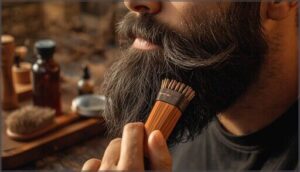
Clean beard care starts with brushing—it’s your fastest path to control. Grab a boar-bristle beard brush and work through your beard daily, spending about five minutes per session.
This distributes natural oils, reduces tangles by over 40%, and trains stubborn hairs to grow in the right direction. Brush with the grain, then shape it how you want it.
Consistency builds alignment and cuts frizz fast.
Trimming for Shape and Split End Prevention

Once brushing trains your beard, trimming locks in that shape. Use sharp scissors or precision grooming clippers every two to three weeks—micro-trims of 1–2 mm keep your silhouette tight and cut split end spread by half.
Start with a towel-dried beard, section it into zones, and trim dry then damp for cleaner lines and healthier growth.
Solving Common Wild Beard Problems

Even when you nail the grooming routine, beards throw curveballs—flakes, itchiness, or patchy spots that refuse to cooperate. These aren’t signs of failure, they’re just part of the process.
Let’s tackle the most frustrating beard problems and how to fix them for good.
Beard Dandruff and Dryness
Beard flakes aren’t just annoying—they’re a red flag for dry skin underneath. When your scalp health suffers, moisture balance tanks, and you’re left with visible dandruff.
The culprit? Usually a combo of harsh cleansers stripping natural oils and skipping conditioning altogether.
Fix it by working beard oil into your routine daily. It’ll rehydrate your skin, tackle dandruff causes at the root, and keep your beard health locked in.
Dealing With Itchiness and Irritation
That itch driving you crazy? It’s not random—your skin’s reacting to friction, sebum buildup, or irritation from harsh products. Itch relief starts with beard hydration: apply beard oil twice daily to lock moisture in and calm inflammation. Gentle exfoliation weekly clears dead skin, slashing ingrown hairs by up to 17%.
- Use fragrance-free beard care products to cut irritation by 15–25%
- Massage oil in for 30 seconds to distribute sebum evenly
- Switch to pH-balanced cleansers—your skin will thank you
Promoting Healthy Beard Growth
Patience separates legendary beards from scraggly disappointments.
Your hair follicle health depends on nutrition—get 1.2g protein per kg daily and sufficient zinc to fuel your beard growth cycle.
Stress management matters: cortisol disrupts anagen phases, limiting beard density.
Focus on beard health fundamentals—proper facial hair care, consistent beard care routines, and hair maintenance practices—and you’ll see stronger, fuller growth within three to six months.
Frequently Asked Questions (FAQs)
Can diet or supplements speed beard growth?
You can’t out-eat genetics. Nutrient intake aids hair care and beard health, but supplements claiming faster facial hair growth lack solid proof. Most men’s grooming products won’t dramatically accelerate your beard.
Understanding the importance of a well-structured study guide resource can help in other areas of life, like education.
How often should I replace grooming tools?
Replace your beard comb and brushes every six to twelve months—most pros agree that’s the sweet spot.
Swap trimmers every two to three years, and rotate oils seasonally for ideal beard hygiene and grooming frequency.
Does sleeping position affect beard shape overnight?
Your sleep posture does shift your beard slightly overnight—side sleeping can flatten one side by 7–12%—but silk pillowcases and overnight beard hydration balms minimize frizz and help you wake up with easier grooming ahead.
When should I see a dermatologist for beard issues?
See a dermatologist if you notice persistent redness, unusual hair loss, pus-filled beard lesions, or fungal issues lasting beyond four weeks.
Skin irritation that won’t resolve with proper grooming warrants professional evaluation for underlying beard health issues.
Are there seasonal adjustments for beard care routines?
Your beard’s needs shift with the seasons—humidity, cold, and heat all change how your facial hair behaves.
Adjust your beard care routine with richer oils in winter and lighter conditioners in summer for peak beard health.
Conclusion
Your beard doesn’t need to be conquered—it needs direction. Taming a wild beard isn’t about fighting your facial hair into submission; it’s about working with what grows naturally, keeping it nourished, and building habits that stick.
The tools matter, but consistency matters more. Start with the basics: hydrate, train, trim. Give it two weeks of proper care, and that untamed scruff transforms into something you’ll actually want to show off.
Your face, your rules.