This site is supported by our readers. We may earn a commission, at no cost to you, if you purchase through links. This content is for general informational and educational purposes only and is not a substitute for professional medical, dermatological, or nutritional advice.

Your beard doesn’t grow at your command. It grows on a 90-day biological schedule written into your genes long before you picked up a razor.
Most guys quit at week four, right when patchy cheeks look worse instead of better. That’s the awkward phase talking, not your genetics failing you. DHT, the hormone driving follicle growth, needs time to convert those thin vellus hairs into thick terminal hairs.
Give it the full cycle and skip the early trim, and you’ll see why patience beats any product on the shelf. Here’s the exact roadmap to grow a full beard, week by week.
Table Of Contents
- Key Takeaways
- Start With Beard Growth Basics
- Follow The 90-Day Beard Plan
- Support Growth From Within
- Build a Beard Care Routine
- Shape a Fuller-Looking Beard
- Frequently Asked Questions (FAQs)
- Is there any way to grow a more full beard?
- What is the 90 day beard rule?
- Can finasteride grow a beard?
- Does tretinoin make you grow facial hair?
- How do you grow a beard?
- How to start growing a beard to make it look fuller?
- Can you grow a full beard?
- How to increase beard growth?
- How do I get my beard to grow fully?
- How long would it take to grow a full beard?
- Conclusion
Key Takeaways
- Beard growth follows a genetically programmed 90-day cycle, so avoid trimming or judging density until the full cycle completes, since most patchiness fills in by week 12.
- DHT, a potent hormone converted from testosterone by 5-alpha reductase, drives follicle growth, and receptor sensitivity (not testosterone levels) determines how thick and full your beard becomes.
- Beard density is 60-78% heritable, with different facial zones (chin, jawline, cheeks) filling in at different speeds, so patience matters more than any product.
- Supporting growth requires consistent nutrition, 7-9 hours of sleep, strength training, and stress management, since these hormonal and lifestyle factors directly influence follicle activation.
Start With Beard Growth Basics

Before you touch a trimmer, you need to understand what’s actually driving your growth. Your genetics, hormones, and age all play a bigger role than any product on the shelf. Let’s break down the basics so you know exactly what you’re working with.
Once you know your growth pattern, you can pick a look that actually suits it—these best beard styles for men are a great place to start.
Clean-shaven Starting Point
Every full beard starts with a clean slate. Shave completely, using proper skin preparation and a sharp razor, so hair grows in even from day one.
Skipping this baseline invites patchy, uneven growth later. Establishing baselines now means every follicle enters the anagen phase together, giving your 90-day journey toward facial hair mastery a fair, uniform starting point.
Genetics and Age Factors
Your face is clean now, but your genetic blueprint decides what happens next. Beard density is 60-78% heritable, controlled by genes like EDAR and PRSS53.
DHT receptor sensitivity, not testosterone levels alone, determines patchiness. Age matters too: most men hit peak fullness between 25 and 35, once follicles complete years of hormone exposure.
Testosterone and DHT Role
Your follicles don’t respond to testosterone directly. An enzyme called 5-alpha reductase converts it into DHT locally in your skin, and this conversion drives beard growth.
This process is essential because dihydrotestosterone is an androgen hormone responsible for facial hair.
Four factors shape your results:
- DHT is 5-10 times more potent than testosterone
- Local hormone conversion matters more than blood levels
- Androgen receptor sensitivity varies by genetics
- Follicle response depends on tissue-level activation, not just circulating androgen levels
Realistic Fullness Expectations
DHT drives growth, but genetics decide the finish line. Set your sights on increased coverage, not a symmetrical mask.
| Zone | Fills In | Notes |
|---|---|---|
| Chin/mustache | Weeks 2-3 | Fastest growth |
| Jawline | Month 2-3 | Moderate lag |
| Cheeks | Month 3+ | Slowest, patience wins |
Zone density varies. Blending techniques help perceived fullness before follicles fully catch up.
Strategic trimming and crisp line-ups can visually balance patchy zones, and these beard density improvement tips offer practical ways to work with what you’ve got.
Patchy Beard Causes
Why does one guy’s beard fill in solid while yours looks moth-eaten? Blame it on more than genetics alone.
- Autoimmune Alopecia attacking follicles
- Shaving Friction causing ingrown curvature
- Fungal Infections like tinea barbae
- Seborrheic Dermatitis disrupting the skin barrier
- Hair Shaft Breakage from rough handling
Sudden patchy beard changes deserve a dermatologist’s eye, not guesswork.
Follow The 90-Day Beard Plan
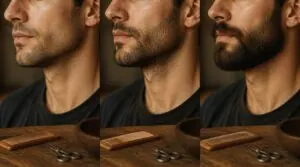
Growing a full beard takes patience, but a clear timeline makes the process easier to manage. Your face goes through distinct stages, each with its own challenges and small wins. Here’s what to expect week by week, and how to handle each phase like a pro.
If you’re curious how dramatically a clean shave can reshape someone’s look, this before-and-after breakdown of James Harden without a beard shows just how much jawline and cheekbone definition can shift.
Weeks 1–2 Stubble Stage
Grab a mirror by day three—you’ll spot fine, patchy stubble mixing vellus hair with darker terminal strands. Expect uneven growth patterns and itchiness as hairs push through skin.
Manage irritation with light moisturizing; skip aggressive scrubbing. This rough patch is normal texture-changing groundwork. Stay patient—your beard’s foundation is forming, one stubborn hair at a time.
Weeks 3–6 Awkward Phase
Right around day 21, your beard hits its rough patch—patchy zones show up as the mid-cheek and mustache fill slower than your jawline. Skin itch peaks here too.
Fight the urge to shape anything. Avoiding early trimming now protects hairs that haven’t thickened yet. Apply beard oil daily, brush gently, and let those false boundaries fade as coverage catches up.
Weeks 7–12 Fuller Coverage
This is where the payoff shows up. Dormant follicles finally kick into terminal hair shift, thickening fine stubble into real coverage. Growth won’t be uniform—some patches thicken faster—but that’s normal follicle activation timing at work.
Keep feeding it: protein, zinc, sleep. Brushing and oil boost visual density, making thinner spots disappear as shafts darken and stand upright.
Avoid Early Trimming

Scissors stay put for now. Trimming too soon locks in a neckline before density catches up, and you can’t undo that.
Let those patchy zones keep growing—judging coverage patterns takes real length, not stubble. Cutting early risks a short cycle, forcing weak spots to restart from scratch and inviting irritation on skin that’s still adjusting.
Track Growth Progress

Numbers don’t lie, so let them guide you. Snap a front, side, and lower-face photo weekly, same lighting, same spot—photo baseline consistency beats memory every time.
Add a simple density rating scale (0–3) for cheeks, chin, and mustache. Watch for asymmetry, log irritation after product changes, and measure length at the chin. This data shows if beard growth is stalling or building steadily.
Support Growth From Within

A trimmer only works with what your body gives it. Real growth starts with hormones, sleep, and what’s on your plate. Here’s what to focus on to fuel a fuller beard from the inside out.
Eat Protein-rich Meals
Fuel your follicles like you mean it. Your body can’t stockpile protein, so spread it across every meal — eggs at breakfast, chicken or fish at lunch and dinner.
This steady supply keeps essential amino acids flowing for keratin production, boosts satiety hormones like GLP-1, and curbs hunger. Choose high-bioavailability sources — meat, eggs, dairy — since they digest more completely than most plant proteins.
Prioritize Beard-friendly Vitamins
Protein builds the frame, but vitamins wire the system. Biotin fuels keratin production, and zinc aids skin health beneath your beard.
Sleep Seven to Nine Hours
Vitamins fuel the machine, but sleep is when the real building happens. Get seven to nine hours nightly to support hormone regulation and healthy testosterone levels.
Deep sleep stages trigger growth hormone release, aiding beard density optimization. Stick to consistent bedtimes for circadian rhythm stability. Skimp on rest, and you’re sabotaging follicles before they get a fair shot.
Strength Train Consistently
Sleep sets the stage, but the gym builds the house. Hit each major muscle group twice weekly for stronger testosterone response and better hormonal balance.
Track progressive overload—log weights, reps, sets. Aim for 2-3 sessions weekly, 2-5 sets per exercise, training close to fatigue. Balance recovery with effort; consistent lifting beats sporadic max-outs for follicle-friendly hormone production every time.
Manage Daily Stress
Cortisol is your beard’s silent enemy—chronic stress spikes it, disrupting the hormonal balance that fuels growth. Practice breathing techniques: inhale five seconds, hold two, exhale five.
Cortisol is your beard’s silent enemy, so breathe deep and steady to keep growth-friendly hormones in balance
Set boundaries. Say no to overload, swap news for quiet mornings, take the longer route around traffic. Lean on social connections—community, workouts, faith groups. Tackle problems head-on instead of stewing. Proactive problem-solving keeps stress low and growth hormones working for you, not against you.
Build a Beard Care Routine

Good genetics only get you so far without daily upkeep. Your skin and follicles need consistent care to support strong, healthy growth. Here’s the routine that keeps your beard on track.
Cleanse Skin Regularly
Your skin under that beard still needs work. Cleanse twice daily, morning and night, to clear oil, sweat, and pollutants without stripping natural barriers. Pick a mild skin cleanser, not harsh soap. Over-cleansing damages your skin barrier, causing dryness and irritation.
Follow with a noncomedogenic moisturizer to lock in hydration and prevent clogged follicles from turning into breakouts underneath your growing beard.
Wash Beard Weekly
How often you wash depends on your skin type. Dry skin? Stick to 1-2 washes weekly. Oily or combination skin needs closer to three.
Use a sulfate-free, fragrance-free beard wash with lukewarm water, never hot. Separate hairs with your fingers so it reaches skin underneath. On off-days, just rinse.
This prevents beardruff while keeping natural oils balanced.
Use Beard Oil Daily
Beard oil isn’t optional—it’s your daily insurance against a rough, dull beard. Apply 3-5 drops for beards under an inch, working into skin first, then hair.
This locks in skin hydration, preventing beard dandruff and calming itch before it starts. It also softens coarse hair and adds shine, so your beard looks conditioned instead of straw-like by week six.
Brush With Boar Bristles
Grab a boar bristle brush once your beard hits half an inch. Unlike synthetic fibers, natural bristles flex under pressure, gliding through hair instead of scraping skin.
Brush roots to ends in light strokes—this spreads sebum evenly and lifts loose debris. Skip force on tangles.
Clean your brush weekly: remove debris, wash, then air-dry fully to prevent odor and keep bristles performing.
Try Fresh Mint Beard Wash
Nothing wakes up a tired face like real peppermint cooling on the skin. Fresh mint beard wash uses natural menthol benefits to cut oiliness while mild surfactants maintain oil balance underneath.
Amino acid conditioning softens coarse hair, reducing frizz for easier styling. The scent fades by evening, preventing scent fatigue—just a brisk lift each morning without lingering overpoweringly.
Shape a Fuller-Looking Beard
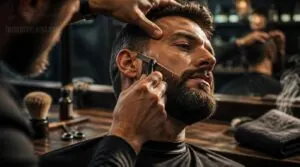
Growth gets you halfway there, but shaping seals the deal. A sharp edge and the right technique can turn patchy spots into a beard that looks deliberate. Here’s how to take control of the final result.
Define Cheek Lines
Your cheek line marks where your beard ends and open skin begins, sitting above the jawline and below your cheekbone.
Use a curved trimming path, not a straight edge, tapering slightly toward the jaw. Check symmetry often, since density often differs side to side. Wait until coverage thickens, then trim gradually to avoid cutting into patchy zones.
Clean Neckline Carefully
Your neckline follows your natural hairline, not a new one you invent. Only trim below that line; leave everything at or above it alone.
Use a trimmer, not a razor, for control. Trim upward in light strokes, check both sides for symmetry, then moisturize after to prevent irritation. Go slow. Over-trimming here is hard to fix.
Blend Patchy Areas
Once your neckline sits clean, patchy cheeks become the real test. Comb hairs upward daily, pulling longer strands into thin zones. Leave sideburns slightly long to bridge gaps with cheek growth.
Let all areas reach similar length before shaping; equalizing length beats cutting patches to match instantly. Track stubble maps by zone, and smooth things out gradually, never all at once.
Use Balm for Control
Once your patchy zones start blending, balm gives you the control oil alone can’t. Balm vs oil comes down to hold: oil conditions, balm locks direction with waxes.
Warm a dime-size amount between your palms, then work it through evenly. This heat training softens hairs so they set where you comb them, reducing beardruff and keeping stray strands disciplined all day.
Trim Every One to Two Weeks
Grab your trimmer every one to two weeks once shaping begins. This keeps stubble length control tight, stops split ends from fraying, and blends uneven growth before it stands out.
Use a guard for even passes, scissors for tight corrections. Small, steady sessions beat rare drastic ones — they cut irritation and keep your beard grooming routine sharp, disciplined, and fully in your command.
Frequently Asked Questions (FAQs)
Is there any way to grow a more full beard?
Yes. Follicle sensitivity to DHT drives density, but selenium intake (Brazil nuts), consistent follicle stimulation through brushing, and minoxidil application can boost thickness. When alopecia causes patchiness, beard transplantation becomes an option worth discussing with a specialist.
What is the 90 day beard rule?
Simple: don’t touch a trimmer for 90 days. Skip early shaping, let slow follicles catch up, and judge true density only once coverage settles. Patience beats panic—your beard’s early patchiness almost always fills in by month three.
Can finasteride grow a beard?
The drug meant to shrink hair can sometimes shrink your beard too — that’s the paradox of DHT inhibition. Since scalp and facial follicles differ in sensitivity, results vary: some notice thinner growth, others see little change at all.
Does tretinoin make you grow facial hair?
Not really. Tretinoin’s mechanism targets skin turnover, not hormones, so any facial hair "growth" is usually vellus fuzz becoming visible, not true hair follicle stimulation. Clinical studies show no reliable hormonal impact on beard density.
How do you grow a beard?
Rome wasn’t built in a day, and neither is a beard. Growing one means working with your follicle growth cycles—patience through the anagen phase, natural shedding, and DHT receptor sensitivity—while feeding keratin production and staying consistent for 90 days straight.
How to start growing a beard to make it look fuller?
Shave clean, then wait through the anagen phase—active growth—without trimming. Feed follicles keratin nutrients, track shedding patterns, and let patchy zones fill in naturally before shaping anything.
Can you grow a full beard?
Like Samson’s strength, your beard holds hidden power—but it’s written in your DNA. Genetic potential and hormone influence decide density and patchy patterns. Most men reach full, mature coverage between ages 25 and
How to increase beard growth?
Boost circulation with scalp massage, lift DHT receptor sensitivity through strength training, and fuel keratin production with zinc, biotin, and selenium-rich foods.
Add Minoxidil if you want faster results, but stay consistent; your hair growth cycle rewards patience over quick fixes.
How do I get my beard to grow fully?
Full growth depends on genetic receptor sensitivity to DHT, patience through anagen phase cycles, and consistent nutritional keratin support.
Feed follicles right, respect the timeline, and skip the trimmer early—fuller coverage builds naturally as your hair growth cycle matures.
How long would it take to grow a full beard?
Bare skin today, thick coverage tomorrow — that’s the trade you’re making. Expect two to four months for most guys, sometimes stretching to six. Genetics, age, and hormone levels like DHT all decide your personal timeline.
Conclusion
A beard grows like a slow-burning fire, weak at first, then unstoppable once it catches. Ninety days feels long when you’re staring at patchy cheeks in week four. Push through anyway.
Your follicles are still converting, your DHT is still working, and quitting early wastes every gain you’ve made. To grow a full beard, you need patience more than product. Trust the cycle, respect the process, and let week twelve prove what week four couldn’t.