This site is supported by our readers. We may earn a commission, at no cost to you, if you purchase through links. This content is for general informational and educational purposes only and is not a substitute for professional medical, dermatological, or nutritional advice.
You sit down, say "just a trim," and walk out with something that doesn’t look like you. It happens more often than most men admit, and the culprit is usually vocabulary, not the barber.
Types of haircuts for men range from a two-millimeter burr cut to a shoulder-grazing wolf cut, and each one demands different upkeep, hair texture, and face proportions. A crisp high and tight needs a visit every two to three weeks. A quiff can wait six to eight.
Know the names, know your hair, and you control the result. Here’s how to find the cut that fits and the words that get it.
Table Of Contents
Key Takeaways
- Shorter cuts like high and tight styles need a trim every two to three weeks, while medium-length styles like a quiff can wait six to eight, so pick a length that matches the upkeep you’ll actually do.
- Your hair texture, face shape, and morning routine should guide your choice more than trends, because the same cut can look completely different depending on your hair and how much time you’ll give it.
- Swap vague words like "trim" for specifics, such as a guard number, a named fade height, a measurement on top, and a neckline finish, and bring photos so your barber can deliver what you picture.
- Keeping your cut sharp comes down to simple habits: wash only two or three times a week, pat your hair dry, style it damp with a small amount of product, and book regular trims.
Men’s Haircut Styles by Length
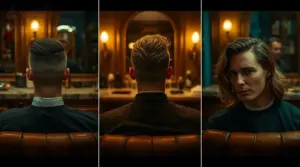
Length is the simplest place to start when you’re choosing a haircut, because it shapes how much upkeep and styling you’ll sign up for.
If you’re leaning toward a shorter cut, it helps to understand what hair clipper guards are used for, since guard size determines exactly how much length stays.
Below, we’ve grouped the most popular men’s haircut styles into three length categories, from short and military-inspired to long and layered.
Find the group that fits your hair and your routine, and you’ll walk into the barbershop knowing exactly where to look.
Short and Military-Inspired Haircuts
A short military-inspired cut gives you a sharp, disciplined look with almost no daily effort. The induction cut and burr cut sit at the shortest end and need no styling at all. A crew cut keeps a bit more length up front, while a high and tight shaves the sides close. Trim every two to three weeks to keep the edges crisp.
These styles trace back to field hygiene and pest control needs in military settings, which is why they remain so practical and low maintenance today.
Medium-Length and Structured Haircuts
If you want more room to style without losing shape, step up from the buzz and grow your top a few inches. A medium-length haircut gives you volume, direction and a clean outline.
- Quiff lifts hair up and back.
- Pompadour adds height.
- A classic side part looks tidy.
- Two-block cuts contrast long top with short sides.
- A textured fringe haircut suits wavy hair.
Book trims every six to eight weeks.
Pair those regular trims with a few color-treated hair care tips to keep your shade vibrant and your strands strong between salon visits.
Long and Layered Haircuts
Ready to let it grow past your ears? Long hair gives you freedom, but layers keep it from turning heavy and shapeless. A haircut with layers removes bulk, adds movement and lets you keep your length.
Try face-framing layers for shape around your cheekbones, or a wolf cut for lift and attitude. Curly hair stacks better with layers, too.
Fade, Taper, and Undercut Variations
Once you’ve picked a length, the sides and back are where you decide how sharp or soft the whole cut looks.
A taper shortens the hair gradually but keeps some length, so it reads as clean and conservative. A fade goes further and blends down to bare skin. Height changes the mood too, and the three options below show how:
- Low fade: starts just above the ears, subtle and office-friendly.
- Mid fade: begins near the temples, balanced enough for most styles.
- High fade: climbs toward the crown, bold and high-contrast.
If you like a disconnected look, an undercut leaves the top long and the sides abruptly short. Mix it with a fade for a softer finish.
On an oblong face, keeping the top long while the sides stay tight can add helpful width, and these hairstyles for oblong faces show how.
Skin fades need touch-ups every 2 to 3 weeks. Low and mid versions stretch to 3 to 4.
Choosing Men’s Haircuts That Suit You

The best haircut isn’t the trendiest one, it’s the one that works with what you’ve got. Three things shape the result: your hair, your face, and how much time you’ll give it each morning. Walk through each one below and you’ll walk into the barbershop with a clear plan.
Hair Texture, Density, and Growth Patterns
Two guys can ask for the same cut and walk away with totally different results. The reason sits on your scalp.
Check your strand thickness first. Fine hair goes limp when it’s left long, while coarse hair holds its shape but can frizz in humidity. Then look at scalp visibility for density. Finally, find your crown swirl and ask your barber to cut with it, never against it.
Face Shape and Haircut Proportions
A quick look in the mirror tells you most of what you need.
Oval faces are the easiest to style, so keep your cut balanced.
Round faces benefit from height on top, like a textured crop.
Square faces soften with a fringe or quiff.
If your face runs long, add width at the sides.
Triangular shapes need fullness up top.
Lifestyle and Styling Commitment
Picture 6:45 a.m., a hard hat on the counter and five minutes to spare. Your mornings decide your cut.
- Buzz or crew cut: almost no effort
- Textured crop: product and blow-drying
- Longer layers: detangling and extra drying time
Pick what you’ll actually do. Honest haircut maintenance tips start there, and you’ll stay in control of how you look every day.
What to Ask Your Barber For

Picture a guy who sits down, says "just a trim," and walks out with sides far shorter than he wanted. The barber did nothing wrong. "Trim" means something different to everyone.
A barber can only deliver what you describe, and a vague word like trim can leave you with a very different cut than you pictured
Skip vague words and give numbers. Try "a number 2 on the sides, about 2 inches on top." Then name the fade: "low fade starting near the ears, tight mix." Say how you want the neckline finished, whether blocked, rounded, or tapered, and mention sideburn length too.
Bring a few photos, ideally showing the cut from the front and side. Photos work best alongside a haircut consultation, where you can also say how much time you’ll spend styling each morning.
Ask which products suit your hair texture and how often to return. A good barber will gladly explain.
Once you know your hair type, a matte clay or paste from these men’s texture styling products can add grip and definition without making thick or wavy hair look greasy.
Styling and Maintaining Your Men’s Haircut

A great cut only gets you halfway. The rest is what you do with it every morning.
Start with how you wash. Shampoo two or three times a week, not daily, so your natural oils can do their job. Pat your hair dry with a towel instead of rubbing it, which cuts down on frizz and breakage.
Then style while it’s still damp. A small amount of pomade, clay, or cream goes a long way, and heat protectant spray is a must before any hot tool.
Book a trim every six to eight weeks, and ask your barber to tidy your beard so it matches your cut. Between barber visits, an adjustable beard trimmer for men makes it easy to keep your neckline and cheek lines sharp.
Here’s what a good routine gives you:
- The confidence of walking in with sharp, controlled hair
- Compliments that make you stand taller
- Control over flyaways before they ruin your day
- A look that feels unmistakably yours
- Pride in a cut that holds its shape
Frequently Asked Questions (FAQs)
How do I fix a bad haircut?
A bad haircut is like a lawn mowed in a hurry: patchy now, but it grows back. Wash it, style it differently, then see your barber, since many salons offer free adjustments within 7-10 days.
Which haircuts hide thinning hair best?
Ever noticed how a little less contrast makes thinning fade into the background? A textured crop or a crew cut with a high fade keeps the crown short, and a side parting haircut adds balance.
How do I transition between haircut styles?
Ready to leave your current cut behind without an awkward middle stage? Step down gradually: go from a skin fade to a low fade, then a taper, while asking your barber to leave two inches on top.
How much does a mens haircut typically cost?
Most guys pay between $25 and $45 at an independent barber shop, while budget chains run $15 to $ Big cities and premium shops push haircut cost higher, often past $60, and beard trims add $10 to $
Does shaving your head make hair grow thicker?
Scalp hair grows about 1 centimeter a month, and shaving doesn’t change that. It only cuts the shaft, so your follicles stay the same.
Blunt stubble just feels coarser. Your buzz cut isn’t thicker.
Conclusion
Picture Marcus, who used to mumble "short on the sides" and hope for the best. Last month he asked for a mid skin fade with a textured crop, two inches on top, and walked out grinning.
That’s the real payoff of learning the types of haircuts for men. Your texture, face shape, and routine narrow the choices, and the right words turn a gamble into a plan. Save a photo, say the terms, and sit down confident. The chair is yours.