This site is supported by our readers. We may earn a commission, at no cost to you, if you purchase through links. This content is for general informational and educational purposes only and is not a substitute for professional medical, dermatological, or nutritional advice.
Your hair shaft has tiny gaps and cracks from heat, color, and everyday brushing, and store-bought conditioners often just coat the surface. Real repair happens when smaller molecules, like those in coconut oil or egg protein, slip inside the strand and rebuild it from within. That’s the whole magic behind hair repair mask recipes: kitchen ingredients that match your hair’s natural chemistry instead of fighting it.
Grab avocado, honey, or shea butter, and you’re already holding what damaged strands crave.
Whether you’re battling brittle ends, an itchy scalp, or frizz that won’t quit, there’s a mix below built for your exact concern, plus the ratios and timing to make it work.
Table Of Contents
- Key Takeaways
- DIY Hair Repair Mask Basics
- Best Hair Repair Mask Recipes for Damaged Hair
- Targeted DIY Masks for Common Hair Concerns
- Natural Ingredients That Help Repair Hair
- How to Apply Hair Repair Masks Correctly
- Frequently Asked Questions (FAQs)
- What is the best homemade hair mask for damaged hair?
- How to repair extremely damaged hair at home?
- What is the 10 miracle hair mask?
- What is the best hair mask for extremely damaged hair?
- How to make a DIY hair mask for damaged hair?
- How do you make a DIY hair mask?
- What are the best DIY hair masks?
- Do DIY hair masks really work?
- What is a homemade hair mask?
- Can you make a hair mask at home?
- Conclusion
Key Takeaways
- Real hair repair happens when small molecules like coconut oil and egg protein soak into damp, open strands instead of just coating the surface like store-bought conditioners do.
- Matching your mask to your specific hair need matters most, so balance protein for strength with moisture for softness, since too much of either leaves hair stiff or brittle.
- Always patch test new ingredients behind your ear for 48 hours first, since eggs, nuts, and undiluted essential oils are common allergens, and skip essential oils entirely if you’re pregnant or have young kids.
- How often you apply a mask depends on your hair type: dry or color-treated hair benefits from 2-3 weekly treatments, oily hair does best every two weeks, and curly hair thrives on 1-2 sessions weekly.
DIY Hair Repair Mask Basics
Before you mix a single ingredient, it helps to know what’s actually happening to your hair. Repair isn’t one-size-fits-all, and knowing your hair’s needs makes every mask more effective. Here’s what you need to understand before you start.
Your hair’s porosity determines how it absorbs and holds moisture, so understanding how to identify your hair porosity type is the first step toward picking ingredients that truly work.
Why Homemade Masks Work
When you make your own hair mask, you control exactly what touches your strands. Small molecules in ingredients like coconut oil and egg protein slip into the hair shaft itself, not just coat it. Damp, clean hair opens your cuticles wider, so absorption improves.
That’s ingredient teamwork working with your hair’s natural chemistry, chemical-free and budget-friendly.
These DIY hair mask recipes offer targeted solutions for various hair concerns using accessible ingredients.
Protein Versus Moisture
Every strand needs two things: strength and softness. Protein balance rebuilds broken bonds inside the hair shaft, while moisture retention keeps that structure flexible instead of brittle. Too much protein leaves hair stiff and snap-prone; too little moisture invites breakage.
Think of it like tuning a guitar string, tight enough to hold a note, loose enough not to snap. Balance both, and hair elasticity follows naturally.
Balance hair like tuning a guitar string: tight enough to hold, loose enough not to snap
Best Ingredients for Damage
Once you know your balance, pick ingredients that actually deliver it.
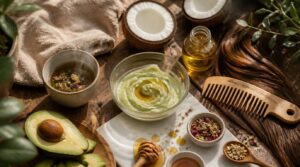
Avocado deep treatment repairs heat and color damage.
Coconut oil repair seals the cuticle, cutting protein loss in half.
Shea butter barrier locks in moisture instantly.
Argan oil shine heals split ends, while honey hydration boost draws water into thirsty strands for real hair damage repair.
Safety and Patch Testing
Before slathering on any mix, test it first. Dab a pea-sized amount behind your ear, then wait 48 hours, checking at the 24-hour mark too.
Watch for redness or itching. Egg, nuts, and undiluted essential oils are common allergens. Pregnant women and kids under 3 should skip essential oils. Use fresh batches only, and toss leftovers within 48 hours.
How Often to Use
Rarely does more mean better here. Your frequency guidelines depend on hair type: dry or color-treated hair thrives on 2-3 weekly applications, oily or fine hair wants once every two weeks, curly hair sits happily at 1-2 weekly applications.
- Dry hair boost: twice weekly, taper as strands soften
- Oily hair limits: once every 14 days max
- Curly hair routine: 1-2 sessions weekly for definition
Best Hair Repair Mask Recipes for Damaged Hair
Once you know your hair type and damage level, it’s time to pick your fix. Each recipe below targets a different repair need, from dryness to weak strands. Here are five masks worth keeping in your routine.
If you’re also dealing with fine lines alongside hair concerns, these natural anti-aging face mask recipes pair well with a full-routine refresh.
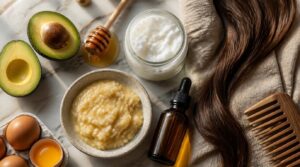
Avocado Olive Oil Mask
Think of avocado and olive oil as your richest repair combo. Avocado’s fats and vitamins A, D, E nourish follicles; olive oil seals the cuticle, locking moisture in for hours. Mash half an avocado with two tablespoons olive oil, apply to damp hair 15–20 minutes.
| Ingredient | Benefit |
|---|---|
| Avocado | Deep hydration, protein |
| Olive Oil | Cuticle seal, shine |
Coconut Oil Honey Mask
When dry, damaged, frizzy hair needs rescue, reach for two pantry staples: coconut oil and honey. Warm 2 tbsp coconut oil with 1 tbsp honey until smooth, cool to lukewarm, and apply mid-lengths to ends.
Honey’s hydration boost locks in moisture; coconut oil fights breakage by penetrating the shaft. Leave 40 minutes under a shower cap for real frizz control and shine.
Egg Yogurt Protein Mask
Your fridge holds a protein treatment already: eggs and yogurt. Whisk one egg with 2 tbsp yogurt (lactic acid gently clarifies), massage in, rinse cool after 30 minutes.
- Strengthens weak strands
- Repairs hair shaft
- Smooths cuticles
- Boosts shine
- Reduces breakage
Use fresh eggs only, refrigerate leftovers, and limit to once weekly for hair strengthening without stiffness.
Shea Butter Repair Mask
Winter-chapped ends need a thick rescue, and shea butter delivers. This natural moisturizer forms a protective barrier that locks in moisture for hours.
Warm 2 tbsp shea butter with 1 tsp coconut oil until melted. Massage through ends, leave 30 minutes, rinse with warm water.
This intensive repair mask targets stubborn hair breakage treatment needs while doubling as a scalp soothing agent for irritated skin.
Aloe Vera Moisture Mask
Nearly 98% water, aloe vera gel soaks straight into thirsty strands. It works as a natural humectant, pulling moisture in and locking it there for real moisture retention.
Smooth pure gel through damp hair, or mix with a spoonful of honey for extra staying power. Leave 20-30 minutes.
You’ll notice better hair elasticity and a calmer, soothed scalp almost instantly.
Targeted DIY Masks for Common Hair Concerns
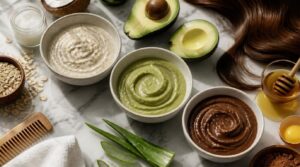
Not every hair problem calls for the same fix, and your mask shouldn’t either. Whether you’re battling flakes, frizz, or oil buildup, there’s a recipe built just for that concern. Here’s where to find the right match for what your hair’s dealing with right now.
Dry Brittle Hair
When strands snap just from a gentle brush-through, your hair is begging for moisture balance. UV rays, heat tools, and hard water all strip natural oils, leaving cuticles rough and thirsty.
Try an intensive repair mask: mash half an avocado, 1 tbsp honey, 2 tbsp coconut oil. Leave 30 minutes.
- Softens texture
- Seals cuticle
- Boosts shine
- Reduces breakage
Frizz and Flyaways
Once moisture balance is handled, the next enemy is humidity itself. Air pulls into your hair shaft, snapping hydrogen bonds and puffing cuticles up to 20% thicker.
Whisk 1 egg, 2 tbsp yogurt, 1 tsp honey for a frizz reducing mask that seals the cuticle. For static, add a coconut oil rinse. Result: smoother, calmer strands with real hair smoothness.
Dandruff Itchy Scalp
Frizz is annoying, but an itchy, flaky scalp signals something deeper. Most dandruff traces back to Malassezia yeast, so your mask needs to fight fungus, not just moisturize.
Mix 2 tbsp coconut oil with 5 drops tea tree oil for an antifungal remedy that calms irritation. Follow with an apple cider vinegar rinse (1:4 ratio) to balance pH and gently exfoliate flakes away.
Oily Roots Buildup
Greasy roots by day two? Blame sebum and buildup working together, not just "oily hair."
Mix 1 tbsp cornstarch with a pinch of cocoa powder, dust onto roots, brush out after 10 minutes. Follow weekly with an apple cider vinegar rinse (1:3) for scalp clarifying and pH balance—your clarifying hair rinse against product buildup and greasy strands.
Split Ends and Breakage
Once the cuticle frays, you can’t glue it back—so think prevention first, repair second.
For a protein hair treatment, whisk one egg with 2 tbsp yogurt, apply ends-only, rinse after 20 minutes.
Follow with argan oil on damp ends daily. That’s real hair shaft repair, plus reducing mechanical damage from brushing wet strands.
Natural Ingredients That Help Repair Hair
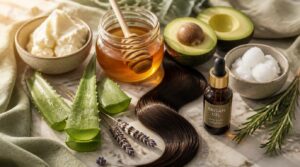
Every great hair mask starts with the right ingredients, not just a random mix. Some pull moisture in, some seal it, and some calm your scalp down. Here’s what to reach for and why each one earns its spot in your routine.
Honey for Hydration
Sticky as it’s, honey is one of the best natural humectants you can put on dry hair. It pulls moisture in and seals it there, softening strands and calming an irritated scalp.
Mix one teaspoon into your conditioner base for easy spreading. Apply to damp hair, and rinse thoroughly so you avoid any tacky residue.
Coconut Oil for Breakage
Breakage starts small, then snowballs. Coconut oil fights it at the source: lauric acid penetrates the shaft, binds to keratin, and builds real strength.
- Cuts protein loss by ~50%
- Lowers water retention index
- Smooths cuticle friction
- Calms scalp bacteria
- Strengthens weak strands
Apply 30-60 minutes pre-wash, weekly, for visible breakage reduction within a month.
Apple Cider Vinegar Rinse
Vinegar as a rinse? Yes, and your scalp will thank you. Mix 1 part apple cider vinegar to 3 parts water, pour over post-shampoo hair, then rinse fully.
This clarifying hair rinse balances scalp pH, dissolves buildup, and smooths the cuticle for less frizz. Its natural acids offer mild antifungal support too.
Use weekly, never on dry strands.
Argan Oil for Shine
Want glass-like shine? Argan oil is your answer, packed with oleic and linoleic acids that seal the cuticle flat.
It also delivers double the vitamin E of olive oil, boosting glow while fighting heat damage. Massage a few drops through damp ends before styling for smoother light reflection and lasting shine, no greasy buildup involved.
Tea Tree for Scalp
Flaky, itchy scalp? Tea tree oil fights the yeast behind dandruff, cutting severity by 41% in four weeks of consistent use.
Mix 3-5 drops with a tablespoon of carrier oil like jojoba, never apply undiluted. Massage in for better scalp circulation, leave 15-20 minutes, then rinse. It also calms irritation and balances excess oil for lasting scalp health.
If you’re dealing with persistent flakiness or itchiness alongside excess oil, pairing this routine with a few natural remedies for an itchy scalp can speed up relief.
How to Apply Hair Repair Masks Correctly
The best mask recipe still falls flat if your application game is off. A few small technique tweaks make the difference between mediocre results and a real transformation. Here’s exactly how to apply your mask step by step.
Before you start slathering anything on, remember to patch test new ingredients and dilute any acids or essential oils—and if you’re dealing with a greasy scalp, this natural hair mask for oily scalp walks through application tricks tailored to keep buildup at bay.
Start With Damp Hair

Grab your homemade hair mask right after a wash, while hair is still damp, not dripping. Damp hair opens the cuticle just enough for ingredients to sink in deeper than dry strands allow.
Blot with a microfiber towel first.
Skip soaking wet hair, it dilutes your mix and washes away the repair you’re after.
Section for Even Coverage
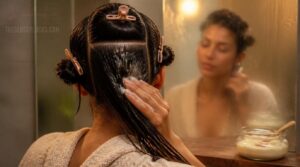
Once hair is damp, split it into sections so no strand gets skipped. Thick hair does best in 2-4 clipped chunks, while fine hair likes smaller, thin sections.
Even coverage starts with a plan:
- Part down the middle into quadrants
- Clip each section away after applying
- Work bottom layers up, then outer layers last
Sectioning keeps your hair mask distribution consistent.
Use a Wide-Tooth Comb
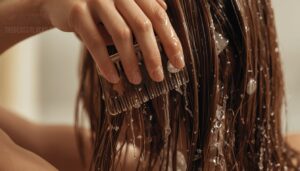
Once your sections are clipped, grab a wide-tooth comb to work the mask through evenly. Start at the ends and comb upward, easing out tangles without snapping strands.
This gentle detangling technique spreads product through the hair shaft, boosting hair hydration and strengthening while preventing breakage. Acetate combs glide smoothly through wet strands, aiding hair shaft smoothing with every stroke.
Ingredients like cetearyl alcohol pair especially well with this method, and understanding how fatty alcohols differ from drying alcohols in hair care can help you choose products that truly nourish your strands.
Cover With Shower Cap

Once combed through, seal everything in with a shower cap. This traps warmth against your scalp, creating enhanced absorption so oils and proteins penetrate the hair shaft instead of evaporating away.
- Locks in moisture for deep, lasting hydration
- Keeps ingredients from evaporating before they work
- Adds gentle warmth for better cuticle sealing
- Feels soothing and comfortable during treatment
- Prevents drips while you relax and wait
Rinse Without Buildup

Once time’s up, rinse with warm (not hot) water to open the cuticle without stripping your moisture barrier. Use the double rinse method: a first pass clears bulk product, a second confirms nothing’s left behind.
| Water Temp | Result |
|---|---|
| Warm | Removes residue |
| Hot | Strips moisture |
| Cold | Seals cuticle |
Rinse until water runs clear, this prevents buildup on dry, brittle hair.
Frequently Asked Questions (FAQs)
What is the best homemade hair mask for damaged hair?
When your strands feel worn down and tired, one mix brings them back to life: the Avocado Oil Mix. Mash avocado with olive oil and honey for deep Hair Moisture Retention and real Hair Strengthening.
How to repair extremely damaged hair at home?
Alternate protein boost treatments with deep oil penetration weekly, balance scalp pH with diluted apple cider vinegar, and skip heat styling for heat-free recovery—your intensive repair mask routine rebuilds strength without overwhelming fragile, damaged strands.
What is the 10 miracle hair mask?
Picture silk sliding through your fingers instead of straw. That’s the promise behind the "10 miracle" treatment: a keratin and collagen mix with apricot and almond oils, smoothing your hair shaft in one quick, salon-quality dose.
What is the best hair mask for extremely damaged hair?
Your best bet blends coconut oil, honey, and a bond repair ingredient like wheat protein. This moisture protein balance softens dry, damaged, frizzy hair while strengthening weak fibers, giving you real breakage prevention without stiffness or crunch.
How to make a DIY hair mask for damaged hair?
No blender required: mash avocado, honey, and coconut oil (2:1:1 ratio), work into damp ends, leave 20 minutes. Patch test first, rinse with lukewarm water, refrigerate leftovers up to five days.
How do you make a DIY hair mask?
Pick natural ingredients based on your hair’s needs, then mix at room temperature for a smooth mixture. Apply to damp strands, focus on damaged ends, and leave on 15-45 minutes before rinsing thoroughly.
What are the best DIY hair masks?
Your kitchen holds a treasure chest of a thousand salon treatments in disguise. Coconut oil with honey hydrates deeply, avocado-olive oil seals split ends, and rosemary-aloe blends spark scalp circulation for healthier growth, naturally and affordably.
Do DIY hair masks really work?
Yes, and the results back it up. Ingredients like coconut oil and honey penetrate the hair shaft, cutting protein loss and locking in moisture. Users report visible shine and softness within one to two weeks of consistent use.
What is a homemade hair mask?
Think of it as a DIY hair mask you mix yourself from natural ingredients like oils, eggs, honey, or avocado. You apply it for deep hair moisturization, hair strength building, and targeted repair based on your hair’s specific needs.
Can you make a hair mask at home?
Your kitchen already holds what you need. Mash avocado, whisk an egg, or warm coconut oil with honey for a DIY hair mask that delivers real hair moisturization and repair, saving you money over pricey salon treatments.
Conclusion
Good things come to those who wait, and healthy hair rewards patience most of all. You don’t need a salon budget to fix damage, just consistency and the right mix.
These hair repair mask recipes work because they feed your strands what they’re already missing. Pick one, stick with it weekly, and watch brittle ends soften into real strength. Your kitchen shelf already holds the fix.
Trust the process, your hair will thank you.