This site is supported by our readers. We may earn a commission, at no cost to you, if you purchase through links. This content is for general informational and educational purposes only and is not a substitute for professional medical, dermatological, or nutritional advice.
Your beard grows about a centimeter a month, whether you baby it or ignore it completely. That number stays stubbornly fixed. But density? Thickness? Those patchy zones driving you crazy? That’s where natural beard growth methods actually move the needle.
Genetics loads the gun—roughly 85% of your density comes down to DNA. Diet, skin care, and daily habits pull the trigger. Most guys stall out because they’re missing the follicle-level mechanics: what feeds keratin production, what unclogs stubborn pores, what actually boosts circulation instead of just smelling nice.
Get the science right, and patience turns into progress you can see in the mirror.
Table Of Contents
- Key Takeaways
- Set Realistic Beard Growth Expectations
- Build a Beard-Friendly Diet
- Follow a Daily Beard Growth Routine
- Use Natural Oils and Supplements Safely
- Improve Lifestyle Habits That Support Growth
- Frequently Asked Questions (FAQs)
- How can I stimulate my beard growth naturally?
- What is the 3-month beard rule?
- Can finasteride grow a beard?
- Can a beard grow in 2 weeks?
- How long before patchy beard areas fill in?
- Can beard growth improve after age thirty-five?
- Does shaving more frequently accelerate beard growth?
- Why do some beard hairs grow faster?
- Does microneedling really help stimulate beard growth?
- Can minoxidil be used specifically for beard growth?
- Conclusion
Key Takeaways
- Beard length grows at a fixed rate of about 9-15mm per month, but density and thickness—the things you can actually improve—depend on diet, skin care, and daily habits.
- Genetics determines roughly 85% of your beard’s density and pattern, so realistic expectations matter more than chasing overnight results.
- A consistent routine of gentle cleansing, exfoliation, circulation-boosting massage, and targeted nutrition creates the best conditions for follicle growth.
- Lifestyle factors like quality sleep, resistance training, and stress management directly support the hormone balance and skin health needed for a fuller beard.
Set Realistic Beard Growth Expectations

Before you start slathering on oils or planning your beard’s grand debut, let’s get honest about what’s actually driving that growth. Your genes, hormones, and age all play a bigger role than any product on the shelf. Here’s what actually shapes your timeline, so you know exactly what to expect.
If you’re curious how these factors play out week by week, this breakdown of the beard growth stages timeline walks you through what typically happens at each phase.
Normal Monthly Growth Rate
If you’re wondering whether your beard is growing "right," the answer’s usually about 9 to 15 millimeters a month—roughly a centimeter.
Growth happens in cycles: the anagen phase drives active growth, so individual speed varies. Seasons, genetics, and DHT sensitivity all play a role.
Track progress monthly, measuring the same spot each time, for real consistency data.
Genetics and Beard Density
Here’s the honest part: genetics calls about 85% of the shots for your beard’s density and pattern. Your dad’s jawline coverage? That’s your blueprint too.
Genetics calls about 85% of the shots for your beard’s density and pattern
Androgen receptor sensitivity decides how well follicles respond to DHT—same hormones, totally different results. Add polygenic factors and ethnic growth patterns, and you get why beards vary so wildly between guys, even brothers.
Research shows that genetic contribution to beard accounts for roughly 60% of thickness variation.
Age and Patchy Growth
Patience matters here. Puberty kicks off facial hair, but follicles keep maturing well into your 20s—thickest growth often lands in your mid-to-late twenties. Patchy cheeks with fuller mustache growth? Totally normal timeline mismatch.
Later on, aging shifts things again: follicle dormancy increases, graying sets in, and once-uniform patches can look sparse—not from bad habits, just biology doing its slow, uneven thing.
DHT and Follicle Sensitivity
Blame it on your receptors, not just your hormones. Dihydrotestosterone (DHT) forms when 5alpha reductase converts testosterone locally, but your follicle sensitivity decides the outcome.
- More androgen receptors mean stronger DHT signaling
- High sensitivity can trigger terminal hair shift even with average hormone levels
- Genetics—not effort—largely sets this baseline
Two guys, same testosterone, different beards. That’s follicle biology talking.
When Growth Usually Improves
Rarely does beard growth happen overnight, so check in around 8 to 12 weeks before judging results. Growth cycle phases mean some follicles rest while others push hair forward, and short hairs mix in slowly. By month four, patchy zones often fill visually as terminal hairs mature.
No change after consistent effort? That gap usually points to genetics, not a fixable routine flaw.
Build a Beard-Friendly Diet

Your beard doesn’t grow from beard oil alone—it grows from what’s on your plate. Genetics loads the gun, but nutrition pulls the trigger on keratin production and follicle health. Here’s exactly what you need to be eating to give those follicles a fighting chance.
Protein for Keratin Production
Every beard hair is basically woven rope, and protein supplies the thread. Keratin synthesis depends on amino acids from dietary protein—especially cysteine, a sulfur-rich amino acid that forms disulfide bonds for strength.
Before reaching for a bottle, it’s worth checking which testosterone-boosting supplements actually support beard growth and which are just clever marketing.
Skimp on protein sources like eggs, fish, or legumes, and you’re asking your follicles to build rope without enough fiber. Feed them well, and keratin production won’t be your bottleneck.
Vitamin D and B Vitamins
Sunlight is basically a free supplement: 15-20 minutes daily lets your skin activate vitamin D, waking up dormant follicles for beard nutrition.
- Biotin builds keratin’s backbone
- B12 fuels follicle metabolism
- Sunlight sparks dormant growth
B-vitamin deficiency and low vitamin D both stall growth. Since B vitamins aren’t stored long, deficiency risks add up fast—making dietary supplements a smart backup when food sources fall short.
Zinc, Iron, and Omega-3s
Think of zinc, iron, and omega-3s as your beard’s supply chain crew. Zinc keeps oil glands running and helps keratin production, but megadosing can block copper and iron absorption—balance beats excess.
Iron builds hemoglobin, shuttling oxygen to hungry follicles. Omega-3s calm inflammation and stretch the growth phase.
Get these from salmon, oysters, and pumpkin seeds—timing matters as much as dosage.
Hydration for Healthy Skin
Your beard’s soil is your skin, and dry soil grows nothing well. Water intake helps circulation, feeding follicles nutrients while a strong skin barrier locks moisture in.
Humectants like glycerin or hyaluronic acid pull water into skin. Post-wash, always moisturize damp skin.
- Drink water consistently
- Use humectant moisturizers
- Moisturize right after washing
- Choose fragrance-free formulas
- Avoid hot showers
Best Beard Growth Foods
Forget expensive serums — your grocery list matters more. Protein-rich eggs kickstart keratin synthesis, while salmon omega-3s calm inflammation around follicles.
Toss in zinc-heavy seeds, vitamin-dense spinach, and micronutrient-rich legumes for iron and folate. Brazil nuts add selenium.
This isn’t about one superfood. It’s proper nutrition, a balanced diet feeding steady nutrient intake for real, sustained growth.
Follow a Daily Beard Growth Routine
Diet affects what’s happening inside your body, but your daily habits shape what’s happening on your skin. A few consistent minutes each day can make the difference between a beard that struggles and one that thrives. Here’s the routine worth building.
Gentle Face Cleansing

Wash smart, not hard: your skin barrier is the foundation everything else grows on.
Grab a gentle, sensitive-skin cleanser—check ingredient labels for harsh sulfates. Use lukewarm water (never hot) with clean hands, morning and night, massaging one to two minutes. Rinse thoroughly to remove residue, then pat dry instead of rubbing. Follow with beard-safe moisturizer. This simple skin care habit prevents irritation before exfoliation and washing routines even begin.
Exfoliate to Unclog Follicles

Clean skin sets the stage, but dead cells still pile up around follicles. That’s where exfoliation earns its spot.
Salicylic acid (BHA) dissolves oil and keratin plugs inside pores—start twice weekly. Prefer a gentler touch? A soft washcloth works too, just skip active bumps.
Always moisturize after. This protects your skin barrier, prevents ingrowns, and keeps follicles primed for growth.
Massage for Better Circulation

Once your skin’s prepped, put your hands to work. Rhythmic kneading and light pressure on the jaw and cheeks briefly compress vessels—then release, letting blood rush back in. That’s your circulation boost.
You’ll notice mild warmth; that’s normal vascular activity, not irritation. Bonus: gentle strokes encourage lymphatic drainage, easing puffiness.
Five minutes daily, easy pressure. Skip it if skin’s inflamed or broken—no need to aggravate anything.
Brush to Distribute Oils
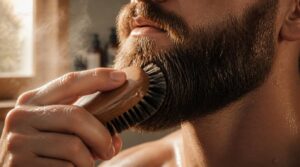
Grab a boar bristle brush once blood’s flowing—those natural bristles pull oil from skin to strand. Section your beard, brush root-to-tip, moderate pressure only.
- Start at roots for even coverage
- Use slow, deliberate strokes
- Angle bristles gently through mid-lengths
- Clean your brush weekly
Pair with beard oil for real density gains. Skip aggressive scrubbing—gliding beats dragging every time.
Let Your Beard Grow

Here’s the hardest part: doing nothing. Patience during patchiness beats every trimmer.
| Week | What’s Happening |
|---|---|
| 1-3 | Uneven stubble, follicle activation |
| 4-8 | Sparse areas start connecting |
| 8-12 | Growth plateaus, cycles catch up |
| 12+ | Full density visible |
Resist trimming—let hair cycles finish naturally, and facial hair density improves on its own timeline.
Use Natural Oils and Supplements Safely

Your beard routine isn’t complete without the right oils and supplements backing it up. Some options have real science behind them, while others just need a little more caution. Here’s what’s worth adding to your cabinet—and how to use it right.
Castor Oil Benefits
Thick and gloopy, sure, but castor oil punches above its weight for beard health. It’s loaded with ricinoleic acid, which calms inflammation around irritated follicles and helps skin lock in moisture. That barrier effect keeps your beard zone hydrated instead of flaky.
It also brings mild antimicrobial protection, guarding follicles while supporting healing on any nicked or irritated skin underneath your growing beard.
Peppermint Oil Dilution
Peppermint oil shouldn’t touch your face undiluted—it’s potent enough to irritate sensitive skin.
Dilute at 1% for facial use (roughly 1 drop per teaspoon of jojoba or castor oil), mixing gently by rolling the bottle.
- Patch test on your forearm first
- Watch for redness 24 hours
- Start at lowest concentration
- Adjust only if skin tolerates it
Rosemary Oil for Follicles
Rosemary oil is basically an espresso shot for your follicles. Its carnosic acid boosts scalp circulation, delivering oxygen straight to hair follicle health zones.
The antioxidant compounds fight oxidative stress while anti-inflammatory properties calm irritation that stalls growth.
Like any essential oil, dilute it in a carrier oil and patch test first—your skin will thank you before follicle activation begins.
Biotin and Multivitamins
Biotin won’t work magic unless you’re actually deficient—then it fixes hair loss fast.
It’s water-soluble, so your body flushes excess rather than storing it.
Multivitamins offer smarter nutrient insurance: broad micronutrient coverage without megadosing.
- Check labels for RDA-level biotin
- Avoid megadoses
- Watch for deficiency symptoms
- Prioritize B-complex balance
- Mention supplements before bloodwork—biotin skews troponin tests
Supplements to Use Carefully
"Natural" doesn’t mean risk-free—that’s the biggest myth in supplement aisles.
Saw palmetto, zinc, and multivitamins can help, but overdoing it risks toxicity, organ strain, or med interactions (looking at you, blood thinners).
| Supplement | Caution |
|---|---|
| Zinc | Nausea if overdosed |
| Vitamin A | Liver stress, headaches |
| Iron | GI symptoms |
| Saw Palmetto | Hormone interactions |
Check labels. Ask your doctor first.
Improve Lifestyle Habits That Support Growth

Oils and supplements only go so far if your daily habits are working against you. Your beard doesn’t grow in a vacuum—it reacts to sleep, stress, and how you treat your body every day. Here’s what actually moves the needle.
Sleep and Hormone Balance
While you’re catching Z’s, your follicles are throwing a growth party—deep sleep triggers growth hormone release, and skimping wrecks it.
Poor sleep disrupts your circadian rhythm, delays melatonin timing, and spikes cortisol. Result? Suppressed testosterone, thrown-off thyroid signaling, and hunger hormones gone haywire.
Aim for 7-9 consistent hours. Your beard (and waistline) will thank you.
Exercise and Testosterone
Once you’re rested, the gym’s your next lever. Heavy resistance training—think squats, deadlifts, rows—spikes testosterone more than isolated curls ever will, thanks to bigger muscle recruitment.
- Lift heavy, multi-joint moves for the biggest hormonal payoff
- Keep rest periods short to boost the post-workout surge
- Pair strength work with cardio to trim fat and support hormonal balance
Effects are temporary, but consistency compounds over time.
Stress and Cortisol Control
Here’s the part nobody tells you: stress can quietly sabotage your gains at the gym. Chronic stress keeps cortisol elevated, which suppresses testosterone and DHT—the exact hormones fueling follicle growth.
Calm your sympathetic activation with mindfulness breathing techniques or short daily walks. Watch dietary stress triggers too—cutting sugar and caffeine keeps cortisol from spiking. Even 10 minutes of intentional stress reduction helps HPA axis regulation and steadier follicle activity.
Avoid Smoking and Dehydration
Cortisol isn’t the only saboteur—cigarettes work against you too. Nicotine restricts blood flow to skin and triggers fluid loss through excess urination and dulled thirst cues, leaving your face dehydrated.
Dry, tight skin makes a lousy home for follicles. Add DNA damage from smoke exposure, and you’re fighting growth on two fronts. Quitting smoking and drinking water consistently protects hydration and gives follicles room to thrive.
Prevent Over-Washing Damage
Ever scrub your beard daily thinking it’s helping? It’s not. Overwashing strips natural oils and wrecks your skin barrier function.
Try this:
- Wash 2-3x weekly max
- Use lukewarm water, not hot
- Choose gentle beard shampoo
- Pat dry, don’t rub
Rinse thoroughly to prevent residue buildup. Your follicles will thank you.
Frequently Asked Questions (FAQs)
How can I stimulate my beard growth naturally?
Think of your beard follicles like dormant seeds waiting for the right soil. Daily facial massage boosts blood circulation, essential oil safety matters with peppermint and rosemary, and DHT modulation through diet helps trigger fuller, natural growth over time.
What is the 3-month beard rule?
It’s a 90-day commitment to skip trimming entirely, letting patchy areas catch up naturally. This helps with evaluating natural patterns, checking beard density, and managing early itchiness before avoiding premature trimming ruins your true growth potential.
Can finasteride grow a beard?
Not reliably. Finasteride blocks 5-alpha-reductase, lowering DHT rather than boosting it, so facial hair thinning is just as likely as growth. Systemic hormone effects vary person to person—don’t rely on this medication for beard gains without real clinical guidance.
Can a beard grow in 2 weeks?
Rome wasn’t built in a day, and neither is your beard. Two weeks usually brings stubble and early growth patterns, not full coverage. Expect roughly a quarter-inch length, scattered patchiness, and early signs of which follicles are activating first.
How long before patchy beard areas fill in?
Give it 2 to 4 months before judging patchiness—your hair growth cycle needs time. Genetics caps your density, so some gaps may stay put. Track density changes weekly rather than daily; patience beats panic when activating stubborn follicles.
Can beard growth improve after age thirty-five?
Your beard isn’t a birthday cake that stops rising after thirty-five candles. Late-stage maturation still happens—terminal hair change continues in existing follicles even as age-related testosterone dips slightly, so managing patchy aging areas with consistent care still yields real, visible beard growth.
Does shaving more frequently accelerate beard growth?
No — that’s one of the most stubborn beard growth myths out there. Growth happens beneath the skin at the follicle, driven by hormones and genetics. Shaving only changes stubble texture and perception, not actual growth cycle speed.
Why do some beard hairs grow faster?
Like a telegraph line hitting some houses faster than others, DHT receptor sensitivity varies by follicle. Genetics dictates which ones activate terminal hair conversion, boosting localized blood perfusion and beard growth speed unevenly across your jawline.
Does microneedling really help stimulate beard growth?
Yes, but with caveats: it works best on existing dormant follicles, using tiny punctures (25–5mm) to boost topical absorption and trigger skin repair. It won’t create new follicles—patchy areas from genetics likely stay patchy no matter how much you needle.
Can minoxidil be used specifically for beard growth?
Technically, yes — it’s off-label, but here’s the twist: topical minoxidil 3% applied twice daily to facial skin can boost beard density within 16 weeks, though irritation risk means checking with your dermatologist first.
Conclusion
Picture a guy who started rosemary oil, weekly exfoliation, and zinc-rich meals in January; by month four, his patchy jawline had filled in enough that he stopped avoiding mirrors.
That’s the real promise behind natural beard growth methods: not overnight miracles, but compounding follicle-level wins.
Feed your skin, calm your cortisol, and work the oils in consistently. Your genetics set the ceiling, but your daily habits decide how close you actually get. Stay patient—the mirror won’t lie forever.
Simple steps like washing a few times a week, exfoliating underneath, and trimming with sharp tools build the foundation—see this beard growth guide for young adults for a routine that actually sticks.
If you’re still wondering whether shaving actually thickens your beard, this breakdown of why shaving doesn’t make your beard grow back thicker lays out the science behind the myth.
If you’re wondering whether that razor is actually thickening your beard or just changing how it feels, this breakdown of whether shaving really speeds up beard growth sets the record straight.