This site is supported by our readers. We may earn a commission, at no cost to you, if you purchase through links. This content is for general informational and educational purposes only and is not a substitute for professional medical, dermatological, or nutritional advice.
Three weeks into your beard, you’re scratching your jaw in a meeting like it’s a full-time job. That itch isn’t weakness. It’s your skin reacting to fresh hairs breaking through the surface while its barrier struggles to keep up.
Sweat, oil, and dead cells pile up around those emerging hairs, and irritation spreads fast. Most guys quit and shave right here.
Don’t. You can prevent beard itch naturally with the right washing routine, a smart moisturizer, gentle exfoliation, and a few product swaps. Here’s how to take control of your skin and keep your beard growing.
Table Of Contents
- Key Takeaways
- Why Your Beard Itches During Growth
- Wash Your Beard Without Drying Out The Skin
- Moisturize Under Your Beard With Jojoba Oil or Aloe Vera
- Prevent Ingrown Hairs With Gentle Exfoliation and Brushing
- Avoid Irritants That Make Beard Itch Worse
- Frequently Asked Questions (FAQs)
- What will stop my beard from itching?
- What is the 3 month beard rule?
- Why is my beard suddenly itchy?
- What are the common causes of an itchy beard?
- Can stress or hormones worsen beard itch?
- Does beard length affect itchiness levels?
- Should I trim or grow through itch?
- Can pillow fabric cause nighttime beard irritation?
- Do seasonal weather changes trigger beard itch?
- How long does beard itch usually last?
- Conclusion
Key Takeaways
- Beard itch comes from new hairs pushing through your skin while its barrier struggles to keep up, so shaving isn’t the fix, and you can calm it by protecting that barrier.
- Wash only when you’re sweaty or oily, using lukewarm water and a gentle cleanser, then pat your skin dry and leave it slightly damp so you don’t strip away oil.
- Moisturize your skin (not just the hair) within minutes of drying off using jojoba oil or aloe vera gel, and exfoliate gently once or twice a week to keep follicles clear and prevent ingrown hairs.
- Ditch products with denatured alcohol, harsh cleansers like SLS and SLES, and added fragrance, since they dry your skin and fuel the itch, and see a professional if it lasts beyond three weeks.
Why Your Beard Itches During Growth

When your beard starts coming in, your skin takes the hit first. That’s the beard growth phase, and it’s why beard itch causes so much frustration. Every new hair has to push through your skin’s surface, and that triggers follicle irritation right at the opening.
Soothing the itch early with natural beard health remedies can keep dry skin and ingrown hairs from derailing your growth before week 12.
Every new beard hair must push through your skin’s surface, and that struggle is why your face itches first
Now add dryness. A weakened skin barrier lets friction and inflammation flare up fast, so beard skin barrier repair matters more than most guys realize.
Here’s what else is going on. Sweat, oil, and dead cells pile up around emerging hairs. Coarse or curly hairs rub harder, and collars and seams make it worse. Trapped moisture feeds itch-causing microbes too.
Sound familiar? Good, because once you know the triggers, beard itch natural treatment gets much easier.
Wash Your Beard Without Drying Out The Skin

So how do you wash without making things worse? Start with the skin, not the hair.
Once everything is rinsed clean, a few simple habits, like keeping your beard soft and healthy, will help prevent dryness and irritation over time.
Overwashing strips oil faster than your skin can replace it, and that undoes your skin barrier repair. Let’s break down a routine that protects it.
- Use lukewarm water, since hot water strips sebum quickly.
- Massage a pHbalanced cleanser or beard wash into the skin for 20 seconds.
- Rinse until no residue remains, because leftover soap keeps skin irritated.
Pat dry with a clean towel. Don’t rub, and don’t chase bone-dry skin. A slightly damp finish helps skin hydration and cuts friction.
Wash only when you’re sweaty or oily, usually every other day. After a workout, rinse. Fewer washes, less irritation. Sound simple? It is.
If your skin feels dry after washing, a beard wash with essential oils can clean gently while leaving the hair soft and lightly scented.
Moisturize Under Your Beard With Jojoba Oil or Aloe Vera
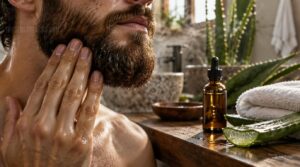
Your skin is clean and slightly damp. Now lock it in. Moisturize within a few minutes of drying off, because that’s when dryness-driven itch starts creeping back.
Which one should you pick? Let’s break it down.
Jojoba oil mimics your skin’s own sebum, so it settles in nicely. Choose it if your skin feels tight or flaky. Warm two or three drops between your palms and press them onto the skin, not just the hair.
Aloe vera gel is lighter. It boosts skin hydration and calms irritation without a greasy feel, which suits clog-prone skin.
Keep layers thin. Heavy products leave residue and add friction. Patch-test first, since added fragrance causes most reactions. Stick with this beard hydration routine daily.
Prevent Ingrown Hairs With Gentle Exfoliation and Brushing
Your skin hydration is handled, so now keep the follicles clear. Dead skin and debris can block follicle openings, and that’s how ingrown hairs start. Hair curls back into the skin instead of growing out.
Let’s break it down. Gentle exfoliation once or twice a week does the job. Use a soft cloth or a low-abrasion scrub, and move in light circles. Skip it if your skin feels raw.
Next, beard brushing. Use a soft brush after washing, while your hair is still slightly conditioned. Brush in the direction of growth to lift trapped hairs and cut friction. Go easy, because firm pressure inflames follicles and makes the itch worse.
Small, steady beard maintenance beats a harsh scrub every time.
Avoid Irritants That Make Beard Itch Worse

Ditch the products that quietly sabotage your progress. Let’s break down the usual suspects.
Check your beard wash and oil labels first. Denatured alcohol strips your natural lipids, and harsh cleansers like SLS and SLES leave your skin tight, dry, and itchy. Synthetic fragrance and essential oils feel luxurious, but they’re common contact irritants, and your face notices fast.
Next, look at your habits. Scrub too hard, towel-dry aggressively, or blast your face with scalding water? You’re damaging your barrier, and itch follows. Rinse thoroughly with lukewarm water, pat dry, and wash pillowcases in fragrance-free detergent.
Heavy waxes and gels deserve suspicion too. Their residue clogs follicles and invites irritation.
Simplify your routine now, and your face will thank you.
Frequently Asked Questions (FAQs)
What will stop my beard from itching?
Want real relief from beard itch? Build a simple beard care routine. Cleanse gently once daily, apply beard oil with jojoba, and add gentle exfoliation twice weekly.
Because ingrown hairs cause inflammation, redness, and itchiness when shaved or cut hair grows back into the follicle, regular exfoliation helps keep follicles clear. These natural remedies calm irritation fast, restoring control.
What is the 3 month beard rule?
A seedling needs patience before it becomes a hedge. The 3 month rule means no trimming or judging for 90 days.
Focus on beard itch prevention: gentle exfoliation, beard oil application, skin hydration, beard maintenance.
Why is my beard suddenly itchy?
Sudden beard itch usually means new stubble is poking through, or something changed. Dry air, harsh washing, or a new beard oil can drain skin hydration. Tweak your beard care routine and add gentle exfoliation.
What are the common causes of an itchy beard?
Up to 5% of adults deal with seborrheic dermatitis, a classic beard itch trigger. Dry skin, sebum overproduction, ingrown hairs, and harsh products add serious fuel.
Smarter beard hygiene brings real skin irritation relief fast.
Can stress or hormones worsen beard itch?
Is it in your head? Not at all. Stress hormones like cortisol inflame skin and weaken its barrier, while testosterone shifts alter oil levels.
For beard itch prevention, protect hydration and seek skin irritation relief.
Does beard length affect itchiness levels?
Does beard length change your itch? Longer hair softens sharp tips, easing friction damage and supporting skin hydration.
But follicle health and hair texture matter more. Build your beard care routine around beard itch prevention.
Should I trim or grow through itch?
Trim if the scratchiness drives you crazy. Shorter hair softens those sharp tips fast. Otherwise, grow through it. Add beard oil, keep up your beard care routine, and the itch usually fades within two weeks.
Can pillow fabric cause nighttime beard irritation?
Yes, pillow fabric can wreck your night. Rough or heat-trapping weaves rub the tender skin under your beard for hours, fueling beard itch.
Wash cases often, keep up facial hair care, and prioritize skin hydration.
Do seasonal weather changes trigger beard itch?
Nothing says cozy like a heated living room that quietly turns your face into sandpaper. Cold air and low indoor humidity leave dry skin 15-30% drier, weakening your skin barrier.
Prioritize hydration, and gently exfoliate.
How long does beard itch usually last?
Every new beard starts with a storm before the calm. Expect beard itch duration to run a few days up to two weeks as stubble toughens. Still itching after three weeks? Something else is going on.
Conclusion
Steady, simple habits beat scratching every time. Wash gently, moisturize daily, exfoliate lightly, and ditch harsh products. That’s how you prevent beard itch naturally without surrendering your growth.
Give your skin a few weeks to adapt. The itch fades, the hairs settle, and your confidence climbs with every millimeter. You’ve got the routine and the know-how. Your beard isn’t the problem, it’s the project. Stick with it, and soon you’ll forget the itch ever existed.