This site is supported by our readers. We may earn a commission, at no cost to you, if you purchase through links.
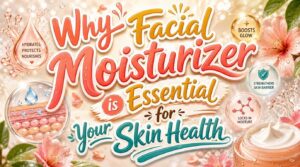
Your skin loses water every hour of every day—quietly, invisibly, through a process called transepidermal water loss. Most people don’t notice until their skin starts feeling tight, looking dull, or reacting to things it never used to. That’s not a sensitivity problem.
That’s a barrier problem. Facial moisturizer works at the structural level, reinforcing the lipid matrix that holds moisture in and keeps irritants out.
Understanding why it matters—and how to use it correctly for your skin type—makes the difference between guessing and actually getting results.
Table Of Contents
- Key Takeaways
- Why Daily Facial Moisturizer Matters
- Moisturizer Protects Your Skin Barrier
- How Moisturizers Hydrate Facial Skin
- Benefits for Every Skin Type
- Moisturizer Helps Acne-Prone Skin
- Moisturizer Supports Healthy Skin Aging
- Choosing and Applying Moisturizer Correctly
- Frequently Asked Questions (FAQs)
- Conclusion
Key Takeaways
- Your skin loses water every day through a process called transepidermal water loss, and a good moisturizer slows that loss by reinforcing the barrier that holds moisture in.
- Ingredients like ceramides, humectants, and occlusives each play a different role — drawing water in, smoothing the surface, and sealing it all in place.
- The right formula depends on your skin type — oily skin needs a lightweight, oil-free gel, while dry or mature skin benefits from richer creams with ceramides and fatty acids.
- Skipping moisturizer doesn’t reduce oiliness or acne — it often makes both worse by triggering your skin to overproduce oil as a defense response.
Why Daily Facial Moisturizer Matters
Your skin loses water every single day — more than you might think. A good moisturizer does more than just soften; it works quietly in the background to keep your skin stable, comfortable, and balanced.
Think of it as a daily shield — and if you’re wondering whether to layer on a serum too, understanding the difference between a moisturizer and a hydrating serum can help you build a routine that actually works.
Here’s why making it a daily habit actually matters.
Prevents Daily Water Loss
Every day, your skin quietly loses water through a process called transepidermal water loss — and your face is especially vulnerable. A good moisturizer works through moisture retention mechanics like skin surface sealing and diffusion path elongation, slowing water flux reduction at the barrier.
This hydration lock strengthens your skin’s barrier lipid architecture, keeping daily moisture loss in check and your skin comfortably balanced.
Supports Healthier-looking Skin
Keeping your skin hydrated does more than prevent tightness — it directly shapes how your skin looks day to day. Well-moisturized skin usually reflects light more evenly, supporting a luminous complexion and reduced redness. Antioxidant defense ingredients paired with ceramides and hyaluronic acid reinforce your skin barrier, promoting even tone and that quiet radiant glow that signals genuinely healthy skin.
Regular aerobic exercise promotes the enhanced blood flow contributing to a radiant complexion.
Reduces Dryness and Tightness
That luminous look fades fast when dryness sets in. Dry skin loses moisture quickly, leaving your face feeling tight and uncomfortable—especially after cleansing. Immediate Hydration Relief comes from applying a comfort-focused formulation while skin is still damp, locking in surface water before it escapes.
Three skin softening strategies that work:
- Humectants like glycerin draw water into the outer skin layers
- Emollients fill micro-cracks, smoothing rough texture instantly
- Occlusives seal everything in, supporting long-lasting moisture lock and skin barrier repair
Helps Skin Feel Balanced
Balanced skin isn’t just about looking good — it’s about how your skin feels hour by hour. When your skin barrier stays supported through consistent Balanced Hydration, the "tight then oily" cycle breaks.
Hydrating ingredients promote pH Stability and Microbiome Harmony, keeping surface evenness and tactile comfort steady.
Oil control becomes natural, not forced, and barrier repair happens quietly in the background.
Moisturizer Protects Your Skin Barrier
Your skin barrier is working around the clock to keep the good stuff in and the bad stuff out.
When it’s weakened, dryness to irritation gets worse — fast.
Here’s how the right moisturizer keeps that barrier strong and doing its job.
Strengthens The Stratum Corneum
Think of your stratum corneum as a brick wall — and moisturizer as the mortar holding it together. The right formula enhances NMF Augmentation, boosting your skin’s natural water-binding compounds.
It reinforces Corneodesmosome Reinforcement between skin cells, improves Lipid Matrix Organization, and drives Bound Water Increase deep in the barrier.
The result? Meaningful TEWL Reduction and a genuinely stronger skin barrier.
Seals in Hydration
Once your barrier is strengthened, the next job is keeping water from escaping — and that’s where occlusive agents and humectants work together.
The Hydration Lock Mechanism operates through these key steps:
- Barrier Film Formation creates a protective layer over skin
- Sealant Lipid Layers reduce transepidermal water loss considerably
- Moisture Retention Technology combines occlusives with Sealant Humectant Pairing
- Humectants draw water inward; occlusives seal it there
- Together, they deliver lasting skin hydration and moisture loss prevention
Reduces Irritation and Flaking
When your skin barrier is compromised, dryness and irritation follow fast. The right moisturizer turns that around.
Ingredients like colloidal oatmeal deliver Soothing Oat Benefits, while Panthenol Comfort aids healing. Centella Calm and Allantoin Relief reduce redness, and Chamomile Serenity eases sensitivity.
Together, they make flaky skin treatment simple — calming sensitive skin, preventing moisture loss, and restoring your barrier’s natural comfort.
Blocks Environmental Stressors
Your face takes a hit every day — wind, cold snaps, pollution, and UV rays all chip away at your skin’s defenses.
A good moisturizer acts as a Wind Barrier and Pollution Shield, with occlusive ingredients blocking environmental damage before it starts. This UV Hydration Support and Cold Weather Guard also buffers Heat Swing fluctuations, helping your skin barrier function stay steady no matter what’s outside.
Supports Barrier Repair
When your barrier is already stressed, the right moisturizer doesn’t just comfort — it actively rebuilds. Ceramides, fatty acids, and cholesterol work together as a Barrier Lipid Blend, supporting Tri-layer Repair from the inside out.
Paired with humectants, emollients, and occlusive ingredients, they restore pH Optimization and Enzyme Activation, helping maintain Microbiome Balance so your skin barrier can genuinely recover — not just cope.
How Moisturizers Hydrate Facial Skin

Moisturizers don’t work through one single mechanism — they use a few different strategies to get water into your skin and keep it there. Each ingredient type plays a specific role, and knowing how they work together helps you make smarter choices for your skin.
Here’s what’s actually happening beneath the surface.
Humectants Attract Water
Humectants are your skin’s built-in water magnets — ingredients like hyaluronic acid and glycerin work through impressive Water Binding Capacity to pull moisture directly into the stratum corneum. Their Skin Layer Targeting addresses dryness exactly where it starts.
Keep in mind their Humidity Dependence:
- In humid air, they draw moisture from the environment
- In dry conditions, they tap into the skin’s own Moisture Gradient
- This can increase skin moisture loss without occlusive support
- Humectant Occlusive Synergy locks in deep hydration effectively
Emollients Smooth Rough Texture
While humectants pull water in, emollients handle the surface work. Think of them as a smoothing layer that fills in rough patches between skin cells — a Micro-Particle Fill effect that softens texture instantly.
Ingredients like Shea Butter Softening compounds and Fatty Acid Conditioning agents add a Film-Forming Layer that reduces friction.
Silicone Glide formulas and noncomedogenic formulation options deliver skin texture enhancement without clogging pores.
Occlusives Prevent Evaporation
Once emollients smooth the surface, occlusives take over — sealing everything in place. Think of them as plastic wrap for your skin. Through Film Formation and Layer Continuity, they create Occlusive Strength that dramatically cut Evaporation Metrics.
- Petrolatum blocks nearly 99% of water loss
- Dimethicone offers silicone-based barrier coverage
- Mineral oil forms a lightweight occlusive film
- Shea butter blends emollient and occlusive benefits
Your clinical skin barrier stays protected longer.
Lipids Replenish Skin Structure
Occlusives seal the surface — but what about the deeper structure underneath? Your skin’s outer layer is built on a lipid matrix repair system made of ceramides, cholesterol, and fatty acids. Multilamellar lipid addition through lipid-rich moisturizers restores this framework layer by layer.
| Lipid | Role | Benefit |
|---|---|---|
| Ceramides | Cholesterol-ceramide balance | Retains moisture |
| Cholesterol | Barrier flexibility | Prevents cracking |
| Fatty acids | Fatty acid integration | Seals lamellae |
Barrier lipid synergy between emollients, occlusives, cosmetic emollient, and cosmetic humectant ingredients strengthens your clinical skin barrier from within.
Damp Skin Application
Lipids rebuild structure from within — but timing seals the deal. Apply moisturizer to damp skin within about a minute of cleansing. That short timing window matters.
Your patting technique sets it up: gently pat dry, leaving skin slightly moist. This layer absorption boost helps lock in hydration before evaporation starts.
Damp skin also improves product slip prevention, ensuring even, smooth coverage every time.
Benefits for Every Skin Type
No two people have the same skin, and that’s exactly why moisturizer isn’t one-size-fits-all. The right formula for you depends on what your skin actually needs day to day.
How different skin types benefit from the right moisturizer.
Dry Skin Needs Richer Creams
If your skin feels tight, rough, or flaky, it’s telling you something important. Dry skin needs rich emollient creams — formulas built around ceramide concentration, shea butter soothing, and urea buffering to restore what your barrier is missing.
Occlusives like shea butter seal in moisture overnight, making nighttime sealing especially effective.
Strong emulsion stability keeps these moisturizers working consistently on your skin.
Oily Skin Needs Lightweight Gels
Oily skin still needs moisture — skipping it only makes things worse. When your skin feels dehydrated, it overproduces oil to compensate. A lightweight gel moisturizer breaks that cycle without clogging pores.
Here’s what makes a gel-based moisturizer work for oily skin:
- Lightweight Feel — spreads thin, absorbs fast
- Rapid Absorption — no greasy residue left behind
- Mattifying Finish — keeps shine controlled throughout the day
- Noncomedogenic formula — won’t block pores
- Thermal Comfort and Cooling Sensation — feels soothing, not heavy
An oil-free moisturizer with humectants like glycerin or hyaluronic acid delivers real hydration without the weight. That’s the balance oily skin actually needs.
Combination Skin Needs Balance
Combination skin plays by its own rules. Your T-zone requires oil regulation while your cheeks remain tight and dry.
A dual texture routine addresses this imbalance: apply a lightweight, oil-free moisturizer where shine builds, then layer a richer cream over dry patches.
Zone-specific moisturizers with noncomedogenic, barrier harmony approach formulas ensure daily hydration without disrupting either zone’s equilibrium.
Sensitive Skin Needs Gentle Formulas
Reactive skin doesn’t need more products — it needs the right ones. A gentle moisturizer built for sensitive skin focuses on four non-negotiables:
- Fragrance-Free formula to avoid common irritants
- Mild surfactants that cleanse without stripping
- Soothing redness relief via panthenol or colloidal oatmeal
- Hypoallergenic simplicity with fewer, well-chosen ingredients
A noncomedogenic formula with ceramides keeps your barrier intact without triggering flares.
Mature Skin Needs Lipids
As you age, declining lipid synthesis means your skin loses its natural ability to hold moisture and repair itself. The ceramide-cholesterol balance shifts, and without enough linoleic acid and other essential fatty acids, the barrier weakens fast. Lipid-driven repair becomes harder.
Aging skin loses its ability to repair itself as lipid synthesis declines and the barrier weakens
Rich emollients like shea butter, combined with ceramides, restore structure, support collagen production, and help maintain skin elasticity — exactly what mature skin needs daily.
Moisturizer Helps Acne-Prone Skin
If you have acne-prone skin, skipping moisturizer might seem like the safe move — but it often makes things worse.
Your skin has more needs than you might think, and the right moisturizer can actually work in your favor. Here’s how it helps.
Prevents Oil Overproduction
Skipping moisturizer when you have oily skin can actually backfire. When your skin feels stripped and dry, sebaceous glands’ regulation kicks into overdrive — producing even more oil to compensate. Rebound oil prevention hinges on this principle: keep skin hydrated, and oiliness calms down.
Pairing the right moisturizer with a broader skincare strategy — like the one outlined in this guide to preventing breakouts before they start — turns daily hydration into a genuinely effective defense against congestion.
Pairing a lightweight moisturizer with a consistent routine is key — and understanding how acne treatments work to prevent future breakouts helps you stay the course through those first few weeks.
Niacinamide support, found in many lightweight occlusives, helps regulate sebum without clogging pores or worsening acne-prone skin.
Supports Non-comedogenic Hydration
Not all moisturizers are created equal — especially for acne-prone skin. Look for a lightweight moisturizer or gel/water-based formulas labeled with fragrance-free formulas and pore-friendly actives.
A good oil-free moisturizer uses silicone film formers like dimethicone to seal hydration without pore-clogging.
Microbiome-safe hydration keeps your skin balanced, while oil-absorbing powders help control shine without drying you out.
Reduces Harsh Cleansing Damage
Cleansing strips more than dirt — it takes moisture with it. A pH‑balanced cleanser with gentle surfactants limits that damage, especially when you keep contact time short. A quick contact wash with a lukewarm rinse reduces barrier stress substantially.
After cleansing, the dermal barrier needs support fast. Moisturizing after shower helps prevent skin moisture loss by:
- Locking in residual moisture before evaporation starts
- Calming tightness left by surfactant residue
- Restoring what effective rinsing couldn’t fully protect
- Supporting barrier recovery with a gentle cleanser routine
- Preventing the rebound oil cycle that clogs pores
Calms Irritated Breakouts
Breakouts already stress your skin — the last thing it needs is more irritation. An oil-free moisturizer with the right ingredients actually calms things down, providing a steady, anti-inflammatory foundation for acne-prone skin.
Niacinamide‘s anti-redness properties reduce inflammation, while Panthenol‘s soothing effects ease tightness. Centella extracts help quiet reactive flares, and ceramide repair support strengthens the skin barrier. Combined with glycerin hydration, these ingredients create a balanced, calming environment for irritated skin.
Helps Post-acne Marks
After a breakout heals, you’re often left with lingering dark spots and uneven tone — that’s postinflammatory hyperpigmentation doing its thing. A good moisturizer helps here more than most people expect. Consistent hydration reduces surface dryness, which makes acne scars and redness look sharper.
Niacinamide aids in redness reduction and dark spots fade, while smoothing texture softens the skin’s appearance. Over time, this creates a more even, brightened complexion.
Moisturizer Supports Healthy Skin Aging
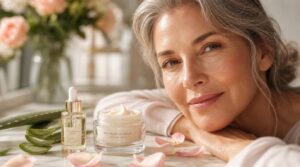
Aging skin doesn’t have to mean dry, thin, or dull — the right moisturizer can genuinely make a difference in how your skin holds up over time.
Consistent hydration aids everything from collagen health to barrier strength, which means your daily routine carries more weight than you might think. Here’s what moisturizer actually does for aging skin.
Softens Fine Lines
Fine lines don’t have to define how your skin ages. The right moisturizer — paired with targeted actives — works on multiple levels:
- Retinoid Renewal speeds collagen formation and cell turnover
- Antioxidant Defense with vitamins C and E blocks aging free radicals
- Niacinamide Boost refines texture for fine lines reduction
- Exfoliation Refinement removes buildup that makes lines stand out
Add hyaluronic acid for deep hydration, and apply a Sunscreen Shield daily to protect every anti-aging gain you make.
Improves Skin Plumpness
When skin loses moisture, it loses volume — and that’s where plumpness perception starts to fade. Hyaluronic acid’s water-binding power draws hydration deep into the skin, supporting surface elasticity and volume amplification from within.
| Ingredient | Benefit |
|---|---|
| Hyaluronic acid | Binds water for radiant fullness |
| Ceramides | Lock in overnight hydration |
| Glycerin | Prevents skin moisture loss |
| Emollients | Smooth texture, boost elasticity |
| Occlusives | Seal volume, reduce evaporation |
Supports Collagen-friendly Hydration
Collagen needs water to form properly — and that’s where your hydration strategy becomes an anti-aging tool. Nutrient-rich humectants like hyaluronic acid draw moisture into the skin, supporting collagen production and improving skin elasticity from within.
Elastin-friendly moisturizers, infused with collagen-boosting peptides and hydrolyzed collagen, strengthen the matrix remodeling hydration process. This helps skin maintain firmness and resilience over time.
Protects Thinning Skin
As skin ages, it loses natural lipids and becomes more vulnerable to moisture loss. Ceramides and panthenol comfort thinning skin by reinforcing barrier integrity, while Vitamin E protection neutralizes free radicals that accelerate breakdown.
Supporting tight junction support and microbiome balance slows UV thinning.
An antiaging moisturizer delivering skin moisture loss prevention also drives cellular regeneration, collagen production support, and skin elasticity improvement.
Pairs Well With SPF
Think of moisturizer as sunscreen’s best partner. Well-hydrated skin gives SPF sunscreen a smooth, even surface to work with — making uniform sunscreen application easy and enhanced UV coverage more reliable.
- Improved sunscreen glide reduces missed spots that weaken sun protection
- Minimized stinging from UV protection formulas on properly moisturized skin
- Non-greasy layering keeps your daily moisturizer and moisturizer with SPF routine comfortable all day
Choosing and Applying Moisturizer Correctly
Picking the right moisturizer can feel overwhelming, but it doesn’t have to be.
A few key factors make the difference between a product that actually works and one that just sits on your shelf.
Here’s what to look for and how to use it correctly.
Match Formula to Skin Type
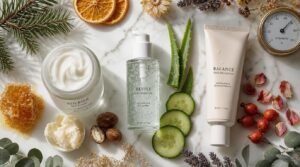
Not every moisturizer works for every face. Match your formula using a Texture Preference Mapping approach: rich creams for dry skin, oil-free moisturizer or gel or water-based moisturizers for oily types, and balanced lotions for combination skin.
Factor in your Sebum Compatibility Rating, Allergen-Free Selection needs, Ingredient Sensitivity Index, and Seasonal Formula Adjustment — your skin type shifts as weather changes.
Look for Ceramides
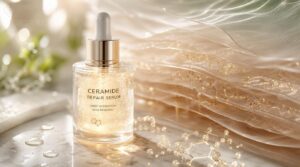
Once you’ve matched your formula to your skin type, check the label for ceramides.
These lipids make up a key part of your skin’s barrier matrix — think of them as the mortar holding everything together. Ceramide types like NP, AP, and EOP vary in molecular structure and polar orientation, affecting how well they integrate into the lipid matrix.
Together, they deliver real hydration and antiaging benefits.
Consider Hyaluronic Acid

Ceramides aren’t the only ingredient worth checking for. Hyaluronic acid is a smart addition, especially in a gel-based moisturizer.
Its molecular weight determines how deeply it works — larger molecules hydrate the surface, while smaller ones support skin elasticity and wound healing.
It also offers strong serum synergy and pH stability, making moisturizer absorption more effective for overall skin health benefits and antiaging goals.
Apply After Cleansing
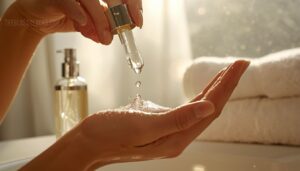
Hyaluronic acid prepares your skin well — but timing matters just as much as ingredients. For ideal results, apply your moisturizer right after cleansing while skin is still slightly damp. This ensures better product absorption and a stronger moisture lock.
Use a pea-sized amount, apply with upward strokes, and follow with sunscreen for full compatibility. This helps prevent irritation.
Avoid Common Moisturizer Mistakes
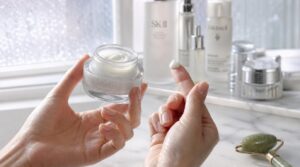
Using more than a pea-sized quantity won’t boost hydration — it risks pore clogging and a heavy, uncomfortable feel. Too much product on oily skin especially backfires.
Avoid rough application technique; gentle upward strokes work better. Watch for incompatible actives stacking, dry skin application, and ignoring seasonal shifts.
Always patch test when layering with other products.
Frequently Asked Questions (FAQs)
Can moisturizer replace prescription skin treatments entirely?
Moisturizer bolsters barrier function and serves as an adjunctive therapy alongside other treatments. However, its equivalence to prescription treatments has limits.
For conditions requiring retinoids or benzoyl peroxide, the appropriate care is determined by severity criteria and regulatory status.
Long-term management necessitates a dermatology consultation to optimize outcomes.
How does diet affect skin hydration levels?
What you eat and drink shapes your skin from the inside out.
Boosting water consumption, balancing electrolytes, eating omega‑3 fatty acids, consuming antioxidant vitamins, and following a low glycemic diet all support your skin hydration cycle.
Is moisturizer safe to use around the eye area?
Yes, but with care. The eye area has thinner, more sensitive skin, so use fragrance-free formulas, apply to the orbital bone only, and patch-test first to avoid irritation.
How often should you change your moisturizer formula?
There’s no fixed schedule — let your skin guide you. Watch for expiration dates, PAO labels, seasonal shifts, and reaction signals like stinging or breakouts.
Reassess every 4–8 weeks and adjust as needed.
Does drinking more water improve skin moisture noticeably?
Drinking more water can improve skin moisture, but results vary. Your baseline intake matters most — those who drink less tend to see bigger gains. It won’t replace moisturizer, though.
Conclusion
Skin barrier like a brick wall—when the mortar crumbles, everything that shouldn’t gets in. That’s exactly what happens when you skip moisturizer. Understanding why facial moisturizer is important for skin health isn’t about chasing trends; it’s about maintaining the structure your skin relies on daily.
The right formula, applied consistently, keeps that wall intact. Your skin doesn’t ask for much—just the basics, done well.