This site is supported by our readers. We may earn a commission, at no cost to you, if you purchase through links. This content is for general informational and educational purposes only and is not a substitute for professional medical, dermatological, or nutritional advice.

Your skin barrier doesn’t know the difference between a walnut scrub and a bad decision. Both leave sensitive skin red, tight, and rebelling by lunchtime. That’s the whole case for enzymes: proteolytic compounds like papain and bromelain digest dead cells chemically, no scrubbing beads required.
I’ve watched clients swap gritty exfoliants for enzyme formulas and stop reacting overnight. The right pick still depends on pH, texture, and what else rides shotgun in the formula. Ahead, the best enzyme exfoliants for sensitive skin that actually deliver glow without the meltdown.
Table Of Contents
- Key Takeaways
- Best Enzyme Exfoliants for Sensitive Skin
- 1. Revision Skincare Pumpkin Enzyme Mask
- 2. Rhode pineapple refresh daily cleanser
- 3. Peter Thomas Roth Pumpkin Enzyme Mask
- 4. Saturday Skin Refining Peel Gel
- 5. Papa Recipe Tea Tree Cleanser
- 6. Eqqualberry Swimming Pool Toner
- 7. Gentle Papaya Face Exfoliator Scrub
- 8. Manyo Galactomy Enzyme Peeling Gel
- 9. Natureclass Rice Enzyme Face Wash
- 10. Elemis Dynamic Resurfacing Facial Wash
- How Enzyme Exfoliants Work for Sensitive Skin
- Choosing The Right Enzyme Exfoliant
- Tips for Safe Exfoliation With Sensitive Skin
- Comparing Enzyme Exfoliant Formats
- Frequently Asked Questions (FAQs)
- Are enzyme exfoliants good for sensitive skin?
- What is the best enzyme exfoliator?
- What is the best exfoliator for very sensitive skin?
- Are enzymes stronger than AHA or BHA?
- How often should sensitive skin use enzyme exfoliants?
- Can enzyme exfoliants be used around the eyes?
- Are enzyme exfoliants safe during pregnancy or breastfeeding?
- How should enzyme exfoliant products be stored properly?
- Can enzyme exfoliants be layered under makeup daily?
- Conclusion
Key Takeaways
- Enzyme exfoliants like papain and bromelain digest dead skin cells chemically instead of scrubbing, making them ideal for sensitive skin prone to irritation.
- Formulas that pair enzymes with barrier-supporting ingredients like ceramides, hyaluronic acid, and glycerin deliver exfoliation without stripping moisture or triggering redness.
- A pH range of 4.5–5.5 keeps enzymes active while protecting skin barrier lipids, making formulation chemistry just as important as ingredient choice.
- Since enzyme exfoliation increases sun sensitivity, daily SPF 30+ is essential to protect freshly resurfaced skin from UV damage.
Best Enzyme Exfoliants for Sensitive Skin
Sensitive skin doesn’t mean you’re stuck skipping exfoliation altogether, it just means you need formulas smart enough to know the difference.
Look for gentle chemical exfoliants over harsh scrubs, and this guide to choosing a sensitive-skin-friendly exfoliant breaks down exactly which ingredients to seek out and which to avoid.
I’ve tested dozens of enzyme-based options, from powders to peel gels, to find the ones that actually respect your barrier while still doing their job.
Here are the ten that earned a spot on your shelf, starting with a personal favorite.
1. Revision Skincare Pumpkin Enzyme Mask
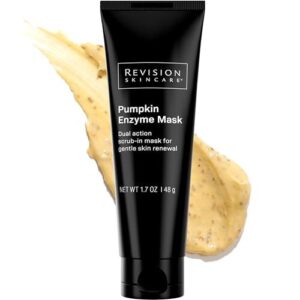
Revision Skincare Pumpkin Enzyme Mask earns its spot at the top for a reason: it’s a dual-action treat, pairing pumpkin fruit powder and ferment filtrate with gentle kaolin and cacao shell polish. At $54 for 1.7 ounces, you get real exfoliation without the sting.
I love recommending this to reactive-skin clients who still crave a resurfacing glow. Massage it in, rinse with lukewarm water, and follow with moisturizer. Just patch-test first, it’s gentle, not bulletproof.
| Best For | Anyone with reactive or sensitive skin who still wants a real resurfacing treatment without harsh irritation. |
|---|---|
| Enzyme Type | Natural enzyme blend |
| Skin Type | Sensitive skin |
| Product Form | Powder scrub |
| Usage Frequency | 1-3 times weekly |
| Hydrating Ingredient | Cocoa powder |
| Net Volume | 1.7 oz |
| Additional Features |
|
- Combines physical and enzyme exfoliation for a deeper, balanced resurfacing effect
- Brazilian clay helps draw out impurities while pumpkin and cocoa powders smooth texture
- Leaves skin hydrated, refreshed, and visibly glowing after just one use
- Must be applied to dry skin only, which adds an extra step to your routine
- Requires rinsing with warm water and sometimes a washcloth for full removal
- Not for use near the eye area, so extra care is needed during application
2. Rhode pineapple refresh daily cleanser
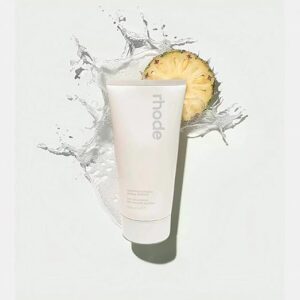
Not every enzyme cleanser needs a jar and a spatula. Rhode’s Pineapple Refresh proves that with its balm-to-foam formula, melting into a light lather that lifts dirt, makeup, and SPF without stripping.
Bromelain does the exfoliation here, smoothing texture while cleansing. Polyglutamic acid and green tea extract keep moisture locked in, so skin doesn’t feel tight afterward.
At $30 for 150ml, it’s a solid AM/PM staple for sensitive skin that wants glow without grit.
| Best For | Anyone with sensitive skin who wants a gentle daily cleanser that removes makeup and SPF without leaving their face feeling tight or stripped. |
|---|---|
| Enzyme Type | Pineapple enzyme |
| Skin Type | Sensitive skin |
| Product Form | Lathering balm |
| Usage Frequency | Daily |
| Hydrating Ingredient | Green tea extract |
| Net Volume | 150ml |
| Additional Features |
|
- Balm-to-foam formula feels light and gentle, even on sensitive skin
- PGA and green tea extract help lock in moisture so skin doesn’t feel tight afterward
- Works well for both morning and evening use, fitting easily into a daily routine
- Meant for daily use, so it’s not designed for occasional or as-needed cleansing
- Results can vary depending on individual skin type
- At $30 for 150ml, it’s a pricier option compared to basic drugstore cleansers
3. Peter Thomas Roth Pumpkin Enzyme Mask
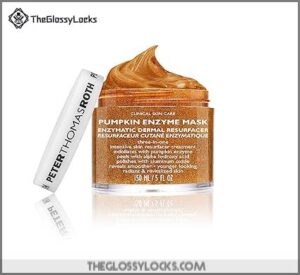
If a cleanser felt too gentle for your buildup, this one goes further. Peter Thomas Roth’s mask uses triple action resurfacing: pumpkin enzymes loosen dead cells, AHAs chemically renew the surface, and fine alumina crystals polish for smoothness.
That’s a lot of horsepower, so sensitive skin needs restraint here, not daily use. Leave it on 3–7 minutes only, and expect real sun sensitivity afterward. Glycerin and vitamin E soften the intensity, but sunscreen isn’t optional the week following.
| Best For | Anyone with dull, uneven, or aging skin who wants a weekly deep-resurfacing treatment rather than a gentle daily cleanser. |
|---|---|
| Enzyme Type | Pumpkin enzyme |
| Skin Type | All skin types |
| Product Form | Liquid peel |
| Usage Frequency | Weekly |
| Hydrating Ingredient | None specified |
| Net Volume | 5 fl oz |
| Additional Features |
|
- Triple action formula combines enzymes, AHAs, and micro-polishing crystals for noticeable texture improvement
- Helps reduce the look of fine lines, wrinkles, and dullness while improving overall tone and clarity
- Short treatment time (just 3–7 minutes) fits easily into a weekly routine
- Increases sun sensitivity, requiring diligent sunscreen use for a full week afterward
- May be too intense for sensitive skin without careful timing and restraint
- Not suitable for daily use, so results take longer to build compared to gentler products
4. Saturday Skin Refining Peel Gel
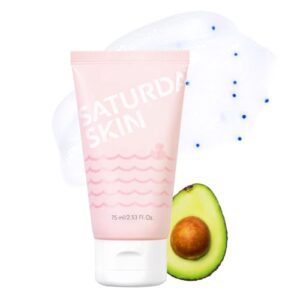
After all that resurfacing muscle, your skin deserves a breather, and that’s exactly what this peel gel offers. It pairs papain and bromelain in a transparent gel that turns milky as you massage it in for about a minute.
Aloe leaf polysaccharides calm things down while jojoba esters keep skin supple, no tightness afterward. Ceramides back up your barrier, so you get smoother texture without the redness roulette. Once or twice weekly keeps dullness away, gently.
If you’re prone to congestion rather than sensitivity, pairing this gentle routine with tips on treating closed comedones without harsh scrubbing can help clear buildup while keeping your barrier intact.
| Best For | Anyone who wants gentle, at-home exfoliation without the harshness of physical scrubs, especially those dealing with uneven texture, clogged pores, or occasional blackheads. |
|---|---|
| Enzyme Type | Papain and bromelain |
| Skin Type | All skin types |
| Product Form | Cellulose roll cleanser |
| Usage Frequency | 1-2 times weekly |
| Hydrating Ingredient | Aloe base |
| Net Volume | 2.53 fl oz |
| Additional Features |
|
- Enzyme-based formula gently dissolves dead skin and sebum without scrubbing
- Aloe, jojoba esters, and ceramides soothe and support the skin barrier, minimizing redness
- Easy one-minute massage application with a satisfying gel-to-milk texture change
- Limited to 1–2 uses per week, so results build gradually rather than instantly
- Must be applied to clean, dry skin, which adds a prep step to your routine
- Requires thorough rinsing, making it slightly more involved than a leave-on treatment
5. Papa Recipe Tea Tree Cleanser
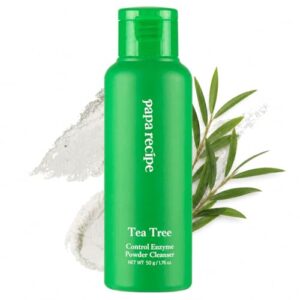
Powder cleansers get a bad rap for being fussy, but this one turns that reputation on its head. A pinch mixed with lukewarm water activates a low pH, powder-to-foam formula that lathers gently while papain gets to work on dulling keratin.
Tea tree leaf extract calms redness-prone skin without stinging, and the foam rinses clean, no residue, no tightness. It’s a smart pick if you want daily cleansing that quietly resurfaces, rather than a separate treatment step.
| Best For | Anyone with oily, combination, or sensitive skin who wants a gentle daily exfoliant that clears clogged pores and balances oil without leaving skin tight or dry. |
|---|---|
| Enzyme Type | Papain enzyme |
| Skin Type | Oily, combination, sensitive |
| Product Form | Powder-to-foam |
| Usage Frequency | Daily |
| Hydrating Ingredient | Tea tree extract |
| Net Volume | 1.76 oz |
| Additional Features |
|
- Powder-to-foam formula with papain enzyme and PHA gently dissolves dulling keratin for smoother skin
- Tea tree leaf extract soothes redness-prone skin while the low pH formula rinses clean with no residue
- Compact, travel-friendly, TSA-compliant design makes it easy to bring along anywhere
- Requires mixing with lukewarm water to activate, which adds an extra step compared to standard cleansers
- Powder format can be a bit messy or prone to spills if not handled carefully
- Walnut shell powder may feel too abrasive for extremely reactive or easily irritated skin
6. Eqqualberry Swimming Pool Toner
Eight types of hyaluronic acid meet a protease-driven enzyme complex in this lightweight liquid, and honestly, that combo does a lot of heavy lifting for dry, reactive skin. It sloughs off dead cells without scrubbing, while a five-berry antioxidant mix (blueberry, cranberry, blackberry, raspberry) fights dullness on the side.
The low pH keeps your barrier intact, and glycerin plus propanediol lock in moisture, so post-toner tightness just isn’t a thing here. Use it daily, with or without a cotton pad.
| Best For | People with dry, sensitive, or reactive skin who want gentle daily exfoliation and lasting hydration without the harshness of a traditional chemical peel. |
|---|---|
| Enzyme Type | Protease enzyme |
| Skin Type | Sensitive skin |
| Product Form | Liquid toner |
| Usage Frequency | Daily |
| Hydrating Ingredient | Hyaluronic acid |
| Net Volume | 10.14 fl oz |
| Additional Features |
|
- Enzyme-based exfoliation that lifts away dead skin without any physical scrubbing
- Hyaluronic acid, glycerin, and propanediol combine to leave skin deeply hydrated with no tight or sticky feeling
- Low pH and gentle formula make it safe enough for daily use, even on reactive skin
- Not strong enough for those wanting an intensive chemical peel-level exfoliation
- Thicker texture may feel different from what fans of light, water-based toners are used to
- Because it’s gentler by design, results may take longer to show compared to stronger exfoliating treatments
7. Gentle Papaya Face Exfoliator Scrub
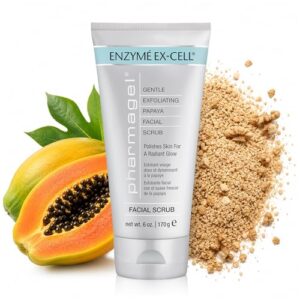
Here’s a hybrid worth loving if you want scrub satisfaction without the risk: this formula pairs papain with micronized walnut shell powder, so you get real texture with gentler edges. Allantoin calms while sunflower oil keeps skin from feeling stripped.
It’s triple-tested for low irritant potential, refining pores and smoothing rough patches on face and body alike. Fair warning, though, for paper-thin or very reactive skin, the walnut particles may feel like too much — apply with a light hand.
| Best For | Anyone who wants a gentle everyday exfoliating scrub, including those with dry or sensitive skin, thanks to its soothing and hydrating formula. |
|---|---|
| Enzyme Type | Papaya enzyme |
| Skin Type | All skin types |
| Product Form | Scrub cream |
| Usage Frequency | As needed |
| Hydrating Ingredient | Sunflower oil |
| Net Volume | 6 oz |
| Additional Features |
|
- Dual exfoliation from papaya enzymes and micronized walnut shell powder smooths texture without being harsh
- Allantoin and sunflower oil soothe and hydrate skin while it exfoliates
- Triple-tested pharmaceutical-grade formula suitable for all skin types
- Walnut shell particles may feel too abrasive for extremely thin or very reactive skin
- Requires gentle application to avoid irritation since it’s a physical exfoliant
- Not ideal for those seeking a purely chemical, particle-free exfoliating option
8. Manyo Galactomy Enzyme Peeling Gel
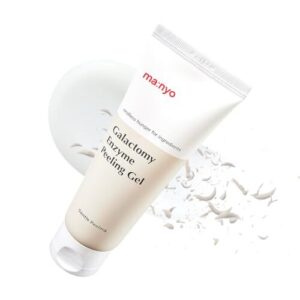
Ever watched a gel turn milky right before your eyes? That’s the fun part of this one.
Manyo’s peeling gel leans on galactomyces ferment filtrate for hydration while papain does the quiet work of digesting keratinized cells. Microcrystalline cellulose adds a whisper of physical polish, so it never feels scratchy.
Massage for 15 to 60 seconds on dry skin and you’ll feel it shift texture. Reactive types should start every one to two weeks, since barrier support doesn’t mean zero risk of irritation.
| Best For | anyone with dull, congested, or slightly rough skin who wants a gentler alternative to acid-based exfoliants. |
|---|---|
| Enzyme Type | Galactomyces enzyme |
| Skin Type | Sensitive skin |
| Product Form | Gel scrub |
| Usage Frequency | Daily |
| Hydrating Ingredient | Hyaluronic acid |
| Net Volume | 2.5 fl oz |
| Additional Features |
|
- Enzyme-based formula gently sloughs off dead skin without harsh scrubbing
- Hyaluronic acid and amino acids help replenish moisture while it exfoliates
- Versatile enough for both face and body use
- Gel’s slimy texture may feel odd to those used to traditional scrubs
- Requires care to avoid the eye area and hairline during application
- Those with very sensitive skin should double-check the ingredient list first
9. Natureclass Rice Enzyme Face Wash
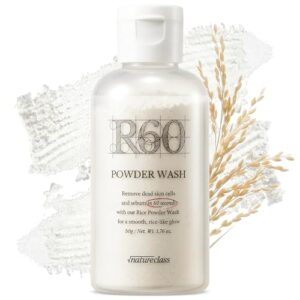
Sixty seconds, one pump of powder, no drama. That’s the pitch behind Natureclass Rice Enzyme Face Wash, and it mostly delivers. Papain teams up with rice-derived enzymes to loosen dull keratin, while rice powder works pore openings without stripping moisture.
Allantoin keeps things calm for reactive skin, and the fragrance-free formula won’t set off alarm bells. My honest take: it’s a solid daily gentle cleanse, not a resurfacing powerhouse, so keep expectations realistic and pair it with proper hydration afterward.
| Best For | People with sensitive or reactive skin who want a gentle, fragrance-free daily cleanse that smoothes texture without stripping moisture. |
|---|---|
| Enzyme Type | Papain enzyme |
| Skin Type | Sensitive or reactive skin |
| Product Form | Powder-to-foam |
| Usage Frequency | Daily |
| Hydrating Ingredient | Rice-powder complex |
| Net Volume | 1.76 oz |
| Additional Features |
|
- Dual-powder formula turns into a cushiony foam that cleanses deeply without over-drying
- Papain enzyme and rice-powder complex gently exfoliate to refine tone and texture
- Fragrance-free, making it suitable for sensitive or easily irritated skin
- Powder must be mixed with water each time, which adds a small extra step to your routine
- Not a substitute for heavy-duty chemical peels if you need more intensive resurfacing
- Results can vary depending on your individual skin type
10. Elemis Dynamic Resurfacing Facial Wash
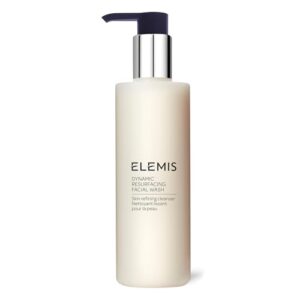
Three enzymes, one goal: smoother skin without the sting. Elemis Active Resurfacing Facial Wash leans on Tri-Enzyme Technology—papain, protease, and subtilisin—to break down peptide bonds holding dull cells hostage, while babassu oil and glycerin keep moisture intact.
Gel-to-foam texture feels indulgent for a cleanser, and jasmine-vanilla notes add a spa-like touch. Poria cocos and moringa round out the barrier support.
My take: it’s a genuinely gentle daily resurfacer, but the exfoliating action means sun sensitivity climbs, so SPF isn’t optional the morning after.
| Best For | anyone with normal to sensitive skin who wants a gentle daily exfoliant to brighten their complexion without harsh scrubbing. |
|---|---|
| Enzyme Type | Papain, protease, subtilisin |
| Skin Type | All skin types |
| Product Form | Liquid cleanser |
| Usage Frequency | Twice daily |
| Hydrating Ingredient | White truffle |
| Net Volume | 6.7 fl oz |
| Additional Features |
|
- Tri-Enzyme Technology gently breaks down dull skin cells for a smoother, brighter look
- White truffle and moringa help hydrate, nourish, and calm the skin during exfoliation
- Non-abrasive gel-to-foam formula works for daily use without disrupting the skin’s natural barrier
- Increases sun sensitivity, so daily SPF is a must
- Contains fragrance oils, which may not suit those with fragrance sensitivities
- Daily use may be too frequent for very sensitive or reactive skin types
How Enzyme Exfoliants Work for Sensitive Skin
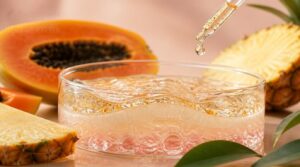
Enzyme exfoliants might sound like science class, but the "why" behind them is easier to grasp than you’d think. Understanding what these little proteins actually do on your skin helps you use them smarter, not just blindly follow trends. Here’s what’s really happening beneath the surface, broken down piece by piece.
Papain, Bromelain, and Pumpkin Enzymes
Fruit-derived enzymes do the heavy lifting here. Papain, pulled from papaya latex, is a proteolytic worker that cleaves surface proteins gently. Bromelain (pineapple-sourced) softens debris without friction. Pumpkin enzymes join in at mild, skin-friendly pH levels. Together, they deliver true gentle exfoliation—no scrubbing, just quiet chemistry breaking down what’s already ready to go.
These proteolytic enzymes work by breaking long protein chains into shorter peptides.
Benefits Over Physical Exfoliants
Grab a gritty scrub and you’re relying on manual pressure, which risks micro-tears and uneven results depending on how hard you press.
Enzyme exfoliators skip that gamble entirely with biochemical digesting action instead of friction. That means reduced skin friction, preserved barrier lipids, and uniform exfoliation—no patchy spots.
For sensitive skin, it’s the gentle exfoliation approach, a true nonabrasive skincare alternative to harsher chemical peels.
Enzyme Concentration and Efficacy
Here’s the thing about enzyme concentration: more isn’t automatically better. At low levels, doubling your enzyme concentration roughly doubles reaction speed. But once substrate runs out, extra enzyme just sits there—or worse, triggers self-digestion and irritation.
- Fizzing, tingling proteolytic action
- Smooth, refined skin texture
- Zero gritty residue
- Balanced, non-reactive glow
Great formulas hit that efficacy sweet spot without overwhelming sensitive skin.
Key Ingredients for Barrier Support
Enzymes dissolve dead cells fast, but your skin barrier support depends on what’s left behind. Look for ceramide lipid blends alongside cholesterol and phytosterols—they rebuild what papaya and pumpkin enzymes strip away.
Pair with humectant moisture binding (glycerin, hyaluronic acid) and occlusive sealing agents like squalane. Toss in antioxidant skin protection and soothing botanical extracts like panthenol, and gentle resurfacing stays truly gentle.
Choosing The Right Enzyme Exfoliant
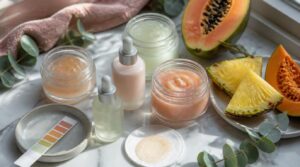
Not every enzyme exfoliant plays nice with every skin type, so picking the right one takes a little more thought than grabbing the prettiest jar. You’ll want to weigh the enzyme source, the texture you’re working with, and the pH before committing to a routine. Here’s what actually matters when you’re narrowing down your options.
Enzyme Type and Source
Not all enzymes are created equal — where they come from matters just as much as what’s on the label.
- Plant-derived: papain (papaya), bromelain (pineapple) — gentle, natural fruit enzymes
- Microbial: fermented proteases, tuned for low irritation
- Animal-derived alternatives: less common, chosen for sensitivity
- Potency measured in protease/milk-clotting units
- Sustainable sourcing via fermentation reduces waste, allows cruelty-free formulas
Product Texture and Format
Texture isn’t just a feel-good detail — it dictates how gently (or aggressively) an enzyme exfoliator works.
| Format | Best For |
|---|---|
| Water-activated powder | Custom-controlled exfoliation |
| Jelly/gel cleanser | Cooling, foamless comfort |
| Creamy paste | Daily moisture + mild resurfacing |
| Peeling gel | Minimal residue, quick massage |
A powder-to-paste system dissolves on contact, while sachets lock in potency until you’re ready to use them.
PH Balance and Formulation
Chemistry quietly decides whether your enzyme exfoliator for sensitive skin feels like a spa treatment or a sunburn. Look for pH balance around 4.5–5.5, where papain and bromelain stay active without disturbing skin barrier lipids.
Citric acid buffering keeps that range stable through pH stability testing, preventing enzyme denaturation risks. It’s a smarter, nonirritating skincare choice than harsh chemical peel alternatives, especially if barrier repair is your goal.
Tips for Safe Exfoliation With Sensitive Skin
Finding the right enzyme mask or cleanser is only half the battle, your routine around it matters just as much. A few smart habits can mean the difference between glowing results and an angry, reactive complexion. Here’s what you need to know before you exfoliate.
Combining With Other Skincare Ingredients
Pair your enzyme exfoliator wisely, and it becomes the MVP of a barrier-safe routine rather than a solo act.
Layer hyaluronic acid first for hydration, then follow with peptides or squalane to lock it in.
Vitamin C plus ferulic acid boosts brightening without stress.
Alternate retinoids on off-nights, and always close with ceramides for real barrier repair—skip harsh AHAs same-day.
Sun Protection After Exfoliation
Fresh, enzyme-buffed skin is basically an open invitation to UV damage, so don’t skip sunscreen. Mineral formulas with zinc oxide or titanium dioxide sit gentler on reactive, freshly exfoliated skin than chemical filters.
Apply SPF 30+ daily, even by windows (UVA sneaks through glass), and reapply every two hours outdoors. Your dermatologist would tell you: post-exfoliation skin barrier repair depends on it.
Signs of Irritation to Watch For
Your skin talks—learn to listen before overexfoliation does real damage.
Listen to your skin before overexfoliation causes real damage
Watch for burning sensations that intensify with rubbing, redness patterns that spread outward, or itching that worsens over time.
- Peeling or rough dryness beyond normal flaking
- Swelling, bumps, or blistering near application areas
- Stinging that lingers after rinsing
Any of these signal a compromised skin barrier—time to pause your enzyme exfoliator for sensitive skin and let things calm down.
Comparing Enzyme Exfoliant Formats
Not every enzyme exfoliant feels the same on your skin, and format matters way more than people realize. Some show up as powders, others as gels or toners, and each one changes how gentle (or powerful) your results feel. Let’s break down the main textures you’ll run into, so you know exactly what you’re signing up for.
Water-Activated Powders
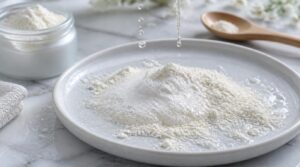
Powder-to-foam formulas stay dormant until water hits them, activating enzymes within 30 seconds. Finer particles dissolve faster than chunky ones, which affects how quickly you feel results.
Starch or cellulose carrier bases keep papain and bromelain stable in storage since enzyme stability hates moisture. Some brands use microencapsulation, controlling exposure so sensitive skin gets exfoliation without that stinging surprise.
Peeling Gels

Once water hits a peeling gel, carbomer thickening agents and cellulose clusters spring into that stretchy, viscous texture you massage over damp skin. This gentle skincare format pairs enzymatic peeling with a satisfying physical roll-off, no gritty scrubbing needed.
Use light circular massaging technique for 30-60 seconds, then rinse with lukewarm water—never hot, which aggravates sensitive skin during resurfacing.
Jelly and Creamy Textures
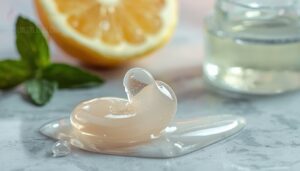
Jelly cleansers give you that jiggly, bouncy first touch thanks to a hydrocolloid matrix of gellan gum or agar, then melt into a creamy after-feel the second your skin’s warmth hits them.
That thermal melting sensation means real slip without grease, especially with emollient-rich follow-ups.
- Jelly-to-cream shift boosts spreadability
- Natural fruit enzymes stay gentle on reactive skin
- Emollient slip factors reduce friction
- Great texture refinement for sensitive skin types
Liquid Toners for Daily Use
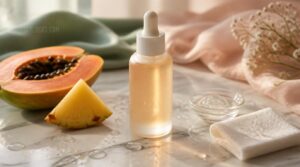
If your skin gets scared off by masks and powders, an exfoliating toner is the gentlest entry point. Look for alcohol-free formulas with glycerin and hyaluronic acid for plumping hydration, plus niacinamide for barrier support.
Fragrance-free, pH-balanced liquid exfoliants using papain or bromelain smooth out skin texture daily without stripping moisture—ideal for sensitive skin easing into enzyme exfoliation.
Frequently Asked Questions (FAQs)
Are enzyme exfoliants good for sensitive skin?
Think of them as tiny, gentle dissolvers rather than scrubbers. Yes, they’re genuinely gentle: proteolytic action digests surface keratin without mechanical friction, so you get dead cell dissolution and smoother texture minus the barrier disruption harsher chemical exfoliants risk.
What is the best enzyme exfoliator?
For sensitive types, the Revision Pumpkin Enzyme Mask wins, thanks to gentle proteolytic action, gold clay, and jojoba oil working together for real skin texture refinement without the sting typical chemical exfoliants can cause.
What is the best exfoliator for very sensitive skin?
Your best bet blends gentle enzyme sources like papain or pumpkin with fragrance-free, low-concentration formulas. Always patch test first, and pair with barrier-repairing additives**—ceramides, glycerin—to prevent irritation while still delivering effective, non-abrasive exfoliation.
Are enzymes stronger than AHA or BHA?
Not exactly — enzymes work gentler. Instead of dissolving bonds like alpha hydroxy acids, an enzyme exfoliator digests keratin proteins on the surface only. That means slower results, but far less skin irritation risk than a typical chemical exfoliant for sensitive skin.
How often should sensitive skin use enzyme exfoliants?
Start with once weekly for any enzyme exfoliator for sensitive skin, adjusting contact time and frequency based on your skin’s response—redness, stinging, or flaking means dial back, while calm, glowing skin means you’re free to gradually increase.
Can enzyme exfoliants be used around the eyes?
Around the eyes, on the eyelids, near the lash line—enzymes just aren’t built for periocular skin. This delicate zone irritates easily, so stick to nonabrasive, mild exfoliants labeled eye-safe, and watch for redness signaling irritation.
Are enzyme exfoliants safe during pregnancy or breastfeeding?
Generally yes, since rinse-off enzyme exfoliants like papain and bromelain limit exposure time and systemic absorption. Pregnancy skin sensitivity can increase irritation, so patch test first and always check with your clinician before starting anything new.
How should enzyme exfoliant products be stored properly?
Keep enzyme exfoliators in a cool, dry spot away from sunlight, original packaging sealed tight.
Watch humidity, use clean hands for scooping, and check shelf life labels—these small habits protect enzyme activity and keep sensitive skin routines safe and effective.
Can enzyme exfoliants be layered under makeup daily?
Think of it like priming a canvas before you paint: a light enzyme layer smooths texture for foundation smoothness. Yes, daily works for sensitive skin if the formula’s gentle, morning application (with SPF), and you’ve patch tested to dodge pilling or occlusive irritation.
Conclusion
No grit, no rebellion, no red patches by lunchtime. That’s what the best enzyme exfoliants for sensitive skin deliver: dissolved dead cells, calmer barriers, real glow. Papain and bromelain do the digging so your skin doesn’t have to fight back.
Pick the texture you’ll actually use, respect the pH, and pair it with SPF the next morning. Your skin isn’t fragile. It’s just asking for chemistry over force, give it that, and it’ll thank you.