This site is supported by our readers. We may earn a commission, at no cost to you, if you purchase through links. This content is for general informational and educational purposes only and is not a substitute for professional medical, dermatological, or nutritional advice.

Watch a droplet hit low porosity hair and you’ll see something odd: it beads up and rolls off, refusing to soak in. That’s not dry hair being stubborn. It’s a tightly packed cuticle layer doing exactly what it’s built to do, forming a hydrophobic barrier that repels water and locks moisture treatments out.
The result? Product sits on strands instead of absorbing, leaving that waxy film near your hairline no matter how much conditioner you apply.
A low porosity hair care routine works differently because it has to. Get the sequence right, from clarifying buildup to sealing with the correct oil, and moisture finally gets where it needs to go.
Table Of Contents
- Key Takeaways
- Identify Low Porosity Hair Correctly
- Prepare Hair for Better Moisture Absorption
- Follow This Low Porosity Wash Routine
- Choose Lightweight Products and Ingredients
- Maintain Moisture Without Causing Buildup
- Frequently Asked Questions (FAQs)
- What should I avoid if I have low porosity hair?
- Can low porosity hair grow long?
- Is overnight oiling good for low porosity hair?
- How often should I wash low porosity hair weekly?
- Can low porosity hair type change over time?
- Is low porosity hair more prone to breakage?
- What hairstyles work best for low porosity hair?
- Conclusion
Key Takeaways
- Low porosity hair has tightly closed cuticles that repel water and product, so moisture treatments need warmth and prep to actually get in rather than sitting on top as buildup.
- The right sequence matters most: clarify buildup first, saturate with warm water to open cuticles, deep condition with heat, then rinse with cold water to seal moisture in.
- Stick to lightweight, water-based products like glycerin or aloe-based leave-ins and oils like jojoba or argan, since heavy butters, silicones, coconut oil, and castor oil just sit on strands and cause buildup.
- Keep up a steady weekly routine (wash, clarify, deep condition, seal) and protect hair overnight with satin to maintain moisture without overloading your cuticles with product.
Identify Low Porosity Hair Correctly

Before you fix your moisture routine, you need to know exactly what you’re working with. Low porosity hair behaves differently at the cuticle level, and that difference shows up in ways you can see, feel, and test. Here’s how to spot it and confirm it for good.
If you’re still unsure after a quick self-check, this complete guide to identifying hair porosity walks through simple at-home tests to confirm what your strands are really telling you.
Why Cuticles Resist Moisture
Picture roof shingles laid flat and tight. That’s your cuticle layer structure when hair is healthy: closed, overlapping, hydrophobic.
Healthy hair cuticles lie closed and tight like roof shingles, sealing out moisture by design
This barrier function creates surface tension, so water beads and rolls off instead of soaking in. Moisture penetration requires prying those scales open first. Without that lift, product penetration stalls entirely, water resistance wins, and your strand stays thirsty despite looking soaked.
Signs Products Sit on Hair
That closed cuticle doesn’t just repel water. It repels product, too, leaving telltale evidence on your strands.
Watch for:
- Sticky film that clumps hair after rinsing
- Water beading instead of soaking during washing
- Heavy, weighed-down feel with quick tangling
- Greasy scalp residue near the hairline
This is buildup sitting on unopened cuticle, not moisture absorption.
Recognizing these signs early can help prevent long-term product buildup effects on hair health and manageability.
Simple Porosity Tests Explained
Guessing wastes product. Run the float test: a clean shed strand sinks (high porosity) or floats (low porosity).
Try the spray bottle test, water beads and sits for 30-60 seconds on low porosity strands. Add strand texture and cuticle detection checks, smooth feels sealed.
Wash with clarifying shampoo first and wait 24 hours for accurate readings.
Low Versus High Porosity
Once your strand test results come in, the real work is comparing behavior. Low porosity hair resists water at first, then holds it once inside.
High porosity hair drinks fast but dries fast too, because open cuticles let moisture escape as quickly as it entered. That contrast in water absorption and moisture retention dictates every product choice ahead.
For weakened strands, a protein treatment for damaged hair can reinforce structure before sealing in moisture.
Prepare Hair for Better Moisture Absorption

Your cuticles won’t budge for moisture until the groundwork is laid first. Preparation determines whether every product afterward actually penetrates the shaft or just sits on top. Here’s exactly what that groundwork looks like.
Start by sectioning damp hair and detangling gently with your fingers, a step this type 3c curl care routine treats as non-negotiable before any product goes on.
Clarify Buildup Before Conditioning
Skipping the clarifying cleanse is like painting over dust: nothing sticks. Buildup blocks moisture, so clarify every 10-12 days using decyl glucoside shampoo or a diluted apple cider vinegar rinse.
Signs you need it: waxy residue, weak lather, water beading. Clean strands absorb up to 40% more moisture, setting up heat-assisted deep conditioning for real results.
Saturate Hair With Warm Water
Run the shower to 95-105°F and let it hit your scalp for a full two minutes before shampoo touches your hair. That heat-assisted saturation triggers cuticle swelling, prying scales open so water reaches the cortex instead of beading off.
Full saturation means even product distribution later. Skip this and you’re conditioning a half-wet strand, wasting product on cuticles still sealed shut.
Section Hair Before Applying Products
Divide soaking hair into four to six clips before any product touches it. Sectioning ensures even coverage, so no strand gets skipped while another drowns in product.
This is where targeted moisture application matters: extra conditioner on ends, less through mid-lengths. Warm water applied section by section keeps cuticles receptive, letting each layered product actually penetrate instead of sitting on damp hair.
Address Hard Water Deposits
Chalky residue isn’t just dirt, it’s mineral scale. Hard water calcium and magnesium coat cuticles, raising friction and blocking absorption even after rinsing.
- Use a chelating shampoo monthly to bind minerals
- Try a diluted vinegar rinse for mild buildup
- Reserve clarifying washes for heavier deposits
Vinegar won’t dissolve heavy scale alone. Chelators do the real work.
Follow This Low Porosity Wash Routine
Once your hair is clarified, saturated, and sectioned, sequence becomes everything. Each step either opens the cuticle or closes it back down, and getting the order wrong undoes your prep work fast. Here’s the exact routine to follow, step by step.
Cleanse Scalp and Hair Thoroughly

Wet hair thoroughly with lukewarm water, then apply a sulfate-free clarifier to your scalp first. Massage in small circles, focusing on the crown and hairline where buildup collects.
Add water to work lather through your lengths, parting sections so cleanser reaches skin, not just strands. Rinse until water runs completely clear, since leftover residue blocks the moisture absorption you’re working to restore.
Once your hair is clean and rinsed, it’s also worth giving your tools some care, since a dull razor can undo all that progress—this guide to sharpening electric razor blades walks through which blade types can actually be restored versus replaced.
Deep Condition With Gentle Heat
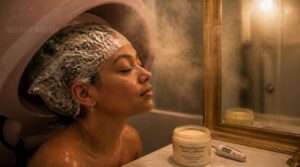
Heat isn’t optional here. Your cuticles stay sealed without it, so apply deep conditioner to soaking-wet hair and add a heat cap or hooded dryer for 20-30 minutes at 100-120°F.
Steam therapy or temperature cycling works too, lifting cuticles gently while boosting absorption up to 30% versus room-temperature application.
Rinse Using Cool Water

Once heat finishes its job of cuticle lifting, cold water reverses it. Rinsing flattens those raised scales, trapping conditioner and moisture inside the shaft rather than letting them evaporate back out.
This cuticle sealing process also boosts shine, smoothing the surface for better light reflection, and curbs moisture loss during drying. Warm-to-cold sequencing simply works.
Apply Lightweight Leave-in Conditioner
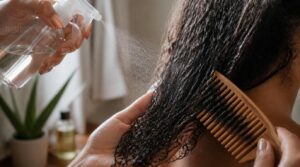
Timing matters now. Towel-dry until damp, not dripping, then work in a water-based leave-in with aloe or glycerin as the first ingredient. Skip the scalp; apply mid-lengths to ends only.
Use a small amount, spray or hands-first, distributing with a wide-tooth comb for even distribution and no greasy patches. Less product, better coverage.
Seal Ends With Lightweight Oil
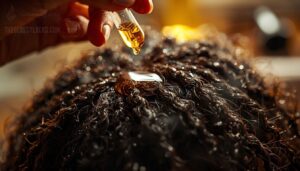
The leave-in isn’t the finish line. While hair is still damp, smooth 2-3 drops of jojoba or grapeseed oil over mid-lengths and ends, sectioning first for even coverage.
This lightweight oil sealant locks in moisture rather than blocking it. Warm strands absorb best, so work quickly.
Rotate argan in for winter dryness.
Choose Lightweight Products and Ingredients

Your wash routine only works if the products you layer on top respect the same cuticle chemistry. Low porosity hair rewards ingredients that absorb quickly and punishes anything that sits on the surface waiting for a cuticle to open. Here’s what to look for, and what to leave on the shelf.
Water-Based Moisturizers and Humectants
Your leave-in should pull water in, not sit on top of it. Humectants like glycerin, aloe vera, and panthenol attract moisture from humid air and bind it to the strand, hydrating without heaviness.
Choose water-based formulas listing water or aloe first. Because low porosity cuticles resist penetration, lightweight humectant-rich products absorb far better than cream-heavy ones ever could.
Best Oils for Sealing
Because your cuticles already resist penetration, the oil you seal with matters as much as the leave-in underneath it. Jojoba oil, grapeseed oil, and light argan oil offer high spreadability with minimal residue.
Use 2 to 4 drops on damp mid-lengths and ends only. This end-focused sealing locks in moisture without coating strands or triggering the greasy buildup low porosity hair shows so quickly.
Limit Protein-Rich Treatments
Because low porosity strands already resist penetration, protein sensitivity turns overuse into stiffness fast. Limit treatments to once every 4-6 weeks, using hydrolysed keratin under 5% concentration.
Watch for signs of protein overload: brittleness, dryness, poor curl hold. Apply with heat for 15 minutes, rinse cool, then follow with moisture. Consider lightweight protein alternatives like rice water for gentler strengthening.
Avoid Heavy Butters and Silicones
Molecular size determines whether an ingredient hydrates or just sits there. Shea butter molecules are simply too large to slip through tightly packed cuticles, creating greasy surface buildup within two to three uses.
Silicones behave the same way: dimethicone forms a waterproof film blocking absorption entirely.
- Skip shea and mango butter
- Avoid non-PEG silicones
- Choose murumuru butter instead
- Use water-based moisturizers
- Clarify weekly to prevent residue
Skip Coconut and Castor Oils
Coconut oil’s lauric acid gives it a molecular weight around 200 g/mol, too large for sealed cuticles to accept. It sits on the strand, forming surface film buildup instead of penetrating.
Castor oil’s thick viscosity (1,000 cP) behaves the same way. Both also carry protein-like properties that stiffen strands.
Swap them for lightweight oils like jojoba or argan, which absorb within minutes and actually reach the cortex.
Maintain Moisture Without Causing Buildup

Getting moisture into low porosity hair is only half the job; keeping it there without piling on product is the real skill. Buildup happens fast on flat, tightly sealed cuticles, so your maintenance routine needs just as much precision as wash day.
Here’s how to structure the days between washes so moisture stays locked in and residue never gets the chance to settle.
Build a Weekly Care Schedule
Consistency beats intensity here. Wash every 5-7 days, clarifying every 1-2 weeks, deep conditioning weekly to biweekly.
A dependable rhythm looks like:
- Wash and cleanse scalp
- Clarify every other week
- Deep condition with heat, 15-30 minutes
- Apply leave-in, then seal ends
This routine prevents buildup while keeping cuticles primed for moisture between sessions.
Refresh With Water-Based Products
A quick water spritz revives yesterday’s curls faster than a full restyle. Mist damp or dry hair, scrunch gently, done in under three minutes.
Water-based leave-ins and humectant sprays (glycerin, aloe) reopen cuticles temporarily, letting product penetrate rather than sit.
| Method | Time |
|---|---|
| Water reactivation | 30 sec |
| Full refresh | 2-3 min |
| Wash | 20+ min |
| Reset styling | Instant |
Avoid Over-Conditioning Between Washes
That midweek spritz works precisely because it’s minimal. Reach for conditioner instead and you’ll hit moisture absorption limits fast, low porosity strands can only hold so much before cuticles seal shut again.
Watch for mushy wet strands, flat roots, or curls that won’t hold shape. Limit deep conditioning to once weekly, use a lightweight leave-in conditioner between washes, and skip protein treatments unless hair feels stiff.
Protect Hair Overnight
Eight hours of sleep can undo an evening’s work if friction and cotton fibers strip moisture straight from your cuticles.
- Swap to a satin pillowcase (cuts friction up to 43%) and add a bonnet for stray edges
- Apply lightweight oils during a scalp massage to seal cuticles shut
- Try a heat cap treatment overnight for deeper penetration into protective styles
Adjust for Australian Weather
Your satin pillowcase won’t help if Sydney’s UV Index hits 11. Apply UV-protective leave-in year-round, sealing with lightweight oils, not coconut or castor.
Coastal humidity demands water-based products over heavy creams. Indoor winter heating drops humidity below 30%, so switch to richer sealants.
Hard water regions need weekly chelating shampoo. Match your humectant-rich deep conditioner to the season, not the calendar.
Frequently Asked Questions (FAQs)
What should I avoid if I have low porosity hair?
Skip heavy oils, thick conditioners, silicones, shea butter, coconut oil, and castor oil. These sit on the cuticle instead of absorbing, causing product buildup.
Limit heavy protein treatments too, since they add stiffness without delivering the moisture your strands actually need. strands actually need.
Can low porosity hair grow long?
Yes. Porosity governs moisture handling, not follicle output, so growth cycles continue normally. Length retention depends on preventing breakage: consistent sealing oils, heat-assisted conditioning, and scalp health keep ends flexible instead of dry and snapping.
Is overnight oiling good for low porosity hair?
Only with lightweight oils like jojoba or argan, applied to damp hair with closed cuticle timing in mind, morning removal via sulfate-free shampoo, otherwise buildup blocks absorption and ruins the oil sealing technique entirely.
How often should I wash low porosity hair weekly?
Wash weekly, not daily, not monthly. Once a week balances scalp oil control with moisture retention, though heavy activity or humid climates may push you toward twice weekly, while low buildup and slow greasiness signal you can stretch it further.
Can low porosity hair type change over time?
Porosity shifts naturally with heat exposure, chemical damage, and product buildup masking true type. Hair cuticle structure changes as strands age, so a porosity test today may differ from results months ago, reflecting routine adjustments rather than permanent identity.
Is low porosity hair more prone to breakage?
Think of a sealed raincoat shedding water instead of soaking it in: that’s your cuticle. Dryness and stiffness from poor moisture retention make strands prone to snapping during detangling, especially when combing hair that isn’t fully saturated first.
What hairstyles work best for low porosity hair?
Protective braids, moisture-retentive twists, and low-manipulation looks work best because they minimize surface handling. Pair them with lightweight product styles and heat-free styles to prevent buildup, and always finish with protective styling overnight on a satin pillowcase.
Conclusion
Sisyphus kept pushing his boulder uphill, never questioning the method. Don’t repeat his mistake with your strands.
A low porosity hair care routine succeeds only when sequence, temperature, and product weight align, because cuticles that resist moisture demand precision, not persistence. Clarify. Saturate with warmth. Seal with lightweight oil. Skip the heavy butters that sit and suffocate.
Master this rhythm, and moisture stops bouncing off your hair and starts living inside it, strand by strand.