This site is supported by our readers. We may earn a commission, at no cost to you, if you purchase through links. This content is for general informational and educational purposes only and is not a substitute for professional medical, dermatological, or nutritional advice.
Type 3c hair sits at a fascinating crossroads—tight enough to coil into dense spirals, yet defined enough to hold shape without much convincing. Those corkscrew curls, roughly the width of a pencil, pack serious volume and personality into every strand.
But that same structure makes moisture a constant negotiation. The coiled shape slows natural oils from traveling down the hair shaft, leaving ends thirsty and prone to breakage faster than looser curl types.
Understanding your curl pattern isn’t about fitting a label—it’s the foundation for building a routine that actually works.
Table Of Contents
Key Takeaways
- Type 3C hair has tight, pencil-sized corkscrew curls that coil from root to tip, shrink up to 50% when dry, and pack together into dense, springy volume.
- The coiled shaft slows natural oil travel from scalp to ends, so your ends stay dry and brittle no matter how often you moisturize the roots.
- The LOC method—Liquid, Oil, Cream—plus weekly deep conditioning are the two non-negotiables that keep 3C curls defined, hydrated, and less prone to breakage.
- Protective habits like satin pillowcases, fabric-wrapped elastics, and sulfate-free cleansing compound over time, turning fragile curls into resilient, well-defined ones.
What is Type 3C Hair?
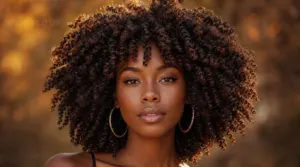
Type 3C hair sits at the tightest end of the Type 3 curl family, where coils are defined, springy, and full of personality. If you’ve ever wondered exactly what sets it apart, the answer comes down to a few consistent physical traits. Here’s what makes 3C hair recognizable at a glance.
If you’re curious how 3C compares to its closest neighbor, understanding what 3B hair looks like helps highlight just how much tighter and more defined the coils become.
Tight Corkscrew Curl Pattern
Type 3C hair is defined by its tight corkscrew curl pattern, where each spiral wraps repeatedly around itself from root to tip. These curls don’t loosely wave or droop — they spring back with energy and hold their coiled form naturally. This pattern is part of the curly hair category.
Three things make this pattern stand out:
- Curl clusters pack closely together, creating a dense, full silhouette
- The corkscrew shape stays recognizable even when individual strands vary slightly in tightness
- Curls rebound rather than fall flat, giving 3C hair its signature lively texture
Pencil-Sized Curl Diameter
One of the easiest ways to place your curls on a hair type chart is by checking their diameter. For 3C hair, that measurement lands around 6 to 8 millimeters — roughly the width of a writing pencil. That’s tight. It’s a practical visual reference tool that puts curl pattern identification within reach for anyone.
Try the Pencil Curl Test: wrap a single natural curl around a pencil. If it fits snugly, your hair strand diameter matches the 3C range on the curl tightness scale. A looser fit points toward 3B; a tighter one may suggest 4A. This simple curl size comparison cuts through the confusion fast.
Root-To-Tip Definition
Curl diameter tells you what type you’re working with — but root-to-tip definition tells you how well your 3C hair is actually performing. Definition means your curls hold a consistent corkscrew pattern from the scalp all the way to the ends, without frizzing out midway.
That only happens when moisture placement is even throughout the strand, curl clumps stay intact during drying, and you don’t disturb the hair while it’s setting.
Natural Volume and Fullness
3C hair’s tight corkscrew curls don’t lie flat — they spiral outward, stacking natural lift away from your scalp. When curls are properly moisturized, they expand and clump into defined groups that spread wide as they dry. That expansion is where your volume lives.
Keep roots lifted, moisture sealed, and frizz controlled, and your curls hold their fullest shape.
How to Identify 3C Hair
Knowing your curl type starts with paying attention to how your hair actually behaves, not just how it looks in a photo. 3C hair has a few specific traits that set it apart from neighboring types, and they’re easier to spot than you might think. Here’s what to look for.
Shrinkage After Drying
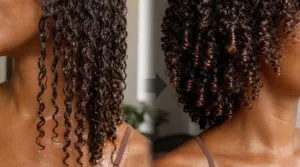
Shrinkage is probably the most surprising thing about 3C hair. Your curls can lose 50% or more of their visible length as they dry. That happens because wet hair stretches under its own weight, then the coiled spring of each curl pulls inward as moisture leaves. High porosity makes this faster, while products with a cast slow it down.
3C hair can shrink to half its length as it dries, coiling inward as moisture escapes
Dense, Springy Curls
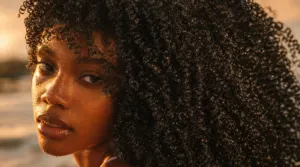
Once the water leaves your strands, 3C hair does something unmistakable — it springs back into tight, densely packed corkscrew curls. Each curl recoils into its natural spiral, giving your hair that elastic curl hold that looser curl types simply can’t match.
How quickly those curls spring back depends a lot on your hair’s porosity — you can dig into how curl pattern affects hair drying time to see exactly what’s happening beneath the cuticle.
That bounce isn’t random; it’s your hair’s structure doing exactly what it’s built to do.
Texture Versus Curl Pattern
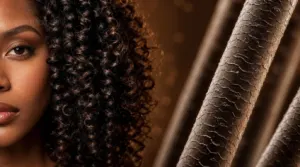
Two things define your hair, and mixing them up leads to routines that just don’t work: hair texture and curl pattern are separate factors.
- Strand thickness (fine, medium, or coarse) controls moisture absorption.
- Curl pattern controls the shape your curls take.
- Product compatibility depends on knowing both.
For Type 3C hair, tight corkscrew pattern meets medium-to-coarse strand thickness, meaning your curls need heavy moisture but also strong hold products.
3B, 3C, and 4A Differences
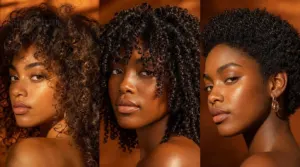
Knowing where 3C ends and 4A begins can feel tricky, but curl diameter is your clearest guide. Type 3B sits a step looser, roughly straw-sized. Type 3C lands at pencil-width. Type 4A curls are slightly smaller still, forming compact coils rather than spirals.
Each type also shrinks and frizzes differently, so identifying yours shapes everything that comes next.
Why 3C Hair Gets Dry

If your 3C curls always feel thirsty no matter what you do, there’s a reason for that — actually, there are a few. The way your hair is built makes moisture harder to get in and easier to lose. Here’s what’s working against you.
Coiled Hair Shaft Structure
Your hair’s coiled shape isn’t an accident — it comes down to what’s happening deep inside each strand. Three key layers make up the hair shaft structure: the cuticle (outer scales), the cortex (main bulk), and the medulla (inner core).
Here’s what shapes your 3C curl:
- Asymmetrical keratin growth causes the fiber to bend as it grows, producing tight S- or Z-shaped curves.
- Non-circular cross-section geometry means your strand isn’t round — that irregular shape drives the coiling pattern.
- Cuticle scales sit less flat on curved strands, leaving gaps where moisture escapes easily.
- Follicle shape determines curl tightness before your hair even exits the scalp.
Together, these structural factors make 3C strands naturally prone to dryness at every level.
Slow Sebum Distribution
Sebum moves from your scalp to tip like a courier traversing a tight maze — on 3C hair, every coil and bend slows that journey down. Oil migration patterns stall before reaching the ends, leaving them dry and prone to breakage. Friction reduction methods like satin pillowcases help preserve the little sebum that does travel down.nn| Hair Zone | Oil Migration Pattern | End Dryness Solution |n|—|—|—|n| Scalp | High sebum concentration | Avoid over-washing |n| Mid-lengths | Partial oil coverage | Apply LOC method |n| Ends | Minimal sebum reach | Deep conditioning weekly |n| Post-wash | Oil coating fully reset | Seal with natural oils |n| Days 2–3 | Gradual scalp-to-tip travel | Refresh with leave-in |nnSebum travel time on coiled strands can span several days, so hair moisture near the roots feels fine while ends stay rough. Hair porosity makes this worse — open cuticles let what little oil arrives escape fast.
Porosity and Moisture Retention
Hair porosity determines how well your strands absorb and hold moisture. High porosity hair drinks water fast but loses it just as quickly — hydration escapes through open cuticle gaps. Low porosity hair absorbs slowly but retains better once moisture gets in.
If your curls refuse to clump no matter what you try, understanding why curls won’t clump can help you match your routine to your porosity.
Whichever type you have, a thoughtful routine of hair moisturizing and conditioning tips helps dry, brittle strands feel softer and look healthier.
Knowing your porosity also shapes how you dry your hair — faster hair-drying techniques like high airflow with moderate heat work with your cuticle rather than against it.
- High porosity: fast absorption, poor moisture retention
- Low porosity: slow absorption, stronger hydration balance
- Humectants like glycerin pull water into the strand
- Sealing oils lock that moisture in place
Humidity, Frizz, and Cuticles
Porosity shapes how moisture moves in and out of your strands — but humidity adds another layer to that equation.
When relative humidity spikes, your hair absorbs moisture from the air. That sounds helpful, but cuticle scales lift unevenly as the strand swells, scattering light and triggering frizz. High porosity hair reacts fastest because its already-open cuticles have less resistance.
| Condition | Cuticle State | Frizz Level |
|---|---|---|
| Low humidity | Flat, sealed | Minimal |
| Moderate humidity | Slightly raised | Noticeable |
| High humidity | Lifted, rough | Intense |
| High porosity + humidity | Fully open | Severe |
| Sealed + oil coating | Protected, smooth | Reduced |
Moisture shield products — think oils and leave-ins — coat the cuticle and slow that water uptake. Sealing your strands before stepping outside helps maintain curl clarity and keeps your pattern defined instead of puffy.
Breakage-Prone Ends
Your ends are the oldest part of your strand — and for 3C hair, they take the most damage.
Sebum can’t travel far enough down a tight coil to keep them nourished, so they dry out faster and snap during detangling. Even friction from rough towels or repeated combing quietly wears them down before a split becomes visible.
Best 3C Hair Care Routine

Your 3C curls don’t need a complicated routine—they need the right one. A few consistent steps make a real difference in how your hair feels, behaves, and holds moisture through the week. Here’s what a solid 3C care routine actually looks like.
Sulfate-Free Cleansing
Start with the right shampoo, and your wash day gets a whole lot easier. Sulfate-free shampoo skips harsh detergents that strip your scalp’s natural oils, leaving 3C hair dry and brittle. These gentler formulas use mild surfactants like cocamidopropyl betaine to lift dirt without that tight, squeaky feeling after rinsing.
- Check labels for hidden sulfates like Sodium Lauryl Sulfate
- Expect less foam — that’s normal with gentle surfactants
- Use enough product and rinse until water runs clear
- Pair with conditioner to lock in moisture after cleansing
Conditioner-Based Detangling
Detangling 3C hair without the right slip is a battle you don’t need to fight. Conditioner slip coats each coil, letting strands glide apart instead of snapping. Divide your hair into sections, saturate each one thoroughly, and work your fingers through before anything else touches it.
Leave-in support keeps curls flexible between wash days, maintaining that moisture balance your texture constantly needs.
Wide-Tooth Comb Technique
A wide-tooth comb is your best tool for taming 3C hair without causing breakage. Hold it at roughly a 45-degree angle, use light pressure, and let the teeth guide strands apart rather than forcing through knots.
Always detangle from ends to roots, working in small sections. That sectioning method keeps curl clumps intact and protects your hair texture.
LOC Method Moisture Sealing
The LOC method — Liquid, Oil, Cream — is one of the most effective moisture-sealing routines for 3C hair.
Start with a water-based leave-in conditioner to hydrate the shaft, then seal with an oil like jojoba to lock that moisture in.
Finish with a moisturizing cream or butter to smooth the cuticle and define your curls.
Weekly Deep Conditioning
Deep conditioning is the reset button your 3C hair needs every week. Apply your hair masks from midlengths to ends — that’s where dryness and breakage hit hardest.
Leave the treatment on for 20 to 30 minutes, or 15 to 20 with a heat cap for better absorption. While you wait, gently detangle each section with a wide-tooth comb while your curls are still coated.
Styling Tips for Type 3C Hair
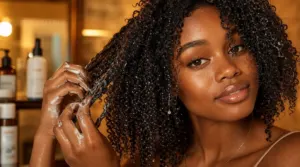
Styling 3C hair is really about working with your curl pattern, not against it. The right techniques can mean the difference between defined, bouncy curls and a frizzy, frustrated afternoon. Here’s what actually works.
Finger Coiling for Definition
Finger coiling is one of the best ways to bring out defined, uniform curls in 3C hair. Here’s how to do it right:
- Divide into small sections so each coil forms evenly without blending.
- Apply styling gel or cream generously before wrapping for grip and hold.
- Wrap root to tip with firm, consistent tension for a full spiral.
- Slide your finger out gently to let the coil spring into shape.
Low-Heat Diffusing
Diffusing is one of the smartest hair styling techniques for Type 3C curls — it sets your pattern without the frizz that air-drying alone can leave behind.
Moisture pre-diffuse matters more than most people realize. Apply your leave-in and styling cream first, then let your hair partially air-dry before turning on any heat.
Heat protectant use is non-negotiable. Spray or work it evenly through every section before the diffuser touches your hair.
| Step | What to Do | Why It Matters |
|---|---|---|
| Moisture pre-diffuse | Apply leave-in, let hair partially air-dry | Curls hold shape easier at lower temps |
| Heat protectant use | Apply evenly before heat | Buffers hair from direct tool contact |
| Sectioning technique | Divide into smaller sections | Consistent curl definition, root to tip |
| Quick pass timing | Brief contact, no repeated passes | Limits heat exposure and moisture loss |
Use low diffuser temperature settings and keep each pass short. Cup curls gently into the bowl and let the airflow do the work — no scrunching, no hovering.
Protective Twists and Braids
Protective twists and braids give your 3C curls a real break from daily styling. Installation tension matters — keep the grip firm at the roots, but never tight enough to cause pulling or throbbing.
Scalp access stays important too, so part sections cleanly to allow washing between wear intervals. Tucked ends reduce friction, and brief maintenance re-twists keep the style fresh.
Satin or Silk Protection
Your curls went through a lot today — the last thing they need is a rough pillowcase undoing all your work overnight.
Satin and silk reduce friction while you sleep, so your curls slide instead of snag. That means fewer tangles, less breakage, and softer curls in the morning.
Here’s what smooth fabric does overnight:
- Limits moisture loss so your curls stay hydrated until morning
- Reduces cuticle disruption, which helps curls look smoother after sleep
- Cuts friction-driven frizz that cotton pillowcases often cause
- Prevents curl flattening from repeated pillow contact
A satin bonnet or silk scarf works well, but a satin pillowcase is a solid backup. Both protect your 3C curls the same way — smooth surface contact is what matters most.
Gentle Hair Elastics
You’ve protected your curls overnight — now keep that same mindset when you’re styling during the day.
Plain rubber bands are rough on 3C hair type, causing breakage and dents. Instead, reach for fabric-wrapped elastics or satin scrunchies. They’re gentler on your curl pattern and won’t snag.
Look for widths between 6 and 12 millimeters for a secure, damage-free hold.
Frequently Asked Questions (FAQs)
What is Type 3C hair?
Type 3C is the tightest subtype in the Andre Walker Type 3 category, with pencil-sized corkscrew spirals that form dense, springy S-shaped coils offering natural volume and a full, textured appearance.
What is Type 3 hair?
Hair texture classification places Type 3 naturally curly hair in the middle of the curly hair spectrum, sitting between wavy Type 2 and coily Type 4, with defined, springy curl patterns.
What does 3C hair look like?
Corkscrew ringlets that bounce back when you stretch them. Tight pencil eraser curls clumping from root to tip. A fullness halo of dense, springy spirals — shorter when dry, bigger than you’d expect.
What is the difference between Type 3C and type 4A hair?
The main difference comes down to curl pattern and coil size. Type 3C sits in the curly category with springy, pencil-sized ringlets, while 4A sits in the coily category with tighter, more compact bends.
What is a 3C hair care routine?
A solid hair routine starts with a sulfate-free shampoo, followed by detangling with conditioner. Use the LOC method to seal moisture, then weekly deep conditioning treatments keep your 3C hair type soft and defined.
If you want more springy, defined curls between wash days, this guide on getting curl definition at home offers easy techniques that work well with your routine.
What is natural 3C hair?
Type 3C hair features tight S or Z-shaped curls roughly pencil-sized in diameter. Its corkscrew structure causes notable shrinkage, and lower porosity makes moisture balance a constant challenge.
What ethnicity has type 3 hair?
Type 3 curls appear across many ethnicities, not just one. Afro-textured hair is most commonly linked to this pattern, but people of South Asian, Mediterranean, and mixed heritage can share the same hair classification.
What is a 5c hair type?
The 5C hair type belongs to an extended classification beyond the Andre Walker Hair Typing System. It describes the tightest, most densely packed coil pattern, with coarse texture, significant shrinkage, and high hair strand thickness.
How do I know if my hair is 3B or 3C?
Telling 3B from 3C apart can feel like solving a puzzle with no answer key. The real difference comes down to curl diameter and spring.
3B curls sit closer to a marker-sized width, while 3C curls tighten around a pencil or straw. Check how your curls clump and contract after drying — 3C shrinks noticeably, pulling upward into dense, springy spirals from root to tip.
What is a Type 3C hair type?
A curl type defined by tight corkscrew spirals, roughly pencil-width in diameter, forming from root to tip. These curls pack together in dense clumps and shrink noticeably as they dry.
Conclusion
Once you crack the code on type 3c hair, the guesswork finally disappears. Your curls aren’t just a pattern—they’re a living system that adapts to moisture, protective habits, and consistent care.
Lead with deep conditioning, seal with the LOC method, and protect ends before bed. Every choice you make compounds over time. The difference between dry, fragile curls and defined, resilient ones isn’t luck—it’s knowing exactly what your hair needs, then delivering it.