This site is supported by our readers. We may earn a commission, at no cost to you, if you purchase through links.
That tube of SPF 50 you found buried in your beach bag from last summer? It may not be protecting you the way you think. Chemical filters like avobenzone can lose up to 60% of their potency within six to twelve months of first use, a window most people don’t factor in.
The expiration date on the label tells you how long the product stays stable unopened. Once you break that seal, a different clock starts running, one that heat, humidity, and daily use all influence.
Understanding how long sunscreen lasts after opening can mean the difference between real UV protection and a false sense of security.
Table Of Contents
- Key Takeaways
- How Long Sunscreen Lasts After Opening
- How Sunscreen Expiration Labels Work
- Factors Affecting Opened Sunscreen Shelf Life
- Storage Mistakes That Degrade Sunscreen Faster
- FDA Rules for Sunscreen Expiration Dates
- How to Tell Sunscreen Has Expired
- Risks of Using Expired Sunscreen
- Make Opened Sunscreen Last Longer
- Can Older Opened Sunscreen Still Work?
- Top 4 Sunscreens: Opened Shelf Life
- Frequently Asked Questions (FAQs)
- Conclusion
Key Takeaways
- Once you open a bottle of sunscreen, you’ve got a 6-to-12-month window of reliable protection — and that clock runs independently of whatever expiration date is printed on the label.
- Chemical filters like avobenzone break down faster than mineral alternatives (zinc oxide, titanium dioxide), so where and how you store your sunscreen directly determines how long it actually works.
- Heat, humidity, and a loose cap are the three fastest ways to kill your sunscreen’s SPF — a cool, dry drawer beats a beach bag or bathroom shelf every time.
- If your sunscreen smells off, looks separated, or has changed texture, those aren’t minor quirks — they’re signs the formula has degraded and can no longer protect your skin reliably.
How Long Sunscreen Lasts After Opening
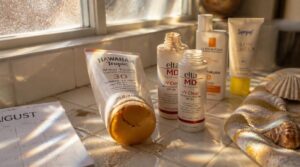
Once you open a bottle of sunscreen, the clock starts ticking — and how long it stays effective depends on more than just the date stamped on the back. Most opened sunscreens fall somewhere in a six-to-twelve-month window, though that range can shift depending on how and where you store them. Here’s what actually determines that timeline.
Heat, sunlight, and even humidity can quietly degrade your SPF long before the label date — find out how sunscreen lotions hold up in swimming and high-heat conditions to know when it’s time to replace yours.
Typical Six-to-twelve-month Window
Most opened sunscreens stay effective for six to twelve months, and the countdown begins the moment you first break the seal.
- Avobenzone can lose up to 60% potency within this window
- Preservatives often begin declining around the 6-month mark
- Emulsifiers separate between 6 and 12 months post-opening
- Texture changes are early degradation signs worth catching
- Using expired sunscreen reduces UV protection noticeably
Proper Storage May Extend Usability
If you store your opened sunscreen in a cool, dry place, that six-to-twelve-month window can stretch closer to two years. Keeping it between 15 and 25°C, away from direct light and moisture, and sealed tightly after each use slows the chemical breakdown that erodes SPF potency. A bathroom cabinet drawer, away from the shower, works well.
Experts recommend maintaining humidity below 60% in storage areas, as excess moisture can compromise both packaging integrity and formula stability.
Poor Storage Shortens Shelf Life
The reverse is equally true. Heat exposure and humidity can cut that window down to just six months. Sunscreen left in a hot car or a steamy bathroom faces temperature fluctuations and moisture that rapidly break down active UV filters.
You’ll notice texture failure, color shifts, and an unusual smell, all clear signs the formula has already degraded beyond use.
Opening Date Versus Expiration Date
Two dates shape your sunscreen’s useful life, and confusing them is easy. The expiration date reflects manufacturer-guaranteed potency for an unopened product. The opening date starts your real countdown.
Write the month and year on the bottle when you first open it; paired with the PAO symbol, that habit keeps you from reaching for something already past its window.
How Sunscreen Expiration Labels Work
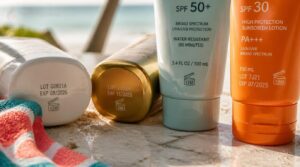
Sunscreen labels carry more information than most people realize, and knowing how to read them helps you make smarter decisions about when to replace a bottle. Manufacturers use a few different labeling systems — some straightforward, others easy to overlook or misinterpret. Here’s what each label type actually tells you.
Printed Expiration Dates
The printed expiration date is your clearest reference point. The FDA mandates this date unless stability testing confirms the product stays effective for at least three years from manufacture. You’ll find it labeled "EXP" or "Use By" on the tube crimp, bottle base, or outer packaging.
Heat and humidity can cause sunscreen to degrade before that date arrives.
Period After Opening Symbol
When in doubt, check the open jar symbol on your sunscreen packaging for guidance. It appears as a small graphic combined with a number indicating months of usability after first opening.
In the EU, any sunscreen with an unopened shelf life of at least 30 months must display this instead of a printed date, making it your primary post-opening reference.
What 12M Means
The 12M symbol is part of the Period After Opening (PAO) system and means your sunscreen stays effective for 12 months from the day you first open it, based on stability and preservative testing.
- Starts on first-use date, not purchase
- Poor storage shortens this window
- Mark your bottle when opened
- Sunscreen usually lasts 6 to 12 months after opening
Missing Expiration Date Guidance
Some sunscreens carry no expiration date. The FDA requires stability proof spanning three years from manufacture, which means the safe consumer assumption is that your sunscreen expires three years after purchase. Without a label date, visual and sensory checks are essential: look for separation, color change, or off-odor. Check the open jar symbol on packaging for any PAO guidance instead.
| Situation | What the FDA Requires | Your Best Action |
|---|---|---|
| No expiration date on label | 3-year stability from manufacture | Assume a 3-year shelf life |
| Opened bottle, no PAO symbol | Manufacturer stability testing | Track your opening date |
| Texture or odor change | N/A | Discard the product immediately |
Recording The Opening Date
The PAO symbol only tells you the window; it can’t tell you when you opened the bottle. Write the opening date directly on the packaging the moment you first use it.
A permanent marker holds up well on most surfaces. Set a calendar reminder for 12 months out, since sunscreen usually lasts about 12 months after opening under average conditions.
Factors Affecting Opened Sunscreen Shelf Life
Not all sunscreens degrade at the same rate once you’ve opened them. Several factors influence how quickly a formula loses its effectiveness — and some of them might surprise you. Here’s what actually shapes the shelf life of your opened sunscreen.
Mineral Versus Chemical Formulas
The type of formula you choose plays a significant role in how long your opened sunscreen stays effective.
Mineral sunscreens containing zinc oxide or titanium dioxide resist photodegradation because these compounds are chemically inert, meaning they don’t break down when exposed to light or air.
Chemical UV filters like avobenzone oxidize more readily, shortening usability, especially under poor storage conditions.
Lotions, Sprays, Sticks, Balms
Format matters just as much as formula. Sunscreen sticks last longer after opening because their solid, low-water composition resists bacterial growth, often outlasting the standard 12-month PAO window. Sprays are more vulnerable, since propellants weaken over time and nozzles clog without cleaning regularly. SPF lip balms need replacing most often, as repeated mouth contact and environmental exposure accelerate degradation.
Preservatives and Packaging
What keeps your sunscreen from spoiling is largely its preservative system: parabens, organic acids, and antioxidants like tocopherols work to slow oxidation and inhibit bacterial growth in sunscreen.
Packaging reinforces this directly: aluminum tubes and pump dispensers limit air exposure far better than wide-mouthed jars. When you seal tightly after every use, you’re actively extending what your PAO label promises.
Frequency of Opening
Packaging helps, but opening frequency shapes how long sunscreen stays effective.
- Daily opening shortens usability to 8-10 months, even with 12M PAO labeling
- Weekly use preserves potency closer to the full labeled period
- Pump dispensers limit air exposure more effectively than wide-mouth jars
- Shared containers introduce extra contamination, accelerating breakdown
- Outdoor workers and athletes may need replacement every 3-4 months
Product Age Before Opening
How old a bottle was before you first opened it matters more than most people realize.
Unopened sunscreen stays stable for up to three years from manufacture, per FDA stability testing, but only when properly kept in a cool, dark, dry place.
If yours sat in a warm garage for two years, don’t expect the full 12M window to hold.
Storage Mistakes That Degrade Sunscreen Faster
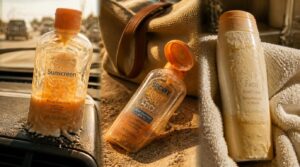
Even if your sunscreen is well within its shelf life, the wrong storage habits can quietly break it down long before the clock runs out. Where and how you store it matters more than most people realize. Here are the most common storage mistakes that degrade sunscreen faster than it should.
Heat and Direct Sunlight
Sunscreen and heat simply don’t mix well. Once temperatures climb above 86°F (30°C), active ingredients like avobenzone begin to oxidize, gradually losing their ability to absorb UV radiation effectively.
Direct sunlight compounds this through photodegradation, where UV photons slowly break down the filter’s molecular structure over time. Together, heat and light accelerate SPF degradation measurably faster than either factor alone.
Hot Car Storage
A parked car ranks among the worst possible storage spots for opened sunscreen. Car interiors can exceed 130°F (54°C) on peak summer days, driving active ingredient breakdown and SPF degradation far faster than normal use would.
- Temperature spikes degrade chemical filters rapidly
- Dashboard exposure concentrates damaging window sunlight
- Heat-induced separation ruins lotion emulsions
- Temperature swings promote condensation inside bottles
Humid Bathroom Conditions
The bathroom feels convenient, but heat and humidity from showers accelerate sunscreen breakdown faster than most people realize. Steam raises moisture levels that interfere with UV filter absorption and disrupt even film formation across skin.
| Bathroom Hazard | What It Does | Result on Skin |
|---|---|---|
| Heat from showers | Degrades active ingredients | Lower SPF efficacy |
| High humidity | Disrupts film formation | Uneven UV coverage |
| Condensation inside bottle | Promotes microbial growth | Potential skin irritation |
Cool dark storage keeps your formula stable far longer.
Loose or Damaged Caps
A loose cap exposes your formula to air, moisture, and contaminants the moment it’s compromised. Three risks follow:
- Oxidation of active ingredients like avobenzone reduces UV-absorbing capacity fast.
- Bacterial or fungal entry overwhelms preservative systems over time.
- Evaporating volatile carriers thicken texture and shift SPF concentration.
Sealing your cap tightly after each use prevents all three.
Refrigeration and Condensation
Refrigerating sunscreen seems like a smart move, but it creates a quiet problem. When a cold container meets warm bathroom air, condensation forms on the surface, and repeated temperature cycling can push moisture past loose cap threads or pump seals. For mineral formulas especially, that moisture can trigger emulsion separation, leaving your SPF uneven and unreliable.
FDA Rules for Sunscreen Expiration Dates
The FDA doesn’t leave sunscreen expiration up to guesswork — there are specific rules manufacturers must follow. Knowing those rules helps you read labels more accurately and make smarter decisions about what’s sitting in your medicine cabinet. Here’s what the FDA actually requires.
Three-year Stability Requirement
The FDA mandates that every sunscreen you buy must retain its labeled SPF for at least three years from the manufacturing date, provided you store it correctly. This applies to both chemical and mineral formulations.
Manufacturers must conduct rigorous stability testing at controlled conditions, usually 25°C and 60% relative humidity, and keep those records available for FDA inspection.
When Dates Must Appear
Stability testing determines whether a printed expiration date must appear on your sunscreen. If testing confirms the product stays effective for under three years, an expiration date is mandatory.
If it holds stable for the full three years, manufacturers may skip the date entirely and display a PAO symbol instead, showing how long it remains usable after opening.
Unopened Sunscreen Shelf Life
An unopened bottle can stay effective for up to 3 years when stored correctly. The FDA mandates 3-year effectiveness from the manufacture date. Keep these key points in mind:
- Store in a cool, dark, dry place
- Preserve original packaging integrity to block air and moisture
- Note the batch number for manufacture date tracking
- Avoid temperature fluctuations that degrade active ingredients
Manufacturer Storage Instructions
Beyond expiration dates, manufacturers must print storage instructions directly on the label. Most specify keeping sunscreen between 20 and 25 degrees Celsius, away from direct light and humidity. These aren’t suggestions. Heat above 30°C accelerates ingredient breakdown, and moisture invites contamination. Follow the label’s guidance to get the full shelf life out of any bottle you open.
How to Tell Sunscreen Has Expired
Your sunscreen will usually tell you when it’s past its prime — you just need to know what to look for. The signs aren’t always obvious, but once you recognize them, checking takes only a few seconds. Here are the key indicators that it’s time to toss your bottle and open a fresh one.
Separation or Watery Texture
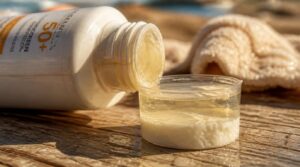
Shake your sunscreen and notice a watery layer sitting apart from the cream base. That alone signals the emulsion has broken down.
Heat and humid conditions destabilize active ingredients like avobenzone, pulling the oil and water phases apart.
If separation persists after shaking, the formula is no longer reliable, and applying it means uneven, inconsistent UV protection across your skin.
Clumps, Grit, or Graininess

Not every texture change means your sunscreen is ruined. Natural mineral formulas with unrefined shea butter can develop harmless grainy texture from fatty acid crystallization, especially after temperature shifts during storage or shipping. Warming the product and stirring it gently can restore smoothness entirely.
Clumps that won’t break down after shaking are a different story. Visible clumping or curdling signals actual emulsion failure, meaning the formula can’t spread uniformly across skin and won’t deliver consistent SPF protection.
Yellowing or Darkening
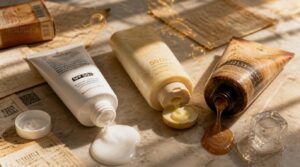
When your sunscreen turns yellow or brown, oxidation of UV filters like avobenzone is the cause, driven by heat and light. Four signs of color degradation:
- White or clear formula turns yellow
- Yellow deepens to brown over time
- Tinted sunscreens mask shifts but still degrade
- Mineral formulas yellow more slowly
Significant discoloration means reduced SPF efficacy.
Sour or Unusual Odor

If your sunscreen smells sour, rancid, or faintly chemical, that signals oxidation or microbial activity inside the formula. Sour odors form when active ingredients break down into acid-like compounds, often from heat exposure or a loose, poorly sealed cap.
Smell alone can’t confirm how unsafe it is, but an off-odor signals spoilage and is reason enough to stop using it.
Poor Spreadability
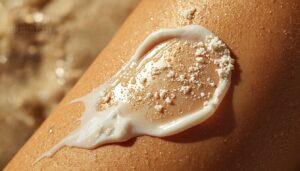
When sunscreen drags, beads up, or refuses to mix smoothly, that’s a clear sign the emulsifiers have broken down.
Separated oil and water phases, grainy mineral particles, and thickened paste all make even application nearly impossible, leaving patches of skin unprotected.
Poor spreadability isn’t just inconvenient; it directly lowers your actual SPF coverage, regardless of what the label says.
Risks of Using Expired Sunscreen
Using expired sunscreen isn’t just ineffective — it can actively work against your skin’s health. The risks go beyond a simple sunburn, touching on everything from UV damage to unexpected skin reactions. Here’s what you’re actually putting your skin at risk for when you reach for that old bottle:
Reduced SPF Protection
The SPF number on your bottle is only as reliable as the filters inside it. Over time, UV filter photostability declines, meaning the active ingredients that block UVB radiation break down, often without any visible sign.
When this happens, the protection you actually get can fall well below what the label claims, leaving you exposed without knowing it.
Greater Sunburn Risk
Degraded UV filters don’t just underperform, they fail when you need them most. Expired sunscreen leaves your skin with far less protection than the label promises, and sunburn can follow surprisingly fast.
What that looks like in practice:
- Redness and pain appearing within hours of exposure
- Skin peeling that can last several days
- Severe burns that may require medical attention
UVA and UVB Damage
Sunburn is the visible warning, but the deeper threat is what you can’t see. UVB rays directly damage DNA, forming lesions that drive skin cell mutations. UVA rays penetrate further, triggering photoaging, inflammation, and immune suppression. Together, they generate oxidative stress and raise cancer risk. Expired sunscreen that can’t deliver full broad-spectrum SPF performance leaves your skin exposed to all of it.
Expired sunscreen leaves your skin defenseless against UVA and UVB rays that silently damage DNA and accelerate cancer risk
Skin Irritation or Reactions
Degraded ingredients don’t just stop protecting you, they can actively work against you. When sunscreen breaks down, altered chemical compounds may contact skin and trigger irritant dermatitis, especially in people with sensitive skin.
Redness, itching, and localized discomfort on areas where you applied the product are common early signs worth taking seriously.
Microbial Contamination Concerns
That irritation risk is only part of what you’re dealing with. Expired sunscreen can harbor live bacterial and fungal colonies, including pathogens like Pseudomonas aeruginosa and Staphylococcus aureus. Research shows contamination rates reach 29% after three months of opening and climb to 34% by six months, as preservative systems degrade and can no longer suppress microbial growth throughout the formula.
Make Opened Sunscreen Last Longer
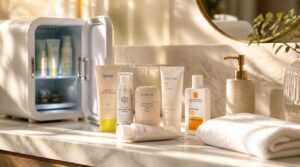
How you store sunscreen after opening makes a real difference in how long it stays effective. A few straightforward habits can help you get the most out of every bottle — protecting both your skin and your investment. Here’s what you can do to keep your sunscreen working as long as possible.
Choose Cool, Dry Storage
Where you store your sunscreen matters as much as how often you use it.
Cool, dry conditions slow chemical breakdown, keeping active ingredients stable longer. Aim for spots below 25°C (77°F), like a bedroom drawer or interior closet.
Avoid bathrooms, where shower steam quietly shortens shelf life, and garages, where temperature swings are unpredictable.
Keep Containers Tightly Sealed
After applying sunscreen, twist or snap the cap until it seats firmly, with no wobble. A loose closure lets air and moisture sneak in, quietly degrading active ingredients.
Check the rim for residue before closing; dried buildup can prevent a flush seal. That small habit reduces air exchange and keeps your formula performing as intended.
Shield Bottles From Sunlight
Light is sunscreen’s quiet enemy. Chemical filters like avobenzone can lose significant SPF efficacy within months when bottles sit in direct sun, even through a clear container wall.
Keeping your sunscreen in a cool, dark place matters more than most people realize. Wrapping bottles in a towel or choosing opaque containers offers simple, reliable protection against light-driven degradation.
Prevent Moisture and Contamination
Moisture is surprisingly destructive to sunscreen formulas. Even small amounts of water entering the container can trigger microbial growth and break down active ingredients. Seal the cap tightly after every use, and store in a dry place with humidity below 60%, well away from bathrooms.
When outdoors, keep containers clean and free from sand, seawater, or dirt to prevent bacterial contamination.
Track Opening and Expiration Dates
Don’t skip this step: write the opening date on the bottle the day you unseal it.
- Check the open jar symbol on the packaging for your PAO timeframe (e.g., "12M").
- Add that month count to your opening date as a calendar cutoff.
- Compare your POA and expiration date, then use whichever falls earlier.
- Record the lot code if tracking multiple bottles.
Can Older Opened Sunscreen Still Work?
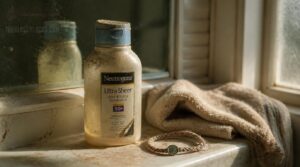
That half-empty bottle sitting in your medicine cabinet raises a fair question: does it still do its job? The answer depends on how old it is, how it’s been stored, and what changes you’ve noticed. Here’s a closer look at the most common scenarios.
Twelve Months After Opening
Twelve months after opening, your sunscreen can’t reliably deliver its labeled SPF value. The PAO symbol and sunscreen expiration date together define this critical window. Watch for:
| Sign | Meaning |
|---|---|
| Watery texture | Emulsion breakdown |
| Sour odor | Oxidation |
| Gritty feel | Ingredient clumping |
| Loose cap | Air exposure |
Proper sunscreen storage slows degradation, but the SPF reduction risk past twelve months is still real.
Using Two-year-old Sunscreen
Two years in, SPF degradation is pretty much a certainty. Sunscreen usually lasts about 12 months after opening, so by the two-year mark, your product has likely lost its ability to reliably protect skin.
Check the open jar symbol on the packaging, then look for:
- Watery or separated texture
- Sour or rancid odor
- Clumps or graininess
- Yellowing or discoloration
Using Four-year-old Sunscreen
Four years out, the situation is more serious than at the two-year mark. Chemical filters like avobenzone have oxidized a lot, preservative systems have broken down, and microbial contamination is a real risk. The SPF on the label no longer reflects what’s in the bottle.
Using four-year-old sunscreen means inadequate UV protection, leaving skin vulnerable to sunburn, photoaging, and cumulative damage.
Accidentally Applying Expired Sunscreen
Grabbed an old bottle without checking the date? It happens. The main risks:
- Skin redness or itching from degraded, unstable ingredients
- No meaningful UV protection as SPF filters break down
- Microbial contamination when preservatives fail
- Uneven coverage from separated texture
- Sunburn risk even after brief sun exposure
Rinse the area and switch to a fresh product right away.
When Replacement is Safest
Don’t wait for the calendar to decide when to replace your sunscreen. Replacement is safest whenever you notice separation, graininess, or a sour odor, since using expired sunscreen reduces its ability to block UV rays and raises the risk of skin irritation.
Opened sunscreen commonly remains effective for six months to a year, but heat exposure cuts that window short.
Top 4 Sunscreens: Opened Shelf Life
Knowing how long a sunscreen holds up after opening can shape which product you reach for each season. The four options below represent a range of formulas — lotion, sport, lip balm, and mineral — each with its own post-opening shelf life to keep in mind. Here’s what you should know about each one before your next application.
1. Neutrogena Ultra Sheer SPF 70 Sunscreen Lotion
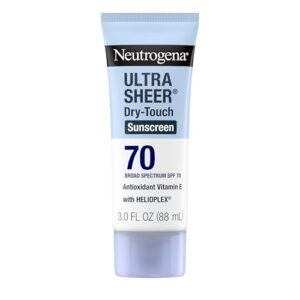
Neutrogena Ultra Sheer SPF 70 uses chemical UV filters, including avobenzone and octocrylene, which degrade faster than mineral alternatives when exposed to heat or light. Once opened, plan on 6 to 12 months of reliable protection under typical conditions. Store it in a cool, dry spot with the cap tightly sealed, and it may stay effective for closer to two years. The opaque packaging helps limit light exposure, but a warm car or beach bag will shorten that window quickly.
| Best For | Active individuals and outdoor enthusiasts who want lightweight, high-SPF protection that wears comfortably under makeup or during physical activities like hiking, biking, or swimming. |
|---|---|
| SPF Rating | SPF 70 |
| Broad Spectrum | UVA/UVB |
| Water Resistance | 80 minutes |
| Formula Type | Chemical filters |
| White Cast | Possible |
| Intended Use | Face & body |
| Additional Features |
|
- High SPF 70 broad-spectrum protection with Helioplex technology shields against both UVA and UVB rays effectively
- Fast-absorbing, non-greasy Dry-Touch formula makes it comfortable for daily wear, including under makeup
- Travel-friendly 3 oz bottle is TSA-compliant and water-resistant for up to 80 minutes
- Can leave a temporary white cast if not blended well, which may be more noticeable on deeper skin tones
- Some users find it feels greasy or oily in warm or humid conditions, despite the Dry-Touch claim
- Chemical UV filters like avobenzone and octocrylene degrade faster with heat or light exposure, so proper storage is important to maintain effectiveness
2. Banana Boat Sport SPF 50 Sunscreen Lotion
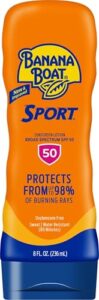
Banana Boat Sport SPF 50 uses chemical filters, avobenzone and octocrylene, that behave much like those in the Neutrogena Ultra Sheer. Once opened, you’re looking at a 6-to-12-month window of reliable broad-spectrum protection under average conditions. Proper storage in a cool, dry place can stretch that closer to two years.
The 8-ounce pump bottle seals reasonably well, but heat exposure, especially poolside or in a beach bag, will accelerate active ingredient breakdown faster than the label suggests.
| Best For | Active individuals and outdoor enthusiasts who need long-lasting, sweat-resistant sun protection during intense physical activity or extended time in the sun. |
|---|---|
| SPF Rating | SPF 50 |
| Broad Spectrum | UVA/UVB |
| Water Resistance | Active sweat resistance |
| Formula Type | Chemical filters |
| White Cast | None |
| Intended Use | Face & body |
| Additional Features |
|
- Rubs in clear with no white cast, making it comfortable and flattering across all skin tones
- Provides broad-spectrum SPF 50 protection plus 12-hour hydration thanks to ceramides, aloe, and vitamin E
- Free from oxybenzone and octinoxate, and holds up well against sweat and water during workouts or outdoor activity
- Some users report skin irritation or an unexpectedly oily feel despite the non-greasy claim
- The pump lid can loosen during shipping, leading to potential leaks
- Not formulated specifically for facial use, and like most sunscreens, requires regular reapplication to maintain protection
3. Banana Boat SPF 50 Lip Balm
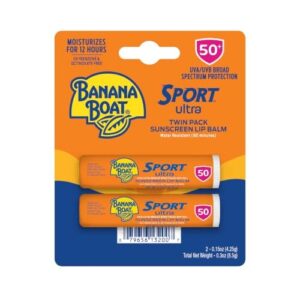
The stick format gives this lip balm a subtle advantage over lotions and sprays. Because the product isn’t pumped or poured, it encounters less air and moisture with each use, which helps slow chemical degradation of the active filters.
Under cool, dry storage, avobenzone and octocrylene usually stay effective for 6 to 12 months after opening, with careful handling potentially stretching that closer to two years. Watch for any unusual odor or texture change as the first signs of breakdown.
| Best For | Outdoor enthusiasts who need reliable lip protection during activities like skiing, hiking, or golfing in any season. |
|---|---|
| SPF Rating | SPF 50 |
| Broad Spectrum | UVA/UVB |
| Water Resistance | Diminishes with activity |
| Formula Type | Chemical filters |
| White Cast | Not reported |
| Intended Use | Lips only |
| Additional Features |
|
- SPF 50 broad spectrum protection keeps lips shielded from both UVA and UVB rays year-round
- Free from oxybenzone and octinoxate, making it a friendlier choice for those with sensitivities to common chemical filters
- Lightweight, non-greasy formula absorbs quickly without leaving lips feeling heavy or coated
- Some users notice an unpleasant, medicinal taste after applying
- Occasional reports of burning or irritation suggest it may not suit all skin types
- Protection fades with eating, drinking, or sweating, so frequent reapplication is necessary to stay covered
4. Blue Lizard Sensitive Mineral SPF 50 Sunscreen
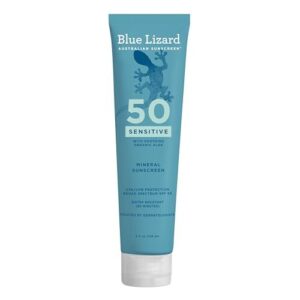
Mineral filters like zinc oxide and titanium dioxide are naturally more stable than chemical UV absorbers, which gives Blue Lizard a quiet edge in longevity. After opening, you can expect 12 months of reliable protection under average storage conditions, and up to two years if you keep it cool and dry.
Watch the Smart Cap as a loose indicator of UV exposure, and check the formula for any separation or grittiness before each use.
| Best For | Anyone with sensitive skin, kids, or eco-conscious swimmers who want reliable, reef-safe sun protection without harsh chemicals. |
|---|---|
| SPF Rating | SPF 50 |
| Broad Spectrum | UVA/UVB |
| Water Resistance | 80 minutes |
| Formula Type | Mineral (Zinc & Titanium) |
| White Cast | Possible |
| Intended Use | Face & body |
| Additional Features |
|
- Broad spectrum SPF 50 with zinc oxide and titanium dioxide means solid, stable UV protection that doesn’t degrade in sunlight the way chemical filters can.
- Water-resistant for up to 80 minutes, making it a great pick for beach days, swimming, and outdoor sports.
- The Smart Cap changes color in UV light to remind you when it’s time to reapply — a genuinely handy feature for forgetful sunscreen users.
- Mineral formulas are notorious for white cast, and this one is no exception — people with deeper skin tones may need extra rubbing to blend it in.
- Some users find the texture greasy or sticky, which can feel uncomfortable during hot or active days.
- The color-changing cap has a limited lifespan of around 8 hours of cumulative UV exposure, so it loses its usefulness over time.
Frequently Asked Questions (FAQs)
Can I use sunscreen 12 months after opening?
Yes, in most cases. If stored properly and showing no signs of degradation, sunscreen opened 12 months ago can still perform effectively, though its SPF potency may have begun to decline.
Can you use 2 year old sunscreen?
In most cases, two-year-old opened sunscreen has exceeded its usable window. Most formulas remain effective for only 12 months after opening, meaning a two-year-old product likely offers reduced SPF protection.
Is sunscreen still good after 4 years?
A four-year-old sunscreen is past the FDA’s three-year stability window, meaning its SPF protection can’t be guaranteed. Cleveland Clinic is clear: don’t rely on sunscreen you’ve held onto for more than three years. Replace it.
How to know if sunscreen has gone bad?
Products labeled 12M give you a clear built-in timeline, but sensory checks matter just as much. Look for separation, grit, yellowing, a sour or rancid odor, or poor spreadability as your clearest signs of degradation.
Can sunscreen be shared safely between people?
Sharing sunscreen isn’t recommended. Each use transfers bacteria and skin oils into the formula, breaking down preservatives and active ingredients faster, which means neither person gets reliable SPF protection.
Can you mix old and new sunscreen together?
Mixing old and new sunscreen isn’t recommended. Blending can dilute active UV filters, disrupt film formation, and make accurate dosing unreliable. Layering products separately keeps each formula intact and your protection predictable.
Does sunscreen expire faster at higher altitudes?
Not directly. Altitude affects UV intensity on your skin, not product stability in the bottle. What degrades sunscreen faster is heat and sun exposure during storage, which can happen anywhere.
Conclusion
Your sunscreen works like a chain: it’s only as strong as its weakest link, and that link is often an opened, poorly stored bottle sitting well past its prime.
Understanding how long does sunscreen last after opening gives you a real advantage. Check the PAO symbol. Store it cool and dry. Replace it within twelve months of opening.
Your skin faces UV exposure every single day, and it deserves protection you can genuinely count on.
- https://www.nivea.co.uk/articles/education/sun/how-long-does-sunscreen-last
- https://shapypro.com/pao-cosmetics-labeling-expiry
- https://www.stylist.co.uk/beauty/does-sunscreen-spf-expire-go-out-of-date-how-long-does-it-last/388825
- https://www.certifiedcosmetics.com/blog/cosmetic-product-labelling/what-is-period-after-opening-pao
- https://senneskin.com.au/blogs/news/cracking-the-code-what-skincare-symbols-really-mean