This site is supported by our readers. We may earn a commission, at no cost to you, if you purchase through links. This content is for general informational and educational purposes only and is not a substitute for professional medical, dermatological, or nutritional advice.

You bought the eye cream to look more rested. Instead, you’re sitting with burning, red skin wondering what went wrong. If that sounds familiar, you’re in good company: under-eye irritation is one of the most common complaints I hear as a cosmetic chemist.
Here’s the thing. The skin beneath your eyes is the thinnest on your entire face, sometimes less than half a millimeter thick. It has a weaker barrier, holds moisture poorly, and sits right next to a tear film that pulls products inward with every blink. So when a formula contains fragrance, retinol, or stripping alcohol, that delicate area has almost no defense.
Understanding why under-eye creams cause irritation starts with knowing what’s in the jar and how your skin reacts to it. Let’s break down the usual suspects, the warning signs worth taking seriously, and how to calm things down fast.
Table Of Contents
- Key Takeaways
- Why Do Under-Eye Creams Cause Irritation?
- Which Eye Cream Ingredients Trigger Irritation?
- What Does Eye Cream Irritation Look Like?
- Can Eye Creams Irritate Your Eyes?
- How Do You Soothe Under-Eye Irritation?
- How Can You Prevent Future Irritation?
- Frequently Asked Questions (FAQs)
- Why do all eye creams irritate my eyes?
- What is the best eye cream that won’t irritate my eyes?
- How to soothe irritated skin under eyes?
- Is it normal for under eye cream to burn?
- Can I use regular face moisturizer under my eyes?
- How long should I wait before switching eye creams?
- Are expensive eye creams less likely to irritate?
- Can I apply eye cream on my eyelids safely?
- Conclusion
Key Takeaways
- Under-eye skin is the thinnest on your face with a weak barrier, so irritants like fragrance, drying alcohols, and strong actives (retinol, vitamin C, exfoliating acids) penetrate far more easily and sting faster there than anywhere else.
- Irritation and allergy look different: irritation causes immediate burning or redness at the application site, while an allergic reaction involves your immune system and can spread beyond the area with itching, swelling, or hives—see a doctor promptly for vision changes, blistering, or spreading swelling.
- Concentration and frequency matter more than any single "bad" ingredient, since a gentle retinol used twice weekly rarely stings but layering actives nightly with acids overwhelms thin skin.
- To soothe a flare-up, stop all actives, apply a cool compress for five to ten minutes, use only a plain fragrance-free emollient, and let the skin rest; prevent future problems by patch testing for 48 hours, choosing fragrance-free formulas with short ingredient lists, and applying a pea-sized amount with your ring finger below the lash line.
Why Do Under-Eye Creams Cause Irritation?
Ever wonder why a cream made for your eyes can still burn? It comes down to anatomy. The skin under your eyes is the thinnest on your face, with a weaker Skin Barrier Function than your cheeks or forehead. That means it holds moisture less effectively and lets irritants slip through more easily.
That’s why common culprits like fragrance, denatured alcohol, and benzalkonium chloride sting so fast down there—check out this guide to sensitive-skin eye creams that skip the harsh ingredients before your next purchase.
Your eyes are also busy. Blinking, tearing, and warmth can pull product toward the tear film, so even a careful application may end up where it stings. Add friction from rubbing or layering multiple products, and you’ve got a recipe for Contact Dermatitis, a non-allergic irritation that flares without your immune system being involved.
Usually, it’s not one bad ingredient. It’s thin skin plus long exposure plus Irritant Ingredients working together. The good news? That’s fixable.
Which Eye Cream Ingredients Trigger Irritation?

So which ingredients are the usual suspects? Fragrance tops the list. Synthetic Fragrances and Essential Oils can contain dozens of reactive compounds, and your under-eye skin doesn’t have the defenses to handle them.
Actives like Retinol and Vitamin C are powerful but demanding. They speed cell turnover and, on thin skin, that often means redness, flaking, or burning. Same story with exfoliating acids like glycolic or salicylic acid.
Then there’s drying alcohols. Denatured alcohol strips the lipids that hold your barrier together, leaving skin more vulnerable to everything else you apply.
Preservatives like formaldehyde releasers and certain isothiazolinones can also irritate sensitive skin, though they’re necessary to keep products safe.
Here’s the takeaway: concentration and frequency matter. A low-strength retinol used twice weekly rarely causes trouble. The same ingredient layered nightly with an acid? That’s when skin pushes back.
Concentration and frequency matter: a gentle retinol twice weekly rarely stings, but layering it nightly with an acid makes skin push back
What Does Eye Cream Irritation Look Like?
Your skin usually tells you when a product isn’t working, but the signals aren’t always easy to read. A little tingling might be harmless, while quiet redness could mean something more serious is brewing.
Learning to spot the difference between normal adjustment and true irritation is key, and this guide on how to exfoliate your face without irritation breaks down exactly which warning signs deserve a pause.
Here’s how to spot the difference between simple irritation and a true allergic reaction, plus the warning signs that mean it’s time to call your doctor.
Irritation Versus Allergic Reaction

How can you tell an allergic reaction vs irritation apart? It’s simpler than you’d think. Irritation shows up immediately: burning, stinging, or redness right where you applied the cream. An allergic reaction is different; your immune system reacts to specific allergens like preservatives or dyes, causing itching, swelling, or a rash that may spread beyond the contact area, sometimes with watery eyes or sneezing. Especially, fragrances and preservatives in cosmetics are frequent triggers, even in products labeled "unscented" that may contain masking fragrances. If you’re unsure, dermatologist consultation and patch testing can clarify your skin sensitivity.
When to Seek Medical Care

Most irritation settles on its own, but some signs shouldn’t wait. Seek same-day care if you notice vision changes, spreading swelling, blistering, or hives near your eyes.
If your skin tolerates actives well, this guide to anti-aging eye creams for fine lines explains how to use retinol and peptides gently around delicate eye skin.
Persistent Redness and Inflammation that doesn’t fade after stopping the cream, or Stinging Burning or Itching Sensations that worsen, also warrants a Dermatologist Consultation. If product entered your eye with lasting burning, get evaluated promptly.
Patch Testing can identify the culprit later.
A skin patch test kit for allergies can help you pinpoint exactly which ingredient is triggering the reaction from home.
Can Eye Creams Irritate Your Eyes?
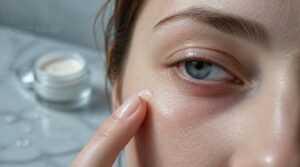
Yes, they can. Your eye cream doesn’t have to touch your eyeball to cause trouble. When you apply it too close to the lash line, the product migrates into your eye through natural blinking, sweat, and sebum. That’s when Stinging Burning or Itching Sensations kick in.
Some formulas make this worse. Occlusive, film-forming bases sit on your eyelid longer, giving irritating ingredients more time to travel toward your eye. Applying on damp skin amplifies the problem, since moisture boosts penetration and stinging. Reapplying throughout the day? That’s cumulative exposure your eyes don’t love.
Watch for Eye Cream Irritation Signs like Persistent Redness and Inflammation around the lids. If discomfort spreads beyond the contact area with intense itching, you may be dealing with an Allergic Reaction rather than simple Skin Sensitivity. Either way, your eyes are telling you something. Listen.
How Do You Soothe Under-Eye Irritation?

So how do you calm things down once your under-eyes are already stinging? First, stop everything. Press pause on all actives, including retinoids, acids, and any layered serums, so your skin stops receiving irritation signals and can actually settle.
Then follow these three steps:
- Cool compress for five to ten minutes to reduce redness and that burning sensation.
- Apply a plain, fragrancefree formulation that contains only emollients, no acids, no botanicals, nothing active.
- Keep the area dry and untouched, avoiding hot water, rubbing, and tight eye patches while it heals.
Give it a few days. If you want soothing antiinflammatory agents later, look for gentle, hypoallergenic skincare options, but honestly, skin often heals fastest when you simply let it rest and resist the urge to over-treat.
How Can You Prevent Future Irritation?

Once your skin has calmed down, you don’t want to go through that sting again. The good news is that preventing irritation comes down to a few smart habits, not guesswork. Here’s how to choose, test, and apply your eye cream so it stays soothing instead of stinging.
Choose a Gentle Formula
Your eye cream’s label matters more than its price tag. Look for a fragrance-free formulation, since fragrance is the top irritant for delicate under-eye skin. Choose hypoallergenic skincare with soothing ingredients like hyaluronic acid, ceramides, or chamomile.
Keep it simple. Shorter ingredient lists mean fewer chances for preservative sensitivity and reactions. A dermatologist-tested, non-irritating eye cream puts you in control.
Patch Test Before Use
Think a patch test is optional? Your under-eyes would disagree.
Apply a small amount to your inner forearm or behind your ear, then watch that spot for 48 hours. Redness or itching that appears later often signals fragrance sensitivity or ingredient sensitivity, not just momentary stinging. No reaction? You’ve lowered your risk.
A two-minute habit beats weeks of skin barrier repair every time.
Apply Eye Cream Safely
Where you place your eye cream matters as much as what’s in it.
To apply eye cream safely, use the ring finger application technique—it’s naturally gentle and won’t press too hard. If you’d rather skip finger application altogether, gentle eye cream applicator tools offer cooling ceramic or metal wands that glide on with zero tugging.
Stick to a peasized amount usage (a tiny dab, truly), and practice avoiding lash line application, since product there migrates into your eyes.
Try waiting for absorption before layering concealer.
Frequently Asked Questions (FAQs)
Why do all eye creams irritate my eyes?
The thinnest skin needs the gentlest touch. Your under-eye area is uniquely permeable, so even gentle formulas can reach your ocular surface, triggering stinging, tearing, and redness almost instantly.
What is the best eye cream that won’t irritate my eyes?
The best NonIrritating Eye Cream is a fragrance-free formulation that’s dermatologist-tested and hypoallergenic. Skip retinoids, acids, and alcohols. Choose sensitive skin formulas, patch test first, and apply gently below your lash line.
How to soothe irritated skin under eyes?
How to soothe irritated skin under eyes? Treat it like a sunburn: stop touching, cool it down. Apply a cold compress for ten minutes, then switch to a fragrance-free formulation with colloidal oatmeal or aloe vera. Skip actives until calm.
Is it normal for under eye cream to burn?
Yes, mild burning can happen, but it’s not ideal. That burning sensation usually signals skin irritation from fragrance allergens or harsh actives. Persistent stinging, redness, or swelling suggests your eye cream isn’t right for you. Stop using it.
Can I use regular face moisturizer under my eyes?
Imagine this: you’ve run out of eye cream, so you smooth your regular moisturizer under your eyes. Sometimes that’s fine. Sometimes it stings.
Here’s the rule: fragrance-free, sensitive-skin formulas are usually safe for UnderEye Skin. Anything with retinoids, exfoliating acids, or essential oils? Save it for your cheeks. That thin Skin Barrier absorbs more, so actives hit harder.
Check your label. Humectants and gentle Occlusive ingredients are your friends. And apply sparingly to avoid Product Pilling or eye contact.
How long should I wait before switching eye creams?
How long should I wait before switching eye creams? Give your skin at least one full week to recover after skin irritation clears. Allergic reactions to eye creams can linger 2–10 days, so patience prevents repeated flare-ups.
Are expensive eye creams less likely to irritate?
Are expensive eye creams less likely to irritate? Not necessarily. Price reflects packaging and marketing, not gentleness. Luxury formulas can still contain fragrance or strong actives.
Your best protection is ingredient avoidance, a patch test, and choosing fragrance-free, hypoallergenic options for sensitive skin.
Can I apply eye cream on my eyelids safely?
You can, but only if your cream is truly eyelid-safe. Your Eye Area skin is ultra-thin, so Sensitive Skin reacts fast. Choose a FragranceFree Formulation, do a Patch Test, and apply gently.
Conclusion
Hippocrates had it right centuries ago: first, do no harm. Your under-eye skin deserves that same ancient wisdom.
Understanding why under eye creams cause irritation gives you real power over the situation. Read labels, patch test, and apply with care. When irritation strikes, stop, soothe, and give your skin time to recover.
Your eyes don’t need the strongest formula. They need the gentlest one. That distinction makes all the difference.