This site is supported by our readers. We may earn a commission, at no cost to you, if you purchase through links.

Your scalp produces about 1–2 grams of sebum daily, but stress, hormonal shifts, and the wrong shampoo can drive that number far higher. Most people respond by washing more often, which strips the scalp’s protective barrier and triggers even more oil. It’s a cycle that keeps repeating until you understand what’s driving it.
Sebaceous gland activity also reacts to signals from androgens, cortisol, and diet, both how often you wash. Knowing how to balance scalp oil production means working with those signals, not against them. The right combination of ingredients, habits, and timing can reset your scalp’s output within weeks.
Table Of Contents
- Key Takeaways
- How Do You Balance Scalp Oil Production?
- Why is Your Scalp Producing Too Much Oil?
- Build a Gentle Scalp-Washing Routine
- Choose Treatments That Regulate Sebum
- Support Scalp Balance Through Daily Habits
- When Should You See a Dermatologist?
- Frequently Asked Questions (FAQs)
- How to stop overproduction of oil on scalp?
- Which vitamin deficiency causes oily scalp?
- Why is my scalp producing less oil?
- Why do I produce so much oil on my scalp?
- Can oily scalp cause hair thinning or loss?
- Does hair type affect how much oil builds up?
- Are scalp oils different from hair strand oils?
- Can dry shampoo worsen scalp oil imbalance?
- Does scalp massage increase or reduce oil production?
- Conclusion
Key Takeaways
- Washing your scalp too often backfires — stripping its natural barrier signals your glands to produce even more oil, so spacing washes to every two or three days breaks that cycle.
- Ingredients like niacinamide and zinc PCA are your most effective tools for dialing down oil production, with niacinamide shown to reduce sebum output by up to 20% over eight weeks.
- Your diet and stress levels directly influence how much oil your scalp makes, since refined carbs spike the hormones that drive sebaceous gland activity, while chronic stress raises cortisol and compounds the problem.
- If weeks of consistent, gentle cleansing haven’t improved your oiliness, it’s time to see a dermatologist — persistent greasy flakes, hair thinning, or scalp inflammation point to underlying conditions no routine product can fix.
How Do You Balance Scalp Oil Production?
With the right routine, you can balance scalp oil production without stripping your skin. Your scalp’s sebaceous glands respond to how you treat them, so consistency matters more than intensity.
Pairing that consistency with targeted botanicals — like those covered in this guide to essential oils for scalp oil balance — can make regulation noticeably more effective over time.
Start with gentle cleansing. Wash often enough to remove surface oil, but avoid harsh shampoos that trigger rebound greasiness. For most people, adjusting hair washing frequency to every two or three days works well.
Next, focus on sebum regulation through targeted ingredients like niacinamide and zinc PCA, which calm the signaling pathways that drive oil output.
Why is Your Scalp Producing Too Much Oil?
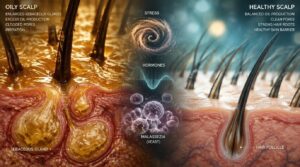
Before you fix the problem, you need to name it. Your scalp makes too much oil for a handful of predictable reasons, and each one reacts differently to a fix.
Hormonal changes top the list. Puberty, pregnancy, menstrual cycles, and some medications raise androgen signaling, which tells your sebaceous glands to produce more sebum.
A stress lifestyle matters too, because stress hormones can increase both oil output and inflammation. Overwashing with strong detergents strips your barrier, and your glands compensate. Harsh hair products leave residue that looks like grease even when sebum hasn’t changed.
Common culprits include:
- Androgen-driven gland activity
- Malassezia yeast and inflammation
- Diet and scalp oil links
- Occlusive products and buildup
- Sweat, humidity, and tight headwear
Build a Gentle Scalp-Washing Routine
Now that you know what’s driving the oil, you can build a routine that works with your scalp instead of against it.
A consistent, gentle routine — as outlined in this guide to managing oily hair after a keratin treatment — gives your scalp the stability it needs to stop overproducing oil and find its natural balance.
Start with washing frequency. If you wash daily with harsh formulas, drop to every other day and see how your scalp responds. If you wash rarely, add one session per week. Changes take about two weeks to show clearly, so don’t judge results in days.
Choose gentle options: a sulfate-free shampoo or pH-balanced shampoo cleans sebum without stripping your barrier. Massage shampoo into your scalp with your fingertips for a full minute, then rinse thoroughly, leftover suds leave a film that reads as grease.
Avoid overwashing your hair with clarifying formulas, and pat dry with a soft towel instead of scrubbing. Consistency beats intensity here.
Choose Treatments That Regulate Sebum

Your washing routine sets the foundation, but the right topical treatments do the heavy lifting for oil control. Some ingredients work by regulating sebaceous gland activity directly, while others keep the scalp environment balanced so it stops overcompensating.
Below, you’ll find four practical treatment options to work into your routine.
Niacinamide and Zinc PCA
Studies show niacinamide can reduce sebum output by up to 20% in eight weeks of consistent use. Applied after follicle cleansing, it calms inflammation and helps maintain your scalp pH balance, so oil glands don’t overcompensate.
Zinc PCA works alongside it, targeting sebum regulation through zinc-dependent skin chemistry, giving you a gentle leave-on combination that controls oiliness without any harsh stripping.
Diluted Tea Tree Oil
For conditions tied to scalp microbiome disruption, diluted tea tree oil works as a targeted antibacterial scalp treatment. Its active compound, terpinen-4-ol, disrupts fungi and bacteria linked to excess flaking, which can ease inflammation and support sebum regulation indirectly.
Mix two to three drops into a carrier oil like jojoba, apply to affected areas only, and rinse after 20 minutes.
Gentle Clarifying Methods
When buildup accumulates, clarifying shampoos or a diluted apple cider vinegar rinse reset the scalp without daily stripping. Scalp exfoliation works best done periodically rather than every wash.
- Use clarifying shampoos every 1–2 weeks.
- Apply scalp scrubs or clay masks for the scalp to lift residue mechanically.
- Rinse with cool water to reduce leftover product film.
Lightweight Scalp Hydration
Picture your scalp as a dry, thirsty barrier that starts overproducing oil to protect itself. That’s exactly the cycle scalp hydration breaks. Apply a lightweight moisturizer to mid-lengths and ends, not roots, to avoid feeling greasy. Scalp barrier repair works best with noncomedogenic oils like squalane, which absorb cleanly without residue and support healthy oil redistribution across the hair shaft. For a clean, non-greasy option, a noncomedogenic squalane scalp oil can gently rebalance moisture without clogging follicles or weighing strands down.
A dry scalp overproduces oil to protect itself—lightweight hydration breaks that cycle before it starts
| Ingredient | Best For | Where to Apply |
|---|---|---|
| Lightweight moisturizer | Daily scalp hydration | Mid-lengths to ends |
| Noncomedogenic oil (squalane) | Scalp barrier repair | Ends only |
| Aloe vera gel | Oil redistribution | Roots sparingly |
Support Scalp Balance Through Daily Habits

Your daily habits shape scalp oil production more than most people realize. What you eat, how you handle stress, and even what you wear on your head all influence how your sebaceous glands behave. These three areas give you the most practical control.
Foods Supporting Sebum Balance
What you eat directly influences how much oil your scalp produces. Refined carbohydrates and sugary foods spike insulin, which signals sebaceous glands to ramp up sebum output.
Prioritizing low-glycemic whole foods and boosting omega fatty acids through fatty fish or flaxseed can dampen that signal. If sourcing enough fatty fish feels impractical, a quality omega-3 fish oil supplement offers a convenient way to maintain those same sebum-regulating benefits daily.
Zinc-rich foods like pumpkin seeds and lentils support healthy keratinization and help regulate gland activity.
Stress, Sleep, and Hormones
When you’re under stress, your body’s cortisol rises and drives greater sebaceous gland activity, increasing scalp sebum output. Poor sleep compounds this by disrupting the hormonal rhythms that regulate oil production.
Androgens are the primary driver of sebum production, and any hormonal fluctuation from stress, inadequate rest, or life transitions like puberty or perimenopause can trigger noticeably oilier scalp days.
Weather, Headwear, and Buildup
Hot weather thins sebum viscosity, making oil travel faster down your hair shafts.
- Humidity above 70% worsens oily scalp by slowing sweat evaporation
- Temperature swings cause reactive overproduction
- Non-breathable hats trap heat against your scalp
- Dirty hats transfer bacteria and residue to follicles
- Pollution binds to the sweat-sebum film, accelerating buildup
In fact, 87% of locals surveyed reported that high humidity made their scalp oily faster, confirming how much climate impacts sebum production.
Rinse your scalp after heavy sweating to limit buildup.
When Should You See a Dermatologist?

Daily habits carry you far, but some scalp issues run deeper than routine can fix.
If consistent cleansing hasn’t improved oiliness after several weeks, it’s time to schedule a dermatologist consultation. Persistent thick, greasy flakes paired with itch can signal seborrheic dermatitis, driven by yeast overgrowth that disrupts scalp microbiome balance and won’t resolve without targeted treatment.
Hormonal influence on oil production also warrants clinical evaluation, since no topical routine corrects a root cause issue. If you’re noticing patchy hair loss or blocked follicles, a clinician can build follicle clogging prevention strategies suited to your specific situation.
Red flags including fever, a spreading rash, or swollen lymph nodes near your scalp need prompt medical attention, not a product swap.
Frequently Asked Questions (FAQs)
How to stop overproduction of oil on scalp?
Stopping scalp oil overproduction starts with gentle, consistent cleansing that won’t strip your barrier and trigger rebound sebum. Then use a sebum-regulating scalp formula with zinc PCA or niacinamide to gradually reduce sebaceous gland activity.
Which vitamin deficiency causes oily scalp?
Imagine cutting out dietary fats and still noticing your roots getting greasier. No single vitamin deficiency reliably causes an oily scalp. Androgen signaling drives sebaceous gland activity far more powerfully than your nutrient intake does.
Why is my scalp producing less oil?
Your scalp may be producing less sebum because of over-washing, harsh cleansers, or hot water stripping away surface oils. Genetics, seasonal changes, or hormonal shifts can also gradually reduce your natural oil output over time.
Why do I produce so much oil on my scalp?
Your sebaceous glands respond to hormonal and inflammatory signals by ramping up output. Androgens, stress, and overly aggressive cleansing all trigger overproduction. Product buildup mixes with sebum, making oiliness appear worse than it actually is.
Can oily scalp cause hair thinning or loss?
An oily scalp doesn’t directly cause hair loss, but when excess sebum comes paired with scalp inflammation, your follicles face real stress. That combination, and not surface oil alone, is where thinning risk genuinely rises.
Does hair type affect how much oil builds up?
Hair type doesn’t change how much sebum your body produces, but it affects how quickly oil spreads. Straight, fine hair lets sebum travel down the shaft faster, making buildup visible sooner than in curly hair.
Are scalp oils different from hair strand oils?
Yes. Your sebaceous glands produce sebum on your scalp skin, not within the hair fiber itself. That oil then migrates down the hair shaft, coating each strand and gradually accumulating toward the ends over time.
Can dry shampoo worsen scalp oil imbalance?
Dry shampoo absorbs surface oil but doesn’t actually remove sebum from your pores. Frequent reliance causes powder buildup, which can make your scalp look greasier and trigger irritation that disrupts scalp oil production over time.
Does scalp massage increase or reduce oil production?
Scalp massage doesn’t directly change sebum production, but vigorous, frequent rubbing can trigger inflammatory signals that worsen existing oiliness in some people. Light, gentle massage redistributes surface oils without substantially increasing sebaceous gland activity overall.
Conclusion
Scalp health starts with small, sustained shifts. Learning how to balance scalp oil production isn’t about harsh products or obsessive washing; it’s about reading what your scalp signals and responding with consistency. Sebum settles when your routine, diet, and stress levels align. Give your scalp the right conditions, and it self-corrects faster than most people expect.
Patience, persistence, and the right products put control firmly back in your hands.