This site is supported by our readers. We may earn a commission, at no cost to you, if you purchase through links. This content is for general informational and educational purposes only and is not a substitute for professional medical, dermatological, or nutritional advice.
You dab it on before bed, wake up, and expect the spot to be gone. It isn’t. That gap between expectation and reality is where most people quit, switch products, or layer on too much and irritate their skin further.
The truth is that spot treatments work on a timeline, and it’s longer than one night for most blemishes. Redness may fade in a few days, but full clearing often takes two to six weeks depending on the ingredient and the type of pimple you’re treating.
Knowing how long until spot treatment works helps you stay consistent, avoid product-hopping, and recognize when it’s time to call a dermatologist.
Table Of Contents
- Key Takeaways
- How Long Until Spot Treatment Works?
- How Long Do Different Spot Treatments Take?
- Does Pimple Type Affect Healing Time?
- What Affects Spot Treatment Results?
- How Can You Use Spot Treatment Safely?
- When Should You See a Dermatologist?
- Frequently Asked Questions (FAQs)
- What’s the worst age for acne?
- Can acne clear up in 2 days?
- Can I put spot treatment on an open pimple?
- What kills acne quickly?
- Can I use spot treatment under makeup?
- Is it safe to use spot treatment while pregnant?
- Can spot treatments expire or lose effectiveness?
- Should spot treatment sting when applied?
- Can I apply spot treatment to my whole face?
- Conclusion
Key Takeaways
- Spot treatments show early results (reduced redness and swelling) within 1–3 days, but full clearing typically takes 2–6 weeks, so consistency matters more than product-hopping.
- Each active ingredient works on its own timeline: benzoyl peroxide kills bacteria and improves inflammatory lesions over 4–6 weeks, salicylic acid unclogs pores over 2–4 weeks, and sulfur calms redness in 3–7 days.
- Pimple type largely determines healing time—whiteheads and blackheads resolve in 3–5 days, papules and pustules take 5–10 days, and nodules or cysts persist for weeks to months with the highest scarring risk.
- The most common mistake is over-applying, which irritates skin and prolongs redness; use a thin layer on clean, dry skin, and see a dermatologist if a spot is large, painful, recurring, or shows no improvement after several weeks.
How Long Until Spot Treatment Works?

How quickly a spot treatment works depends on what you’re expecting it to do. First results, meaning a visible reduction in redness and puffiness, often appear within 1 to 3 days of consistent application. That’s not the same as full resolution. The pimple may still be present, but the active inflammation is already quieting.
If you need faster results, this quick acne treatment for persistent pimples is designed to shrink blemishes overnight when applied before bed.
Full results take longer. For most spot treatments, you’re looking at a 2 to 6 week acne treatment duration before you can accurately assess whether a product is working. Blemish healing time varies by lesion type and your skin condition, but consistency of application is what matters most throughout that window.
If you see no reduction in redness or swelling after about a week of correct use, the product likely isn’t matched to your lesion type. That’s useful information, not a reason to keep waiting.
How Long Do Different Spot Treatments Take?
Not all spot treatments work on the same schedule. Each active ingredient follows its own timeline for visible results, and knowing what to expect helps you judge whether a product is actually working. Here’s how the three most common options compare.
Benzoyl Peroxide
Most spot treatments containing benzoyl peroxide kill acne bacteria within 24–48 hours, but your first results take longer. Expect reduced redness and swelling in 1–2 weeks of consistent use, with significant improvement in inflammatory lesions at 4–6 weeks. Full clearing usually requires 8–12 weeks.
For stubborn nodules or cysts that don’t respond to benzoyl peroxide, this guide to acne treatment for reducing inflammation covers the prescription options worth discussing with a dermatologist.
Start with 2.5–5% concentration, and don’t quit early, since stopping before week six undermines your acne treatment duration.
Benzoyl peroxide works by killing acne-causing bacteria and helping pores shed dead skin cells that cause blockages and new breakouts.
Salicylic Acid
Where benzoyl peroxide targets bacteria, salicylic acid works differently. It’s a keratolytic that loosens dead cells inside the follicle, so pore unclogging drives results rather than bacterial kill. You may notice less surface inflammation within 1–3 days, but visible shrinkage lags behind.
Expect meaningful improvement in comedonal acne over 2–4 weeks of consistent use. Choose 0.5–2% leave-on gels; cleansers rinse off too quickly.
Sulfur
works through antimicrobial and keratolytic action, and it’s gentler than benzoyl peroxide for sensitive skin. Unlike salicylic acid, it calms redness rather than unclogging pores, so expect results in 3–7 days, not overnight.
For best results:
- Choose 5–10% masks or lotions
- Apply as a thin overnight layer
- Expect a drying effect, which shrinks pustules
- Combine with prescription spot treatments only if directed
Does Pimple Type Affect Healing Time?
Pimple type largely determines your healing time. Whiteheads and blackheads resolve in three to five days on their own because they sit at the pore surface with minimal inflammation. Your spot treatment simply speeds up what your skin would do anyway.
Since these milder blemishes also carry a lower risk of scarring, a targeted routine like this hormonal acne treatment guide can help keep deeper, more inflamed breakouts from taking their place.
Inflammatory acne behaves differently. Papules and pustules need your immune system to control bacteria and calm swelling before healing starts, so expect five to ten days for full resolution. You’ll notice the lesion flatten and lose redness two to three days after inflammation peaks.
Nodules and cysts are the outliers. Their inflammation reaches deep into the dermis, so they persist for two to six weeks, and cysts can take months to fully settle even with treatment. They also carry the highest scarring risk.
One caution: squeezing a comedone can convert it into an inflamed lesion, multiplying its healing time.
What Affects Spot Treatment Results?
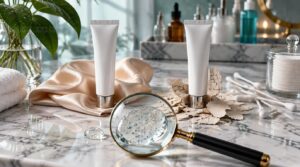
Why do two people using the same product see different timelines? The answer comes down to several variables you can actually control.
Active ingredient concentration matters, but stronger isn’t faster. High percentages often trigger irritation, and inflammation slows healing rather than speeding it.
Your skin type and sensitivity set the limits. Oily skin can dilute or slide off gels, while sensitive skin reaches its irritation threshold sooner, which can mask progress behind redness and peeling.
Consistent use drives results more than anything else. Spot treatments rely on sustained contact, so applying a thin or patchy layer, wiping it off early, or skipping days extends your timeline considerably.
What’s on your skin matters too. Heavy moisturizers, makeup, or layering strong exfoliants can trap residue or compound irritation. Prioritize skin irritation prevention by keeping the routine simple, because effective inflammatory acne reduction depends on the ingredient reaching the follicle, not fighting through barrier damage.
How Can You Use Spot Treatment Safely?
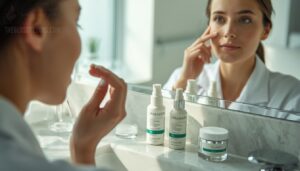
In my clinic, the most common mistake I see isn’t choosing the wrong ingredient. It’s over-applying. A pea-sized dab becomes a thick mask, and the resulting irritation keeps the spot red long after the pimple would have flattened.
In my clinic, the biggest spot-treatment mistake isn’t the wrong ingredient—it’s over-applying, which keeps spots red through irritation
Follow these four rules to get results without setbacks:
- Apply to clean, dry skin so the active spreads evenly and dries properly.
- Use a thin layer only on the spot, no more often than the label directs.
- Skip bandages or occlusive covers unless the product says they’re fine; trapped moisture worsens irritation.
- Support your skin with a noncomedogenic moisturizer and gentle cleansing, especially if your skin type and sensitivity run dry or reactive.
Patch test new products on your inner arm first. And if your routine includes retinoids or exfoliating acids, watch for added sun sensitivity; use sunscreen daily.
When Should You See a Dermatologist?
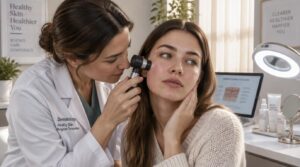
You might think spot treatments make a dermatologist visit unnecessary, and for most ordinary pimples, that’s true. But some situations deserve professional eyes. And even when you’re doing everything right, patience matters—most acne medications take several weeks to show visible results, not days.
See a dermatologist if a spot is unusually large, deeply painful, or keeps returning in the same place. These can signal cystic acne, which topical products can’t reach effectively. Sudden widespread breakouts or rapidly worsening skin also warrant earlier evaluation, since non-acne conditions can mimic pimples.
Book a consultation if you notice scarring or dark marks that linger after the lesion clears. Treating early prevents permanent texture and pigment changes.
Also consider a visit when a prescription acne medication makes sense: no meaningful improvement after several weeks of consistent use, hormonal-pattern flares, or acne severity that’s affecting your daily life. A dermatologist consultation gives you an accurate diagnosis and a plan matched to your skin, not guesswork.
Frequently Asked Questions (FAQs)
What’s the worst age for acne?
There’s no single worst age. Acne vulgaris commonly peaks in your mid-teens, but hormonal adult acne can persist into your thirties. Severity varies individually, so track your own pattern before judging.
Can acne clear up in 2 days?
For most pimples, 2 days is a drop in the bucket. You may see less redness, but full clearance usually takes longer. Only very small surface spots can fade that fast.
Can I put spot treatment on an open pimple?
You can, but avoid it if the pimple is weeping. Apply spot treatments only to clean dry skin; broken skin increases stinging and irritation. For open lesions, gentler antibacterial skincare or a hydrocolloid patch works better.
What kills acne quickly?
Benzoyl peroxide kills acne-causing bacteria fastest, often calming inflamed spots within a few days. Salicylic acid unclogs pores gradually, while sulfur and tea tree oil work more slowly. Topical retinoids prevent rather than kill.
Can I use spot treatment under makeup?
Yes, you can, but apply it first and let it dry completely, about 10 to 15 minutes. If it still transfers, your makeup will smear the product and reduce contact time. Use non-comedogenic makeup over treated spots.
Is it safe to use spot treatment while pregnant?
Ironically, pregnancy-safe skincare rules are stricter for your baby than for your acne. You can use benzoyl peroxide (5% or less) and low-strength salicylic acid spot treatments; sulfur is also fine. Skip retinoids and tea tree oil; confirm with your OB-GYN.
Can spot treatments expire or lose effectiveness?
Here’s the catch: spot treatments can expire. Benzoyl peroxide degrades with heat and air, salicylic acid loses stability, and even prescription spot treatments weaken. Check dates, store cool, and discard expired overthecounter acne products.
Should spot treatment sting when applied?
A little sting is common, but pain isn’t proof it’s working. If benzoyl peroxide or salicylic acid burns intensely, you’ve likely irritated your skin, not accelerated skin inflammation reduction. Dial back.
Can I apply spot treatment to my whole face?
The theory that more coverage means faster clearing is false. Spot treatments aren’t formulated for full-face use; applying benzoyl peroxide, salicylic acid, sulfur, or tea tree oil everywhere raises irritation risk. Treat blemishes only.
Conclusion
A patient once told me she’d tried five spot treatments in three weeks. Her skin never stood a chance, because she never gave any of them time to work. That’s the real lesson in how long until spot treatment works: most products need two to six weeks, not two to six nights.
Pick one ingredient, use it consistently and correctly, and track your progress weekly. Patience isn’t passive here. It’s the treatment.