This site is supported by our readers. We may earn a commission, at no cost to you, if you purchase through links.
Imagine this: a client walks in with 45 minutes before her flight and hair that fights her every morning. That’s not a traditional keratin appointment. That’s a job for the express lane.
I’ve done both treatments hundreds of times in my chair, and the choice usually comes down to one question: how much time and change do you actually want? Keratin Express softens frizz and keeps your natural bounce, done in under 90 minutes. Traditional keratin takes hours and rewrites your curl pattern for months.
Neither one’s better. They just solve different problems. Let’s break down which one solves yours.
Table Of Contents
- Key Takeaways
- Keratin Express Vs. Keratin Treatment: Key Differences
- How Both Keratin Treatments Work
- Which Keratin Treatment Fits Your Hair?
- Cost, Safety, and Maintenance Compared
- Top 3 Keratin Treatment Products
- Frequently Asked Questions (FAQs)
- Is the Keratin Express treatment worth it?
- How long will Keratin Express last?
- How much does a Keratin Express treatment cost?
- What is the most effective keratin treatment?
- What is the difference between keratin treatment and keratin express?
- How long does a keratin express last?
- What is the process of keratin express?
- What type of keratin treatment is best?
- Can pregnant women get keratin treatments safely?
- How long should hair be before treatment?
- Conclusion
Key Takeaways
- Keratin Express takes 30-90 minutes and lasts 4-8 weeks, while a traditional treatment takes 2-4 hours but lasts 3-5 months, so your choice really comes down to how much time you’ve got versus how long you want results to stick.
- Express smooths frizz and boosts volume without straightening your curls, but traditional keratin actually reshapes your curl pattern and loosens curls for a sleeker, straighter finish.
- Traditional formulas pack 70-80% hydrolyzed keratin (often with formaldehyde) for deep bonding, while Express uses a gentler 30-40% concentration with glyoxylic acid, making it the safer, fume-free option.
- Your hair type should drive the decision: fine or curly hair does best with Express, while thick, coarse, or heavily damaged hair needs the deeper repair only a full traditional treatment can deliver.
Keratin Express Vs. Keratin Treatment: Key Differences
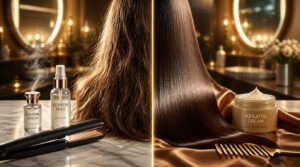
So which one actually wins for your hair? It comes down to five things: time, longevity, texture, upkeep, and what you’re really trying to fix. Let’s break each one down so you can call the shots with confidence.
If you’re still unsure why this step matters at all, it helps to first understand why hair conditioner is important before comparing formulas.
Treatment Time and Process
When time’s tight, Keratin Express wins easy. It’s done in 30 to 90 minutes, even 15 with color. Traditional treatments? Plan on 2 to 4 hours, sectioning included. This speed comes from a quick heat sealing process that locks in keratin proteins much faster than conventional methods.
| Treatment | Time |
|---|---|
| Express | 30-90 min |
| Traditional | 2-4 hrs |
| With color | 15 min |
| Heat sealing | 5-90 min |
| Full process | Longer |
Your schedule decides the winner here.
Results Duration and Longevity
Speed’s great, but how long do results stick around? That’s where the two really split.
Keratin Express lasts up to 6-8 weeks. Traditional treatment stretches 3-5 months.
| Factor | Effect on Longevity |
|---|---|
| Washing 2-3x/week | Cuts life in half |
| Coarse hair | Lasts 20-30% longer |
| Sulfate-free care | Extends fade time |
| Porous hair | Fades faster |
| Heat styling | Shortens results |
Your hair type and habits decide real staying power.
Smoothing, Straightening, and Volume
Longevity’s one thing, but what actually happens to your hair? Big difference here.
Keratin Express smooths and reduces frizz without straightening. Curls stay bouncy, volume gets a boost.
Keratin Treatment straightens strands and loosens curls, trading volume for sleek control.
| Effect | Express vs. Treatment |
|---|---|
| Straightening | None vs. Full |
| Volume | Boosted vs. Reduced |
| Curl pattern | Enhanced vs. Loosened |
| Frizz control | Both excel |
| Best texture | Fine vs. Coarse |
Aftercare and Downtime
Here’s the real difference: downtime. Keratin Express lets you wash after 8 hours; Traditional needs 72+ hours, silk pillowcase, no sweat, no ponytails.
Once you’re past that waiting period, sticking to a keratin-friendly hair washing schedule helps your treatment last without weighing your hair down.
| Rule | Express | Traditional |
|---|---|---|
| First wash | 8 hrs | 72+ hrs |
| Workouts | 12 hrs | 1 week |
| Coloring | 2 weeks | 3+ weeks |
| Touch-up | 6 weeks | 3-4 months |
Sulfate-free products, always.
Best Use for Each
So who wins? Depends what you need. Got a wedding Saturday and frizzy roots? Keratin Express fixes that in under an hour, keeps natural volume, light straightening only.
Dealing with serious curl or damage? Keratin Treatment is the real fix, deeper bonding, lasts months. Busy schedule wins Express. Long-term smoothing wins Treatment.
How Both Keratin Treatments Work
So what actually happens under that processing cap? Both treatments follow a similar roadmap, but the details make all the difference. Here’s how each one gets from bottle to bouncy, frizz-free hair.
Clarifying and Sectioning Hair
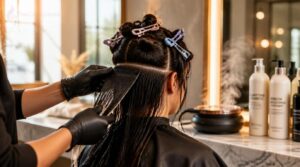
Every keratin service starts the same way, no matter which one you pick. Your stylist opens the cuticle with clarifying shampoo, then sections your hair into 4-6 parts. Thinner sections mean better penetration, especially on fine or high-porosity hair. Cuticles stay receptive for about 30 minutes, so product goes on fast, brushed root to tip, before heat sealing locks it in.
Keratin Concentration and Ingredients
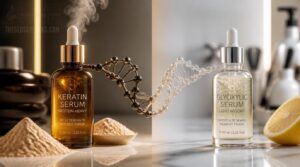
Protein is the real workhorse here, and not all keratin is created equal. Traditional formulas pack 70-80% hydrolyzed keratin, often with formaldehyde. Express versions dial it back to 30-40%, leaning on gentler glyoxylic acid instead.
You’ll find:
- Animal or plant-based sources
- Molecular weights from 300-3000 Da
- Collagen mix add-ins
- Ionic vs. covalent bonding
Heat Activation Temperatures
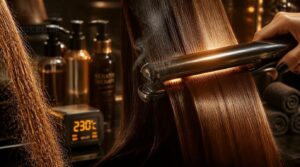
Heat is where the magic (and the risk) happens. Temperature ranges run 200-450°F depending on formula strength, with Keratin Express staying gentler at 350-400°F.
Higher heat means faster bond setting, 5-15 minutes tops. But crank it too high or too long, and you’re looking at moisture loss. Good heat control keeps hair smooth, not fried.
Chemical Bonding and Smoothing
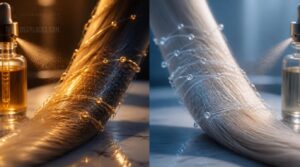
Here’s the science part, minus the boring textbook talk. Traditional keratin leans on disulfide bonds, strong covalent links that reshape hair for months. Express versions use ionic bonding instead, weaker but gentler.
Both still work through protein layer formation and cuticle sealing. Glyoxylic acid (express) and formaldehyde (traditional) just play different bonding agent roles getting there.
Salon Versus At-home Application
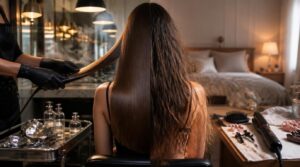
Where you get it done matters as much as which formula you pick. A salon treatment means trained hands, pro-grade flat irons, and real ventilation. An at-home treatment hands you the brush, the clips, and the guesswork.
Kits save cash but skip proper sectioning, so results turn out patchier. Salons just deliver steadier, more consistent smoothness.
Which Keratin Treatment Fits Your Hair?
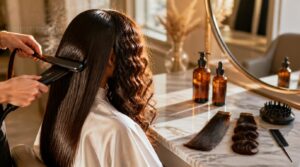
Not every head of hair wants the same fix, and that’s okay. Your texture, your color, your curl pattern all play a part in this decision. Let’s break down which treatment actually works best for your specific situation.
If time is tight, a quick four-minute leave-in hair mask can deliver deep repair without ever stepping near a sink.
Fine Hair and Natural Volume
Got fine hair that goes flat by noon? Keratin Express treatment is your best friend. It smooths frizz, adds keratin smoothing without weighing strands down, and actually enhances volume instead of crushing it.
- Pair it with lightweight conditioners
- Use root lifting sprays for lift
- Reach for dry shampoo between washes
This combo keeps fullness and manageability intact for weeks.
Thick, Coarse, Textured Hair
Now flip the script for thick, coarse strands. Traditional Keratin Treatment wins here, hands down.
Coarse hair fights back. Up to 10 cuticle layers create real cuticle penetration challenges, blocking moisture and product absorption. That density means coarse hair longevity actually shortens (2-4 months) despite the resistance. Traditional formulas pack 70-80% hydrolyzed keratin, strong enough to punch through and deliver true frizz control and smoothing.
Coarse hair fights back with up to 10 cuticle layers, but a strong keratin formula still punches through for real smoothing
Curls and Curl Retention
Curly girls, this one’s for you. Keratin Express is your best friend here, it enhances curl definition instead of erasing it.
Curl retention depends on:
- Hydration levels in your strands
- Low heat settings while styling
- Diffusion drying over direct heat
Add sulfate-free products, and your waves stay bouncy, humidity-proof, and frizz-free for weeks.
Color-treated or Damaged Hair
Waves are one thing, but color-treated hair plays by different rules. Open cuticles mean higher porosity, more dryness, and weaker bonds.
Bonding repair treatments with lightweight protein and moisture balance work best. Skip heavy proteins, they leave color-treated strands stiff.
| Need | Fix |
|---|---|
| Moisture loss | Hyaluronic acid, glycerin |
| Fading | UV protection, sulfate-free products |
| Sensitive scalp | Fragrance-free formulas |
| Bond damage | Keratin Treatment repair |
Frizz Control Versus Straightening
Want frizz gone but keep your curl? Or a sleek, straight finish? That’s the real fork in the road.
Frizz control uses silicones for humidity resistance without touching bond structure. Straightening needs higher heat to reshape bonds for lasting hair smoothing and serious styling time reduction.
Cost, Safety, and Maintenance Compared
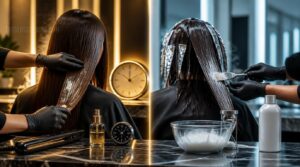
Price tags only tell half the story here. What really matters is the fine print: the chemicals, the wait times, the rules you’ll need to live by after. Let’s break down what each treatment actually costs you, in dollars and daily hassle.
Upfront Cost and Long-term Value
Money talks, so let’s talk numbers. Keratin Express runs $150-$350 a session, while a full treatment costs $300-$900. Sounds like Express wins, right? Not so fast.
Full treatments last months longer, so your cost per week often evens out. Ask about package deals too. Buying ahead can seriously boost your long-term savings.
Formaldehyde and Safer Alternatives
Here’s the chemistry that matters: traditional treatments can pack up to 1.4% formaldehyde, way past safe limits, with salon air hitting 3.47 ppm. That’s real exposure.
Express formulas swap it for glyoxylic acid, a low-toxicity option with far less irritation and zero chemical gases. Want peace of mind? Ask for formaldehyde-free keratin and make sure your salon’s ventilated.
Washing and Styling Restrictions
Traditional keratin needs 72 hours before that first wash. Express? Just 8, though I still tell clients to wait longer if they can.
Skip hot water, it opens the cuticle. Use cool or lukewarm water, sulfate-free shampoo, and hold off on tight ponytails or clips so nothing dents the bond while it sets.
Exercise and Coloring Timelines
Sweaty gym sessions and fresh keratin don’t mix. Wait 48 to 72 hours before hard cardio, sweat breaks down the bond before it fully sets.
Coloring? Give it 2 to 3 weeks. Sweat and heat fade color fast too, so working out too soon after dyeing can undo your results in months, not weeks.
Sulfate-free Aftercare Routine
Your shampoo choice makes or breaks your results. Grab a bottle and check the label: skip anything with sodium lauryl or laureth sulfate.
Wash 2 to 3 times a week, max. Work a sulfate-free shampoo from scalp to ends, then follow with a hydrating conditioner. Track how your scalp feels and adjust from there.
Top 3 Keratin Treatment Products
Ready to pick a product and get started? Here are three keratin treatments I trust and recommend to my own clients. Take a look and see which one fits your hair goals.
Perfect Moisture Conditioner
If your keratin service is an investment, Perfect Moisture Conditioner is how you protect it. This Cezanne formula uses hydrolyzed keratin and panthenol to rebuild strand strength while boosting thickness by up to 10%, so your smoothing results actually stick around.
Here’s what’s inside:
- Hydrolyzed keratin and soy protein rebuild elasticity and bind moisture
- Jojoba, shea, and argan oils seal the cuticle for shine
- Behentrimonium chloride grips detangling and static, hair texture improvement you’ll feel immediately
- Aloe barbadensis leaf juice soothes the scalp, certified organic
- Sulfate-free base keeps the formula gentle and color-safe
Leave it on for one to two minutes after shampooing. Stylists say consistent use helps treatments last up to five months on fine hair. Parabens, sulfates, and phthalates are nowhere in sight. At $34 for 12 ounces, it’s cheap insurance for your smoothing results.
Peter Coppola Keratin Treatment
Once your conditioner routine is locked in, the next question is which service to book. Peter Coppola Keratin Treatment is a solid pick if you want salon-grade smoothing without formaldehyde worries. It uses glyoxylic acid derivatives instead, so you get frizz control minus the harsh fumes.
Salons offering it usually require certification, meaning your stylist trained specifically on mixing ratios and application. That’s not fluff, it’s what keeps results consistent.
Aftercare guidance comes straight from the salon, sulfate-free shampoos, and results holding for months. It’s part of a larger product range built for professional training and long-term smoothing, not a one-time gimmick.
Keratin Salon Direct Treatment
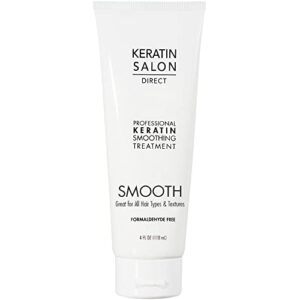
Not ready to book a salon appointment yet? Keratin Salon Direct brings that same smoothing power home, minus the formaldehyde fumes. Their SMOOTH formula and FLAT IRON FREE EXPRESS option both work into the hair rather than just coating it, using keratin plus botanicals your strands actually absorb.
Give it 60 minutes and you’ll see real frizz reduction and shine. Results run up to three months. No harsh smell, no scratchy throat, just smoother hair without the salon-chair wait.
- Smooths and reduces frizz using keratin and botanical extracts, with no wait time before washing, styling, coloring, or heat use
- Costs far less than repeated salon keratin treatments, which often run $250 or more per session
- Works fine alongside color, exercise, swimming, and everyday styling like ponytails
- Results are unpredictable, lasting anywhere from just two washes to several weeks depending on the person
- Some users report unwanted color changes, including lifting or stripping
- A lingering "burned hair" or "wet dog" smell shows up for some people when hair gets wet, even after multiple washes
Frequently Asked Questions (FAQs)
Is the Keratin Express treatment worth it?
Yes, if quick results matter more than lasting power. You’ll get frizz-free hair in under an hour for $100-$300, lasting up to six weeks, perfect when you need a fast refresh without committing to a full salon day.
How long will Keratin Express last?
Don’t blink, it’ll fade before you know it. Realistically, expect 4 to 6 weeks of smoothness. Fine hair fades closer to week four, thick or curly hair holds near six. Wash less, last longer.
How much does a Keratin Express treatment cost?
Most salons charge $150 to $350, depending on hair length. Longer hair can run $350-$500+. Urban shops tend to price higher than suburban ones. At-home kits cost less, but you’re on your own for application.
What is the most effective keratin treatment?
The traditional salon keratin treatment wins on pure effectiveness. It smooths, strengthens, and straightens using real chemical bonding, lasting up to 6 months. Express versions fade faster, closer to 6 weeks, since they skip that deep protein infusion.
What is the difference between keratin treatment and keratin express?
Think weekend touch-up versus full renovation. Keratin Express freshens frizz for six weeks in under 90 minutes; full keratin treatment rebuilds smoothness for three to five months over several salon hours, sealing deeper with heat.
How long does a keratin express last?
You’re looking at four to six weeks of smooth, frizz-free hair. Wash it often or skip sulfate-free products, and it fades faster. Coarse hair holds results a bit longer than fine strands.
What is the process of keratin express?
Your stylist sections damp hair, applies a lightweight keratin solution, and lets it sit for 20-30 minutes. Then comes blow-drying and flat-ironing at 350-375°F to seal everything in. Quick, simple, done in under an hour.
What type of keratin treatment is best?
Your hair type decides it. Coarse or frizzy strands need a full treatment for smoothing that lasts three to six months. Fine or wavy hair does better with Keratin Express, giving you four to eight weeks of frizz control without the commitment.
Can pregnant women get keratin treatments safely?
Funny how a treatment meant to smooth things over can complicate pregnancy plans. Formaldehyde exposure is the real concern, so skip it unless you’ve confirmed a formaldehyde-free formula and gotten your OB-GYN’s blessing first.
How long should hair be before treatment?
Aim for two to three inches, minimum. Shorter strands just won’t hold the solution. Clean hair, washed 24 to 48 hours prior, helps too, so your stylist can prep evenly and get the best possible results.
Conclusion
One treatment races the clock. The other rewrites your curl story for months. That’s the real split in keratin express vs keratin treatment: speed versus transformation.
If you’ve got 45 minutes and frizz to tame, the express lane wins every time. If you want smoothness that lasts through summer, book the full service and clear your schedule.
Either way, you’re choosing control over bad hair days. Your chair, your call, your hair, finally cooperating.
- https://beautyvice.com/blogs/news/keratin-treatment-vs-express-blowout
- https://www.clinikally.com/blogs/news/keratin-express-treatment-quick-solutions-for-smooth-sleek-hair
- https://hastehair.com/blog/keratin-treatment-vs-keratin-express
- https://www.thelangmoresalon.com/blog/spring-into-silky-smooth-hair-exploring-keratin-treatment-vs-keratin-express-blowout
- https://www.gkhair.com/blogs/all-blog-posts/keratin-express-treatment