This site is supported by our readers. We may earn a commission, at no cost to you, if you purchase through links. This content is for general informational and educational purposes only and is not a substitute for professional medical, dermatological, or nutritional advice.
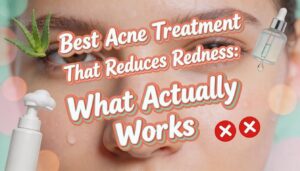
Redness often outlasts the pimple itself—sometimes by weeks. That’s because acne doesn’t just clog pores; it triggers a full inflammatory response, sending blood vessels into overdrive and leaving skin visibly irritated long after the blemish clears.
For many people, the red, swollen phase is the most frustrating part, and treating it wrong can make it worse.
The right acne treatment that reduces redness works on multiple levels: calming active inflammation, protecting the skin barrier, and preventing the kind of post‑breakout discoloration that lingers like an unwanted houseguest.
Table Of Contents
- Key Takeaways
- What Causes Acne Redness
- Best Ingredients for Red, Inflamed Acne
- Daily Routine for Less Redness
- Fast Relief for Red Pimples
- Top 5 Moisturizers for Red Acne
- When to See a Dermatologist
- Frequently Asked Questions (FAQs)
- What is the best treatment for redness from acne?
- What is a good alternative to spironolactone for acne?
- What is the best treatment for perimenopausal acne?
- Can peptides help with acne scars?
- How to reduce redness & inflammation from acne?
- What is the treatment for redness on the skin?
- How to reduce acne redness overnight?
- Can a dermatologist treat acne redness?
- What is the best way to treat redness?
- What is acne redness?
- Conclusion
Key Takeaways
- Acne redness often outlasts the pimple itself because your immune system triggers vascular dilation and inflammation that can linger for weeks, even after the blemish is gone.
- Ingredients like niacinamide, azelaic acid, and salicylic acid work on different levels — calming inflammation, fading post‑breakout marks, and clearing clogged pores — so pairing them strategically gets better results than using any one alone.
- Your daily habits matter as much as your products: gentle cleansing, a noncomedogenic moisturizer, and broad‑spectrum SPF every morning are non‑negotiable for keeping redness from getting worse.
- If redness doesn’t improve after six to eight weeks of consistent OTC care, it’s time to see a dermatologist — persistent flushing or painful cystic lesions often need prescription treatments or professional procedures that go beyond what’s on the shelf.
What Causes Acne Redness

Redness is one of the most frustrating parts of dealing with acne — it’s often what makes a breakout feel impossible to hide. But before you can treat it effectively, it helps to understand what’s actually driving it.
That’s why knowing your options early makes a real difference — from targeted serums to soothing spot treatments, affordable acne treatments for redness can calm inflammation without breaking the bank.
Here’s a look at the main reasons your skin turns red in the first place.
Inflammation and Widened Blood Vessels
When a pore gets infected, your immune system floods the area with inflammatory messengers. Histamine vasodilation widens nearby blood vessels, while prostaglandin redness and nitric oxide release push even more blood to the surface.
Cytokine vessel activation then increases microvascular permeability, letting fluid seep into surrounding tissue. That’s the swollen, angry red bump you’re seeing — vascular dilation working against you.
This process also boosts increased blood flow to the site, delivering immune cells and nutrients.
Post-inflammatory Erythema After Breakouts
Even after a pimple heals, you’re often left with a flat pink or red mark — that’s postinflammatory erythema. Those widened blood vessels from earlier don’t close overnight.
Vascular remodeling takes time, sometimes weeks or even years.
Sun exposure slows the healing timeline considerably, which is why daily SPF matters. Psychological impact is real too — the breakout is gone, but your skin still tells the story.
Skin Picking, Squeezing, and Friction
Picking doesn’t just feel satisfying in the moment — it creates mechanical trauma that breaks your skin barrier, drives bacteria deeper, and kickstarts fresh inflammation control problems. That cycle is hard to stop.
- Bacterial transfer from fingers worsens lesions
- Barrier disruption slows healing and invites scar formation
- Habit prevention starts with pimple patches, not willpower
Keep your hands off.
How Red Acne Differs From Acne Marks
Not all redness is the same. Active red acne involves heat sensation, tenderness, and lesion elevation — your skin is fighting inflammation right now.
Acne marks, or postinflammatory erythema, are flat, texture difference-free discoloration left behind after healing.
| Feature | Red Acne | Acne Marks |
|---|---|---|
| Feel | Warm, raised | Smooth, flat |
| Cause | Vascular dilatation | Color persistence |
| Treatment | Salicylic acid, niacinamide | Barrier repair, time |
Best Ingredients for Red, Inflamed Acne
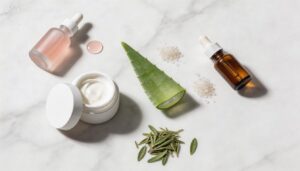
Not all acne ingredients are created equal, especially when redness is your main concern.
Some work by killing bacteria, others by calming inflammation or repairing the skin barrier.
Here’s what actually matters.
Azelaic Acid for Acne and Redness
Azelaic acid quietly does a lot of heavy lifting. It combats acne through an anti-microbial mechanism that clears bacteria, while tyrosinase inhibition fades postinflammatory erythema left behind after breakouts.
It’s one of the few anti-inflammatory ingredients that are also noncomedogenic and helps skin barrier repair.
Start low to manage initial irritation, and ask your dermatologist about prescription-strength options or layering with retinoids for better results.
Niacinamide to Calm Visible Inflammation
Niacinamide works on multiple inflammation pathways at once — it dials down pro-inflammatory cytokines, limits excess blood flow to irritated vessels for real vascular calm, and reinforces your skin barrier.
That skin barrier support helps you tolerate other anti-inflammatory ingredients in acne care without added redness.
Use a 10% noncomedogenic serum each morning for skin barrier repair and steady acne inflammation control.
Salicylic Acid for Clogged, Red Pores
Salicylic acid earns its place in any red acne routine by dissolving the sebum plugs that keep pores inflamed and visible. Its oil-soluble nature lets it reach where surface cleansers can’t.
- Strength Selection: Start at 0.5%–2% to balance comedone prevention with tolerance
- Formulation Type: Choose leave-on serums or noncomedogenic gels over rinse-offs
- Application Timing: Every other day first, then daily if skin adjusts
- Irritation Mitigation: Pair with a ceramide moisturizer to protect the barrier
- Combination Scheduling: Alternate with retinoids nightly to reduce postinflammatory erythema without stacking anti-inflammatory ingredients
Benzoyl Peroxide for Inflamed Breakouts
Benzoyl peroxide is clearly the most direct weapon against inflamed breakouts — it kills acne-causing bacteria by flooding pores with oxygen.
Concentration guidelines suggest starting at 2.5% to manage skin tolerance strategies before moving higher.
Apply it as a spot treatment on clean, dry skin.
If you’re unsure how often to use it, this guide to how often you should apply spot treatment explains how to ease in without irritating your skin.
Pair with a noncomedogenic moisturizer, avoid stacking anti-inflammatory ingredients same-day, and choose gel or lotion product forms for best absorption.
Adapalene and Retinoids for Long-term Control
Think of adapalene as your skin’s long-game partner — a topical retinoid that clears clogged pores and quietly dials down inflammation over time. For maintenance frequency, aim for every other night minimum, consistently for at least six months.
- Start slow for irritation management — use twice weekly, then increase
- Combine with niacinamide to offset dryness
- Combination therapy with benzoyl peroxide targets bacteria and congestion together
- Apply at night for ideal application timing
Sulfur Spot Treatments for Swollen Pimples
Sulfur is one of the oldest acne actives around — and it still earns its place. Formulas generally range from 6% to 10% sulfur concentration, absorbing excess oil and calming papules and pustules directly.
Because these are combination formulations, patch testing first matters for side effect management.
| Factor | Guidance |
|---|---|
| Application Frequency | 1–3 times daily on bare skin |
| Best Use | Noncomedogenic spot treatments with salicylic acid or niacinamide |
Ceramides and Hyaluronic Acid for Barrier Support
While sulfur addresses surface inflammation, your barrier often takes a hit from active acne treatments. Ceramide moisturizer choice matters here — ceramides reinforce the lipid barrier repair process by reducing water loss, while hyaluronic acid layering pulls moisture back into stressed skin.
Together, they create a hydration retention synergy that calms reactive redness. Look for barrier boosting formulations that are noncomedogenic and hypoallergenic for daily skin barrier support with soothing ingredients.
Daily Routine for Less Redness
Getting the right ingredients is only half the battle — how you use them day-to-day matters just as much.
A consistent routine doesn’t have to be complicated to make a real difference in reducing redness and keeping breakouts under control.
Here’s what your daily routine should include.
Gentle Cleansing Without Over-drying Skin

Your cleanser matters, but so does how you use it. Rinse with lukewarm water — hot water strips protective lipids fast.
Choose a fragrance‑free formula, ideally a non‑soap cleanser or hypoallergenic, oil‑free, noncomedogenic formulation, and massage gently for about 60 seconds using light circular motions.
pat dry — never rub. skin‑soothing approach keeps your barrier intact and redness from climbing.
Choosing a Lightweight Noncomedogenic Moisturizer
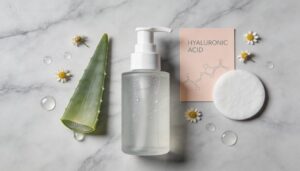
Once your skin is clean and patted dry, reach for a lightweight moisturizer — and no, skipping it won’t help with oiliness. Look for a noncomedogenic formulation that’s oil-free and fragrance-free.
Texture absorption matters: gel or lotion formats layer cleanly without clogging pores. Humectants like hyaluronic acid or glycerin are your best pick — skin-soothing, hydrating, and unlikely to trigger fresh inflammation.
Using Sunscreen to Prevent Lingering Redness
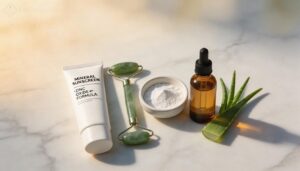
Your moisturizer isn’t the last step — sunscreen is. UV exposure keeps red marks inflamed longer, so broad-spectrum protection daily is non‑negotiable.
- Choose barrier-friendly ingredients like zinc oxide in a mineral sunscreen
- Tinted mineral formulas visually neutralize redness while protecting
- Apply enough to cover fully — thin smears underdeliver
- Reapplication timing matters: every two hours outdoors keeps healing skin shielded
Avoiding Scrubs, Fragrance, and Over-exfoliation
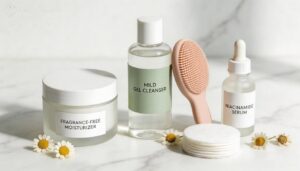
best active ingredients can backfire if your technique works against you. Scrubs and abrasive tools create friction that worsens redness on already-inflamed skin.
Stick to soft touch washing with a gentle cleanser, and choose fragrance-free, hypoallergenic moisturizer formulations. Limit exfoliation to once or twice weekly — minimal exfoliation frequency protects your barrier.
For travel days, a guide to the best facial exfoliators for travel can help you pick gentle formats that won’t disrupt your routine.
Choosing noncomedogenic products for sensitive skin alongside anti-inflammatory ingredients in acne care keeps flares manageable.
How Long to Stay Consistent Before Judging Results
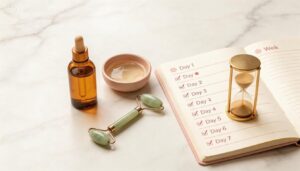
Most treatments need 8 to 12 weeks before you can fairly judge whether they’re working. Redness often softens within 2 to 4 weeks, but your patience timeline matters — don’t switch products too early.
Track results with photo consistency: same lighting, same angle, every week. Introduce one active at a time so your treatment plan stays clear and your adjustment threshold stays honest.
Fast Relief for Red Pimples
pimple shows up at the worst possible time and you need it calmer — fast. The good news is there are a few reliable ways to bring down redness and swelling without making things worse.
Here’s what actually works when you need quick results.
Ice and Cold Compress Application Guidelines
Cold therapy is one of the simplest fast-relief tools you have. An ice pack won’t fix a breakout, but it shrinks visible swelling and redness within minutes.
Follow these application timing and safety precautions:
- Always use a protective barrier — wrap your ice pack in a cloth before applying
- Apply cold compress sessions for 15–20 minutes, never longer
- Respect rewarming intervals of at least 2 hours between sessions
- Practice skin monitoring throughout — stop immediately if numbness occurs
Pimple Patches for Isolated Inflamed Blemishes
Pimple patches work best when you place them early — patch placement timing matters more than most people realize.
Hydrocolloid pimple patches rely on hydrocolloid absorption to pull fluid from surface-level whiteheads, flattening the bump while barrier protection benefits keep hands and friction away.
Watch for patch saturation indicators: a cloudy, swollen patch means it’s working.
For deeper inflammation, active-infused patches with anti-inflammatory ingredients offer more targeted acne inflammation reduction.
Spot Treatments That Reduce Swelling Quickly
The right spot treatment works like a fire extinguisher — fast and targeted. A salicylic acid or azelaic acid gel applied to clean, dry skin starts reducing swelling within hours.
Sulfur-based products and a targeted clay mask pull out excess oil while calming inflammation.
A cooling gel or topical anti-inflammatory serum can visibly shrink redness overnight with consistent use.
Safe Use of Cortisone Cream on Pimples
Cortisone cream can quiet a swollen pimple fast — but potency selection matters. Stick with mild hydrocortisone, the safest over-the-counter option among topical steroids.
Spot application means a thin layer on that one inflamed bump only. Keep it a short course: two or three days maximum.
Watch for side effect monitoring signals, like new pustules or steroid acne prevention failures, and stop immediately if redness spreads.
Why Touching and Popping Worsen Redness
That urge to squeeze is hard to resist — but popping causes real tissue trauma. Manual pressure pushes bacteria deeper, spreading infection risk to nearby follicles and triggering barrier disruption that delays healing.
Squeezing a pimple pushes bacteria deeper and delays healing — hands off
Repeated touching keeps skin irritation going, prolonging postinflammatory erythema far longer than leaving it alone would. Pimple patches and ice therapy work precisely because they treat without touching.
Makeup Tricks to Neutralize Red Blemishes
When redness still shows after treatment, green concealer earns its place.
Green corrector application works because green sits opposite red on the color wheel — dab a small amount directly onto the inflamed spot, never buff.
Follow the dabbing technique with a light tinted moisturizer or concealer, layer thin coats, then lock everything down with setting powder.
Cooling primer timing matters too: calm the spot first, then build coverage.
Top 5 Moisturizers for Red Acne
Finding a moisturizer that hydrates without feeding your breakouts can feel like a full-time job. The right one will calm redness, support your skin barrier, and actually work alongside your acne treatments — not against them.
five solid options worth knowing about.
1. La Roche Posay Toleriane Double Repair Face Moisturizer
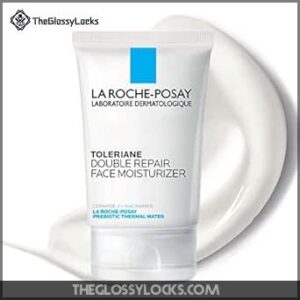
Few moisturizers check every box for acne-prone, sensitive skin — but the La Roche‑Posay Toleriane Double Repair Face Moisturizer comes close.
At $24.99, it delivers ceramide‑3, niacinamide, and glycerin in a lightweight, oil‑free formula that absorbs without leaving a greasy film.
It’s fragrance‑free, non‑comedogenic, and designed to restore your barrier while keeping skin hydrated for up to 48 hours.
Apply a pea‑size amount morning and night, then layer your SPF on top during the day.
| Best For | Anyone with sensitive, acne-prone, or dry skin who wants a no-fuss daily moisturizer that won’t clog pores or irritate skin. |
|---|---|
| Price | $24.99 |
| Net Weight | 3.2 oz |
| Skin Type | All/Sensitive |
| Comedogenic | Non-comedogenic |
| Fragrance | Fragrance-free |
| Texture | Lightweight cream |
| Additional Features |
|
- Ceramide-3, niacinamide, and glycerin work together to strengthen your skin barrier and lock in moisture for up to 48 hours.
- Completely oil-free and non-comedogenic, so it won’t trigger breakouts or leave your face feeling greasy.
- Works great as a makeup base and is gentle enough for rosacea or mild eczema-prone skin.
- No SPF included, so you’ll need a separate sunscreen for daytime use.
- Applying too much can cause minor pilling, especially under makeup.
- At $24.99, it’s a bit pricier than drugstore basics, which might give budget shoppers pause.
2. Tata Harper Clarifying Oily Moisturizer
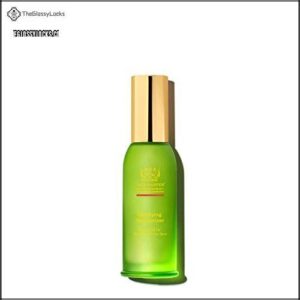
If you’re willing to invest in your skin, the Tata Harper Clarifying Oily Moisturizer ($72 for 3.2 oz) takes a botanical approach that sets it apart.
It combines salicylic acid, zinc PCA, and evening primrose oil to target active blemishes while controlling oil — without stripping your barrier.
The serum-like texture absorbs quickly and layers cleanly under sunscreen.
That said, it’s not for dry or fragrance-sensitive skin. Think of it as a targeted treatment moisturizer for oily, blemish-prone types who want results from nature-derived actives.
| Best For | Oily, blemish-prone skin types who want a lightweight, nature-derived moisturizer that pulls double duty as a treatment. |
|---|---|
| Price | $72.00 |
| Net Weight | 3.2 oz |
| Skin Type | Oily/Blemish-Prone |
| Comedogenic | Not specified |
| Fragrance | Natural scent |
| Texture | Thin cream/serum |
| Additional Features |
|
- Targets breakouts and controls oil without drying your skin out
- Serum-like texture sits nicely under makeup or sunscreen
- Botanical formula skips synthetic fragrance and harsh chemicals
- At $72, it’s a real investment — not easy to justify for everyone
- Too lightweight for dry or dehydrated skin
- The natural scent is strong and can be a dealbreaker for sensitive noses
3. First Aid Beauty Hydrating Gel Cream
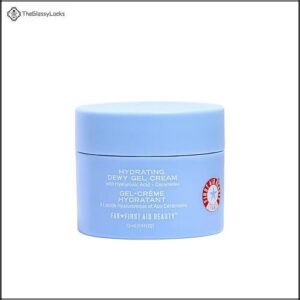
If your skin is inflamed and reactive, the First Aid Beauty Hydrating Gel Cream ($27.34 for 1.9 oz) gives you a solid, no‑fuss option. Its gel‑cream texture feels light and breathable — never greasy — while hyaluronic acid, niacinamide, and colloidal oatmeal work together to calm irritation and shore up your skin barrier.
It’s fragrance‑free, non‑comedogenic, and dermatologist‑tested.
One honest note: the container is small, so it goes quickly. But a little does go a long way.
| Best For | People with sensitive, reactive, or inflamed skin who want a lightweight, fragrance-free moisturizer that hydrates without clogging pores. |
|---|---|
| Price | $27.34 |
| Net Weight | 1.9 fl oz |
| Skin Type | Combination/Oily/Dry |
| Comedogenic | Non-comedogenic |
| Fragrance | Fragrance-free |
| Texture | Gel-cream |
| Additional Features |
|
- Hyaluronic acid, niacinamide, and colloidal oatmeal work together to calm irritation and strengthen your skin barrier.
- Light gel-cream texture absorbs easily — no greasy or heavy feeling after application.
- Free from a long list of common irritants, making it a safe bet for even the most sensitive skin.
- At $27.34 for just 1.9 oz, you’re paying a premium for a container that runs out faster than you’d like.
- It can pill if you layer it over a serum that hasn’t fully soaked in yet.
- The dewy finish fades as it dries, so it may not deliver the glow some people are expecting.
4. Codex Labs Shaant Balancing Face Cream
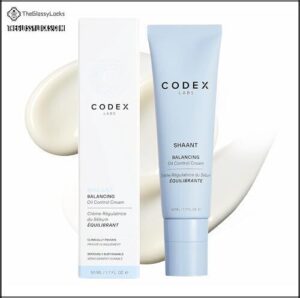
If you’re looking for a retinol alternative that won’t irritate breakout-prone skin, the Codex Labs Shaant Balancing Face Cream ($35 for 2.89 oz) is worth a look. Its patented ShaantComplex combines bakuchiol, ashwagandha, and vitamin E to calm inflammation, control oil, and smooth uneven texture — without clogging pores.
The matte finish works under makeup or alone.
One heads-up: the pump can be finicky, and the warm, spicy scent may bother fragrance-sensitive skin.
Give it a few consistent weeks before judging results.
| Best For | People with oily, combination, or breakout-prone skin who want a gentle retinol alternative that controls shine without causing irritation. |
|---|---|
| Price | $35.00 |
| Net Weight | 2.89 oz |
| Skin Type | Combination/Oily |
| Comedogenic | Non-comedogenic |
| Fragrance | Warm/Spicy scent |
| Texture | Matte cream |
| Additional Features |
|
- Bakuchiol-based formula gives you retinol-like benefits (smoother texture, fewer fine lines) without the harshness
- Matte finish makes it easy to wear under makeup or solo during the day
- Vegan, cruelty-free, and non-comedogenic — solid pick for sensitive, acne-prone skin
- The pump breaks or leaks pretty easily, which gets frustrating fast
- Oil control isn’t consistent for everyone — some users actually noticed more oiliness
- The warm, spicy scent can be a dealbreaker if your skin (or nose) is fragrance-sensitive
5. Avène Tolerance Control Skin Balm
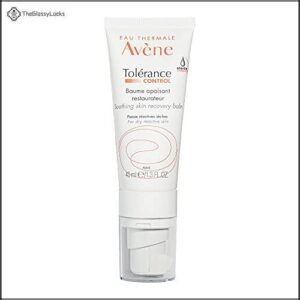
For reactive, post-procedure, or rosacea-prone skin, the Avène Tolerance Control Skin Balm ($40 for 2.43 oz) is a reliable recovery option. It combines squalane, shea butter, and glycerin to hydrate without a heavy, greasy feel — and it works around the eyes too.
The balm-style formula creates a protective layer that calms burning and tightness. Oily skin types may find it too rich in warm months, and spreading is easier if you apply Avène thermal spring water first.
| Best For | Anyone with reactive, rosacea-prone, or post-procedure skin that needs calm, fuss-free hydration without irritation. |
|---|---|
| Price | $40.00 |
| Net Weight | 2.43 oz |
| Skin Type | Very Sensitive/Reactive |
| Comedogenic | Not specified |
| Fragrance | Fragrance-free |
| Texture | Thick balm |
| Additional Features |
|
- Soothes burning, tightness, and tingling fast — great after laser treatments or allergy flare-ups
- Hydrates well without feeling heavy or greasy, and it’s safe to use around the eyes
- Dermatologist-recommended and works nicely alongside gentle cleansers or mineral sunscreen
- The thick texture can be tricky to spread — you may need Avène thermal water to help it glide
- Too occlusive for oily or combination skin, especially in warmer weather
- Small tube for the price, and a few users reported breakouts or reactions post-procedure
When to See a Dermatologist
Over-the-counter products can only do so much, and sometimes your skin is telling you it needs more than a drugstore routine. If breakouts are painful, persistent, or just not responding, a dermatologist can offer real options that go beyond what’s on the shelf.
Here’s when it’s time to make that appointment — and what a professional can actually do for you.
Painful, Cystic, or Persistently Inflamed Acne
deep, painful lesion isn’t just a stubborn pimple — it’s a deep, painful lesion that can last months and leave permanent scars. Cystic Lesion Management and Scar Formation Prevention aren’t optional at this stage; they’re urgent.
dermatologist appointment if you notice:
- Deep, tender nodules that don’t respond to salicylic acid or niacinamide.
- Lesions persisting beyond two weeks despite pimple patches and anti-inflammatory ingredients.
- New inflamed spots forming before older ones heal — a sign you need Inflammation Monitoring.
- Signs of Sinus Tract Prevention needs: draining, tunnel-like lesions under the skin.
- Scarring already forming, where Pain Management Strategies and laser therapy become part of the plan.
Redness That Does Not Improve With OTC Care
If OTC products haven’t moved the needle after six to eight weeks, your redness may have a different driver entirely. Rosacea Misdiagnosis is common — persistent flushing, burning, and acne-like bumps without blackheads often signal rosacea, not standard acne.
Medication Reactions, Systemic Inflammation, and Skin Barrier Damage can all keep redness stuck. Ocular Redness Signs — stinging eyes or eyelid involvement — mean you need an evaluation now.
| Warning Sign | Likely Cause | Next Step |
|---|---|---|
| Flushing that fades and returns | Rosacea Misdiagnosis | Dermatologist evaluation |
| Burning after applying actives | Skin Barrier Damage | Stop actives, restore barrier |
| Eye irritation with facial redness | Ocular Redness Signs | Urgent medical assessment |
| Widespread redness with scaling | Systemic Inflammation | Rule out psoriasis or eczema |
| New redness after starting medication | Medication Reactions | Review with prescribing provider |
Prescription Options for Acne and Redness
When topicals from the drugstore stop cutting it, prescription options open up a more targeted path. Your dermatologist can prescribe azelaic acid, prescription retinoids, or topical antibiotics — often as combination therapy strategies, pairing clindamycin with benzoyl peroxide, to support antibiotic resistance management.
Differin bridges the OTC-to-prescription gap well. Corticosteroid use stays short-term.
Always ask about insurance coverage considerations before starting dermatologist prescription protocols.
Chemical Peels and Laser Treatments for Redness
When prescriptions aren’t enough, chemical peels and laser therapy can go further. Superficial peel benefits include reducing postinflammatory erythema with minimal downtime, while medium depth peels tackle more stubborn acne redness.
Pulsed dye laser targets superficial vessels at 585 nm, and Nd:YAG laser reaches deeper veins at 1064 nm for laser vascular treatments for redness.
Post-peel care and sun protection are non‑negotiable.
Signs The Condition May Not Be Acne
Not everything that looks like acne actually is.
Itchy bumps with atypical distribution — say, clustered on your chest or only around your mouth — can point to folliculitis or perioral dermatitis. Persistent reddening alongside flushing suggests rosacea. Scaly lesions with follicle pain lean toward eczema, atopic dermatitis, or contact dermatitis.
Facial redness alone isn’t a diagnosis — a dermatologist can tell the difference.
Preventing Long-term Marks and Recurring Flare-ups
Long-term marks — postinflammatory hyperpigmentation especially — form when inflammation goes deep or healing skin gets hit with UV.
Daily sunscreen, anti‑inflammatory ingredients like niacinamide and azelaic acid, and a consistent skin care routine are your defense.
Sleep quality, hydration habits, and avoiding environmental pollution matter more than people expect.
Protect healing skin the same way you’d protect any wound.
Frequently Asked Questions (FAQs)
What is the best treatment for redness from acne?
Redness is your skin waving a red flag.
Calming it means tackling inflammation head-on with anti-inflammatory ingredients like niacinamide and azelaic acid, while supporting your barrier through consistent, gentle daily care.
What is a good alternative to spironolactone for acne?
If spironolactone isn’t right for you, oral contraceptives or anti-androgen therapy options like cyproterone acetate, flutamide usage, or a dutasteride regimen may help control hormonal acne effectively.
What is the best treatment for perimenopausal acne?
Perimenopausal hormonal acne responds best to a combination of hormonal balance therapy, dietary interventions, and topical anti‑inflammatory ingredients like niacinamide and azelaic acid.
Paired with noncomedogenic moisturizers, stress management, and consistent sleep hygiene.
Can peptides help with acne scars?
Peptides support wound healing and collagen stimulation, which may help with post-inflammatory marks.
Clinical evidence remains limited for true scar remodeling, so pair peptides with niacinamide or proven acne scar treatment options for better results.
How to reduce redness & inflammation from acne?
To reduce redness and inflammation from acne, use anti-inflammatory ingredients like niacinamide and azelaic acid, apply cold therapy to calm swelling, and support your skin with an Anti-inflammatory Diet, Hydration Boost, and Stress Reduction.
What is the treatment for redness on the skin?
Think of redness as your skin waving a red flag.
Calming it means addressing inflammation at the source — with anti-inflammatory ingredients like azelaic acid, niacinamide, and cold therapy for skin erythema relief.
How to reduce acne redness overnight?
Ice a red pimple for 10 minutes before bed, apply a pimple patch, and use a niacinamide serum. Don’t pick it. By morning, you’ll notice less swelling and redness.
Can a dermatologist treat acne redness?
Yes, a dermatologist can absolutely treat acne redness.
From prescription combination regimens to laser therapy for skin, professional dermatological procedures for acne give you options far beyond what’s on drugstore shelves.
What is the best way to treat redness?
The best way to treat redness combines anti-inflammatory ingredients, cold compress therapy, noncomedogenic moisturizers, and mineral sunscreen daily.
Lifestyle modifications — including stress management, sleep hygiene, and dietary impact awareness — help reduce environmental triggers substantially.
Hormonal balance also matters here, since disruptions in pituitary function can trigger unexpected symptoms elsewhere in the body, much like the surprising link explored in why hair growth treatments sometimes cause headaches.
What is acne redness?
Acne redness is your skin’s alarm system firing.
Inflammation triggers vascular dilation, causing visible blood flow, heat sensation, and spot tenderness. That facial redness — including postinflammatory erythema — signals active skin inflammation beneath the surface.
Conclusion
Finding the right balance between clearing acne and calming redness can be a challenge. But with the right approach, you can tackle both.
By incorporating an acne treatment that reduces redness into your daily routine, you’ll be on your way to smoother, more even-toned skin.
Combine gentle care, effective ingredients, and patience, and you’ll discover a clearer complexion.
Stay consistent, and your skin will thank you with a brighter, healthier glow.